
Local News
Caveman Blvd gets the green light for traffic safety

Elizabeth Spencer | American Fork Citizen
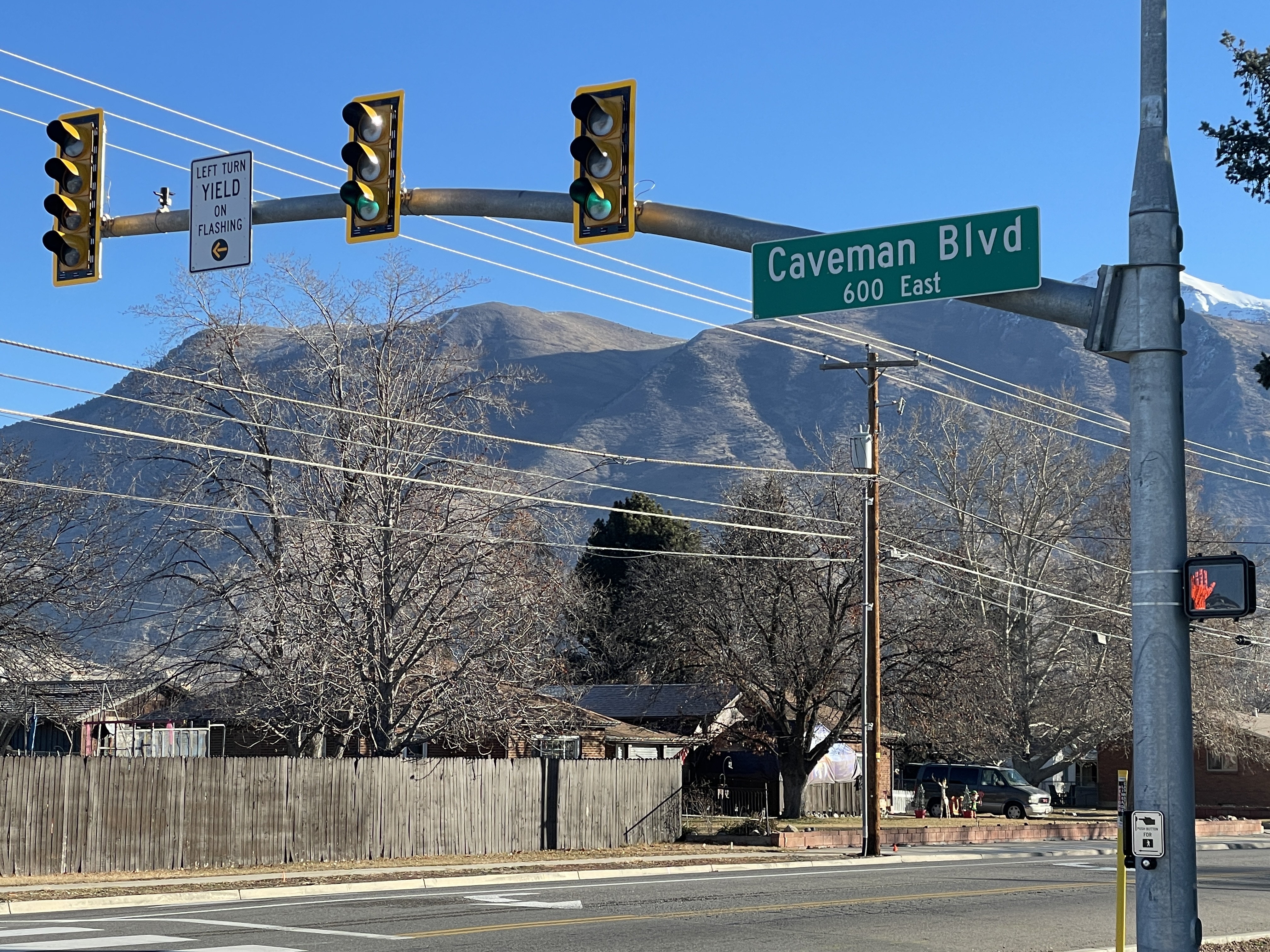
American Fork City recently installed a new traffic light at the intersection of 300 North and Caveman Boulevard (600 E.) with a goal of preventing accidents and reducing wait times. The area normally gets backed up in the mornings and afternoons when high school students are traveling to and from the school. Traffic will now flow more smoothly, and pedestrians won’t have to dodge cars as they cross the street.
“In the summer of 2024, I asked staff if we had a priority list of potential traffic improvement projects. 300 N. and 600 E. was one of the intersections at the top of the list,” shared Sam Kelly with the city’s Public Works Department. “We waited for school to start back up in the fall, and then we ordered a traffic study to see if the intersection met the warrants or requirements to signalize the intersection. The study confirmed the need for a signal, so we made a budget request to fund the signal. The rest is history.”
“This was a much-needed change, and I’m glad the traffic light is there now. It can be a long wait to get through that intersection,” shared AFHS Principal Peter Glahn. “That intersection can get backed up pretty badly during busy school times. This will make it a lot safer to get through.”
Kelly shared that the public works team feels proud of this step in making the city safer, emphasizing the amount of coordination behind the scenes of projects like this.
“It is a great feeling to see the project complete,” Kelly said. “We have a sense of pride and accomplishment knowing that we completed a project that makes the quality of life better for the residents of American Fork.”
Boyd Roberts owns a home on Caveman Blvd. and thinks the new light enhances the safety of traffic and pedestrians. He has witnessed numerous accidents and near misses. Boyd calls the new light a “great addition.”
“It will be a great safety improvement for the residents of the area and those who use the corridor to commute from one community to another,” concluded Kelly.

Megan Wallgren | American Fork Citizen
Energy is at the heart of the future, powering daily life, economic growth and new technology, and how it is produced will shape communities for generations. To help guide that future, Utah Associated Municipal Power Systems (UAMPS) is investing in the next generation of energy leaders by offering a scholarship program for local high school seniors for a second year.
UAMPS, in partnership with its member utilities, will award eight scholarships worth $2,500 each. The program is designed to encourage students to explore careers that support affordable, reliable and sustainable energy, while helping build a skilled workforce for the future.
“Investing in the next generation of energy professionals is critical to the future of public power,” said Mason Baker, CEO and general manager of UAMPS. “By continuing this scholarship program into its second year, UAMPS is helping students build pathways into an industry that plays a vital role in strengthening our local communities and supporting long-term energy reliability.”
Students are eligible if they are high school seniors planning to attend a two-year or four-year college or a trade program, have a GPA of 3.0 or higher, and are U.S. citizens. Applicants must live in a household within a UAMPS member municipality, which includes Lehi.
Applicants are required to submit a 500- to 1,000-word essay, written without the use of AI, describing the benefits of renewable energy, their planned field of study, and how their education and career goals will promote or advance renewable energy. A cover page and a copy of the student’s most recent transcript must also be included.
Essays and transcripts must be emailed to [email protected] by midnight on Feb. 28. Scholarship recipients will be notified by phone and email by March 31.
UAMPS is a project-based consortium that provides a variety of power supply, transmission and other services to its 50 members serving 395,600 customers in seven western states: Utah, Arizona, California, Idaho, Nevada, New Mexico and Wyoming.

Rob Shelton | American Fork Citizen
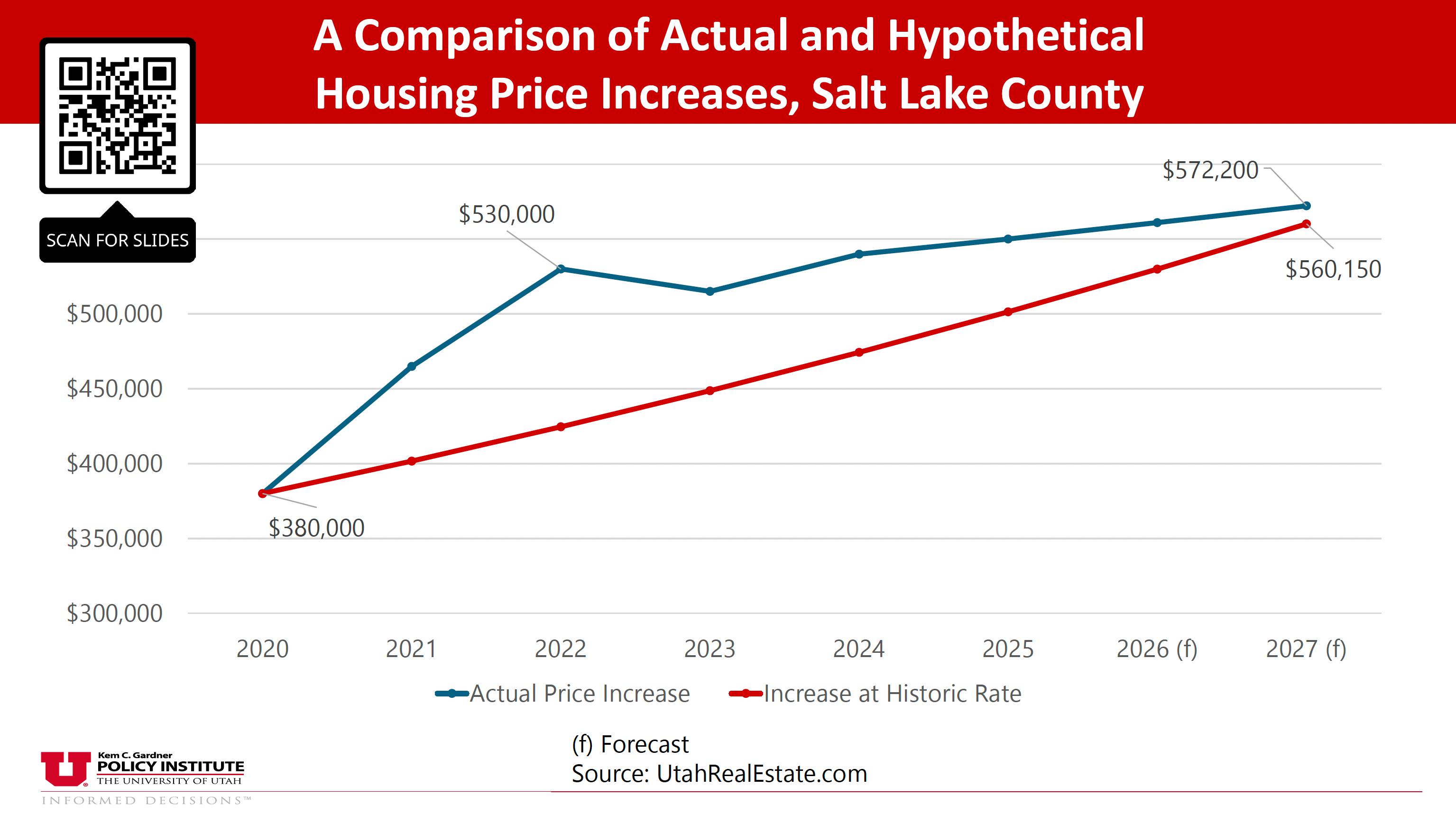
Between 2020 and 2022, Utah’s housing market was booming. During that time, prices jumped roughly 40%, the sharpest surge in Utah’s modern housing history. Since then, growth has cooled dramatically. From 2022 through 2025, prices rose less than 4% over that three-year period.
These and other interesting facts about the recent history and forecast of the local real estate market were presented to the Salt Lake Board of Realtors by James Wood. Wood is a longtime Utah housing economist with the University of Utah’s Kem C. Gardner Policy Institute. His report has tracked population growth, housing demand and affordability trends in Utah for decades and is widely cited by state and local officials, builders and lenders. Salt Lake County is used in the report as it is considered the bellwether county for real estate trends along the Wasatch Front.
In 2020, the average cost of a home in Sale Lake County was $380,000. In two years, the average home cost jumped to $530,000 and is forecast to be $572,200 in 2027. Wood compared the historical growth rate of homes in Salt Lake County with the actual growth rate. In 2027, the historical growth rate suggests the average home cost will be $560,150. While the gap between the actual cost of a home and the historical average has been closing in recent years, in 2027, there is still about a $12,000 gap between the two.
According to the National Association of Realtors, home prices from 2020 to 2025 increased by about 62.5%. Wood described the current moment as a pause after years of upheaval. “We are really catching our breath now,” he said, noting that median home prices fell 2.8% from 2022 to 2023.
Looking ahead, Wood said the county’s for-sale housing market in 2026 is likely to resemble what buyers and sellers have seen in recent years, with no major shifts expected.
“I think for 2026, I don’t see many indicators out there that can say, ‘well, we’re going to, all of a sudden, see a surge in buying or a surge in prices,’” Wood said.
In Wood’s report, he mentioned that the 2026 market headwinds include a slowing Utah economy and economic uncertainty, coupled with an interest lock: over 61% of mortgage holders have an interest rate below 4%. With home prices rising and interest rates above 4%, the market seems to offer little hope for most homeowners to upgrade or move from their current homes.
The market tailwinds for 2026 include more favorable mortgage rates (below 6%). This year also marks the fourth year of recovery from the pandemic, and a relatively high share of young households.

Leia Larsen | The Salt Lake Tribune
Note to readers • This story is made possible through a partnership between The Salt Lake Tribune and Grist, a nonprofit environmental media organization.
In rural Millard County, Kalen Taylor is bracing for the day the farmland across the street transforms into a sprawling data center complex.
Initial plans for Joule Capital Partners’ 4,000-acre data center site call for six buildings, each powered by 69 Caterpillar natural gas-powered generators to meet the intensive energy demands. Construction is slated to begin this spring. Once built, Taylor will likely hear the equivalent of more than 400 semi-trucks idling in his neighborhood around the clock, producing emissions year-round.
“I just would rather look out my backdoor and see cornfields than a data center,” Taylor said. “I like the sound of crops rustling in the wind, not the hum of a CAT generator making power.”
Farther north, Eagle Mountain city officials have turned to massive data centers operated by tech giants like Meta to provide much-needed tax revenue. But even in this urban, rapidly growing part of the state, developers struggle to secure the power they need from Utah’s largest electric utility, Rocky Mountain Power. Google has delayed building a campus there due to energy constraints. That prompted the City Council to explore building small nuclear reactors, to the consternation of many residents.
“It means our city would become a radioactive storage site,” said Joy Rasmussen, a mom of four who bought a home in Eagle Mountain in 2022.
This spring, in Washington, D.C., Sen. John Curtis (R-Utah) spoke glowingly to Sam Altman, CEO of OpenAI, about Utah’s aspirations to “lead” the nation “with data centers and advanced technologies” during a Senate Commerce Committee hearing on artificial intelligence.
Curtis noted the “challenges” that come with data centers’ insatiable energy demands. How, the senator asked, can the state protect ratepayers?
“The best way,” Altman responded, “is much more supply. More generation.”
With the growing demand for more data centers, Utah finds itself in a difficult position. State and federal officials have called AI the “arms race” of a new era, as the nation looks to fend off Russia and China and forge its place as the world’s leader in technology, energy and innovation. And Utah looks to position itself at the forefront of that fight.
The state’s main electricity provider, Rocky Mountain Power, doesn’t have the capacity to meet the surge in energy demand. Data center developers have instead turned to generating their own electricity, mostly using natural gas. Gov. Spencer Cox has zeroed in on nuclear as a cleaner energy solution as part of his Operation Gigawatt.
That collision of the AI boom and limited power supplies means Utah’s rush to build data centers is likely to rely on fossil fuel energy for the foreseeable future, raising concerns about the state’s already struggling air quality. Alternative sources won’t match the demand the centers generate — potentially as much as four times what Utah residents and businesses currently consume. Small nuclear plants are at least a decade away, while the Trump administration has curtailed many incentives for solar and wind power.
Lawmakers and regulators are trying to balance the needs of energy-intensive industries without ratepayers feeling the environmental and pocketbook pains felt in other parts of the country, like rising energy bills and polluted resources.
“We’re kind of in a big mess right now,” said Logan Mitchell, a climate scientist and energy analyst for Utah Clean Energy, “and it’s manifesting in all of these different ways.”
Data centers turn to self-built power
Rocky Mountain Power, like many private utility providers in the U.S., has a monopoly as the sole electricity provider in much of Utah, but it must yield to state regulation. For decades, power providers hummed along as energy demand across the country stayed relatively flat.
Conflict arose, however, when platforms like Altman’s ChatGPT, Google’s Gemini and Elon Musk’s Grok made AI a mass consumable good rather than a niche product. Demand for more data centers gripped the globe, and the utilities, which plan for energy needs decades in advance, were caught unprepared and undersupplied.
Data centers use substantial amounts of energy, with rows of servers computing day and night for services that are an increasing part of daily life — streaming services, online banking, e-commerce and the rise of AI. In arid Utah, many data centers have pivoted away from water-guzzling evaporative cooling in favor of closed-loop systems, which require more electricity to run.
Last year, the Utah Legislature passed SB 132, allowing private companies with energy demands of 100 megawatts or more to build their own generating stations that operate off the public grid used by nearly everyone else. The bill’s sponsor, Sen. Scott Sandall, R-Tremonton, specifically cited data centers as he promoted the legislation.
“It kind of un-handcuffs Rocky Mountain Power to provide these loads for data centers, for AI, for large manufacturers,” Sandall said, “those that are coming in, and quite frankly, changing the curve of power demand.”
In Millard County, both Joule and Creekstone Energy intend to build their own massive facilities, powered by natural gas.
“We are so excited for other alternative energy sources like geothermal and solar and wind and someday, maybe even nuclear,” said Mark McDougal, a managing partner of the Joule data mega-campus. “But we can’t wait for that.”
Natural gas is efficient, McDougal said, and a proven technology that can run around the clock.
The developers received support from county leaders because of their potential to create employment in construction, maintenance and security, along with boosting economic development. The rural community in central Utah lost its largest employer, the Smithfield Foods pork processing plant, in 2023 – it accounted for about a quarter of all jobs in the county. The idling of the nearby Intermountain Power Plant’s remaining coal units also caused a hemorrhaging of local jobs.
Construction of the massive sites will bring some jobs to the communities, but data centers generally employ a relatively small number of permanent workers.
Millard County’s location is attractive to data center developers because it lies on a fiber optic corridor and near a natural gas pipeline, along with large transmission lines associated with the old coal plant.
“Having both of those in the same place,” said Ray Conley, Creekstone’s CEO, “and not having a large metropolitan area that is competing for power is a very unique combo.”
It also lies outside the Wasatch Front, an area plagued for years by poor air quality that falls short of federal standards.
“It’s so hard where you have inversions and trap emissions,” McDougal said. “[Here] emissions are able to disperse.”
Joule’s applications filed with the state indicate it will produce 1 gigawatt to start — about a quarter of the electricity Utah currently uses annually. But its own public statements indicate it intends to produce more than 4 gigawatts onsite. Creekstone, less than a mile away, intends to produce 10 gigawatts, Conley confirmed.
At least a few computing campuses want to build natural gas plants on the Wasatch Front as well, despite its inversions and air quality challenges. Data company QTS received approval from the Eagle Mountain City Council to build a 20-acre, 200 megawatt plant last year, although a company spokesperson said it secured power from Rocky Mountain instead.
In West Jordan, the expanding Novva data campus received state approval to build a 200 megawatt natural gas plant in December 2024.
But “natural gas” is an old greenwashing term, Mitchell said. The fuel is methane, a potent greenhouse gas. Burning it produces carbon dioxide, nitrogen oxides and other pollutants.
Nitrogen oxides mix in the atmosphere, get baked by the sun and turn into particulate pollution in the winter and ozone pollution in the summer.
The pollutants create haze in rural parts of the state as well, and impact visibility at Utah’s famed national parks from Arches to Zion.
Even data centers on the Wasatch Front that have tapped into the existing power grid also received approval to install hundreds of diesel-fueled generators in the last five years, including QTS, Meta and the National Security Agency in Utah County and eBay, Aligned, DataBank, Oracle and Novva data centers in Salt Lake County. Those generators would only run during blackouts and other emergencies when the campuses can’t get enough grid power, according to permit applications. But diesel emissions contain even more harmful pollutants than natural gas.
In November, the federal government removed Northern Utah from its list of regions out of compliance for wintertime inversion pollution after more than a decade, thanks to state efforts like banning wood burning on poor air quality days combined with stricter federal regulations on vehicles and fuel. But it continues to struggle with meeting national requirements for ozone smog.
The new data centers coming online, with their diesel and natural gas generators, could bump the state right back out of compliance, environmental advocates say.
“They’re eating into all of the progress we’ve made to reduce emissions from other sources,” Mitchell said.
State regulators said they’re not just concerned about temporary diesel generators and year-round natural gas generators taking a bite against air quality gains in recent years.
“We’re concerned about all growth,” said Bryce Bird, director of the Utah Division of Air Quality. “Everything that has to do with people also has emissions associated with it.”
That doesn’t mean Utah can’t be a tech leader, said Department of Environmental Quality Executive Director Tim Davis. But the state’s still figuring out how to strike the right balance between affordable energy creation, environmental protection and improving public health.
“I don’t know of a state that is not having similar conversations,” Davis said. “That’s just a mind-numbing amount of new power that they’re trying to plan for.”
‘If anybody wants to criticize data centers, look in the mirror’
Novva applied for a two-year presidential exemption from the Clean Air Act in March under a program designed to benefit coal plants, smelting facilities and chemical manufacturers. The company asked for the exemption so it could operate using diesel generators while it finishes building its natural gas plant, according to records obtained by Grist and shared with The Salt Lake Tribune.
The company noted Rocky Mountain Power can’t provide the electricity needed until 2031, and even then, it’s not guaranteed. The requested exemption aligns with national security interests, Novva wrote in its application, citing the U.S. Department of State’s assertion that AI is “at the center of an unfolding global technology revolution” and can help make Americans safer.
Novva CEO Wes Swenson said he never received a response to the exemption request. He insisted, however, that data centers like his are important for protecting “American data.”
“If anybody wants to criticize data centers, look in the mirror,” Swenson said. “‘I want Netflix, I want Prime, I want Apple TV.’ … Nobody goes to the library anymore. Who uses cash? Where do people think that all comes from?”
Where will all the new energy come from, and how will it impact Utahns?
Utah leaders have honed in on nuclear power, and small modular reactors in particular, as a cleaner and more sustainable solution to the spike in energy demand. The need is not just driven by data centers, but also a hoped-for renaissance in manufacturing and the future electrification of Utah’s transportation. But Rocky Mountain’s parent company, PacifiCorp, only has firm plans for one small reactor – a plant under construction by TerraPower in Kemmerer, Wyoming. It won’t come online until around 2032, and Utah will share its projected 500 megawatts with other Western states.
Enthusiasm for small nuclear reactors within Utah’s borders appears tepid. Brigham City is the only community so far to fully embrace nuclear reactors. But in making that announcement, state leaders were light on specifics in explaining why the small city needs the power. No known data centers are planned for the area.
Ninety minutes south in Eagle Mountain, Meta’s data campus is expanding, a huge QTS data hub is under construction and Google is waiting to build on 300 acres it owns within city limits. The city made two attempts last year to adopt an ordinance to allow for nuclear development and other energy projects, including solar farms. After receiving mixed feedback, the efforts failed.
The pivot to nuclear has environmental and clean energy advocates wondering why Utah has shied away from renewables. Cox calls his Operation Gigawatt an “all-of-the-above” strategy that welcomes all energy sources. But resources like wind and solar have faded from the conversation.
“People see renewable energy as the woke liberal energy, and we have to stick with fossil fuels and nuclear, because that’s what conservatives want,” said Ed Stafford, a professor of marketing at Utah State University whose research focuses on renewables. “Politicization of energy is just a bad thing, because, as common sense tells us, we should go with the cleanest and cheapest forms of energy that spreads the wealth around.”
PacifiCorp intends to bring no new solar, wind or battery storage online in Utah over the next two decades, according to the latest draft of its long-term resource plan. Meanwhile, the utility isn’t factoring large energy consumers, like data centers, into its projections, to Mitchell’s frustration.
“Rocky Mountain Power should be planning for the reality of the future,” Mitchell said, “rather than creating a fictional reality that indicates they don’t have much load growth and they’re not going to build new resources.”
Data center developers and operators interviewed for this story said they support transitioning to cleaner energy sources. But they also need consistent and reliable power, when the sun doesn’t shine and the wind doesn’t blow.
“The economic rebates and incentives are going away, which is why it’s not as in fashion as it was before,” said Conley, Creekstone’s CEO. “But a lot of [data] customers are willing to pay a premium for green energy instead of dirty energy.”
Conley’s company recently applied with the Utah Office of Energy Development to operate the Intermountain Power Plant’s remaining coal units, which went idle this year after the plant’s customer base in California decided to transition to cleaner energy sources.
“Diversification,” the CEO said, “reduces risk.”
Risk is at the forefront of at least some Utahns’ minds, particularly as news stories across the nation call out data centers for driving up the cost of power for all ratepayers. Utilities build new generating plants and upgrade decades-old grid equipment to meet rising demand, then spread the costs among all their customers. This year, Pew reports, both data centers and cryptocurrency mining could cause the average U.S. power bill to grow 8% by 2030.
In Utah, however, SB 132 seems to serve a dual purpose of helping data center developers get the energy they need behind the meter, while protecting other customers who still use the traditional grid.
“There’s very little evidence that data centers have impacted rates to date,” said Michele Beck, director of the Office of Consumer Services, a utility watchdog part of the Utah Department of Commerce.
She called SB 132 one of the “best ideas out there” for protecting power customers in the nation. But, she said, it’s important for Utahns to remain vigilant. It’s not just utilities struggling to catch up to new demand. Regulators have struggled to keep pace as well.
“The industry in general is speeding up,” Beck said. “It just compounds everything.”
Grist reporter Naveena Sadasivam and Tribune reporter Addy Baird contributed to this story.
Utah County leaders are asking the state legislature to spend $2 million to help pay for costs associated with the case against conservative influencer Charlie Kirk’s accused assassin.
On Monday, the Utah State Legislature’s Criminal Justice Appropriations Subcommittee heard a request by Rep. David Shallenberger, R Orem, for the funding. He pointed out the unique nature of the high profile case against Tyler Robinson, who is accused of killing Kirk in front of thousands during an appearance last year at Utah Valley University.
There have been extra security costs, multiple defense attorneys with specialty in death penalty cases and plans for a lengthy jury selection and trial.
“This is not a standard case or even a standard capital case,” Ezra Nair, the Utah County Administrator, testified to the committee.
Utah County does not pay into a special fund that other counties do to handle capital punishment cases. That’s left county taxpayers on the hook for the extra costs associated with the Robinson case.
In a public post Monday, Utah County Commissioner Skyler Beltran said the request is about fairness, not financial distress. “Utah County is not asking for help out of desperation. We are asking for a partnership,” he wrote. “In an unprecedented, high-cost case like this, we feel it is reasonable to ask the state to help share in those extraordinary costs. This request is about protecting Utah County taxpayers while still ensuring justice is fully and properly carried out.”
Nair told FOX 13 News he did not believe Utah County would have to ask for additional funding beyond the $2 million request. Lawmakers on the appropriations committee expressed support for the ask. Sen. Brady Brammer, R Highland, who co chairs the committee, said it was an “unprecedented” case.
“This one I believe the state should,” said Sen. Derrin Owens, R Fountain Green. “We can all pitch in and help you on this together.”
Note: Ben Winslow is a reporter with KSTU, Fox13. This story came from the Utah News Collaborative.
April Slaughter | American Fork Citizen
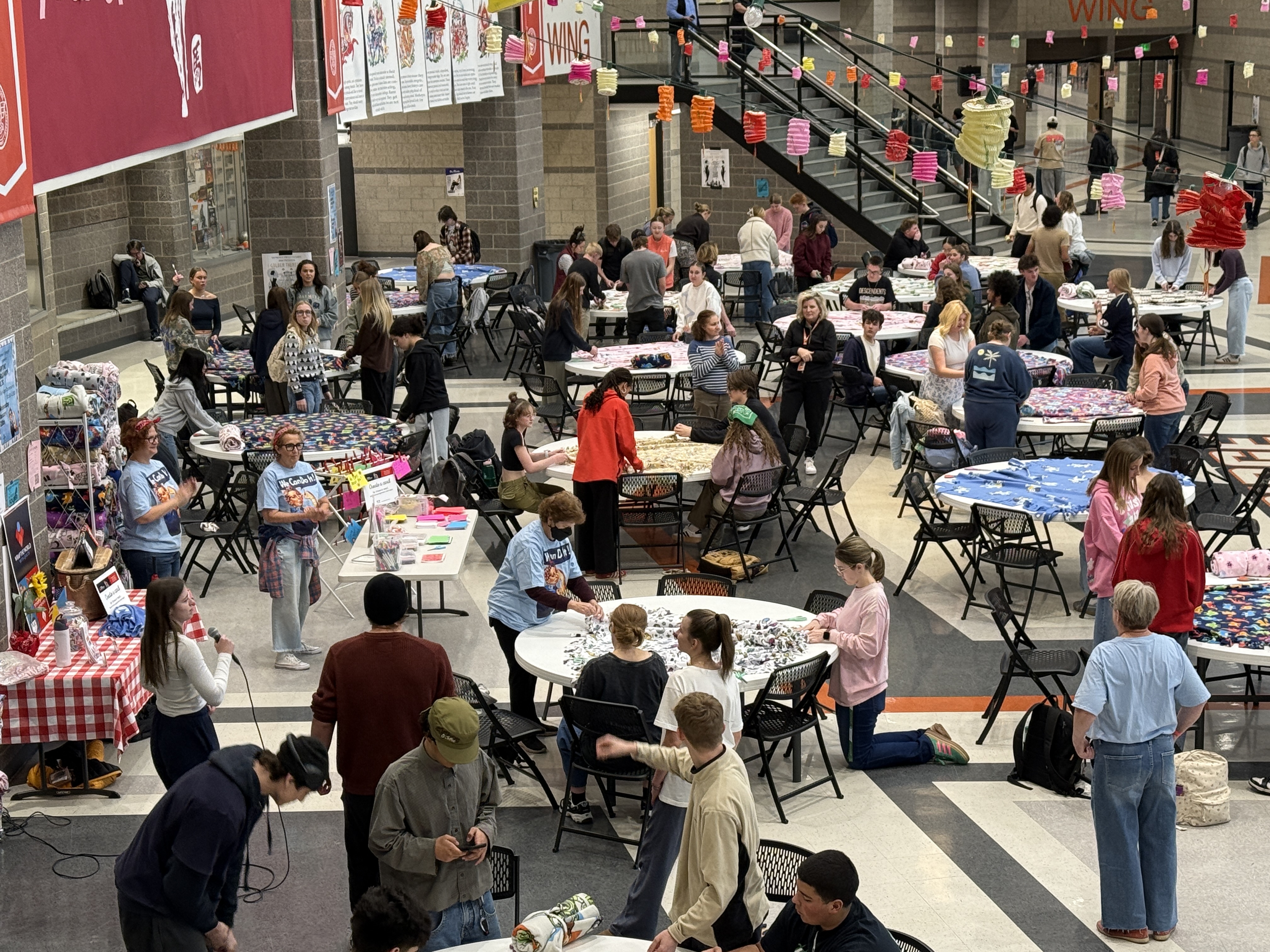
About 100 students at Skyridge High School gathered Wednesday, Jan. 28, in the school’s Commons area to tie quilts for people affected by war and natural disasters, turning an early-release school day into a hands-on humanitarian effort.

The event partnered with Wrap the World with Quilts, a Lehi-based nonprofit that collects and distributes handmade quilts and blankets to refugees, disaster survivors and communities facing humanitarian crises. Students worked in small groups throughout the Commons, cutting fabric and tying knots, while volunteers guided them through the process. Each time a quilt was completed, students rang a bell, and nearby classmates paused to cheer.
Student leaders said the project was valuable far beyond the number of quilts produced. The event was designed to give students a tangible way to serve others and to help them better understand how small actions can have a global impact.

“We’re tying blankets for people in need — refugees around the world,” said Skyridge student leader Grant Weekley. “They’re sent wherever the need is. It’s a simple thing, but it makes a big difference.”
Organizers estimated the event would produce between 120 and 150 quilts by the end of the afternoon. All students were welcome to participate, whether they tied a single blanket or completed several. Teachers and staff members also stopped by throughout the day to observe and encourage students.
The nonprofit behind the project was founded in Lehi following a deeply personal moment at the start of the war in Ukraine.
Gina Halladay, founder of Wrap the World with Quilts, said the organization began when her husband, who had worked remotely with women in Ukraine, received photos of them fleeing across the border into Poland, carrying little more than grocery bags filled with clothing.

“He asked me, ‘You’re a quilter — can we send them a handmade quilt?’” Gina said. “They were shocked that someone in America cared about what was happening to them.”
After Gina shared the idea on social media, quilts began appearing on her Lehi porch almost immediately. What was initially expected to be a modest collection effort quickly grew. Within a short time, the group became an official nonprofit and changed its name from Wrap Ukraine With Quilts to Wrap the World With Quilts to reflect a broader mission of responding wherever humanitarian needs arise.
The organization now partners with Lifting Hands International, a humanitarian nonprofit based in American Fork that ships cargo containers of aid worldwide. Each container requires thousands of quilts and blankets, far more than many organizations can collect on their own.
Since then, Wrap the World with Quilts has collected more than 64,000 quilts over the past four years, all through donations and volunteer labor. Gina estimates the quilts represent about 82 tons of aid, valued at $32 million. The organization is entirely volunteer run, with quilts arriving daily from across the country.
Community partnerships have played a significant role in the nonprofit’s expansion. Gina said Thanksgiving Point in Lehi donated workspace to the organization, providing volunteers with a centralized location to sort donations, sew quilts and coordinate shipments.
“That donated space changed everything for us,” Gina said. “It gave people a place to show up, use their skills and be part of something bigger than themselves.”
In addition to providing physical warmth, the quilts are designed to offer emotional comfort. Each quilt is registered through the nonprofit’s system, allowing donors to include notes of encouragement. When quilts reach their destinations, recipients can send messages back, creating a personal connection between people who may never meet.
The nonprofit has also established sewing centers in Lehi, Poland and Ukraine. One sewing center operates in the basement of an elementary school in Ukraine, allowing children to remain creative and engaged while sheltering during air raid alerts.
At Skyridge, organizers said the quilt-tying event also helped foster connections among students. Many worked alongside classmates they did not previously know, turning the activity into both a service project and a social experience.
A similar quilt-tying event is planned for Wednesday, Feb. 25, at Lehi High School, also during an early-release school day. Wrap the World with Quilts continues to accept quilt and blanket donations and encourages community members, volunteer groups and businesses interested in supporting the effort to get involved. For more information, visit www.wraptheworldwithquilts.com
Jennifer Thomas | American Fork Citizen
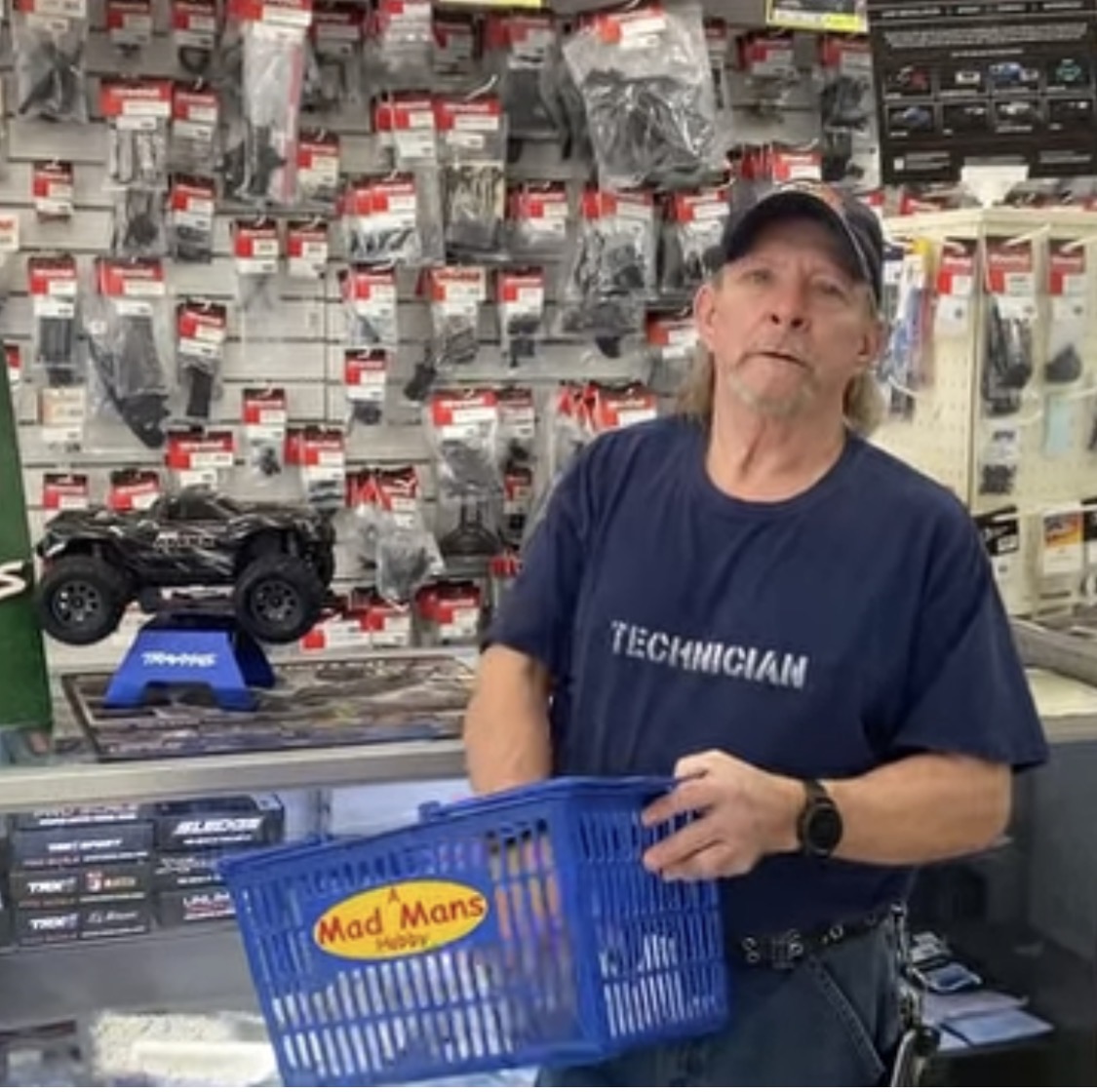
What began as an alleged retail theft at “A Mad Man’s Hobby” store on Jan. 2, 2026, quickly escalated into a violent aggravated robbery when a male and female duo used their truck as a weapon. After Mark Willson, an employee, noticed one of the suspects remove an item from the store, he followed them on foot and was struck and dragged along the pavement as the suspects sped away from the scene.
After sustaining severe, multi-site fractures to his legs, arms, and face, Willson endures a lengthy recovery process involving multiple surgeries.
According to the victim’s stepdaughter, Shellie Vincent, after hospitalization, Willson completed a rehabilitation program earlier in January and transitioned to in-home recovery last week, where he is making steady progress.
“He is motivated to literally get back on his feet and has a positive attitude overall that he will eventually get back to himself with the understanding that he has a long way to go,” said Vincent.
Providing for his family has become significantly challenging for Willson due to the current circumstances.
The hobby store has organized a collection for Willson and his family at A Mad Man’s Hobby retail store. Willson’s family has also created a GoFundMe to help defray the significant medical expenses.
“At the hobby store we are very grateful for all the customers who inquire about Mark’s health and for their donations. Mark still has a long road to recovery and any donations are appreciated,” said Teresa Mott, owner of “A Mad Man’s Hobby.”
Brady Visker, owner of 2nd Chance Auto Glass, located at 64 N 400 W, Lehi, is supporting his friend, Willson, through the recovery process with a generous fundraiser.
“Mark has been a friend and a mentor since I was a teenager, racing RC cars,” said Visker. “I feel so much compassion for him as he deals with his terrible injuries.”
“2nd Chance Auto Glass” specializes in windshield repair, replacement, and ADAS calibration is donating 15% of all services rendered during the month of February to support Willson’s recovery.
“As a fellow business owner, I know how difficult it is to maintain a small business when dealing with health problems and medical expenses,” said Visker.
“Donating 15% of our proceeds to Mark during the month of February is my way of being able to help a fellow businessmen and friend in need.”
“Anyone who wishes to participate in this fundraiser is greatly appreciated and can contact 2nd Chance Auto Glass at 2ndchanceautoglass.com for further details,” added Visker.
The Lehi community continues to offer a supportive network, providing both financial recovery assistance and ongoing encouragement in the wake of the hobby store incident.
“My employees are great to step up and fill in where needed at the store. They are very concerned about Mark’s health. We have each other’s backs, we love this hobby store, and we want it to continue,” said Mott. “We are still in shock that someone can do this to another person and just leave him lying in the road but are grateful for all the support.”
Vincent said, “Thank you for your kindness and support during this time.”

Leia Larsen | Salt Lake Tribune
The state’s snowpack sits at just one-third of normal, leaving water managers bracing for another difficult year.
Utah is experiencing its most dismal winter ever recorded.
A special report issued Monday by the National Resources Conservation Service noted that snowpack levels measured across the state are among the lowest recorded since the SNOTEL measuring equipment was installed in 1980.

“That’s of concern to all of us, because snow does more for us than provide ski slopes,” said Jordan Clayton, supervisor of NRCS’s Utah Snow Survey. “It’s critical to us as a state.”
Of Utah’s major watersheds, four have record-low snow, including the Weber-Ogden, Provo-Jordan, Tooele Valley-Vernon Creek and Lower Sevier basins. Another six are on the brink of setting historic lows. Those include the Northeastern Uintas, San Pitch, Price-San Rafael, Dirty Devil, Upper Sevier and Southeastern Utah watersheds.
“It’s horrible,” said Scott Paxman, general manager and CEO of the Weber Basin Water Conservancy District.
Utah has 140 SNOTEL sites that transmit real-time data on snow depth and the water content within that snow. As of Monday, 31 of those sites recorded the worst snow-water equivalent ever documented for this time of year. Another 12 stations showed the second-worst conditions on record.
Statewide, Utah has only about one-third of its normal snowpack for the start of February, and the season has only about two months left to accumulate snow before it begins to melt.

“It’s just been an outlier year,” said Glen Merrill, a hydrologist with the National Weather Service’s office in Salt Lake City. “We’ve been extremely dry.”
Utah and much of the West have been gripped by a high-pressure system and dry conditions, Merrill added. The state saw record-breaking warm temperatures in November and December. Cold weather brought some relief in January, but temperatures are back to feeling like early spring.
“We’re beginning February, hitting 50 [degrees] again,” Merrill said.
There’s a skiff of good news on the horizon. Forecasts call for cooler temperatures and more active storm activity by Feb. 11, Merrill said.
But the odds of sudden snowstorms making up for Utah’s snowpack deficit in the weeks ahead are only around 10%, he cautioned.
Communities across the state depend almost entirely on spring snowmelt for water supplies. More than 95% of the state’s water supply is directly tied to mountain snowpack, said Joel Ferry, executive director of the Department of Natural Resources. He said lawmakers will make water issues a top priority during the annual legislative session, which is currently underway.
“The policy changes and strategic investments we’ve made in conservation and infrastructure are helping to stretch our supply,” Ferry said, “but every Utahn across every sector must do their part to use this precious resource wisely.”
In northern Utah, major reservoirs are between 42% and 80% full, according to the Department of Natural Resources. The water situation is even more dire in southern Utah, where several reservoirs are less than 40% full. Lake Powell, the nation’s second-largest reservoir, sits at 26% of its capacity.
The Great Salt Lake is particularly vulnerable to the lack of snow in northern Utah. It depends on the spring runoff to refill and make up for nearly 3 million acre-feet of water that evaporates over the summer and fall.
The salty inland sea currently sits about 3 feet above the record-low elevation set in late 2022, and the lake typically loses that many feet to evaporation each year.
“This record-low snowpack is a sobering reminder of the challenges we face,” said a spokesperson with the Great Salt Lake Commissioner’s Office, “and serves as a powerful motivator to accelerate our efforts to ensure the Great Salt Lake remains a top priority.”
Resource managers said they’re bracing for a year nearly as bad as 2022, when watering restrictions led to brown lawns, dead trees and difficult decisions for farmers. Cities may even have to enact drinking water restrictions, Paxman said.
“We [might] push the start date of irrigation back to May 15 or even the first of June,” said Paxman, who manages one of the largest secondary outdoor water systems in the nation.
The silver lining this season, compared to 2022, is the amount of water still held in the soil. Soil moisture content is average or above normal for this time of year for nearly the entire state, NRCS data show, thanks to rainfall in the fall. That means that when the lackluster snowpack melts, it will run off efficiently, Paxman said.
“It should go straight to rivers and reservoirs,” he said, unlike 2022, when the soil was bone dry. “Everything we got [then] pretty much sank into the ground.”
In the years following the Great Salt Lake’s record low, water managers collaborated to identify surpluses and make donations to help the lake refill, especially following the record-breaking snowfall of 2023.
But donations to the lake this year appear unlikely, Paxman said.
“If this winter has taught us anything,” the Great Salt Lake Commissioner spokesperson said, “it’s that we can never take a ‘good’ water year for granted.”
Jacob Young, general manager and CEO of Jordan Valley Water District, said his agency hasn’t decided whether to release additional water to benefit the lake, which typically occurs at the end of the summer.
“It is largely dependent on how much water was conserved during the irrigation season,” Young wrote in an email. “This is another reason for our community to implement … water conserving measures.”
Skiers, snowboarders and winter nostalgists used social media to commiserate about Utah’s missing snow in recent weeks.
“It already seems like snowstorms are a thing of the past,” one Redditor wrote in the Salt Lake City forum Sunday, amassing more than 800 upvotes. “We’re going to be headed toward catastrophe very, very soon with the effects climate change is having on the Great Salt Lake.”
Note to readers • This story is made possible through a partnership between The Salt Lake Tribune and Grist, a nonprofit environmental media organization.

Megan Wallgren | American Fork Citizen
Vaccination rates across Utah, including in Utah County, have fallen below levels needed to maintain herd immunity as the state continues to track a measles outbreak during the 2025–2026 school year.
According to the Utah Measles Dashboard on utah.gov, there have been a recorded 210 measles cases statewide since last June. Of those cases, 187 were in unvaccinated individuals, and the majority involved children under the age of 18. Twenty people have been hospitalized, a number that reflects only admitted patients and does not include emergency room visits that did not end in a hospital stay.
As of Jan. 19, Utah County has reported 26 measles cases, the highest number among counties along the Wasatch Front. The number is cumulative throughout the outbreak and not a snapshot of active infections.
Local health officials warn that increasing exemption rates, particularly in schools, are putting medically vulnerable residents at greater risk. As vaccination rates decline, the likelihood of outbreaks increases, especially in school settings.
Aislynn Tolman-Hill, a spokesperson for the Utah County Health Department, said, “Herd immunity basically means that we want enough people to be vaccinated so that a virus can’t spread easily. When there are enough people vaccinated, it protects everyone, including those medically vulnerable who cannot be vaccinated, for instance, infants under the age of 1. The fewer people we have vaccinated, the closer we are to losing that herd immunity and protecting those people.”
Data provided by Alpine School District put the district’s vaccination exemption rates in Lehi and American Fork at around 9%. Herd immunity is considered jeopardized when exemption rates exceed 5%.
National data highlights Utah’s vulnerability. A Dec. 31 Washington Post article reported that no county in Utah has achieved herd immunity among kindergarten students. Utah County’s vaccination rate was reported at 89%, meaning an 11% exemption rate.
Health officials rely heavily on school vaccination data to assess community risk. “Unfortunately, what we are seeing this year is more and more exemptions,” Tolman-Hill said. “We are getting closer and closer to losing that herd immunity.”
Under current Utah law, parents seeking a vaccine exemption for their child must complete an online module at immunize.gov. The 15-minute course explains vaccine-preventable diseases, how immunizations work, and what happens if a non-immunized student is exposed during an outbreak. After completing the module, parents provide a certificate to their school nurse. There is no fee for the exemption.
That process may soon change. During the 2026 legislative session, Rep. Trevor Lee is sponsoring HB 152, Educational Vaccine Exemptions. If passed, the bill would require all vaccine exemptions to be obtained through local health departments, with in-person counseling from nurses or physicians, and would include a $25 fee. The online exemption option would be eliminated.
Tolman-Hill encouraged families to consult trusted health care providers if they have concerns or questions about vaccines. Vaccinations are available through local health departments, physicians and many pharmacies. Assistance programs exist for those without insurance.
“Vaccines are safe and an effective way to protect yourself, your family and your community,” Tolman-Hill added. “We’re here to help.”
Health officials are currently in a waiting period to see whether additional cases will be reported, but Tolman-Hill expects the numbers to rise. “As long as vaccination rates remain below herd immunity thresholds, there will be some risk,” she said.
For more information about vaccinations and herd immunity, talk to your physician or visit health.utahcounty.gov.

Brynn Carnesecca | American Fork Citizen
On December 5th, supercar owners across Utah gathered and raised over $63k—surpassing their $50k goal—to fund Make-A-Wish experiences for children.
The Full Throttle for Wishes Charity Casino Night was hosted by Fast Lane Drive Utah, Supercar Ron, and Club Paddock. The event was inspired by Supercar Ron’s goal to raise $500k for Make-A-Wish.
Inspired by his efforts, Raul Parra and his team at Fast Lane Drive Utah hosted a casino night featuring stories, games, and fundraising.
“[Fast Lane Drive] is essentially a social club for supercar owners. It’s really a network of individuals that own supercars and want to belong to a group that could give back to the community,” Parra explained. “We have 23 chapters across the world and Utah is one of them.”
The event began with a heartfelt dinner, followed by a moving program where kids shared their Make-A-Wish experiences. The evening concluded with a lively casino night featuring prizes, an open bar, a live DJ, and a silent auction. Every dollar raised brought hope to Make-A-Wish families.
“Most of our fourth quarter events usually have some sort of charity component to them,” Parra said. “We thought that as part of our capstone December event, we would try and raise $50,000 in support of Supercar Ron and his goal for Make-A-Wish.”
While the casino games brought fun and excitement, the true highlight was the emotional moment when the kids who had received their wishes shared their stories—reminding everyone of the life-changing power of a single wish fulfilled.
Carter Lenley, a Make-A-Wish recipient who spoke at the event, shared that it was enjoyable to come together and have a good time, mentioning he saw a new friend from Make-A-Wish. As part of his wish, Carter had the chance to lead the Avengers as his own superhero, “Spiderman Mouse Knight.”
His mom added, “That day I think he gained a lot of confidence being able to lead the Avengers, and that has been carried over into his life since. Watching him discover new independence—doing things we weren’t sure he could do on his own—has filled us with pride and gratitude. It’s been amazing to watch his transformation.”
Inspired by Carter’s courage and his family’s joy, attendees threw themselves into the fundraising with even greater passion, determined to help more children transform their lives through the magic of a wish granted.
“The car community is great about doing charitable work, whether it’s donating time or money,” Parra said. “The car community in Utah and around the world always shows up for these charitable events. The energy was high, and people were excited to be there.”
As a first-generation Mexican American who lost his father at 16, Parra finds profound meaning in giving back—each act of service is a tribute to his roots and a way to honor the memory of his father.
“When you get to the stage in life where you are doing well…you feel a calling to donate back to the community,” Parra shared. “You can do so. For the Fast Lane Drive community, it isn’t just about what we drive; it’s about how we show up for others. The charity work we do lets us turn passion into purpose.
Fast Lane Drive Utah regularly accepts new members. To join, you must have a qualifying car and an interview. Visit www.fastlanedrive.com/chapter/utah. To donate to the ongoing Make-A-Wish foundation or see how to get involved, visit www.wish.org.

Ryann Anderegg | American Fork Citizen
As the holiday season approaches, hundreds of families across northern Utah County are finding hope, relief, and connection. This is possible through a long-standing partnership between the Alpine School District Foundation and United Way of Utah County’s Sub for Santa program. Together, these organizations are working behind the scenes. Their goal is to ensure students and families facing financial hardship can experience the warmth and joy of Christmas.
The Sub for Santa program is a temporary Christmas assistance initiative that matches sponsors—including individuals, families, businesses, classrooms, and organizations—with families in need, providing gifts for children ages 18 months to 16 years. Families may also qualify if they have younger or older children, as long as at least one child falls within the eligible age range. Each year, sponsors step forward to “adopt” families and provide gifts during the holiday season.
According to Tyler Vigue, Executive Director of the Alpine School District Foundation, the collaboration helps ensure help reaches those who need it most. “We partner with the United Way of Utah County’s Sub for Santa Program,” Vigue said. “Many of our school leaders encourage families who need help to apply there, and we are blessed to be able to use some funds that have been donated for this purpose to fulfill the program for 200-plus children throughout northern Utah County.”
This year, the need for holiday assistance has reached record levels. As of mid-December 2025, United Way of Utah County reported more than 2,700 families and over 7,000 children signed up for Sub for Santa. These numbers are significantly higher than in previous years. Nearly half of the families are first-time applicants, reflecting increased economic strain throughout the community.
Families qualify for Sub for Santa based on several factors, including income versus expenses and unusual circumstances. The program provides a temporary lifeline during one of the most emotionally and financially demanding times of the year.
Within the Alpine School District, schools often serve as the first point of connection for families who are struggling. Principals, counselors, and school administrators frequently identify students in need and help families navigate available resources.
Those efforts vary by school and may include food drives, clothing closets, emergency assistance, or classroom-based giving initiatives. The Alpine School District Foundation helps coordinate and supplement these efforts when possible, ensuring consistent and equitable support across schools.
Although Sub for Santa is associated with Christmas gifts, organizers stress that its impact extends beyond presents.
“At United Way, our mission is to uplift individuals and families, helping them thrive at every stage of life,” the organization states. “We do this by providing essential support like early education, mental health resources, financial security, and opportunities for community engagement, so everyone feels connected and supported.”
For families facing job loss, medical expenses, housing instability, or rising costs, the holidays can add to their stress. Sub for Santa provides material help and reassurance that families are not alone.
For students, the impact is profound. Teachers and counselors note that supported children focus, learn, and participate better at school.
“When students come back after winter break knowing someone cared enough to help their family, it matters,” Vigue said. “It affects their confidence, their emotional well-being, and their sense of belonging.”
The success of Sub for Santa depends entirely on sponsors who are willing to step in and help. Sponsors sign up and are then matched with families. Each sponsor receives details such as children’s ages, clothing sizes, and gift preferences. Some sponsors adopt a single family, while others, such as businesses or community groups, often take on multiple families at once.
Step forward now, become a sponsor and make a direct impact. Even small contributions can bring hope and relief to families in need this holiday season.
“With many families still waiting, our community has a real opportunity to help,” Vigue said. “Every match lifts a burden and creates hope.”
Ready to help? Sign up today to sponsor a family at unitedwayuc.org/get-involved/sub-for-santa/. Your support is needed now.
“No single organization can do this alone,” Vogue said. “It takes collaboration, generosity, and awareness. When schools, families, nonprofits, and sponsors unite, we meet real needs.
While Sub for Santa focuses on Christmas, both United Way and the Alpine School District Foundation see their work as part of a broader commitment to long-term family stability and opportunity.
“At the heart, United is the way to understanding and hope—creating stronger, healthier communities and a brighter future for all.”
“When we support families, we support learning,” he said. “And when students feel safe, cared for, and valued, everyone benefits.”
As Christmas draws near, organizers urge sponsors to step forward now to close the gap and ensure every registered family is served. Your generosity can transform a season of worry into one of joy for hundreds of waiting children, showing families across northern Utah County that their community stands with them.

Cavemen had a memorable run on the way to the 1976 state title

Cavemen’s 1976 state basketball title launched players into life

AF girls end 4th in league hoops

‘BIGGEST LOSER’ CONTESTANT FROM AF DIES TRAGICALLY

Aspen Peaks School Board “Meet the Candidates” night recap

Tragedy Strikes American Fork: Local Couple Found Dead in Apparent Murder-Suicide
-

 Obituaries1 month ago
John Bradley Brown
-

 Local People1 month ago
Strength-focused support helps disabled adults thrive in Utah County
-

 Obituaries1 month ago
Cheri Laurel Peterson Theurer
-

 Opinion1 month ago
OPINION: The importance of a free press
-

 Sports3 weeks ago
Cavemen celebrate 1976 state basketball champs
-

 Local News4 weeks ago
Measles surge highlights Utah’s lack of herd immunity
-

 Schools1 month ago
APSD holds student logo design contest
-

 Local People4 weeks ago
Community rallies for 6-year-old involved in an auto-bicycle accident
-

 Business1 month ago
Pinkbox Doughnuts has sweet grand opening in American Fork
-

 Schools3 weeks ago
AFHS football team earns national honors for good sportsmanship