Politics
Utah County Clerk candidates profiled

Staff Writer | American Fork Citizen
As part of our commitment to keeping, the American Fork Citizen and Lehi Free Press invited candidates in contested Republican races appearing at the upcoming county convention to participate in a candidate profile by responding to the same three questions.
By asking identical questions, we aim to provide voters with a clear and consistent way to compare each candidate’s priorities, experience, and vision for our community. The profiles below include the responses we received by our publication deadline. Doug Courney did not provide a response prior to the print deadline.
Here are the questions candidates were asked:
Why are you running for public office?
What are your top priorities if elected?
What separates you from other candidates?
If any of these convention races advance to a primary election, we will provide additional coverage during the primary cycle, May through June. Contested races for the general election will be covered in the September through October period.
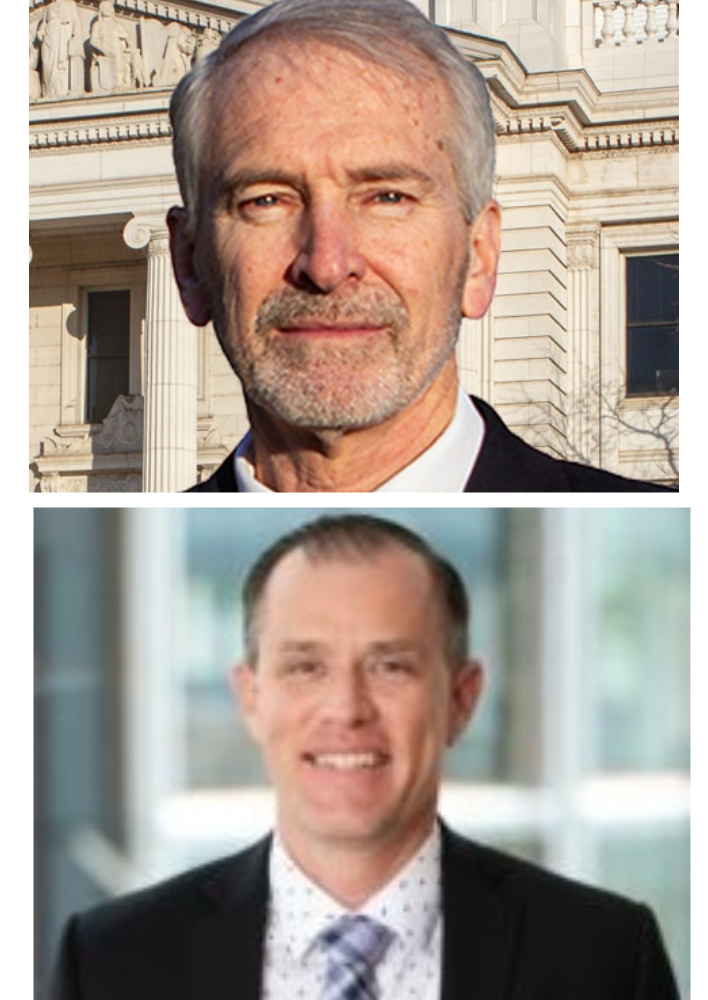
Corey Astill
My decision to run stems from widespread public concern about professionalism, operational competence, and transparency in the current Utah County Clerk’s office. Utah County needs steady, experienced leadership focused on the integrity of elections, execution, compliance, and service to all voters without injecting personal agendas or creating unnecessary barriers for voters.
Administering elections isn’t about politics – it’s about process. It requires attention to detail, respect for the law, and a commitment to serving every voter equally. My background is built around managing high-stakes responsibilities where mistakes aren’t acceptable, and that’s exactly the mindset this office requires.
I strongly believe that protecting access to the ballot is foundational, and that voters across the political spectrum deserve confidence that elections are conducted professionally and lawfully. I will focus on restoring trust through transparent operations, strong internal controls, clear communication with voters and elected officials, and professional management of the Clerk’s office.
I’ve spent my career fighting for efficient government and conservative values, and I’m committed to ensuring every voice is heard fairly and securely. As a former congressional advisor, businessman, and attorney, I’ve spent decades working to ensure government serves the people – not the other way around.
I understand the role of the County Clerk. It’s a process job—not a policy platform. I will relentlessly focus on rebuilding public trust eroded by recent controversies, enhancing voter access while maintaining robust security, and modernizing election processes. My experience, understanding, and commitment make me uniquely positioned to manage the Clerk’s responsibilities effectively.
I’ve been a Chief of Staff in the U.S. Senate, corporate Vice President, and worked with major companies and leaders at every level. Eileen and I currently run two clinics that provide health treatment to children with autism, giving us a meaningful way to give back to community and struggling families.
I’m driven to make a difference. Right now, we need a Clerk with experience to run the office effectively and commitment to rebuild trust.
Aaron Davidson
I ran for office to strengthen transparency in our elections processes and restore voter confidence. Voters should trust elections not merely because elected officials claim all is well, but because the evidence is clear and publicly accessible.
My top priorities are transparency and building election processes that demonstrate we are doing everything possible to keep voter rolls clean and up to date, ensure that only qualified voters cast a ballot, and count every one of those ballots accurately.
I am also committed to making the process of obtaining a marriage license or passport as convenient and pleasant as possible, treating every applicant as a real person rather than just a task to complete.
I have a background in creating database systems, and that experience has been invaluable in developing processes that bring greater transparency to county elections. I pushed the legislature to make the Cast Vote Record available to the public, and it is now posted on our website for voters to review. I also worked to end ranked‑choice voting and succeeded. In addition, my MBA in finance has helped me analyze and reduce the cost of running elections in Utah County.
I grew up mostly in Arizona and came to BYU, where I earned three degrees: a bachelor’s and master’s in accounting with an emphasis in information technology, and an MBA in finance. I began my career with Price Waterhouse in management consulting before starting my own database‑design company and later founding and selling several businesses. I now use that experience to serve the community as current Utah County Clerk.

Staff Writer | American Fork Citizen
As part of our commitment to keeping voters informed, the American Fork Citizen invited candidates in contested Republican races appearing at upcoming county conventions to participate in a candidate profile by responding to the same three questions.
Here are the questions candidates were asked:
Why are you running for public office?
What are your top priorities if elected?
What separates you from other candidates?
By asking identical questions, we aimed to provide voters with a clear, consistent way to compare each candidate’s priorities, experience, and vision for our community. The profiles below include responses received by our publication deadline. Incumbent candidate Brady Brammer did not provide a response prior to the print deadline.
If any of these convention races advance to a primary election, additional coverage will be published during the primary cycle, May through June. Contested races for the general election will be covered September through October.
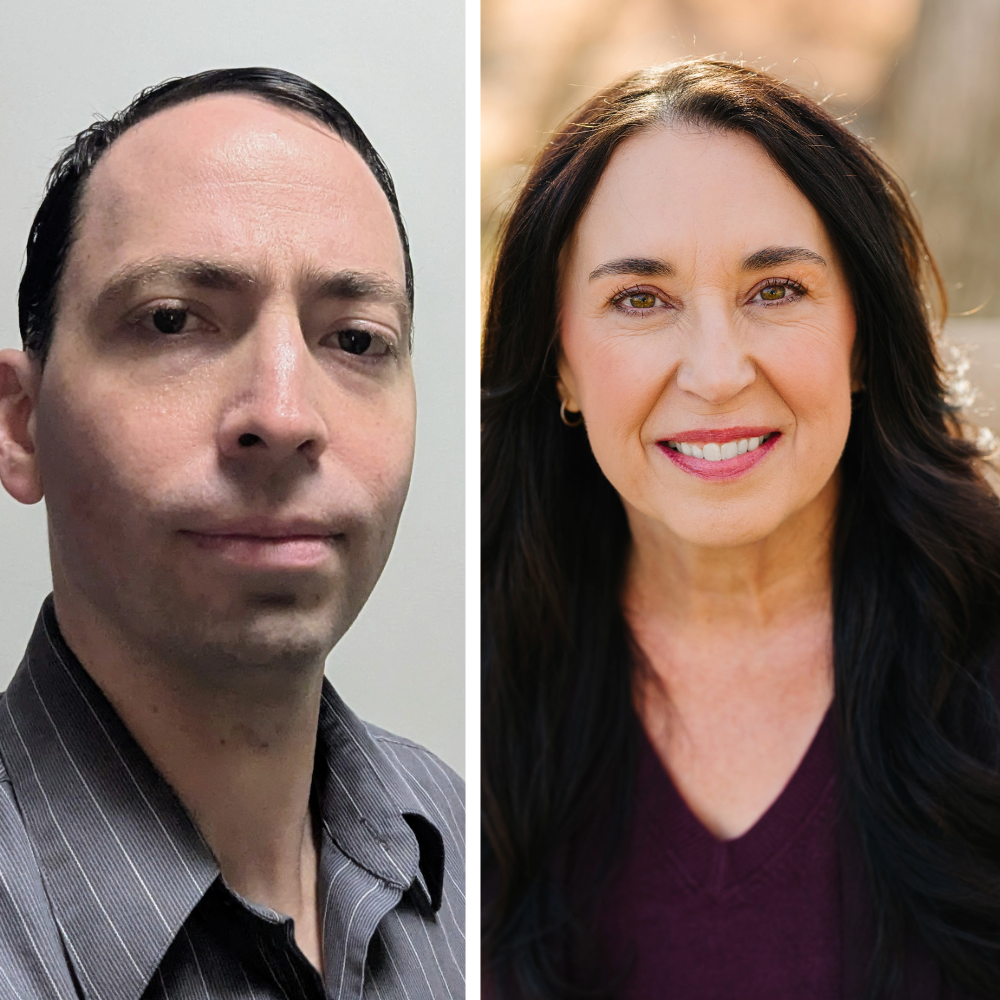
Kelly Smith
I chose to run for the Senate because I believe the relationship between state legislators and local governments should be collaborative and cooperative.
Now in my second term on the Cedar Hills City Council, I’ve seen firsthand how often the legislature imposes one-size-fits-all solutions that overwhelm communities and weaken local control. That experience has been frustrating — and it’s an area we can easily improve.
My top priority is to build on the strong relationships I have with local elected leaders, community groups, and residents so we can work as partners. I want policies shaped by the people they affect.
I will focus on the real issues facing our families: housing affordability, transportation, and education. My goal is to represent our community’s interests — not special interests or personal agendas. Legislation is a tool, not a weapon, and new laws should improve our quality of life, not make it more difficult.
My experience as a city council member, longtime community volunteer, former public school teacher, and small business owner gives me a practical understanding of how policies affect families and local governments.
I’ve worked directly with residents, educators, and local leaders to solve problems, balance budgets, and plan responsibly for growth. That background has taught me to listen first, communicate clearly, and be proactive and responsive.
I will bring a community first, conservative, solutions-oriented approach to the legislature.
I’m a mother of four and grandmother of seven. I’m a lifelong Republican and have served as a delegate and precinct chair.
My husband and I bought our first home in American Fork in 1992 where we raised our children for 22 years before moving to Cedar Hills in 2014. I taught kindergarten and second grade in Lehi for ASD and have served on numerous community boards and as a local and council PTA president.
Seth Stewart
Our government is expanding rapidly beyond its enumerated powers, often through programs that promise to lower the cost of living but consistently accomplish the opposite. Popular sovereignty requires people to stand in the way of overreach and hold government to its short list of enumerated powers, rather than allowing families and property to become pawns in a centralized plan. The state is reducing freedom in many forms. It increasingly mirrors federal overreach in the name of federalism. Cleverness is often mistaken for conservatism. We need discernment to recognize long-term consequences before it is too late.
Religious freedom, property rights, defendant rights including jury trials, and stopping further expansion of power are my highest priorities. Returning to Article I, Section 10 currency would end inflation permanently. I have made legislative proposals that would save Utahans thousands of dollars annually and resolve our most contentious electoral issues in a completely fair manner.
I encourage everyone to study the Constitution and compare it to what we see today. I review nearly 50 bills a day during the legislative session and publish my findings at SethAndrewStewart.com. I have testified against dozens of harmful bills and proposed solutions that return to long-forgotten constitutional principles. I appealed to the United States Supreme Court to uphold a defendant’s right to a jury trial when our state refused. I have seen how Utah families are harmed by our regulations and courts, and how legislative policy enables those outcomes. My role is to safeguard against radicalization and overreach.
I am a married father of six precious children. We have lived in American Fork for seven years since I graduated from BYU with an MS in computer science. My children’s future means everything to me. This requires us to stand in the way of injustice by learning and defending true principles. If we do not choose the future for our children, someone else will. I ask for your help in this most important effort.
Staff Writer | American Fork Citizen
As part of our commitment to keeping voters informed, the American Fork Citizen invited candidates in contested Republican races appearing at the upcoming county convention to participate in a candidate profile by responding to the same three questions.
By asking identical questions, we aim to provide voters with a clear and consistent way to compare each candidate’s priorities, experience, and vision for our community.
Here are the questions candidates were asked:
Why are you running for public office?
What are your top priorities if elected?
What separates you from other candidates?
If any of these convention races advance to a primary election, we will provide additional coverage during the primary cycle, May through June. Contested races for the general election will be covered in the September through October timeframe.
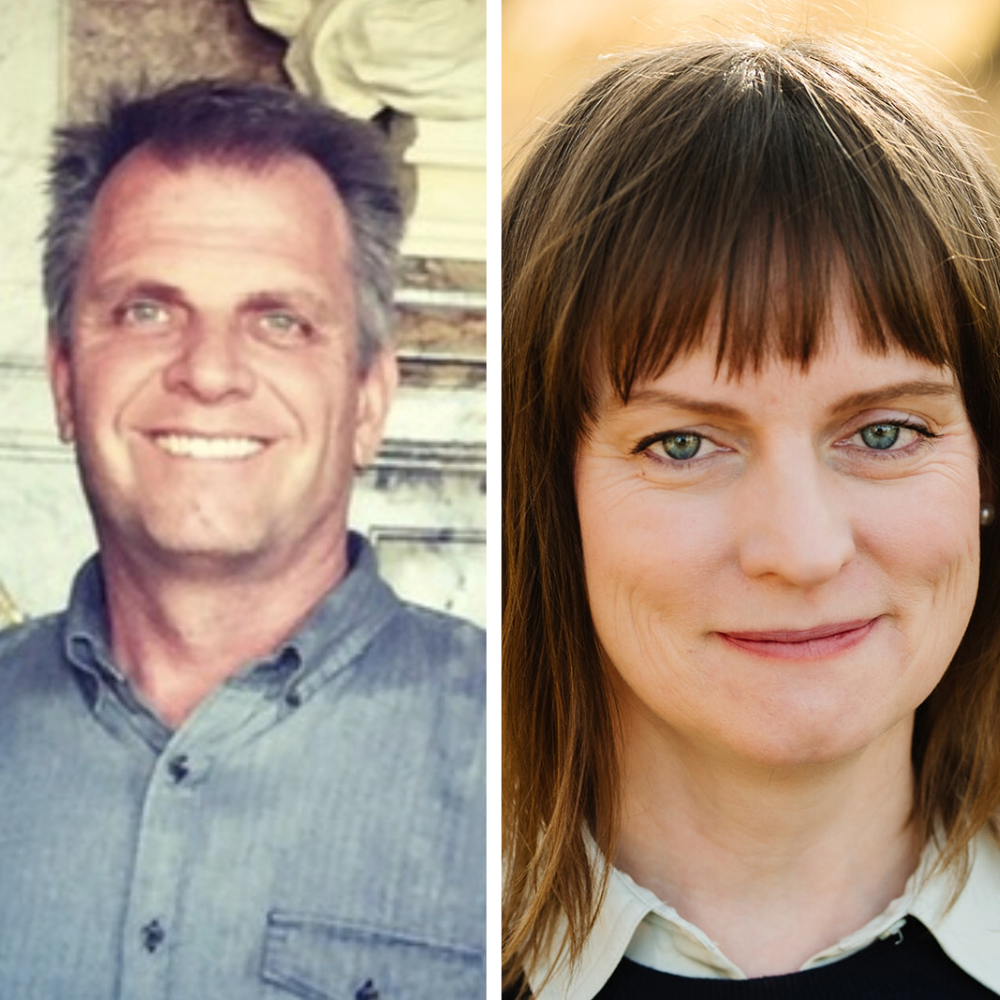
Tracy Nuttall
I’m running for state school board because I believe that when families and the public education system work together, we unleash an amazing potential for good in our society. As a state school board member, I’ll focus on the following priorities to help our district realize that potential:
Leading and supporting our area through the Alpine School District split so our students and educators come out stronger. Throughout this transition, I’ll use my legislative experience to advocate for our district’s evolving needs both on the state board and with the Legislature.
Advocating for local control to ensure students are the focus in the classroom. Those who are closest to students best address their needs—empowering parents, teachers, and administrators is the best way to ensure the individual needs of each student are met.
Ensuring responsible use of taxpayer money in education funding. Taxpayer money should be used wisely and efficiently.
I already have the skills and experience to represent our community at the state level. As a mom of kids in public school in Alpine, I bring personal, current experience of our schools and school district. I have also worked as an attorney for the Utah Legislature where I represented legislators and drafted public education bills that were ultimately implemented by the State Board of Education. Later, I worked as a contract attorney for USBE, ensuring better access to public education laws for districts and charter schools. Under my leadership, our district won’t get lost because of a learning curve.
I am a mom of three kids in public school—currently in elementary, middle, and high school. I’ve served on our elementary school’s PTA board and several times on our school community council. I graduated from BYU Law School in 2010 and since then I’ve worked as associate general counsel for the Utah Legislature and as a contract attorney for the Utah State Board of Education. I live in Alpine with my husband and kids.
Terry L. Hutchinson
I was on the Washington County School Board from 2016-2024. The Utah State School Board didn’t do enough to support our community values and didn’t allow for options that worked for us. The State School Board also doesn’t properly prioritize parents’ rights regarding the education of their children, and they often go against the majority of voters in the State. I totally support public education and the educators, but a parents’ right to make decisions regarding their children is fundamental. If elected, my goals are: To empower local school boards to align with their communities; and to protect parent rights and improve student safety. By doing so, student learning and well-being will improve. I also want to ensure that the USBE reflects the educational values of the State of Utah and protect our future.
I’m an attorney with decades of experience in two states. I ask the hard questions and get answers. During my 8 years as a local Board member, our Board built several schools (due to rapid growth) without raising taxes, changed our building process to pay-as-you-go (saving tens of millions of dollars per year in interest); worked with the administrative system (improving its accountability to the community and increasing the quality of its new hires); protected parents’ rights and led the fight in Utah to remove inappropriate materials from our school libraries. I also responded to all my constituents and their issues.
My wife and I both grew up in Alpine and graduated from American Fork High. We have five children and nine grandchildren. I served in the Army and practiced law in Utah and Nevada for more than three decades. I have served on the Washington County Library Board for eight years and was elected twice to the Washington County School Board before returning to Alpine, where our parents still live.

Staff Writer | American Fork Citizen
As part of our commitment to keeping voters informed, the American Fork Citizen invited candidates in contested Republican races appearing at upcoming county conventions to participate in a candidate profile by responding to the same three questions.
By asking identical questions, we aim to provide voters with a clear and consistent way to compare each candidate’s priorities, experience, and vision for our community.
Here are the questions candidates were asked:
Why are you running for public office?
What are your top priorities if elected?
What separates you from other candidates?
If any of these convention races advance to a primary election, we will provide additional coverage during the primary cycle, May through June. Contested races for the general election will be covered September through October.
Tad Rasmussen:
I am running for Utah County Auditor because taxpayers deserve a government that is transparent, efficient, and accountable. With my professional background in business management, accounting, and procurement, I have the expertise to ensure your tax dollars are spent legally and wisely.
Top Priorities. Tax Rates: Rates are currently calculated on manual spreadsheets—a single keystroke error can lead to massive financial discrepancies. I will work with stakeholders to implement tax-rate software to remove human error and ensure your tax bill is 100% accurate, every time. Budget Process: Currently, the process excludes Procurement, leading to underestimated costs in budget requests. By involving Procurement at the start, we gain a true understanding of costs. Furthermore, Procurement can obtain items for approximately 10% less from suppliers than individual departments can from salespeople. It is time to bring professional oversight to the beginning of the budget cycle.
My competitive advantage lies in the unique combination of professional procurement expertise and non-profit sector financial management. Unlike other candidates, I am a NIGP Certified Procurement Professional (NIGP-CPP) with a deep understanding of how government procurement works.
I’ve managed complex supply chains, giving me the “boots-on-the-ground” experience to identify waste that standard audits miss. By merging accounting principles with strategic sourcing, I offer more than just oversight; I provide a proven roadmap to streamline operations and save Utah County taxpayers over $1 million annually.
I’m a dedicated husband and father with a background in business management and accounting. I’ve spent my career streamlining processes to maximize efficiency. I’m not a career politician; I’m a fiscal expert passionate about protecting your tax dollars. I’m running for Utah County Auditor to bring professional transparency and common-sense financial leadership to our local government. I am focused on results and accountability, not on political climbing.
Gina Tanner
I’m running to strengthen the financial future of Utah County and its taxpayers. My commitment is simple: build trust by continually improving transparency and accountability for every tax dollar. I’ve spent my career focused on responsible budgeting, sound financial management, and rigorous oversight.
While many candidates share conservative values, my education and experience set me apart. The Auditor’s Office must be led with integrity, competence, and a results-driven approach that protects taxpayers. The County Auditor is elected to be directly accountable to the people, to ensure responsible budgets, safeguard public funds, and uphold rigorous oversight. These values shape the vision and culture I will bring to the office. I love Utah County. For 20 years, I have dedicated myself to serving the people who call this place home. I am committed to protecting the values that make Utah County strong for our citizens today and for generations to come.
I have direct, hands-on experience in budgeting – one of the core functions that protects taxpayer dollars and ensures transparency. I understand how financial systems work in practice, not just in theory, and I know how to evaluate them for efficiency, compliance, and risk. I have over 10 years’ experience managing teams, an often overlooked but critical part of the job. I have a master’s degree in accounting, with extensive knowledge of the government accounting standards and best practices critical to the Auditor’s duties. This combination of advanced education and real-world experience ensures strong, independent oversight from the start.
Gina is a lifelong Utah County resident. She and her husband of 25 years settled in Benjamin and have three children. Gina believes effective auditing is not about politics or punishment – It’s about accuracy, accountability, and constant improvement. She supports responsible modernization that increases efficiency for taxpayers and strengthens oversight without disrupting operations. Her commitment is clear – protect taxpayer dollars, ensure accuracy and transparency, and provide steady, independent leadership that earns public trust.
Travis Hoban
I decided to run for Utah County Auditor because the office plays a critical role in protecting taxpayer dollars, ensuring accountability, and maintaining public trust—especially as the county continues to grow rapidly. Recent significant errors by the Auditor’s Office and the pace of budget growth underscore the need for strong, independent oversight and focused leadership in the Auditor’s Office.
My top priorities are transparency the public can understand, accountability through independent and professional audits, and fiscal discipline. I want financial information to be clear and accessible so taxpayers can see how their money is being spent. I also believe the auditor function must be emphasized—strengthening internal controls, improving audit quality, and identifying inefficiencies before they become problems. Ultimately, my goal is to ensure county government grows responsibly, lives within its means, and earns the confidence of the people it serves.
I bring a combination of professional auditing expertise, executive leadership, and local government experience. I hold a professional internal auditor credential and have led and participated in numerous audits in the highly regulated banking and fintech sectors. I currently serve as a Chief Technology Officer and previously was a Vice President at a large bank, managing teams, budgets, and complex operations. In public service, I’ve served six years on the Provo City Council’s Audit Committee, working directly on budgets, oversight, and accountability. This blend of technical expertise and leadership uniquely prepares me to lead the Auditor’s Office effectively.
I’m a husband, father, and longtime Utah County resident. Family and faith are central to my life and guide how I serve and lead. I currently serve on the Provo City Council and work professionally as a Chief Technology Officer. I’m running for County Auditor to bring independent oversight, sound judgment, and disciplined stewardship to county government, with a focus on protecting taxpayers and strengthening public trust.

Rob Shelton | American Fork Citizen
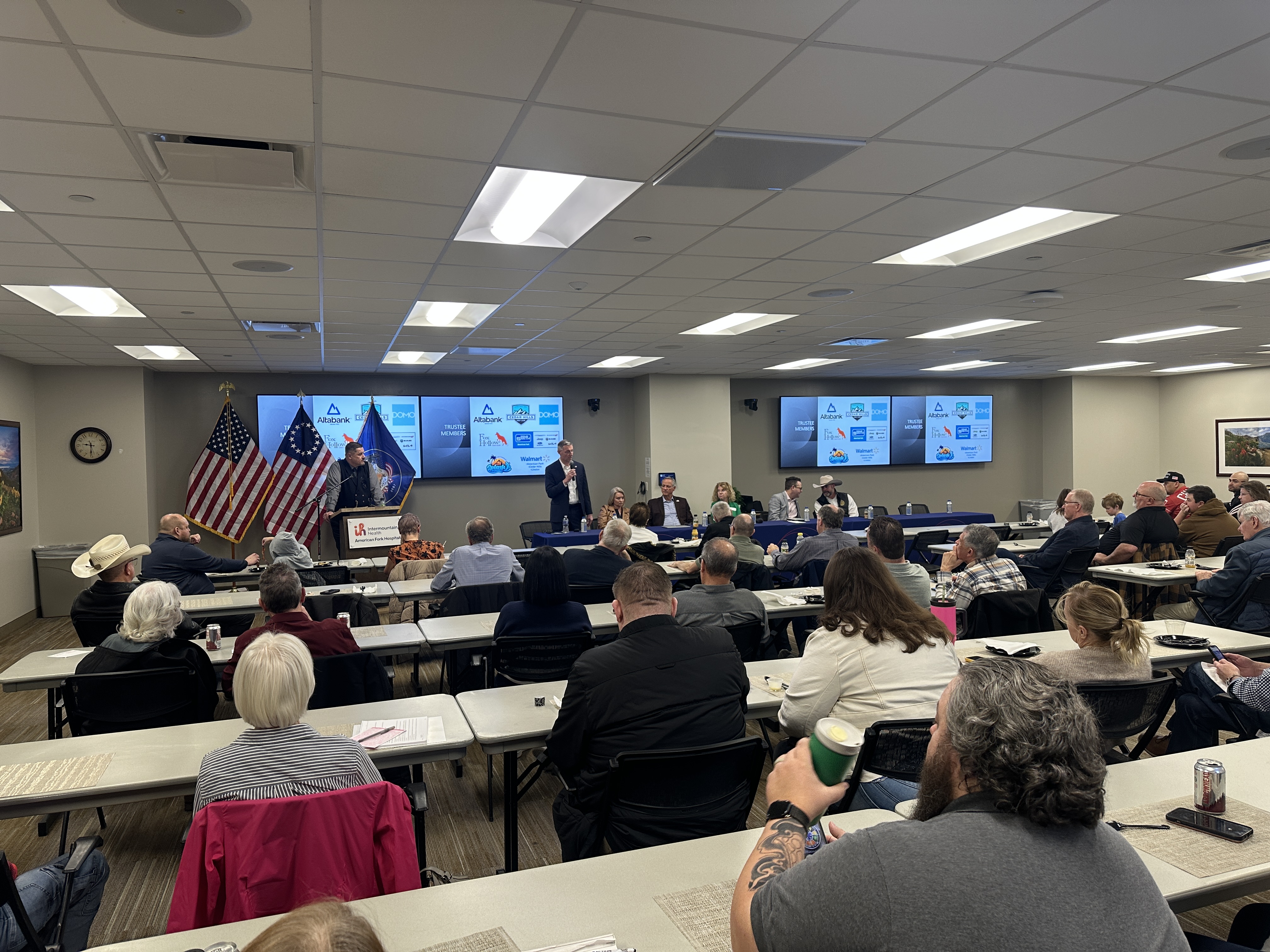
Residents filled a conference room at American Fork Hospital early Saturday for a wide-ranging discussion on growth, public safety and infrastructure during the latest Pancakes and Politics forum.
The Feb. 7 event, hosted by the American Fork Chamber of Commerce, brought together U.S. Rep. Mike Kennedy, state lawmakers, education leaders and Utah County Sheriff Mike Smith for nearly two hours of questions and discussion. The long-running free breakfast series gives residents direct access to elected officials and a chance to raise concerns about issues affecting daily life across Northern Utah County.
Washington vs Main Street
Kennedy, who previously served in the Utah Legislature before his election to Congress, opened the forum by expressing appreciation for the event and its informal setting.
“I love coming here to be with you,” Kennedy said. “This is a great venue.”
He framed much of his remarks around limiting federal influence while strengthening state and local control, a theme he returned to repeatedly throughout the morning.
“I want Utah bigger, and I want Washington, D.C., smaller,” Kennedy said.
Kennedy told attendees that many decisions made in Washington are better handled closer to home and argued that reducing federal power ultimately benefits families and local communities. He pointed to recent federal tax changes as an example, saying they leave more money in residents’ hands rather than in the federal government’s.
“Keeping taxes low — money in your pocket — disempowers Washington,” Kennedy said.
One attendee asked about tariffs and whether they are actually hitting local business owners. Kennedy said he has long opposed tariffs as a policy tool.
“I’ve never been a fan of tariffs,” Kennedy said. “I think tariffs are attacks on the people.”
Still, he noted that tariffs are sometimes used as leverage in trade negotiations. Kennedy added that while he generally opposes tariffs, he echoed President Trump’s argument, saying, “If tariffs are such a terrible idea, why does every country on the planet leverage them against us?”
Kennedy also pointed to examples of tariffs being used as a negotiation tool, particularly in discussions about pharmaceutical pricing. Kennedy emphasized his concern about the high cost of prescription drugs in the United States compared with other countries.
Kennedy also warned residents not to get distracted by the constant churn of headlines coming out of Washington, describing the nation’s capital as “a bit of a mirage,” comparing the media cycle to “a kitten with a laser pointer.” He said the White House often throws out “another shiny object” that pulls attention from one issue to the next, adding that “you will never catch that light, because there always is going to be another shiny object for you to chase.”
He mentioned flashpoints, such as headlines about Greenland. Kennedy said issues that dominate the news can disappear quickly, even as major policy changes move forward quietly. “I’m good with being a workhorse, not a show pony,” he said, emphasizing focus on steady legislative work rather than headline-driven politics.
Before leaving early for another commitment, Kennedy addressed election policy, saying he opposes federal involvement in the administration of state and local elections.
“I am not in favor of nationalizing our elections,” he said, adding that election administration should remain a state responsibility.
Traffic gridlock and Utah County underfunded
While national issues set the tone early, much of the forum focused on local concerns — especially traffic congestion and funding in Utah County.
State Sen. Brady Brammer answered the question about transportation being underfunded in Utah County. “We’re seeing transportation dollars are currently being spent in Davis County,” said Brammer. According to Brammer, Utah County is currently underfunded compared to Davis County. He mentioned how many state elected officials representing Utah County are working hard to reverse that trend. “We’ve done a lot of what I call constant, gentle pressure on [UDOT] to program the future of transportation…It’s too late. I agree completely. But we’ve got several billion, that’s not million, billion dollars of road projects that are programmed into Utah County.”
Brammer also addressed the question about plans for a flyover connecting Meadows Drive to the American Fork Front Runner station. Meadows Drive is near the American Fork/Lehi border and is a major retail hub. He commented that this project had stalled for years because it fell between state and local funding responsibilities. Studies date back to 2015, but the project has yet to move forward.
Brammer said lawmakers are now working to include funding for an environmental study in the Legislature’s end-of-session budget adjustments, a necessary step to move the flyover project higher on the state’s priority list.
He cautioned residents not to expect immediate construction but said progress is possible after years of delay.
Public safety and jail strain
Public safety was another point of discussion. Utah County Sheriff Mike Smith offered a candid assessment of the challenges facing the county as its population grows.
Smith said the Utah County Jail, built nearly 30 years ago, is under increasing strain as inmate populations become more complex, particularly with mental health and substance abuse issues.
He said recent changes in criminal law have contributed to inmates cycling through the system with more severe conditions, placing additional pressure on staff and facilities.
Smith said renovations are underway to expand medical and mental health treatment areas inside the jail, but those changes will likely reduce the number of available inmate beds.
“I don’t want to be like Salt Lake County, where we’re just releasing people onto the street because we have nowhere to put them,” Smith said.
Smith also addressed concerns about public demonstrations and safety during large gatherings, emphasizing that constitutional rights come with clear limits.
“You have a First Amendment right to come and peacefully assemble,” Smith said. “But you don’t have a right to disrupt traffic or endanger others.”
He said law enforcement agencies in Utah County monitor large gatherings and are prepared to respond if demonstrations move beyond lawful assembly.
Utah Lake making a comeback
State leaders also discussed progress at Utah Lake improvement, an issue of growing interest as shoreline access and recreation continue to expand. Brammer highlighted the work of the Utah Lake Authority, which he helped establish in 2022.
He said roughly 85% of invasive phragmites around the lake have been removed, significantly improving access and habitat conditions. Work continues to control carp populations, which contribute to water turbidity and algae blooms.
Brammer said recent investments have shifted Utah Lake from a long-standing liability to a resource with increasing recreational and environmental value.
Utah County education underfunded
Education issues were also raised during the forum. Utah State Board of Education member Cindy Davis said Utah County faces unique challenges because of its rapid growth and large student population. She also said that, like transportation funding, Utah County might not be getting its fair share of educational funding.
“We have more students in Utah County per taxpayer than other areas do. There are some formulas at the state level that help to offset, so there’s a bit more equalization in the funding. But still, we have less funding per student than a lot of areas in the state,” said Davis.
She added that Utah’s math performance has risen dramatically over the past 15 years. Utah’s eighth graders are now tied for second in the nation, just one point behind Massachusetts, while fourth graders are tied for third, two points behind Massachusetts. She emphasized that although there is still room for improvement, these gains represent significant success for Utah’s schools and educators.
Stay involved
Despite the wide range of topics, the forum maintained a focus on community engagement and practical problem-solving. Officials repeatedly encouraged residents to stay involved, attend meetings and communicate directly with their elected representatives.
Smith closed his remarks with a reflection on trust and local government, urging residents to rely on firsthand information rather than speculation.
“We’re your local government,” Smith said. “We live here. We see the same problems you do, and we want to protect what makes Utah County a great place to live.”
The final pancakes and politics for this legislative session will be on February 28 at 9 a.m. The meeting will take place in a conference room just East of the emergency room at American Fork Hospital.
Annie Knox | Utah News Dispatch
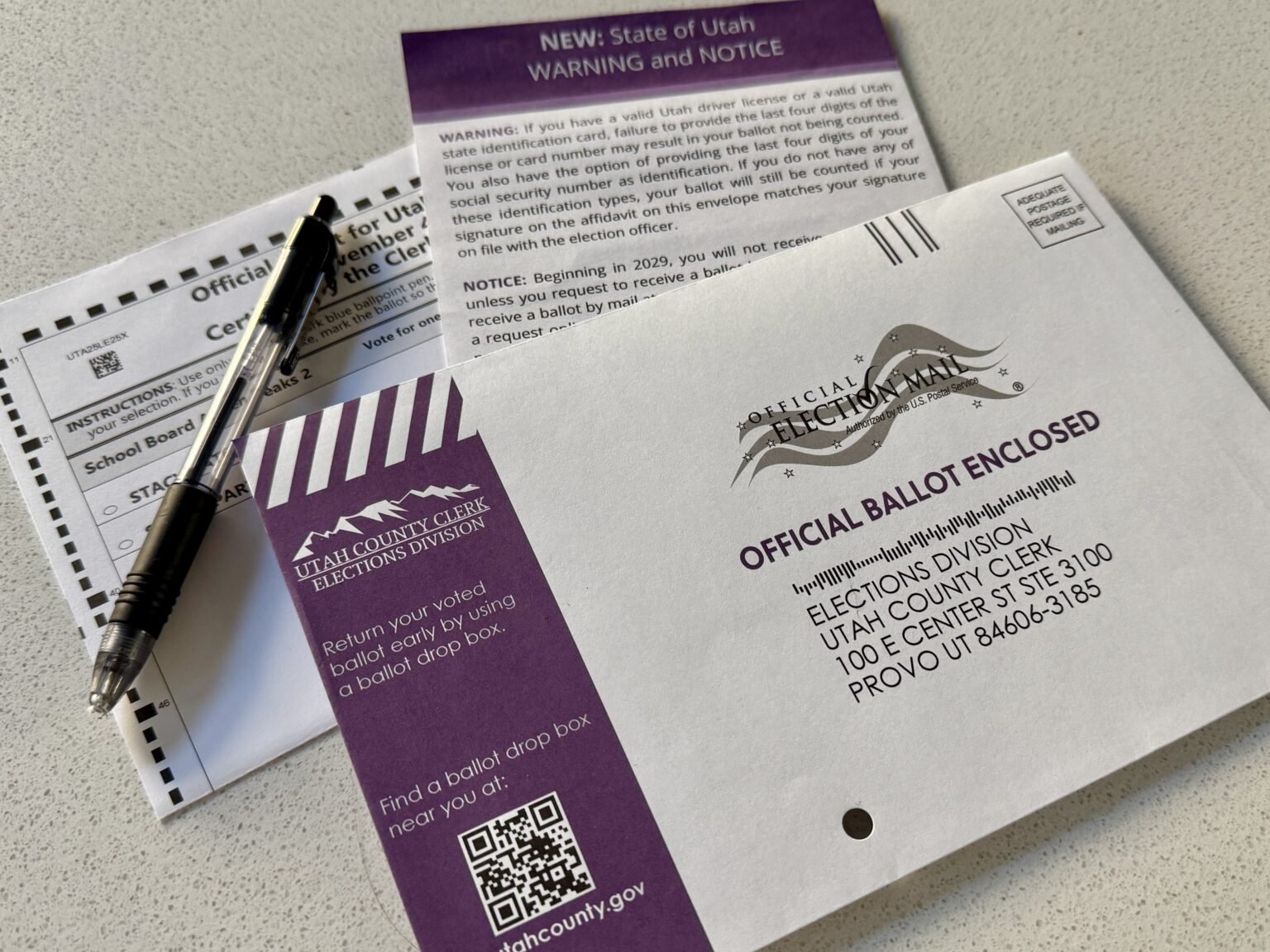
Utah lawmakers advanced a proposal Monday that would require voters to prove they are U.S. citizens if election officers lack confirmation and get in touch seeking documentation.
Utah’s chief elections officer, Lt. Gov. Deidre Henderson, said last week that an ongoing inquiry by her office has not confirmed any cases of noncitizens voting in a Utah election. One noncitizen voter registration was found in the review.
A prior review found four people without citizenship managed to register to vote in 2018 or 2019 due to a glitch on a state website. Her office said it’s not clear whether they voted and that local prosecutors are investigating.
Bill sponsor Rep. Cory Maloy, R-Lehi, told colleagues on the House floor Monday that if even a few noncitizens make their way onto Utah’s voter rolls, “that’s a few too many.”
“This bill helps protect the meaning of citizenship,” Maloy said.
The House approved HB209 in a 62-13 vote, sending it to the Senate for approval.
Critics say the move isn’t needed and could pile greater administrative and financial burdens onto county election offices, noting that note voters already must attest they are U.S. citizens.
Rep. Sahara Hayes, D-Millcreek, said during the House debate that she’s not opposed to the concept behind the measure.
“But as the recent audit pointed out, this isn’t really an issue that needs solving here in Utah,” Hayes said. “We only had one noncitizen on our voting rolls, and they did not vote.”
The bill sets a process for election officers to investigate a voter’s citizenship status if existing state and federal databases don’t answer the question. For the November general election, the proposal requires elections officers to send notice to voters by July 1 if they need to provide proof of citizenship, then give them 30 days to respond.
Maloy said Utah doesn’t have authority over federal elections, so voters could cast their ballots in federal races even if his proposal becomes law and they don’t comply with verifying their citizenship.
Rep. Angela Romero, D-Salt Lake City, questioned whether the bill would allow any elected official in Utah, not just those overseeing elections, to determine who can and can’t vote. Maloy said only those in charge of running elections could do so.
This story was originally published by utahnewsdispatch.com and written by Annie Knox. Adjustments for style and clarity have been made.

Sally Francom | Lehi Free Press
Utah County Commissioner Skyler Beltran was elected by his fellow commissioners to serve as Chair of the Utah County Commission for 2026 during the Commission’s most recent meeting. Amelia Powers Gardner will serve as Vice-Chair.

The leadership change comes at a pivotal time for the county. Commissioners Amelia Powers Gardner and Brandon Gordon both announced they will not seek reelection. With their upcoming departures, Beltran will become the senior commissioner beginning in 2027, as newly elected commissioners join the governing body at that time.
According to Utah County Code, as Chair, Beltran will set the Commission’s agenda, conduct Commission meetings and serve as the spokesperson for the County while continuing to represent residents from across Utah County in everyday matters.
“I’m proud to represent the people of Utah County each and every day,” Beltran said when reached for comment about being elected Chair.

Rob Shelton | American Fork Citizen
The 2025 general election winning count shows Brad Frost winning his third term as mayor with 4,863 votes to George Brown’s 1,364. That’s about 78% of voters choosing to re-elect Frost as Mayor through 2029.
In the City Council race, Ryan Hunter had the highest votes with 3,873, followed by Staci Carroll with 3,843, Deb Anderson with 2,990, and Seth Stewart with 790. With the highest two vote counts, Hunter and Carroll secured their re-election to the council.
The inaugural Aspen Peaks School Board elections also drew attention, with two races on the ballot — Seats 6 and 7. In Seat 6, Jeanne-Marie Burrows edged out Tyler Bahr by only 99 votes, 1,715 to 1,616. Seat 6 includes portions of both American Fork and Lehi.
In Seat 7, Jason Theler finished on top with 2,876 votes, ahead of Stephanie Jones, who had 2,041.
Politics
Highland City Councilor: Utah County Republican Party issuing endorsements in municipal elections “Deeply troubling”
Dear Editor,
This year’s municipal elections mark a historic and troubling shift for Utah County. For the first time, a partisan political party has chosen to endorse candidates in races that have always been nonpartisan. These endorsements reportedly required both a fee and a pledge of loyalty to the party’s platform.
Early results suggest that these party-endorsed candidates have swept the nonpartisan races. This development raises serious concerns about the future of local governance, voter choice, and the integrity of Utah’s long-standing tradition of nonpartisan municipal elections.
I urge your newsroom to investigate and report on this significant change in our county’s electoral landscape. Transparency and public awareness are vital as we navigate this new and concerning chapter in Utah’s political history.
As a current city council member, I have served on the Legislative Policy Committee of the Utah League of Cities and Towns, where I’ve worked to defend local authority from state overreach—often pushed through Republican-sponsored bills. I am grateful that I have never pledged loyalty to any party, as doing so would compromise my ability to put my city’s interests first. The idea of requiring such a pledge for a local race seems deeply misguided and contrary to the spirit of local service.
Thank you for your attention to this important issue.
Ron Campbell
Highland City Council
By Rob Shelton
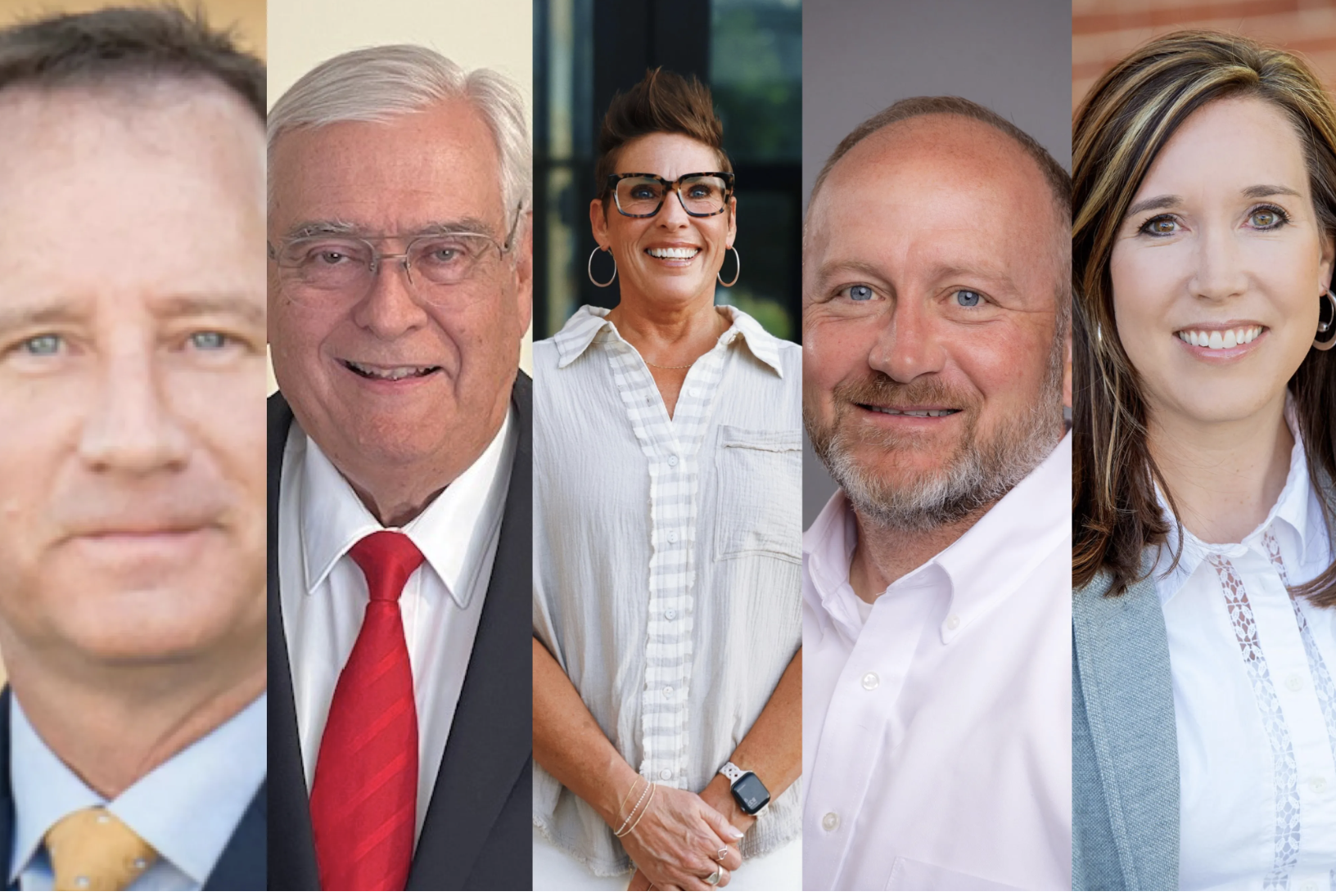
The preliminary count shows Brad Frost leading with 2,714 votes to George Brown’s 754. That’s about 78% of voters choosing to re-elect Frost as Mayor through 2029.
In the City Council race, Ryan Hunter and Staci Carroll are essentially tied for the two open seats. Hunter earned 2,160 votes, while Carroll finished just seven votes behind at 2,153. Deb Anderson, a first-time candidate, pulled in 1,619 votes, and Seth Stewart placed fourth with 457 votes.
The inaugural Aspen Peaks School Board elections also drew attention, with two races on the ballot — Seats 6 and 7. In Seat 6, Jeanne-Marie Burrows appears to have edged out Tyler Bahr by only 66 votes, 928 to 862, in early results. Seat 6 includes portions of both American Fork and Lehi.
In Seat 7, Jason Theler finished on top with 1,577 votes, ahead of Stephanie Jones, who had 1,193.
Election officials released this first batch of results Tuesday night, noting that provisional and absentee ballots are still to be counted.
Matt Hemmert | American Fork Citizen
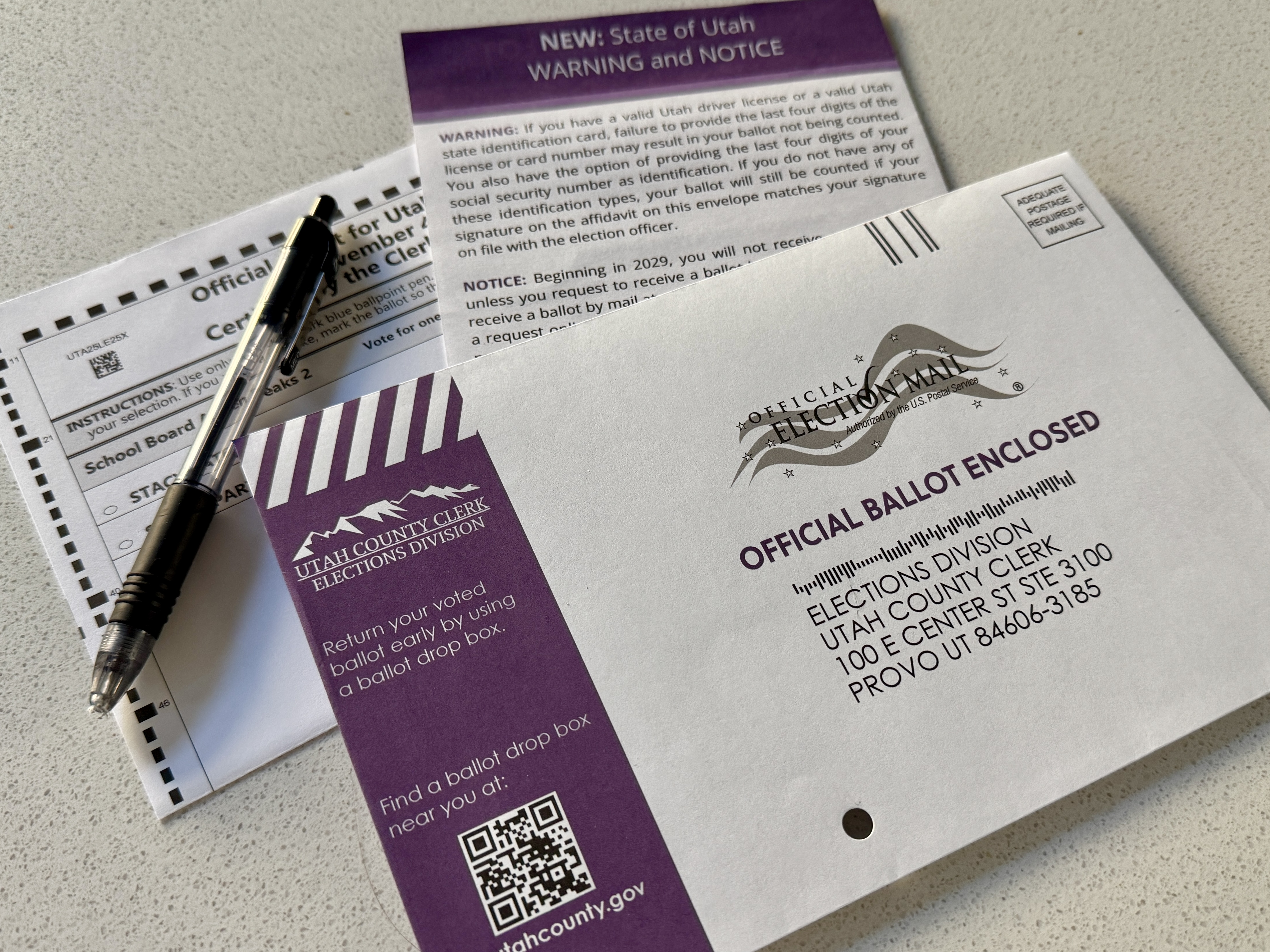
Many Utah County voters expressed concern and confusion about the voter information and instructions they received from the Utah County Clerk’s office regarding the general election ballot.
The voting instructions included a warning that voters must include the last four digits of a valid Utah driver’s license, state identification card, or Social Security number, or risk “your ballot not being counted.” However, ballot envelopes do not designate a place for a voter to provide that information.
On October 20, the Utah County Clerk issued a clarification that only a signature is required for a ballot to be returned and that voter instructions align with a new Utah voter ID law that isn’t yet in effect. County clerk Aaron Davidson explained that the county included a place for identification numbers on the primary ballot, but that Davidson didn’t like it and omitted it from general election ballots. Rather than reprinting voter instructions, he continued, he decided to send incorrect ballot information and answer questions afterward.
What is required on my ballot envelope?
After sealing your ballot in the return envelope, your signature in the designated space on the envelope is all that is required to return your ballot.
How do I submit my ballot?
You can submit your ballot envelope in multiple ways.
- Through the U.S. Postal Service with no postage required. Please note, however, that a ballot must be received by the Utah County Clerk’s office no later than 8 p.m. on November 4, regardless of when you place it in the mail.
- By dropping it off at the designated ballot drop box no later than 8 p.m. on November 4. Lehi’s drop box is located on the south side of the Lehi Public Safety Building (120 N 100 E, Lehi). Other drop box locations can be found on the Utah County Elections Division’s website.
Can I vote in person if I want to?
Yes, you can vote in person.
- Through November 3, you can vote early in person at the Utah County Elections Office (100 E Center Street, Provo).
- On November 4 (Election Day), you can vote in person at the Broadbent Community Room in the Lehi Public Safety Building (120 N 100 E, Lehi). Other vote centers can be found on the Utah County Elections Division’s website.

William (Bill) Rolland Pulley

The Ruth’s “Fiddler on the Roof” a familiar tale of faith, family and change

Karma Lee Poulson Swain

‘BIGGEST LOSER’ CONTESTANT FROM AF DIES TRAGICALLY

Aspen Peaks School Board “Meet the Candidates” night recap

Tragedy Strikes American Fork: Local Couple Found Dead in Apparent Murder-Suicide
-

 Sports1 month ago
Cavemen celebrate 1976 state basketball champs
-

 Schools1 month ago
AFHS football team earns national honors for good sportsmanship
-

 Local News1 month ago
‘It’s horrible’ — Utah snowpack hits worst levels on record
-

 Opinion1 month ago
OPINION: We Still Need Public Libraries
-

 Local News1 month ago
Utah’s massive data centers seek to build new power sources
-

 Obituaries1 month ago
Bruce George Storrs
-

 Local News1 month ago
Kem C. Gardner Policy Institute expert shares real estate outlook
-

 Local News1 month ago
Community rallies around victim of Lehi hobby store theft
-

 Local News1 month ago
Skyridge students tie quilts for global relief effort
-

 Obituaries1 month ago
Mary Elizabeth Ballard