
Opinion
Alpine Board Member Clements: Timing and process of split concerning

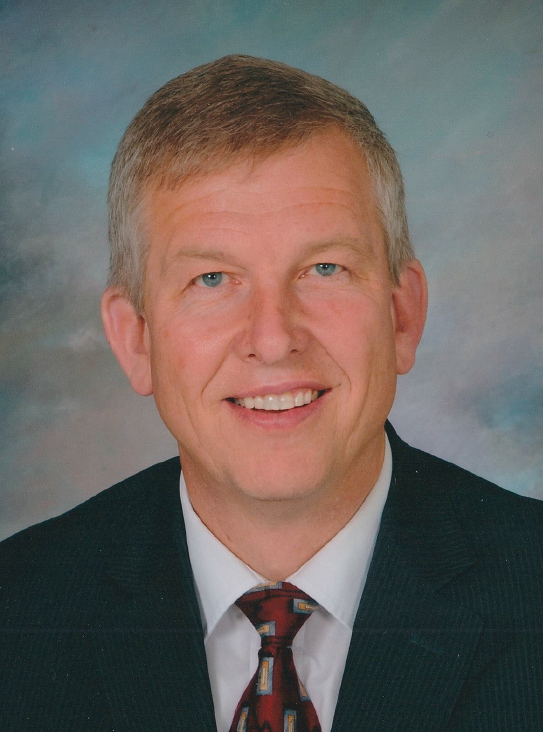
The recent push to split Alpine School District has stirred emotions and concerns, but before we hastily fracture Utah’s largest and most successful school district, it is imperative to ask: Is this the best course for our students, our taxpayers, and our community? The short answer is no. While the notion of more localized governance and control may seem attractive, the current push for a district split is happening at the wrong time, in the wrong way, and for the wrong reasons.
Splitting a district isn’t inherently a bad idea. In fact, there are times when a district’s growth and diversity make dividing it beneficial for all. West of the district, rapid population growth and shifting demographics offer valid reasons for considering such a move. The Alpine School Board even voted to put the idea on the ballot, signaling a willingness to explore the option with input from all affected parties. This democratic process would have allowed all voices to be heard, creating an environment where any decision would be shared and accepted by the entire community. Unfortunately, that’s not what’s happening.
The current approach, driven by interlocal agreements, bypasses this inclusive process. Instead, a small percentage of voters are in a position to dictate the future for everyone. It’s taxation without representation, plain and simple, a concept we rightfully rejected at this nation’s founding. Worse yet, these interlocal agreements seem motivated more by potential tax benefits and political representation than by the well-being of our students. This is not how decisions that will affect the education of thousands should be made.
Timing is equally concerning. Critical projects—such as building a high school in Saratoga Springs and renovating American Fork and Pleasant Grove high schools—are in the pipeline and are designed to be completed with minimal tax increases. If the district splits now, these projects may be delayed, underfunded, or left in limbo. Shouldn’t we first ensure these necessary improvements are finished before we complicate the process with a split? If a division of the district is truly necessary, it should occur when all parties can move forward on solid ground, not when students and taxpayers alike will be left holding the bag.
Many have asked if the split will lower taxes. It’s a reasonable question, but the answer, based on extensive studies, is a resounding no. Alpine School District commissioned an in-depth analysis, which determined that the district is performing exceptionally well and should remain intact. Should a split occur, the experts recommended only a two-way division, which would still require a moderate tax increase. A three-way split, as some have suggested, would lead to skyrocketing costs for many areas, as we’ve seen with the Canyons/Jordan split, where taxes increased by 25% in both districts. It took 15 years for those communities to recover—do we really want to relive that painful experience?
Furthermore, the promise of better representation in smaller districts is uncertain. Voters may feel they will have more influence in local decisions, but new school boards may not fulfill those expectations. Will they build schools more rapidly? Will they keep taxes low while maintaining small class sizes? We can’t know, and these uncertainties pose significant risks.
Most troubling of all, a split threatens to undermine the quality of education we currently enjoy. Alpine School District’s exceptional programs, from Dual Language Immersion to Advanced Learning Labs, are sustained by its size and resources. A smaller district may struggle to offer these opportunities at the same level, leaving students with fewer options. Teacher training and professional development would also suffer, as smaller districts lack the capacity to provide the same high-quality support. Our top educators, many of whom have chosen Alpine for its strong support system, may retire early, leaving classrooms filled with less experienced teachers.
And then there’s the leadership vacuum. A three-way split could leave parts of the district without our visionary superintendent, whose leadership has been instrumental in making Alpine a beacon for educators statewide. Do we want to gamble the future of our children’s education on unknown and untested districts?
If voters are truly willing to increase taxes, let’s direct those funds toward enhancing our current programs and improving outcomes for students. There is no evidence that these interlocal agreements will lead to better educational experiences for our children. In fact, they’re more likely to diminish the quality of education and create long-term financial strain.
Splitting Alpine School District is not a decision to be taken lightly. Let’s ensure that when and if it happens, it’s done in a way that benefits every student, every taxpayer, and every community member—not just a select few. Now is not the time, and this is not the way.
The opinions shared are entirely my own and do not reflect the views or positions of the Alpine School District or its officials.
Dr Mark Clement
Pleasant Grove Utah

Leave a Reply to John GaddCancel reply
Some books cost more than others. I don’t mean the dollars we pay for them. I mean the work done by the author and others, despite life’s challenges, great and small.
If you’ve seen the professional musicians in my family perform, you know they’re wonderfully talented. I watch them offstage too, so I see how much work they’ve invested to become the musicians they are, besides their preparations for specific performances. They never stop working and learning.
Writing is like that. About a dozen years ago, I decided to write fiction. That is, I decided to learn to write fiction. For decades I had written other things, with some success and sometimes professionally. But writing fiction is a different adventure.
Since then, my books and tales have won some awards, and I spend some enjoyable hours teaching other writers. But writing is no less work than it was at the beginning, and I’m still learning.
I’m in good company. In 2024, celebrated author Katherine Paterson told some writers in Provo that she still faces her next book with trepidation. She knows how to write the many books she’s written, but she doesn’t yet know how to write the next one.
Months or years of research may go into the fiction and nonfiction we read, even before the writing. Then it can take months or years to finish the first draft of a book. First drafts are a mess; no veteran writer expects otherwise. But we celebrate them. Most people who think they have a book in their heads never get that far.
The revision and editing passes to produce the final draft may be numerous. Other people help the author with those, including editors and critique partners. If there are a hundred things to worry about when drafting a book, there are two hundred when revising and editing. It’s real work, but it’s how we make a book.
For the writer, revision is partly a process of exploring questions that involve the reader: What am I trying to say? What am I actually saying? What experience do I want to create for the reader? What is the reader’s actual experience? We can partially measure that last one by having beta readers read a manuscript when it’s nearly ready. Meanwhile, someone has to worry about other things too, including cover design, printing, distribution, marketing and more.
As a reader, when I finally hold a book in my hand, I have at least a general sense of what it cost the author and others to create it, and sometimes I know details. Like those musicians I mentioned, even if the writer and everyone else are uncommonly talented, they still labored to produce this book — and to learn their art and their craft. I want to honor that.
As we wander deeper into the 21st century, I grow more conscious of a more important way to honor their work: being a good reader — which many people are instinctively, but others don’t seem to expect of themselves. I can focus on what the writer says, the experience the writer creates for me. I can read to connect with other minds, to find whole worlds to explore.
Where else would I focus? On myself, that’s where; like Narcissus looking for a mirror.
Does the writer spoon-feed me so I don’t have to think too much? Does the writer tell me exactly what I want to hear? Has the writer carefully avoided every possible misunderstanding and misinterpretation, and every thought that might challenge me, and every word or phrase that might offend me, now and forever? If not, how triggered and offended can I be? How can I misread the book to make it about me and to pull the author down?
By contrast, what I owe the creators of a book is what a good reader does in any century. I meet the writer halfway. I’m open to new things, and new views of old things. I’m patient while stories and arguments develop. I allow others to disagree, and I’m willing to hold in my mind some thoughts that conflict with my own. I seek the experience of reading, not continuous affirmation sprinkled with a few fragments of offense, imagined or otherwise, to feed my self-righteous indignation.
Finally, do you wonder what I think the author owes the good reader? Many things. Here are three: honesty, trust, and thanks for reading.
David Rodeback
American Fork
bendablelight.com

Duane Gines | Guest Writer
I will start by quoting Peace Pilgrim: “Every good thing we think, say, and do has a positive effect whether we see the results or not and ripples on and on forever.” Every interaction, even a “tremendous trifle,” can uplift or diminish others.
Building on this idea, an attitude of gratitude determines the altitude of our living, regardless of our longitude or latitude. Let’s consider how gratitude enhances the ripple effect that we have on others.
My daughter challenged me to set a goal to practice Lent this year. Lent is a Catholic tradition that starts on Ash Wednesday and ends on Easter. Usually, during Lent, people give up something they like that isn’t particularly beneficial to themselves or others. However, it can also mean committing to improve in some area. For my goal, I chose to increase gratitude. Each day, I go over my “gratitude list” and recall in detail people who have blessed my life. I try to visualize the specific events where this happened. If those people are still alive, I try to contact them and thank them for their positive influence on my life.
I want them to know about the positive ripple effect they had on me, even though they may have forgotten it long ago. It has always led to some great catch-up visits, so I do recommend it. Letting people know that they are appreciated and why they are appreciated is a very worthwhile endeavor. Abraham Heschel reminds us (I paraphrase) that people of our day are losing the power of celebration. Instead, they seek amusement or entertainment from a spectacle, but celebration is a positive state of mind that expresses reverence and appreciation. Celebration is a confrontation that gives attention to the transcendent meaning of one’s actions. I would call it the ripple effect.
For years, I have been giving away handmade bracelets “just for the hill of it” to people I meet. Most of the gifting was done on the Timp Cave trail, where I have made many friends. Whenever I give a bracelet, I tell recipients that it symbolizes how we are all strands in the fabric of life and that each of us is important. I remind people that by working together, we can solve the problems of poverty, violence, and pollution that plague our planet. Over time, I have seen many ripple effects from the bracelets and the brief messages shared on the trail. Many of these fellow hikers, in turn, share their own inspirational messages with me, which I always appreciate and try to pass along.
I suspect that most of us who have found joy on the journey and have made an effort to pass it along to others throughout our days have had a significant ripple effect. My hope is that all of us can find ways to create positive ripples in our beloveds, our families, our friends and others we meet. I regularly remind people that they are MAGNIFICENT, and that is actually an understatement. Not everyone is easily convinced, but I assure them that it is true.
On that note, to increase our gratitude, Einstein suggested, “A hundred times a day I remind myself that my inner and outer life depends upon the labors of other men, living and dead, and that I must exert myself to give in the measure that I have received, and am still receiving.”
Let us commit to daily gratitude and intentionally create positive ripples in the lives of everyone we encounter.

I love basketball, and I’m a Utah Jazz fan, but I’ve watched very little of the NBA this season. Too many teams are trying to lose games by the bushel to improve their draft position, including the Jazz. Losing is part of the game, but intentionally losing shouldn’t be. It ruins the product.
I understand why teams tank; there are only so many ways to build a championship team in the NBA as it exists. Getting top draft picks is crucial, especially for small-market teams.
The 2026 draft seems unusually deep with top-tier players, including BYU’s AJ Dybantsa. That’s probably why the race to the bottom is so crowded this season.
The NBA tries to minimize tanking by having a draft lottery, rather than simply awarding the first pick in the next draft to the team with the worst regular season record. In 2025, the three teams with the worst records each had a 14% chance of picking first.
The league also sporadically fines a tanking team to make a point. The point is stupid: that teams shouldn’t make perfectly rational decisions based on the incentives the league itself has created.
I get the need to spread top talent around, for the sake of competition and therefore revenue. It makes sense to pursue that goal through the draft. But having two teams in each game who play to win is important too, and the NBA is failing miserably at that.
Here’s my plan. For all the current chatter, I haven’t heard or read anything like it in the media.
In the first round, there will still be a lottery, but with no incentive for tanking. A team’s chances will be based not on its win/loss record, but on how many years it’s been since that team had the number one pick, either organically or by trade. Since 1976, when the NBA and ABA merged, 7 of 30 NBA teams have never had a number one pick: Boston, Denver, Indiana, Memphis, Miami, Oklahoma City and Utah. Some other teams have had several. If we’re interested in spreading the talent around, we should fix that too.
If we use my plan for the 2026 draft, Dallas will have one chance to get the first pick, because they got it last year. Atlanta picked first two years ago; they will get two chances. Cleveland last picked first 12 years ago, so 12 chances. Sacramento, 37. The Knicks, 41. The Lakers, 44. Any team without a number one pick since the merger will get 100 chances every year until they get one.
The team that wins the first pick will be removed from the drawing for the second pick, and so on, so each team will have one first-round pick.
I’ll spare you most of the numbers, but if I did the math right, Dallas will have 1 chance in 1,106. Utah’s chances will be nearly 1 in 11. The chances that the first pick will go to a team that has never had one will be 700 in 1,106—over 63%.
If you get the first pick this year, it will probably be a while before you get it again. This will tend to prevent another recurring imbalance. Orlando, Houston and Philadelphia each picked first in two consecutive years. Cleveland had the first pick two years in a row and three times in four years.
As it happens, the team that picks first this year will be the most likely team to pick last in next year’s first round.
We’ll hold the lottery shortly after the window closes for players to declare for the draft, so they can’t game the system easily either.
The second round will work differently. It’s less consequential, and the drop-off in player quality from one slot to another is negligible. We’ll allot second-round picks based on regular season record, but best to worst, not worst to best—offering a small incentive to win games. Ties will go to the team that has gone longest since a number one pick. If a tie is between teams who’ve never had one, we’ll flip a coin.
My plan will eliminate the incentive to tank but still spread the talent around. It will be fairer to teams who haven’t picked first in decades, or never have. It will dramatically improve the NBA for the fans—and the players and coaches too.
Prove me wrong.
David Rodeback
American Fork
In Utah County, when a neighbor needs help, we choose to step in and support them. That spirit of looking out for one another is what makes March for Meals so meaningful. It is an opportunity to continue that tradition of care, connection, and community.
This month, March for Meals shines a spotlight on the essential work of Meals on Wheels Summit, Utah & Wasatch, which delivers thousands of nutritious meals and friendly visits to older adults who are isolated and homebound. The program is more than a meal–it delivers dignity and human connection to our senior neighbors.
Right now, more than 300 seniors in our community are waiting for services. These are neighbors who need consistent meals and regular human contact in order to remain healthy and independent at home. No one should have to wait for something so basic and so essential.
March for Meals is a chance for all of us to step up. Here is how:
• Volunteer to deliver meals.
• Join us at one of the many fundraising nights and round-up campaigns throughout the month at local restaurants and grocery stores.
• Make a donation.
Every donation made during March will be matched dollar for dollar up to $100,000, doubling the impact and making good go further.
Caring for older adults belongs to all of us. If we truly believe in taking care of our own, now is the time to act. Visit mowsuw.org/march-more-meals to get involved.
The Board of Directors
Meals on Wheels Summit, Utah & Wasatch
Caucus meetings will be held this year on March 17 at 6 p.m., and I encourage all registered voters to attend these important meetings.
For those who may have not attended one of these meetings in the past, here is some background. These are small local meetings where the various precincts meet to choose their leadership and their delegates to attend both the county and state conventions that will be held later this year. These delegates are the people who will represent us in selecting who we would like our candidates to be for this year’s election cycle. This is the beginning of this year’s election cycle. I first participated in this process in the late 1970s and have been involved in various capacities every year since. During this time, there have been some changes to the delegates, how they represent their neighbors, and the way they vote.
The last election for governor illustrates some of the change and why it is important that we choose the right people to represent us. In the 2024 election year, the delegates chose Phil Lyman with roughly two-thirds of the delegates voting for him and roughly one-third voting for Spencer Cox. During the actual primary vote, the results were just the opposite with Governor Cox receiving over 56% of the vote and Phil Lyman receiving 44% of the vote. The result shows that the caucus delegates did not represent the wishes of the people they were elected to represent.
That same year, the delegates gave the U.S. Senate candidate Trent Staggs roughly 70% of the vote and John Curtis 30% of the vote. John Curtis was elected in the primary election with roughly 50% of the vote, and Trent Staggs received only 32% of the vote.
These are only two examples of many others in prior years where the election results clearly showed that the delegates elected at the caucus meetings did not end up representing the wishes of the people in their precincts, but instead chose to vote representing their own views.
I encourage you to attend your caucus meeting this year and to elect delegates who will find out how their neighbors feel, and will then represent you and your neighbors and not just themselves.
Kevin Barnes
American Fork
Multitudes of BYU students, Latter-day Saints, and others met Jeffrey R. Holland at a pulpit or in his writings, where he changed lives, including mine. Relatively few of us sat at his feet day after day in a classroom.
When I arrived for the first day of the freshman Book of Mormon class he taught in my first semester at BYU, I was already a voracious reader of everything from history to mystery. I had read the entire Bible and Book of Mormon. So this will sound strange: in that class, he taught me to read.
For months, he led us through a text we already knew, slowing us down and showing us things that were always there, but we hadn’t seen them before. He could do this with literature, which he loved, but this was scripture, which he loved even more.
He taught us to notice details and ask probing questions. Why did the author tell this story this way? Why tell it at all? How does it illuminate the book’s grand themes? What is the human experience condensed in these lines? How can it inform our own experience and connect us to others? In a religion class we also asked, What does this passage teach us about Jesus Christ? How does it point us to God?
Many teachers have asked such questions of many students with many texts, I know. But he had a rare gift for bringing an author’s words to life in our minds.
Two years later, when I returned to BYU after my missionary service, he remembered me and hired me as a research assistant. I spent the next four years doing research for his many speeches and a book he would finally write several years after we both left BYU.
Our work on his major speeches — there were usually two of us — was to gather material from religious writings, history, literature and elsewhere to enhance what he wanted to teach on a particular theme. We’d work at that for a month or two. Then he would add our straw to his and spend a few weeks spinning it into pure gold.
Along the way, if something we found intrigued him, he might request more research. I once spent hours preparing a memo on the literary, historical and biographical context and significance of two lines of a T.S. Eliot poem. One December, I stayed on campus a day or two into Christmas break to study and report a particular moment in Abraham Lincoln’s life.
We could submit nothing to him without a proper citation to its source. This was so others’ words could be properly credited, and someone studying further could find the quoted passage. It was also because he insisted on using others’ words responsibly: not quoting them out of context, not twisting the words away from their meaning and intent to serve his own purposes. Not everyone has extended that grace and professionalism to his words.
He was always grateful, encouraging and interested in people, not just words and tasks. Eventually, he trusted me to write for him too. I was in class one day, when a department secretary delivered a note to the professor. He interrupted his lecture to say, “David Rodeback, you’re to call the president‘s office right now.”
President Holland had agreed to speak at an event that afternoon, and it had slipped off his calendar, so nothing was prepared. He’d be in meetings until the event. He needed ten minutes of appropriate remarks, which he could probably read through once before speaking.
In all, I wrote a few minor speeches for him and several major speeches for some of his associates. He heard me speak only once, at my commencement in the Marriott Center. I treasure a note he scrawled in pencil on an index card and passed to me there on the stand, praising my brief speech.
We exchanged letters and emails occasionally through the ensuing decades. This never changed: the only thing about him that was bigger than his intellect was his heart.
At BYU, he taught me to read and to cite, and trusted me to write. There and in the decades since, his example has guided my own best teaching, mostly at church but also at major universities. So I use the present tense advisedly: In death, he is still my teacher. I am still his student.
David Rodeback
American Fork

I’ve been thinking about public libraries. I’ve been in several recently, besides my own in American Fork. I had events at libraries in Provo, Logan, Herriman, Springville, and downtown Salt Lake City, plus an offsite fundraiser for a new Alpine library.
I also saw news of an imperiled library near Logan. To save taxpayer dollars, some Cache County elected officials proposed closing it and leaving some county residents without free access to a library.
Obviously, not everyone values or uses public libraries. It can sound oh, so trendy and wise to declare that whatever a library can offer is readily available on the Internet. It can sound oh, so conservative and fiscally responsible to assert that whatever the taxpayers pay for libraries is too much.
I’m generally conservative but not obsessed with pinching every taxpayer penny. I’d rather conserve a civilization, including a political culture of self-government and an economic culture stacked with opportunities for have-nots to become haves. If this conservation were a shooting war, public libraries would be main battle tanks. They’re the point of the spear.
When we defend public libraries, we often hurry past the books to argue that a library offers so much more. It does, but after I acknowledge some of it, we’ll return to books.
In Salt Lake City, I met a library patron who’s been out of work. He uses library computers to update his resume and answer job listings. We discussed books, society and the heartache of unemployment.
To narrow the ominous divide between the Internet Age’s haves and have-nots, we must keep basic online resources available to people who can’t afford them, like my unemployed friend. Public libraries excel at that.
We may worry about a decaying sense of community in a post-COVID, social media-saturated world, with its “infinite content” and “infinite isolation,” to quote Austin Tindle. Libraries and city parks are among the few public spaces where people may gather without paying admission.
Do we value education? Public libraries are safe, quiet places to study and read for teens and adults who need them. Many offer literacy programs for those who slip through the cracks at school, and reading challenges for young readers who lack encouragement at home.
It’s all important. So are video and e-book collections, chamber music concerts, art exhibits, and teen D&D meetings. But none of it eclipses the books we can hold in our hands.
We read more deeply from the printed page, and we need that depth urgently. Even in the Ivy League, reports Shilo Brooks from his teaching at Princeton, many students arrive knowing “how to read massive amounts very quickly and retain nothing.” They read superficially, for information but not experience. When he taught them to read entire books, a life-shaping kind of reading, they flocked to his classes.
The books we read teach us empathy and show us other views of the world and ourselves. They raise, Brooks says, “the deepest possible questions about human beings.” When we engage with them, we expand our humanity.
We see youth and adults crying out for purpose and meaning; struggling with suicide, addiction and incarceration; avoiding marriage or even dating, and often higher education and employment too. What if reading books could help?
I’m serious, and so is Brooks. Stories are how we make sense of the world, he says. Good books, fiction and otherwise, ground and enlarge our hearts and minds. They lure us away from endless scrolling, to confront thoughts that have endured. They model standing for something, articulating it, defending it. They point beyond money and self-indulgence to higher things. More deeply than movies and Taylor Swift, they help us ponder love, justice, duty and truth.
Books even help us remain free. Alexis de Tocqueville warned that the American experiment requires broad and deep knowledge and understanding among ordinary people. In the 1830s, much of that came from reading books, even among poorer Americans. It still can.
Maybe the people we elect can buy all the books they want on Amazon or elsewhere. But we cannot afford to limit Americans to the books they can afford to buy. We need public libraries. If we ever find we’ve elected people locally who don’t get that, we must either persuade them or overwhelm and then retire them.
Too much is at stake to play games with every American’s access to books—or to neglect to read them deeply ourselves.
David Rodeback
American Fork
League of Utah Writers Writer of the Year

Dear Editor,
In 1800, the United States—then a young nation of just over five million people—supported roughly 200 newspapers. That same year, London, the cultural and intellectual center of Britain, with a population of one million, had only four newspapers, proportionally just one-tenth of the American total. Only a few decades later, the United States boasted more than 2,500 newspapers serving 23 million readers.
A broad, independent press has always been essential to human freedom. When many voices compete, citizens gain a more honest understanding of the world. To see why, consider a grim hypothetical: imagine if, in the early 1800s, a conglomerate of slaveholders joined forces to create thousands of newspapers, using them to justify and defend slavery. They then used the money from these papers to buy out or put out of business other independent media sources, censuring all of them to create a fictional idea of the virtues of slavery. Fortunately, in our timeline, what really happened was that thousands of abolitionists risked their safety and spent their own money to expose slavery’s brutality through books, pamphlets, and newspapers—work which would have been impossible under a media monopoly.
Now consider a different scenario—one not hypothetical at all. Forty years ago, about 50 companies owned 90% of U.S. media. Today, just six corporations control that same share. Six companies determine what the vast majority of Americans read, watch, and hear. Some may soon merge, further concentrating power. If concentrated media power was alarming in the 1800s and would have been catastrophic, why should we shrug it off now?
We consume national news the way we watch sports or reality TV, cheering for “our side” and forgetting that the most important decisions, the ones that shape our daily lives, happen locally. What our schools teach, how our cities are planned, which roads are built or ignored: these issues rarely make cable news, but they define our communities, much more than what some senator in D.C. or a New York- based political pundit most recently tweeted. And without independent local media, they go uncovered, unnoticed, and unchallenged.
That is why an informed citizen must do more than scroll and skim.
Because a free press is not something a nation “has.” It is something its people support and maintain. And if we don’t invest in the diversity of voices that once made America the most literate, self-governing society on earth, we will wake up to find that six corporations, or possibly even fewer, now speak for 330 million of us.
A nation that forgets how to question power will learn what it’s like to live under it.
Jonathan White
Saratoga Springs

A personal retrospective on the life of President Jeffrey R. Holland
Beky Beaton / American Fork Citizen
I first met President Jeffrey R. Holland – what he always was to me – shortly after my arrival at BYU in 1986 to begin a hybrid appointment as an administrator at The Daily Universe, BYU’s student newspaper, along with a half-time teaching responsibility in the Department of Communications.
At the newspaper, I joined a small group of media professionals hired from the industry and brought in to supervise and help direct the efforts at the publication, which was otherwise fully staffed by students and operated as a laboratory to help sharpen the skills of the next generation of communicators.
My faculty responsibilities included teaching three courses per semester from the so-called “practical” list such as newswriting, editing, publication design and more.
The students in those classes submitted work for publication in the newspaper as part of their assignments. Once they had passed some of the core courses, they were eligible to apply for the senior staff positions that were paid student work opportunities. I was their Editorial Director.
As the head of the university at the time, President Holland was our ultimate boss. He was keenly interested in the newspaper operation and would summon the administrative cadre from time to time to discuss how things were going and potential improvements we might make.
I also had the opportunity for one-on-one visits with him when I was involved in efforts at the university to revise and promote the general education requirements and to incorporate communication classes in every discipline. He was keenly interested in the success of that endeavor.
Of course, I was also a participant in staff conferences and social events as well, and it was at these that I had the opportunity to interact with Sister Patricia Holland and to notice the deference and high esteem with which he treated her, a great example to me.
President Holland addressed the university community multiple times a year and demonstrated his empathetic approach to even the most difficult topics which became one of the hallmarks of his later, more public ministry.
He was a master at understanding and reaching out to the youth and young adults of the Church of Jesus Christ of Latter-day Saints, and this was amplified and multiplied following his call to the Seventy in 1989 and his subsequent call to the Apostleship in 1994.
He left BYU to take up the first of those, but we continued to correspond occasionally about topics of mutual interest until he joined the Quorum of the Twelve. At that point, I felt the weight of his responsibilities was too great to impose further on his time.
However, there was one exception. When he received his appointment as the Church representative in Chile, I had a son serving a mission there. I wrote to inform him of that and there was a later interaction between them which further strengthened our family’s high opinion of him and his teaching abilities.
The last time I saw President Holland in person was 10 years ago, when he officiated at the temple wedding of a prominent local athlete who had used his position in the public eye to spread the message of the Gospel in many different ways, beginning when he was just a teenager.
I was privileged to be there because I was a family friend. I had no opportunity for a private conversation with President Holland on that occasion, but a knowing glance from him acknowledged our then-nearly 30 years of association.
I had been completely unaware that he was to be the sealer for the ceremony, but I noticed as we were coming up the stairs into the sealing room that there was what appeared to be a large group of temple workers lining the hall.
Once we were all seated and they’d brought the bridal couple in – before the sealer, also somewhat unusual – the doors opened and in strode Elder Holland. That immediately explained both observations.
Elder Holland said that performing a sealing was not something he “gets to do very often these days.” It used to be fairly common for the apostles, he said; now the church is simply too big, but he cherished the opportunity.
He thanked the bridal couple for the example they were setting by being married in the temple and said it would bless not only their immediate associates but also the youth of the entire church – no doubt a reference to their elevated position in the collective public consciousness.
He said he had no domestic advice to offer, though he mentioned a couple of things, most notably counseling the bride that if her husband left his clothes on the floor that Sister Holland was still dealing with that after 52 years and basically to not fuss over the little things that don’t matter.
He also said he’d received the couple’s permission to talk to us about the Gospel, particularly in reference to the Temple, and proceeded to give this small group of disciples a 30-minute lesson on the endowment, the symbolism of the Temple and the Atonement of Jesus Christ.
It was all vintage Elder Holland, full of humor, humility and very down-to-earth, yet very specific and direct in its content. The power of his spirit and office filled the room and left everyone there profoundly grateful for his personal teachings.
I had mixed feelings as I learned of his passing: joy that his suffering was now ended and that he was with his beloved Pat again, but deep sorrow at the loss of one of the greatest Gospel educators and advocates for the rising generation that I have ever known or seen.
My life was changed forever by my association with him, not just when it was personal, but perhaps even more so by his later ministerial efforts and how his messages resonated not just with me, but especially with my children and grandchildren.
President Jeffrey R. Holland is one of the noble and great ones, and the legacy of his life and teachings will echo through all future ages.
David Rodeback | American Fork Citizen
Hi. I’m Nani. I’m a girl in Mrs. Eberding’s fifth grade class. Yousef’s in the class too. We’re the ones who read outside, behind the school, even when it’s cold, instead of having lunch in the cafeteria. I do it because I don’t like the cafeteria or the kids in it, and Mom lets me make my own sandwich. Yousef does it because he doesn’t eat lunch.
Once I offered him half my sandwich and learned his family doesn’t take charity. Or handouts like free school lunch, he said.
Another day, he was sad and wasn’t reading. I thought maybe they’d teased him about his thrift store clothes again. “They say I should go back where I came from,” he said.
“But you’re from here, your parents too, and everybody’s legal!”
“They don’t care.” He slipped something into his coat pocket.
“What’s that?” I asked.
“Nothing.”
“What is it?”
He stared at me. “Don’t laugh. And you can’t tell anybody.”
“I promise.”
He pulled something from his pocket and slowly opened his hand.
“Is that a penguin? One of those mini Beanie Baby things?” It looked old and worn.
“Mamani gave it to me. My grandma. When I was four. Said when I feel alone, to hold it and remember her and not feel lonely.”
* * * * *
I was happy when Mrs. Eberding told us what we were doing on the last school day before Christmas. My first ever white elephant gift exchange! I was also happy because even poor families like Yousef’s could afford white elephants.
We all put our white elephants on the big table when we got to school. I’d wrapped mine in pretty green paper. Yousef’s was in brown grocery bag paper. They were supposed to be secret, so I didn’t tell him mine was soap that looked like a hamburger, and I didn’t ask about his.
“It’s all I had,” he said nervously. “Hope it’s okay.”
“Don’t worry,” I said. “White elephants are just for fun.”
Mrs. Eberding said when she drew our names, we could choose and open any gift except our own, or take someone else’s, and they would choose again. To be fair, whoever went first could trade gifts with anyone at the end.
My name was first. I opened the pink box and smiled. It was a coffee mug showing a girl with a stack of books. “Just a girl who loves books,” it said. It was perfect. I wanted to hide it so another girl wouldn’t steal it, but that wasn’t allowed. I imagined sipping cocoa while I read my books.
When it was Yousef’s turn, he looked sad. I thought he reached for his own, but he took the baby blue one next to it. As he unwrapped it, some rude boys started laughing. When we saw the white training bra with cartoon elephants, most of us girls turned embarrassed red. I turned angry red.
Yousef didn’t turn anything. He just held it and kept looking sad.
Later, the boy who opened Yousef’s gift shrugged, but I gasped. There in his hand was Yousef’s tiny, worn-out stuffed penguin from his mamani. My heart broke, and I started to cry.
I missed what Mrs. Eberding said to me at the end, so she repeated it. “Nani, you were first. You may trade with anyone if you want to.”
I still had my mug. No way did I want to trade.
“Better hurry,” she said. “Before the bell.”
It hit me. I jumped up as the bell rang and held out my beautiful mug to the boy with Yousef’s penguin. “Let’s trade,” I said, as everyone else rushed to the door and Mrs. Eberding yelled, “Merry Christmas!”
Yousef was already gone, and I was sure he hadn’t seen my trade. I rushed out the front doors into the chilly breeze but didn’t see him walking home. I found him out back, where we always sat to read, head in hands, his body shaking. Up close, I heard his sobs.
“Yousef?”
His hands muffled his words. “Go away.”
“Yousef? Why would you—”
“Leave me alone.” He still didn’t look up. “Have a nice Christmas. Please go away.”
The sun came out and warmed us a little. “First we trade. I want that training bra.” I held out my hand with his penguin.
“No. You love that mug,” he mumbled, then sniffed and sniffed again. I stood there and just waited for him to look up.
Finally, he did.
David Rodeback lives in American Fork. This is the shortest Christmas story he’s ever written. Visit bendablelight.com to read more of David’s work.

Caveman baseball deals first losses to Knights

Students to Shine at Alpine School District’s Special Schools Prom

Utah’s first Waldorf-inspired high school comes to Utah County

‘BIGGEST LOSER’ CONTESTANT FROM AF DIES TRAGICALLY

Aspen Peaks School Board “Meet the Candidates” night recap

Tragedy Strikes American Fork: Local Couple Found Dead in Apparent Murder-Suicide
-

 Local News1 month ago
Utah appeals court case could redefine survivorship rights after unpaid divorce settlement
-

 Art/Culture1 month ago
AFHS goes green with their “Shrek”tacular musical
-

 Local News1 month ago
Volunteers invited to help protect the Jordan River
-

 Local News1 month ago
Northwest Utah County to receive UTA On Demand transit service
-

 Obituaries1 month ago
Debra Janet Elliott Twitchell
-

 Opinion1 month ago
OPINION: How to solve the NBA’s tanking problem
-

 Local News1 month ago
Marijuana arrests spark debate over legalization and medical access in Lehi
-

 Art/Culture1 month ago
Three generations of Brinton family pianists prepare for Carnegie Hall performance
-

 Politics1 month ago
Utah County Commission Seat B
-

 Art/Culture1 month ago
The Ruth’s “Fiddler on the Roof” a familiar tale of faith, family and change
John Gadd
October 19, 2024 at 6:53 pm
What Mark fails to address in this op-ed is how a split of the school district will affect him personally, and how this might bias his perspective. He is currently serving his 3rd term on the school board, and is running for a 4th term. As the largest school district in the state, Alpine School District also has the largest budget – over 1.1 Billion dollars. And unfortunately, Mark and the rest of the school board waste millions and millions of tax dollars every year from that budget. Here are three examples.
First, two years ago the school board voted to double their own pay. This article discusses this self-serving pay increase – https://lehifreepress.com/2021/07/13/alpine-school-district-board-to-get-pay-raise/. And when pay and benefits are combined, Mark’s compensation increased by 457% since 2017. Did your compensation go up 457% since 2017? Me neither. There really ought to be a law against elected officials raising their own pay. If the district splits, Mark and his friends on the school board will likely miss out on their bloated compensation, and they likely don’t want to see that happen.
Second, in 2023, 55 school district executives had a higher total compensation than the governor of the state of Utah. This can be verified on the Utah government website Transparent Utah. Why do 55 administrators who administer a portion of one of Utah’s 41 school districts deserve to be compensated more than the governor who administers the entire state of Utah? If the district splits, Mark’s administrator friends, many of whom he personally voted to hire, may lose their inflated salaries.
Third, Mark and his friends on the school board have gotten into the bad habit of building overpriced extravagant school buildings. Instead of buildings that are safe and functional, Mark has long advocated to spend our hard-earned tax dollars on extravagant school buildings with 3 story glass entryways and 3 story glass courtyards – they literally look like crystal palaces. And don’t believe for a second that these crystal-palace school buildings are built for the good of the students. Because the truth is that school buildings don’t teach and inspire students – great teachers do! Instead, extravagant school buildings do one main thing – they feed the egos of the school board members who build them. But the burden of their excess falls on you and me – the taxpayers. Don’t believe me? Drive around and look at the newest high schools in Alpine School District. And when you do, ask yourself if the building is simply safe and functional, or does it goes way beyond that into extravagance. Or just look at the price tag for the new high school the school board is in the process of starting out west. The price tag that Mark and his friends have decided on is $175 Million for a single building – easily one of the most exciting expensive, if not the most expensive, single K-12 school building ever built in the history of our state. Why so much for a single school building? And why should taxpayers shoulder the burden of these extravagant school buildings? If the district splits, Mark may lose his current ability to build extravagant school buildings.
Finally, Mark’s predictions about what will happen in 3 new school districts is pure conjecture. The truth is that the new school boards in those new school districts will call the shots. And if We the People do our jobs and elect competent school boards, the truth is that everyone in the new districts can be better off than they are now. Bigger is not always better, especially when it comes to a government entity like a school district. Please consider what Mark failed to mention when you consider what he says in this op-ed. And consider how his personal biases might affect his perspective on a potential district split.
John Gadd
Pleasant Grove