
Local News
Hunger’s silent battle in Utah County


Jennifer Thomas | American Fork Citizen
The person who cannot pay the rent, the utilities, their gas bill or buy groceries may be your neighbor or friend. The person that does not have a meal to eat tonight or goes without lunch may be your co-worker or your family member. The person who doesn’t eat three meals a day could be your niece or the child who lives next door. Food insecurity is an often suppressed condition where one’s basic sustenance needs are not met.
Children who are hungry may have trouble focusing and learning in school. Beyond academic achievement, “hunger can hurt a child’s ability to build and strengthen their social-emotional skills. When children are hungry, they typically have less energy and ability to focus,” according to the No Kid Hungry organization. A child dealing with hunger may have a harder time forming friendships and interacting with friends, as well as maintaining self-control or listening to instructions.
When adults experience hunger, it can significantly affect their physical and mental health. According to the USDA, there is a strong connection between hunger and chronic diseases like high blood pressure, heart disease and diabetes. Facing hunger can be stressful. Worrying about where your next meal will come from can cause mental health problems such as depression, anxiety and even posttraumatic stress disorder (PTSD). The American Academy of Pediatrics revealed that mothers with school-aged children who face severe hunger are 56.2% more likely to have PTSD and 53.1% more likely to have severe depression. An inability to feed loved ones can result in traumatic effects on a person.
Many people in the community aren’t just skipping lunch or dinner once in a while; they are missing meals daily. The statistics are sobering for Utah as, according to Utah Food Bank, 415,000 Utahns face food insecurity.
“Food insecurity is so much more than just a hunger problem; it’s a collection of anxieties and mental health disparities right in front of Lehi and Utah residents,” said Jordyn Bristol, Miss Timpanogos 2024 and Lehi resident.
“In Utah County, 77,380 residents face hunger, including one in six children who are unsure where their next meal is coming from,” said Ginette Bott, President and CEO of Utah Food Bank. “Food insecurity is truly an issue for college-aged adults in Utah County as well.”
“Almost two in five students enrolled in Utah colleges experienced food insecurity in 2021,” according to a new reportfrom Utahns Against Hunger.
Bristol has advocated to end hunger in Utah for many years. “Going hungry in Utah County is a problem,” Bristol said. “The Hunger Solutions Institute at Utah State University shared a report from the 2022 U.S. Census stating that 9% of Utah County households are food insecure. This number has been increasing due to a 25% inflation increase over the last four years alone.”
“There are many factors that contribute to food insecurity, but experiencing a crisis highly impacts households who experience food insecurity,” said Bott. “A crisis can be anything sudden and traumatic such as loss of a job or death of a spouse. Divorce also influences food insecurity; really anything that puts a family in a financial bind.”
“The risk for food insecurity increases when money to buy food is limited or not available,” Bott continued. “This is a frightening time with inflation, the increase in rent and housing costs, day care costs and an increase in gas prices leaves families stretching their family budgets further than ever before. Many cannot stretch their income as far as it needs to go.”
“Food insecurity is increasing in Utah County primarily due to factors such as rising housing costs and the ending of a pandemic-era. The cost of living in Utah has increased, and we are seeing more families searching for assistance now than ever before. While Utah is technically below the national poverty line, when one in 10 families struggle, we all struggle,” said Bristol.
Community Action Partnerships of Utah shared that 44% of Utah renters and 23.2% of homeowners are cost-burdened, meaning they spend more than 30% of income on housing and utilities, which results in less money for food.
“I have met families driving a Tesla at a drive-thru food bank in need due to a sudden job loss or budget cuts,” Bristol shared. “On a city level, there are areas called ‘food deserts,’ which are where there is a lack of easily accessible healthy food options—such as grocery stores, convenience stores or markets—and are heavily surrounded by less healthy options; fast food locations being closer than a grocery store, for example. High food costs contribute to food insecurity. The average cost of eggs in 2020 was $1.50 for a dozen; we are now seeing them on average cost $3 per dozen. I believe that families below the poverty line are more likely going to choose the cheaper, less healthy options for food.”
The Utah Food Bank has been fighting hunger across the state for over 120 years. “Utah Food Bank has stayed true to their objective of serving those in need throughout our state.” Bott said, “We work tirelessly with community partners and volunteers to continue making an impact and fulfilling our mission of Fighting Hunger Statewide.”
In the fight against hunger the Utah Food Bank has built a new Timpanogos Distribution Center located in Springville which greatly helps with assistance in Utah County. The 77,032 square-foot facility includes 50,364 square feet of warehouse and commercial kitchen space and 26,668 square feet of office and conference room space.
“This facility allows us to offer direct service programs previously unavailable in Utah County and its surrounding areas and it facilitates the expansion of our current programs,” said Bott. “The Timpanogos Distribution Center has been in operation since February of this year and serves the central Utah area, which includes Utah County and 10 other counties. The distribution center in Springville produces canned and boxed goods. Everything that comes in goes out free of charge. There are meats and produce as well as household items available.”
The Utah Food Bank also provides a mobile food pantry program that provides additional support to Utahns facing hunger. The mobile food pantry is a “great and effective way to serve communities that are underserved without a brick and mortar pantry for people to go to,” said Bott. The mobile pantries bring food to areas that lack direct access to a nearby pantry. The mobile pantry serves the Lehi area twice a month.
Bott recommends that anyone facing food insecurity dial 211 for help. 211 is a 24/7 confidential and free resource. Anyone can call to speak with an expert who can help find food, pay bills or access other essential services. Information about 211 is available at https://www.211.org/.
Utah County provides many resources for food insecurity, including food banks, pantries and programs that help people access food.
● Utah Food Bank has been in operation in Utah since 1904 and provides assistance to Utahns facing hunger across the state. The food bank offers direct service programs and emergency food assistance services. Food, volunteers and monetary donations are always needed. Further information and assistance are found at https://www.utahfoodbank.org/get-help/.
● Utah Food Bank’s Mobile Pantry Program provides support to many local communities statewide. The mobile pantry provides service to the Lehi community twice a month at 1149 N 300 W in Lehi from 8:30-9:30 a.m. The next service dates are Dec. 19, 2024 and Jan. 2, 2025. Please arrive early. Information is found at https://www.utahfoodbank.org/programs/mobile-pantry/.
● Community Action Services and Food Bank in Provo is the second largest food bank in Utah and provides comprehensive food assistance services to individuals and families in need across Utah County. They offer a food bank, food pantry, community garden and SNAP outreach. Information can be found at https://www.communityactionprovo.org/ .
● Food and Care Coalition is one of the most proactive homeless resource centers in Utah County and provides nutritional meals daily to individuals, families, and those affected by tragedy. The Coalition is always in need of volunteers and donations. Please reach out to help or for assistance at https://foodandcare.org/.
● Tabitha’s Way is a food pantry for individuals and families of all ages struggling with food insecurity. With three pantries in Utah County located in Spanish Fork, Pleasant Grove and Saratoga Springs, they provide temporary food assistance and resources for self-reliance. Tabitha’s Way always appreciates volunteers and donations. Assistance and information are found at https://tabithasway.org/.
● Centro Hispano Emergency Food Pantry is located in Provo and empowers Latino and Utah families by providing equitable access to information and resources. The pantry provides bilingual services to Hispanic community members. Help can be found at https://centrohispanouc.org/.
● Supplemental Nutrition Assistance Program (SNAP) is located in Provo. Information is found at https://jobs.utah.gov/customereducation/services/foodstamps/requirements.html.
● Women, Infants & Children Nutrition Program (WIC) provides food and nutrition counseling to women and children in need. Information and assistance is online at https://wic.utah.gov/about/apply/.
● Utah Valley University offers a food pantry for students and is open for in-person and online use at https://www.uvu.edu/studentcare/food-pantry/index.html.
● Brigham Young University students experiencing food insecurity may contact the Dean of Students Office and their local Bishop to learn about available resources. Walk-ins, phone calls and emails are all welcome. Please find information at https://foodandhousinginsecurity.byu.edu/.
● Alpine School District offers assistance to those facing food insecurity in the community with the Principal’s Pantry and the Kid’s Closet supports the basic needs of children. Information is found at https://foundation.alpineschools.org/principals-pantry/ and https://foundation.alpineschools.org/kids-closet/ .
● The Alpine Bible Church located in Lehi provides a food pantry for the community. Visit https://www.alpinebible.com/serve/food-pantry/ for information and assistance.
● Utahns Against Hunger is an organization that is committed to helping people in Utah gain access to the food help they need through charitable organizations and Federal Nutrition Programs. Please contact https://www.uah.org/ for assistance.
By raising awareness, tackling the root causes and making ourselves part of the solution, we can help lessen the severity of hunger’s silent battle in Utah County.
“Ten percent of the state’s children are food insecure. This is also a problem they unfortunately cannot control. With a state so focused on family, we need to become educated and support statewide legislation that helps fight hunger. I feel legislation that supports access to free or reduced lunch programs for children are important,” said Bristol.
Through education, we can support programs and legislation in the state that support those facing hunger.
“Backed by Provo Representative Tyler Clancey, The American Heart Association of Utah as well as The Policy Project’s ‘The Focused Student Project,’ there is a state bill being presented in the upcoming state legislative session asking for an increase in the Education budget to go towards free school lunch programs for children. This is a crucial amendment to ensure students are being fed,” said Bristol.
Engaging in advocacy is the public support that can help in reducing food insecurity. People can become informed and contact elected officials to leverage their influence and raise awareness. Together we can end hunger through action and advocacy. Individuals can donate to reputable organizations that focus on alleviating food insecurity. Financial contributions as well as volunteerism can help reach those in need within our community.
“This is not a public health issue we can deal with at a later time while there are hungry children. My favorite quote is, ‘If not me, then who?’ I urge Utahns to use their skills and community attachments to cling to this issue and fight for the future of this community,” said Bristol.


Staff Writer | American Fork Citizen
Intermountain Health opened a specialty clinic and cancer center Monday in Saratoga Springs, adding services for residents of the city, Eagle Mountain, West Lehi and nearby communities.
The 48,000-square-foot facility is part of Intermountain’s existing campus, which also includes emergency services and a surgery center. The clinic offers cardiology, gastroenterology, orthopedics and sports medicine, women’s health and pediatrics.
The cancer center provides medical and radiation oncology, infusion therapy, survivorship support and advanced radiation treatment.
“We’re proud to bring this level of coordinated care closer to the families we serve,” said Jason Wilson, president of Intermountain Health American Fork Hospital. “This is one of Utah’s fastest-growing areas, and we will help ensure people here have the medical care they need.”

The campus expansion is intended to reduce patient travel and help providers coordinate care, Intermountain said.
“When someone is going through cancer treatment, being close to home matters,” said Dr. Tawnya Bowles, senior medical director for oncology at Intermountain Health. “This center will help patients stay connected to family, work and daily life while receiving compassionate, high-quality care.”
“Bringing these services together makes it easier for providers to collaborate and for patients to get the care they need in one place,” said Lyndsey Russell, market vice president of Medical Group operations for Intermountain.
Staff Writer | American Fork Citizen
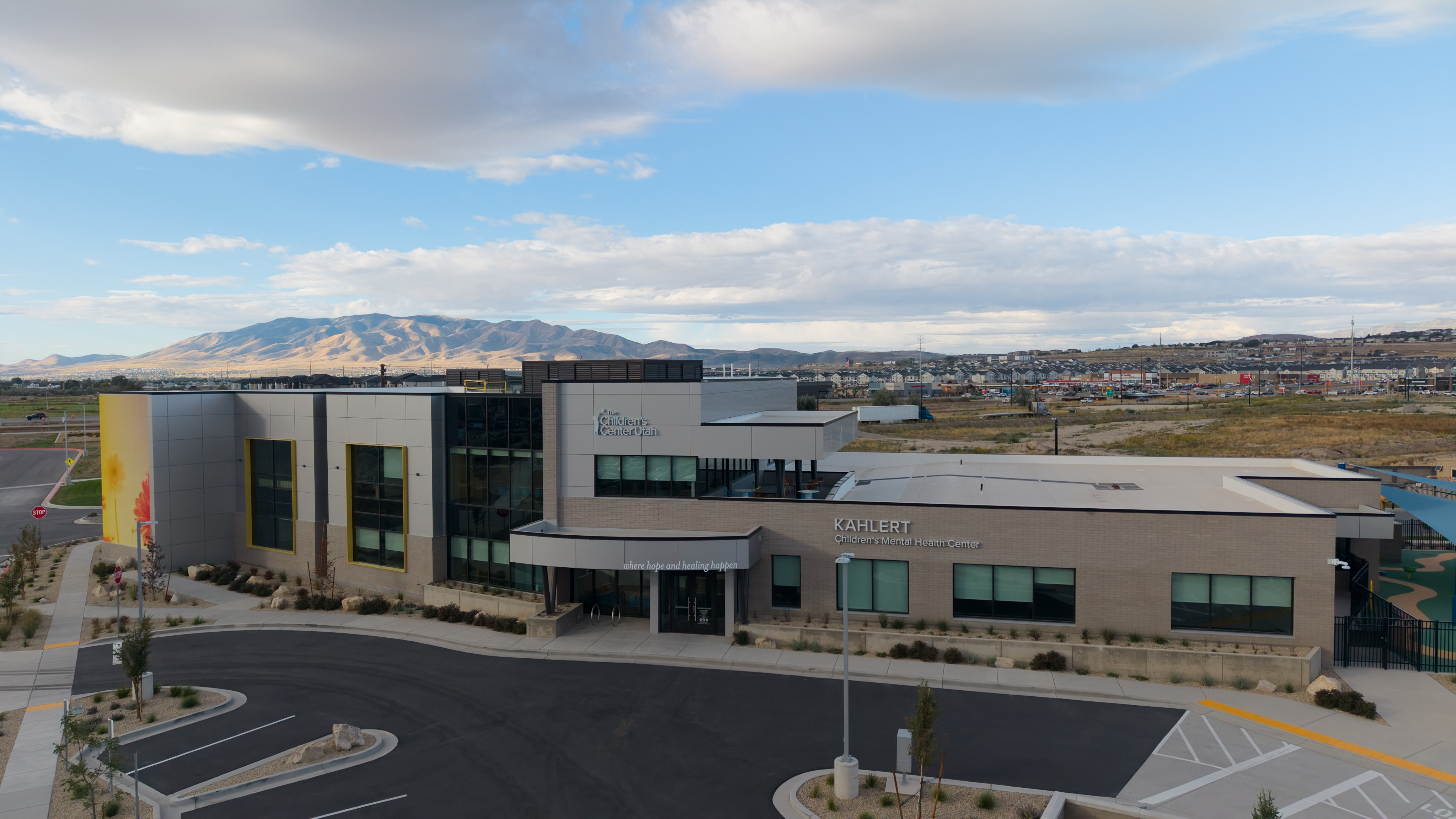
On Thursday, Oct. 1, The Children’s Center Utah celebrated the grand opening of its Kahlert Children’s Mental Health Center, its first location outside of Salt Lake County, expanding access to specialized infant and early childhood mental health care for children (from birth through age six) and their families and caregivers.
Located on the Intermountain Primary Children’s Hospital, Larry H. & Gail Miller Family Campus in Lehi, the new center brings The Children’s Center Utah’s services closer to families in one of the state’s fastest-growing regions. Approximately 60,000 children from birth through age six live in Utah County, and previously many families seeking care from The Children’s Center Utah had to travel to Salt Lake County to access services at the organization’s existing West Valley City location.
The Kahlert Children’s Mental Health Center is currently providing outpatient mental health services, with The Children’s Center Utah’s Therapeutic Preschool Program set to begin in January 2027. Together, the programs will provide Utah County families with greater access to comprehensive, effective mental health care during the earliest years of a child’s development.
“This center represents what is possible when people come together around a shared goal of improving children’s mental health in our state,” said Rebecca Dutson, president and CEO of The Children’s Center Utah. “We are deeply grateful to the individuals and organizations who recognize the importance of infant and early childhood mental health and have been willing to lead the way. If we want to stem the tide against Utah’s mental health crisis, we have to start earlier—giving young children and families access to the support they need from the very beginning.”
The Kahlert Children’s Mental Health Center was made possible through strong public/private partnership. The State of Utah appropriated funding for the project, which was matched two-to-one by private investments including land donated by Intermountain Health and critical philanthropic support from The Kahlert Foundation, The Church of Jesus Christ of Latter-day Saints, Clark and Christine Ivory Foundation, Central Bank, and Christian and Marie Gardner, among others.

“Every child deserves the chance to grow up healthy and supported,” Gov. Spencer J. Cox said. “When a child is struggling, families need to know where to turn and be able to get help early. The Kahlert Children’s Mental Health Center will bring more specialized care to Utah children during some of their most important years. I’m grateful to everyone who came together to build this center and give more families the support they need.”
Directly across from Intermountain Primary Children’s Hospital, the Kahlert Children’s Mental Health Center complements the pediatric medical services available on the campus and reflects a shared recognition that children’s physical and mental well-being are deeply connected. The location is part of The Children’s Center Utah’s broader commitment to increase access to services statewide.
“We are so proud to stand alongside The Children’s Center Utah as they bring this extraordinary work to more children and families across our state,” said Heather Kahlert, Executive Vice President of The Kahlert Foundation. “At The Kahlert Foundation, we believe deeply in showing up for families at the moments when support can make the greatest difference. This new center is about creating a place where children can be cared for, families can feel supported, and healing can begin early. It is incredibly meaningful to us to help make that possible.”
The opening also coincides with the release of new research commissioned by The Children’s Center Utah and conducted independently by the Kem C. Gardner Policy Institute. One data point shows that 20% of screenings for social or emotional issues among children ages 0-5 are in the concerning range, further underscoring the need to expand access to infant and early childhood mental health care as Utah’s communities continue to grow.
“I’m thrilled to welcome this new resource to Utah County,” said County Commissioner Skyler Beltran in a Facebook post about the ribbon cutting. “What a great investment in our children and families and an exciting addition to our community.”
For The Children’s Center Utah, the Lehi expansion is part of a broader effort to reach children earlier and remove barriers that can make it difficult for families to access specialized mental health care. By bringing services closer to home, the new Center will help more of Utah’s youngest children and their families and caregivers get the support they need, when they need it most.
Jennifer Thomas | American Fork Citizen
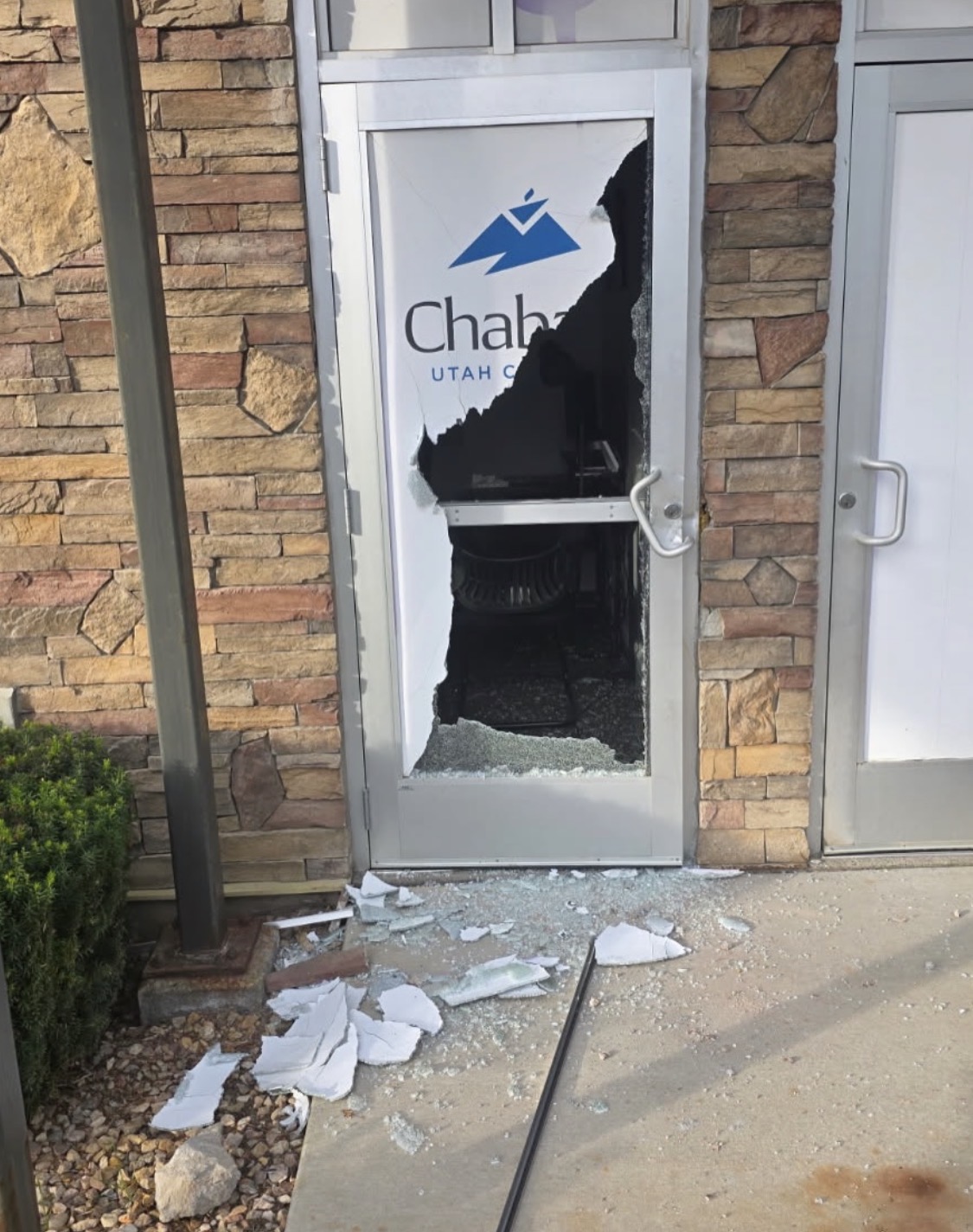
A recent break-in at the Chabad of Utah County, headquartered in Lehi, has only strengthened the resolve of its members. Following a Saturday, Sept. 26 incident at the commercial complex housing the Jewish office and classroom space, the Lehi Police Department has launched an investigation.
Fortunately, the building sustained no structural damage, and the community has emerged more united than ever.
According to Hadley Milner, Lehi City Communications Coordinator, “Officers responded to the scene around 11:30 p.m. after the east glass entry door of the multi-unit complex was shattered. Officers searched the building and confirmed that the building had been entered.”
A subsequent search of the property, located on Mayflower Avenue in Lehi, confirmed that the building had been unlawfully entered. The complex houses four separate businesses.
“At this time, no additional vandalism has been identified, and no property has been reported stolen from the other businesses within the complex,” said Milner. “No other commercial space was damaged.”
The incident stands in stark contrast to the overwhelming warmth and rapid expansion the organization has experienced since its founding.
Rabbi Chaim Zippel—the first Utah-born Chabad Rabbi—and his wife, Esty, co-founded Chabad of Utah County out of their Lehi home in November 2022. Starting with just eight loaves the first week, they delivered homemade challah bread to local Jewish families. At the time, many Jewish residents lived in such deep isolation that they frequently asked the Rabbi, “if they were the only Jewish family in the entire county.”
After almost four years based out of their home, they were fortunate to utilize other locations to host events. “In August of 2026, we leased an office/classroom space in Lehi. We were excited to have a home base and a place where we could be found online,” said the Rabbi.
He continued, “On August 27, we installed the door sign, and on September 26, one month later, we had the break-in.”
The front door was completely smashed and destroyed just before midnight on Saturday, triggering a security alarm. Because the incident took place on the first day of the Jewish holiday of Sukkot, Rabbi Chaim Zippel and his family—who observe Jewish holidays and Shabbat electronics-free—did not discover the damage or the flood of community messages until a day later.
“We just finished Shabbat and our phones were off as we do not use electronics throughout the holiday,” said the Rabbi. “We were unaware of the incident because our phones were off. The police and the building manager responded to the incident. But at 11:30 p.m. on Sunday night, when we turned on our phones, we discovered the messages letting us know what had happened.”
Investigators are pursuing all possible leads and motives, including whether bias or prejudice may have played a role in the incident. “At this stage of the investigation, there is not enough information to determine whether this incident was a hate crime. Investigators will continue to evaluate all available evidence and information as the investigation progresses,” noted Hadley Milner, Lehi City Communications Coordinator.
No suspects have been arrested.
Despite the break-in, Rabbi Zippel and Chabad of Utah County are undeterred and continue to expand their outreach. They remain focused on fostering a secure, meaningful, and inclusive space for the local Jewish community.
“While we must remain vigilant and take steps to protect ourselves, we refuse to let negative news disrupt our momentum. We are deeply grateful for our neighbors, as well as the Jewish, non-Jewish, and interfaith leaders whose kindness and support help our community thrive,” said the Rabbi. “Having experienced so much growth over the past few years, we know that a few anonymous online cowards cannot diminish the profound love and solidarity we share. We will continue to move forward, uplifted by the strength of our community.”
The Lehi City Police Department asks anyone with information about the incident, or who may have witnessed suspicious activity in the area, to contact their non-emergency line at (385) 201-1005.

Megan Wallgren | American Fork Citizen
*This story was updated on Oct.2, at 7:33 p.m.
An email sent on September 15 to Alpine School District classified employees left some recipients feeling attacked, despite the good news it contained.
The email announced an additional $250 to a one-time payment of $500 for classified employees added during contract negotiations with the Alpine Education Support Professionals union earlier this year. “The Board of Education and District leaders are pleased to announce an additional $250 to the one-time payment of $500, making a total of $750 to be paid to classified employees in the fall of 2026, prorated based on the employee’s contract or hours worked each week,” the email stated.
The bonus announcement was followed by a statement calling out bad behavior during the negotiations.
“Let us be very clear, the additional payment is in spite of the poor behaviors, inaccurate depictions and statements about the board and superintendent’s value of and support for this essential group of team members in both public and private settings by several leaders of AESP during the negotiation process, ratification meetings, and proposal consideration in official public meetings,” the email read.
“Our hope is this message will acknowledge the unfortunate situation created by a few individuals as an opportunity for us all to self-reflect and seek improvement while inviting future AESP leaders in the new school districts to return to long-standing, positive, and mutually beneficial discussions, solutions to problems and validation of all members involved in this important work – serving children, parents, team members and communities.”
Alpine Food Services employee Sarah Fotheringham said, “We were all jaw-wide open with the letter. We felt like it was written in bad taste and intended to intimidate us.” Fotheringham continued, “I’m very happy the School Board came through with their willingness to give us additional compensation after giving us a .5% COLA.”
Classified employees are support personnel who handle non-instructional and operational roles critical to running the district. These include school office staff, facilities and maintenance crews, and transportation and nutrition services workers, along with other various part-time employees.
The cost-of-living adjustment (COLA) pay increase, just 0.5%, that classified employees received in their paychecks for the ‘27 fiscal year was a sticking point in negotiations earlier this year. The union rejected the initial contract proposal. As part of a compromise, the contract included a one-time bonus payment.
The email stated, “This additional [$250] payment reflects the long-standing commitment of the board of education and superintendent to invest in and advocate for our “hands-on” technicians and support team members, which group has and will always be a high priority to the leaders of Alpine School District.”
ASD Superintendent Robert Smith addressed the controversy by affirming Alpine’s commitment to its classified employees. “Alpine’s Board of Education and Superintendent value their classified employees,” he said. “In the negotiation agreement, a statement to revisit the amount of the one-time bonus was included. This message was the announcement of that review and determination.”
Of the paragraphs that raised eyebrows, Smith said, “The intent of the message and section you referenced was to decouple the increased amount from a process this year that was unlike any experienced in the past 20 years with AESP.”
Smith continued, “Wording of any communication could be improved, which is true in this case. The intent was to celebrate our employees, follow through on a commitment, and invite a more positive dialogue in the new districts.”
When asked who wrote the email, Smith responded, “The message was approved for distribution by a majority of the Board and Superintendent and sent by the ASD communications team.”
Fotheringham also wants to leave any bad feelings between Alpine and classified employees behind. “My hope is that, with the new school board and new AESP boards, they will work together better with patience and understanding. I’m hopeful that the employees will be valued by the new school boards more than what was displayed in the announcement,” she said.
UDOT aware of the problem
Nichole Coombs | American Fork Citizen
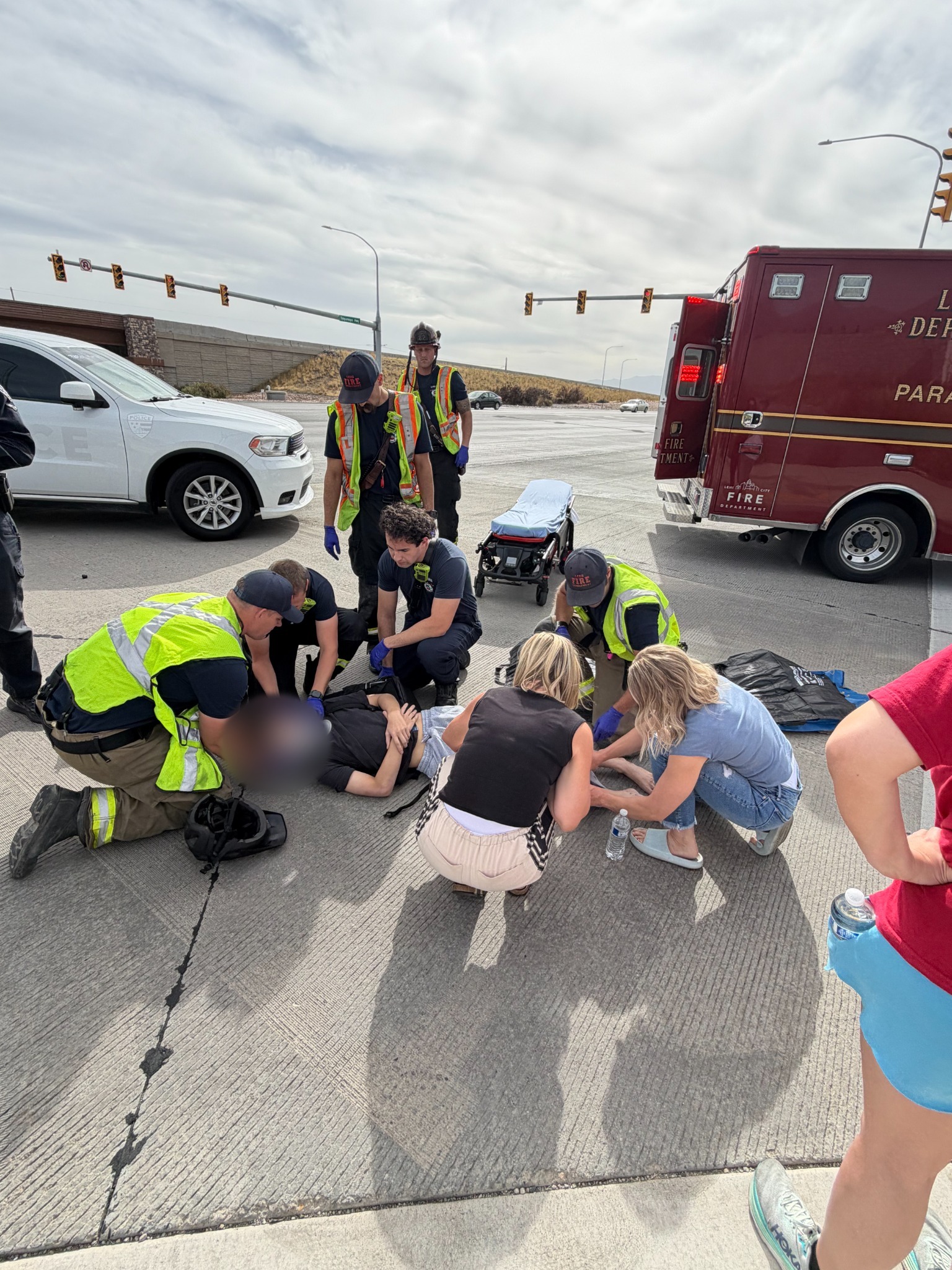
It’s been three weeks since a 15-year-old Skyridge student was hit while crossing SR-92 and Center Street in Lehi. The teen, whose name has not been released, is healing from a fractured wrist, but his accident has brought attention to something neighbors say they’ve seen coming.
“He was in the crosswalk on his e-bike,” said Tiffany Barker, a Lehi resident who lives near the intersection. “He was doing everything right, and a big truck turning right didn’t see him start to cross and hit him. I was the third person on the scene, and the boy was rolling around on the ground saying he was in pain. We kept him still until paramedics arrived.”
This intersection is frequented by students coming and going from Skyridge High School and Viewpoint Middle School. Residents say ninth graders going to the high school for some special classes have to cross this intersection during the day.
“We really need a walking bridge,” said Barker. “Students are coming back and forth, people coming to the businesses, and there are walking paths on both sides. There’s a lot of foot traffic.”
The intersection has been on Lehi City Council members’ minds for some time.
“I’ve been worried about it for a long time,” said council member Rachel Freeman. “I don’t want any family in our community to have to deal with a tragedy. I go into that intersection daily, if not multiple times a day, and feel like there are some blind spots. I think a pedestrian bridge would help.”
SR-92 is not a Lehi City road, but that doesn’t mean the city isn’t working to get a bridge.
“Lehi City has been working on a design and working on securing funds for a bridge for some time because our engineers anticipated this intersection would be busy,” said Freeman. “Lehi has been able to secure about half the funding for the bridge so far, but we are still waiting, hopefully, for the other half of the funding to come from UDOT.”
The Utah Department of Transportation, or UDOT, is aware of the safety concerns over this intersection.
“This is a priority for Lehi,” said John Gleason, UDOT’s director of public relations. “We are working to come up with solutions. School boundaries have recently changed in the area, and so we are working to make it safe for everyone, so we don’t have situations like the one that recently happened.”
UDOT doesn’t have an exact timeline for a pedestrian bridge in the area.
“We are aware of the funding that Lehi has secured,” said Boyde Humpherys, region three deputy director for UDOT. “We are working as fast as we can through the process for everyone.”
UDOT uses data from multiple sources, including local committees, to create a prioritization list. Currently, a pedestrian bridge across SR-92 ranks among the top three.
“It’s about an $8-9 million project,” said Humpherys.
Council member Michelle Stallings says the pedestrian bridge is a high priority and there are a couple of ways Lehi City can help.
“It could be a partnership,” said Stallings. “We have another pedestrian bridge further west, and it was a partnership between Lehi, UDOT and UTA. Federal grants were used for that one, so the funding was different, but it could be a joint project.”
Several petitions have been circulated locally to bring attention to the problem.
For Barker and her neighbors, time is of the essence.
“We really need this bridge now. We can’t wait for another kid to get injured before it becomes a priority.”

Jacob Fischler | Utah News Dispatch
September 22, 2026
Federal officials charged a Utah letter carrier Tuesday with throwing 300 primary ballots in a church parking lot dumpster, an incident that a top U.S. Justice Department official said made the case for stricter regulations of voting.
The prosecution of Damon Matai Seei, of Payson, Utah, showed “voting fraud is real,” acting Deputy Attorney General Trent McCotter said at a press conference at DOJ headquarters in Washington.
The Justice Department gave the arrest an unusually high profile, spotlighting the administration’s efforts to combat voter fraud after the U.S. Supreme Court this month blocked a new U.S. Postal Service rule limiting mail voting from going into effect for this year’s elections.
The regulation was meant to “address the chronically abused mail-in ballot system,” McCotter said. He criticized the trial judge who initially blocked the rule, which would have required special tracking and design features, among other things such as creating a national database of eligible voters.
“Election integrity should not be a political or partisan issue,” McCotter said. “Who could be against properly tracking mail-in ballots? Unfortunately, but entirely predictably, that regulation was blocked by a judge in Massachusetts. … The Trump administration, however, will continue taking aggressive actions to protect our elections.”
Postal Service rule
U.S. District Judge Indiria Talwani’s order blocking the rule is only in effect for the Nov. 3 elections, a provision meant to preserve the status quo because the rule was finalized mere months before the midterms. The merits of the case are still being argued. The U.S. Supreme Court upheld Talwani’s decision.
The prosecution of Seei, and the attention the administration sought to give it, undercut a key argument the administration made in the case: The rule included only “modest” technical specifications for a category of mail and should not be interpreted as an election regulation.
The U.S. Constitution grants states the authority to administer elections, with policy oversight from Congress.
In siding with the Democratic states and voting rights groups who filed suit, Talwani and the U.S. Court of Appeals for the 1st Circuit said the rule was clearly an attempt to affect election policy and was not restricted to a modest mail regulation.
Trump and mail-in voting
President Donald Trump has railed against mail-in voting and claimed, without evidence, that it is a major source of election fraud and contributed to his 2020 loss to President Joe Biden.
Since Trump retook office in January 2025, the department has charged 70 immigrants with illegally voting, compared with only 13 in the four years of Biden’s term, McCotter said Tuesday.
“And we intend to bring many more,” he added.
Homeland Security Investigations, a Homeland Security Department agency, has made 160 recent arrests, from 1,600 open voter fraud cases, HSI acting Deputy Executive Associate Director Matthew Millhollin said.
A reporter in the room noted that 70 prosecutions amounted to a bare fraction of the 150 million votes cast in the 2024 election.
McCotter responded that the Utah case involved 300 ballots, and that law enforcement had only scratched the surface of possible incidents. “Thousands more” cases were being investigated, he said.
“The folks on the other side, the opponents of the president, insist this has never happened, that there is no voting fraud,” he said. “And so when we have dozens of cases … I think that discourages and defeats their characterization.”
No partisan motive alleged
Seei, who is no longer a postal worker, intentionally threw out about 300 mail ballots on June 3 that were being mailed to voters in advance of the June 23 primary in Utah, according to charging documents.
In an interview with law enforcement, he indicated he did not have a political motive but said he threw away the mail, which also included advertisements, “because he wanted to ‘lighten his workload’ so he could presumably go home earlier,” prosecutors said.
Melissa Holyoak, the top federal prosecutor for Utah, traveled to Washington, D.C., for Tuesday’s press conference. She noted that 95% of the state’s voters cast their ballots by mail.
Many people in Seei’s delivery area in Eagle Mountain, Utah, complained to the Utah County Clerk that they hadn’t received ballots, Holyoak said. Using county databases, the clerk found that voter participation was “remarkably low” in the area where complaints originated.
“As American citizens, we have certain freedoms and rights,” Holyoak said. “And one of those fundamental rights is the right to vote. But when defendant allegedly tossed the mail-in ballots into a parking lot dumpster, those citizens’ right to vote were also thrown away.”
The federal public defender representing Seei did not immediately return a call seeking comment.
Utah News Dispatch is part of States Newsroom, a nonprofit news network supported by grants and a coalition of donors as a 501c(3) public charity. Utah News Dispatch maintains editorial independence. Contact Editor McKenzie Romero for questions: [email protected].


Nichole Coombs | American Fork Citizen
Lehi residents will have a new place to enjoy the outdoors in the future, thanks to a generous donation from the Peck family.
“This is what my dad would have wanted,” said Cole Peck. “He said we had been blessed, but nothing matters more than making memories with your family.”
Siblings Cole Peck and Megan Peck Butler made the significant land donation official at the Lehi City Council meeting on September 8, 2026. The donation includes 20.34 acres of land located under the Mill Pond.
“It’s really the land under the water,” said Peck. “It’s a beautiful area.”
The city will now be responsible for turning the area into a usable space for residents to enjoy. Talks have included adding walking paths adjacent to the Mill Pond and stocking the pond with fish, but no official plans have been made.
“The Mill Pond has been part of Lehi’s history for decades,” said Peck. “My family has used the property for many different things, including supporting various businesses. We even stocked the pond with fish at one point”
Besides giving families opportunities to make memories together, the pond also serves as a secondary water source for the community. The pond has several natural springs that feed it, but without some human intervention, the pond would have disappeared.
“Silt washes into the pond from upstream, and we have to dredge it to keep the water in it,” said Peck. “The water feeds into the city’s secondary irrigation system. Without this water source, Lehi would have even less water. We’ve been doing this for the past two years. If we weren’t taking care of it, the pond would disappear.”

With the donation, Peck says the city may now apply for federal funding and grants to cover the cost of dredging out more silt, deepening the pond, and storing more water for irrigation.
“We turned down 20 to 50 offers to buy the land,” said Butler. “Developers offered our family generational wealth and all sorts of things. But we felt like we wanted to leave it.”
The Peck family says the donation fulfills the dream Loren Powell, Tony Train, and their dad, Tony Peck, had for many years.
“My dad wanted to beautify the city. He wanted people to enjoy being together. This is how we are choosing to honor him and the others who saw his vision,” said Peck.
The land will officially be called the Peck Mill Pond Area in recognition of the family’s generous donation. The Peck family are a multigenerational Lehi family.
“It’s taken many years to get this where it needs to be,” said Peck. “It will be a great thing for the city.”
“I’m proud we did the right thing by all the families,” said Butler. “My dad taught us to work hard and do the right thing. He would be happy about this but probably embarrassed by his name being attached to it.”
The city has no timeline for developing the land. The Peck Mill Pond Area will remain closed until it is safe for the public to enjoy.
AF City News
Incorrect measuring led to oversized AF structure approval; Lehi neighbor files court injunction


Rob Shelton | American Fork Citizen
A fight over a massive backyard structure on 900 West in American Fork is headed towards court. A Lehi homeowner, whose property is adjacent to the structure, told the American Fork City Council at its Sept. 8 meeting that he has retained an attorney and plans to seek an injunction. The city has responded by routing all further communication through its own attorney. This is the second announcement of legal action against the city this past month during the public comment period of a city council meeting.
The structure sits at 731 N 900 W, on a parcel the city’s Development Review Committee approved on April 6. City records list the building at 7,910 square feet of footprint and 11,146 square feet total, standing roughly 35 feet tall, compared to the single-story “rambler” homes that back up to it in American Fork and neighboring Lehi.
“The Rovig accessory structure was approved on April 6, 2026,” Dale Stewart, a Lehi resident whose backyard abuts the project, told the council Sept. 8. “Many of you have seen the news reports now on KSL and Fox 13 regarding the size of the structure and the undue negative impact it has created on the neighborhood.”

Stewart’s case turns largely on how the city measured the property’s required “rear yard,” the open space behind a home where accessory-building coverage is capped. American Fork code defines a rear yard as the space between a building’s rear outer wall and the closest opposite property line. But when Stewart called the city on Aug. 24 asking how the calculation was done, city planner Cody Opperman told him the city had measured from “the plane that’s flush with the front of the home, and anything behind that is rear yard,” using the front of the house, not its rear wall, as the starting point. The city approved the project in April with no side yard calculated at all, according to Stewart.
After Stewart raised the issue, Patrick O’Brien, director of development services for the city, acknowledged in an Aug. 25 email that a side yard needed to be calculated and sent a drawing showing the correct approach: measuring from the rear of the dwelling, not the front. But the drawing excluded part of the home’s attached addition, labeling it a “detached structure.” Stewart said the addition was attached, and O’Brien agreed after sending an inspector to confirm it. “They confirmed that it is attached,” O’Brien wrote back.
Using the full, attached dwelling, Stewart calculates the rear yard at roughly 28,181 square feet. The accessory structure’s 7,910-square-foot footprint is 28.1% of that space, which Stewart says exceeds the 25% cap set by Section 17.5.105(1)(f) of the city code. He also told the council the building’s height, including a decorative cupola, could reach 37.5 feet, exceeding the city’s 35-foot maximum.

City records suggest officials anticipated a dispute like this well before it arrived. At an Aug. 19, 2025 Planning Commission meeting, eight months before Rovig was approved, O’Brien told the commission a code-compliant building could still feel “out of place and create a sense of concern,” citing a different accessory structure that had “met all code requirements” yet still drew complaints. Mayor Frost said the city needed rules flexible enough “while preventing someone from building something disruptive.” He asked staff what steps it could take “to prevent serious issues like the one that occurred previously.”
Stewart also quoted O’Brien from a December 2023 meeting, saying an accessory building “should be considered something subservient. If we have something that is borderline two times the size of the primary structure, it challenges that role.” Stewart said the structure behind his home is three times the size of the primary residence.
“Mr. Mayor, you made a commitment to us that evening that you would review the matter and, quote, ‘make it right if the city made a mistake’,” Stewart said, referencing a visit Mayor Frost made to his home. “I’m asking you to follow through with that tonight. I have hired an attorney, and they will be seeking an injunction this week.”
The fallout arrived by email two days later. David Bunker, American Fork’s city administrator, wrote to Stewart and his attorney, Jeffrey Colemere of the Draper firm Colemere Gibbs & Stout, on Sept. 10, copying the mayor, the council and the city attorney. “With the notification you provided during the city council meeting on Tuesday, September 8, 2026, that you are seeking legal recourse regarding this issue, we respectfully request that all communication with the city shall proceed through our city attorney,” Bunker wrote. “Heather [city attorney Heather Schriever] will be the point of contact for all communications with you or Mr. Colemere.”
Stewart first raised the issue publicly at the council’s Aug. 25 meeting, two days after construction began, and local media reported on the dispute the next day.

Elizabeth Spencer | American Fork Citizen
Friday night’s football game started a little differently at American Fork High School as players and fans took a moment to remember 9/11. The Cavemen started and ended their game with a big win, honoring those who made the ultimate sacrifice 25 years ago.
Players, along with volunteers from Follow the Flag (FTF), unfurled their massive “Lady Liberty” American flag on the field. Teacher Sam Beeson, in his last year of teaching at AFHS, led the national anthem, followed by a breathtaking Apache helicopter flyover.
Military, police, and firefighters received free game admission and free concessions. A generous donor made the evening possible and remains anonymous in our community. The game was a “USA-Out,” which means that students were asked to wear red, white and blue.
“We have a community that really embraces our first responders, police, fire, vets, and active military duty. It’s just a feel- good event. It’s nice when you can help put something on that supports those people that take care of us,” said Jeremy Lewis, Athletic Director at AFHS.
“It’s always important to have perspective, especially at the young age of high school,” said a member of the Navy who attended the game. He said some of these [high school] kids are going to go straight into the military, so it’s important to understand that the community respects and acknowledges that it is an important lifelong decision.”

“We are here to serve the community and those that need our help,” said AF Firefighter Justin Whatcott, who was on shift Friday evening. “As for 9/11, the biggest thing for me is remembering those who served in the military at both the Twin Towers, the Pentagon, and the Flight 93 crash site. They are the ones we need to never forget, and we need to remember the sacrifice they made for our community. I feel like it’s so important to remember those that gave it all.”
Whatcott said seeing the flag ceremony stirred feelings. “It’s an honor to be here and to be a part of that with the youth and be able to support this program that they have honoring those that gave it all”
“I just love being part of something that recognizes those people who responded: the firefighters, the police, the paramedics, the military and the veterans. It’s really special to be a part of that and to recognize them without worrying about political differences. It’s really an important time just to set those things aside and say thank you,” said Lewis.
Delmar Dade was on the field during the flag ceremony. As a police officer, he has served the community of Crystal Lake, Illinois, a suburb of Chicago, for 16 years. Dade flew in for the occasion and to watch his nephew, a senior, play football. “I thought it was awesome to be able to be out there and honor those who gave their life and sacrificed for our country.”

“These kids weren’t alive when 9/11 happened. It’s like they always say to ‘never forget,’ it’s easy when times are okay to kind of forget where we’ve come from or forget the sacrifices. It’s important for them to see that there are people that came before them that had to sacrifice,” added Dade.
Senior Christian Hanshaw plays tight end. He was also on the field during the pre-game event and said he could feel the sacredness and solemnity. “We are doing this to honor everyone who died and trying to honor something very sacred to our American culture. It was really cool to honor our country.”
“I hope our players honor our servicemen and women and first responders by emulating and living their lives with discipline, service, and being selfless. I think for our kids, that is the best way to honor them,” shared AFHS Football Coach Aaron Behm. “I think there is so much our kids can learn from 9/11 about unity, service, and how much we have to be grateful for living in this country.”
“It was really cool to honor everything that happened 25 years ago today. It’s nice to recognize everyone who sacrificed their lives that day. It means a lot,” said Captain Sam Thompson, who plays linebacker.
Speaking of 9/11, Lewis added, “I think for people in our generation, this is our JFK moment. This was the big moment for us where we remember where we were and what we were doing.”
“I remember hearing what was happening on the news that morning, and calling Carrie (his wife) and telling her to turn on the TV. Like so many other Americans, we couldn’t stop watching the news, and honestly, we didn’t sleep well for weeks afterward,” shared Kyle Fox, founder of FTF.
“It felt like the whole world had changed. But I also remember what happened after, when Americans seemed to forget their differences for a while and just stood together. Twenty-five years later, that’s something worth remembering. For Follow the Flag, honoring those who lost their lives and those who ran toward danger is also a way of reminding the next generation what that kind of sacrifice and unity looks like,” added Kyle.
“I think one of the most important things we can do twenty-five years later is make sure September 11th doesn’t become just another date in a history book, especially for a generation that wasn’t alive to experience it. I vividly remember watching the news that morning while my two young sons played on our living room floor. It changed me forever. There was so much heartbreak that day, but there was also an incredible sense of unity in the weeks that followed,” shared Carrie Fox.

“I love that AFHS is creating a moment where young people can stop, remember, and honor those who sacrificed. Seeing that giant flag carried onto a high school football field is an awesome reminder that remembering is now our responsibility,” concluded Carrie.
Honoring 9/11 at AFHS didn’t begin that evening on the field. During the school day between class breaks, inspiring patriotic songs played over the loudspeaker, reminding kids that 9/11 is a unique day of reflection, remembering those who sacrificed.
Fittingly, AFHS took home the win, 45-0.


Alixel Cabrera | Utah News Dispatch
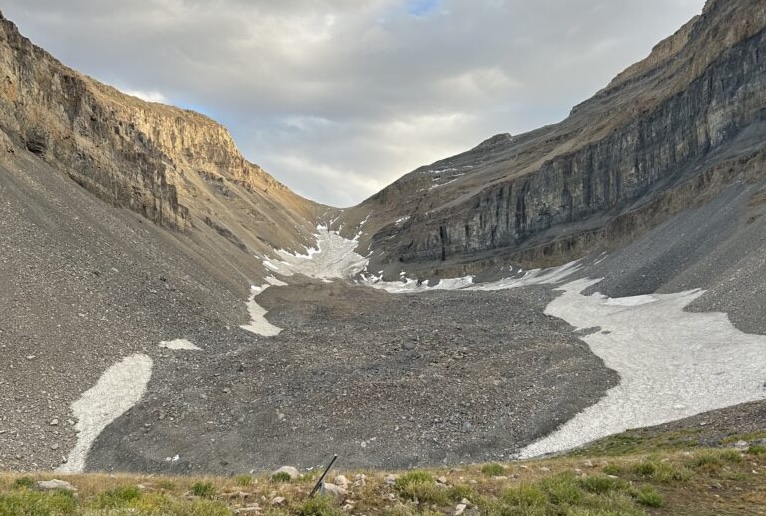
With a novel 3D technique, a University of Utah team has brought to light the unaccounted masses of ice hidden at the Timpanogos Rock Glacier, finding both a good measurement of how much ice it contains, and also how the rock glacier located near Salt Lake City and Provo formed.
The Timpanogos Rock Glacier stores 1.5 million cubic meters of ice, a University of Utah news release says. That’s enough frozen water to fill 600 Olympic-sized swimming pools. The number is also similar to the volume of the largest pyramid in Giza, Egypt, said Bronson Cvijanovich, a former graduate student in the Department of Geology & Geophysics.
“Timpanogos Rock Glacier is surprisingly ice rich. It is 83% ice and 17% loose rock,” said Cvijanovich, lead author of a study measuring the internal ice content of the rock glacier.
Rock glaciers are common in the Wasatch and Uinta ranges. Timpanogos is one of 836 in the state. While their footprints can be outlined with satellite imagery, “the 3D shape, depth and ice they obscure is harder to reveal,” the university said in the release.
“There’s a lot of ice that’s hidden in Utah’s mountains,” said Leif Anderson, a glaciology professor who oversaw the study. “When we are high in the mountains and walking across loose rocks or rubble, you don’t realize there could be 120 feet of ice buried beneath your feet.”
To estimate the ice content, a team hiked about five miles in an elevation gain of 3,500 feet to get to the rock glacier on different occasions in 2024, hauling sensitive instruments, like a gravimeter, and took gravity readings at 232 spots separated by about 80 feet in a grid atop the rock glacier.

The gravimeter measures density differences between rock and ice, the university said in the release, which allowed the researchers to calculate the 3D shape of the buried ice body. After those measurements were collected, the team had to correct them to take into account differences in gravity due to factors like the position of the sun and the moon, the location’s terrain, latitude and elevation.
But how does ice get into the rock glacier in the first place? Another study from U of U researchers showed with a new mathematical model that rock glaciers gain mass because “rockfalls bury persistent snow in the upper parts of rock glaciers,” according to the release.
“In the Wasatch, the mountains themselves are eroding and burying the snow, and that’s why the rock glaciers exist,” Anderson said.
Despite climate change, the Timpanogos Rock Glacier apparently keeps on adding ice, the researchers said.
“Rock glaciers flow downhill just like a glacier or river, but the important distinction here is that the thick carapace of loose rock actually protects and hides the ice, making these climate-resilient water storage sites that may still be adding frozen water. From a water resource standpoint, it is really important, especially in a warm and arid state like Utah,” Cvijanovich said.
This story was originally published by utahnewsdispatch.com and written by Alixel Cabrera. Adjustments for style and clarity have been made.

House District 56 candidates, profiled

Utah County Auditor and Clerk:

Caveman girls soccer ends year in semis

‘BIGGEST LOSER’ CONTESTANT FROM AF DIES TRAGICALLY

Aspen Peaks School Board “Meet the Candidates” night recap

Tragedy Strikes American Fork: Local Couple Found Dead in Apparent Murder-Suicide
-

 AF City News1 month ago
Incorrect measuring led to oversized AF structure approval; Lehi neighbor files court injunction
-

 Local News3 weeks ago
ASD classified employee announcement brings controversy despite one-time payment
-

 Local News1 month ago
25 years later, AFHS remembers 9/11
-

 Local News1 month ago
How much ice hides in Timpanogos Rock Glacier?
-

 Obituaries1 month ago
Bonnie Lee Dalton
-

 Obituaries1 month ago
Willa Mae Johnson Williams Overson
-

 Local News4 weeks ago
Trump DOJ uses case of Utah letter carrier to highlight allegations of voting fraud
-

 Local News4 weeks ago
Peck family donates Mill Pond to Lehi City
-

 Local News1 month ago
American Heritage School brings history to life, honoring Constitution Day
-

 Schools1 month ago
Aspen Peaks opens public survey on boundaries as district looks ahead