
Local People
Local woman breaks weightlifting world record

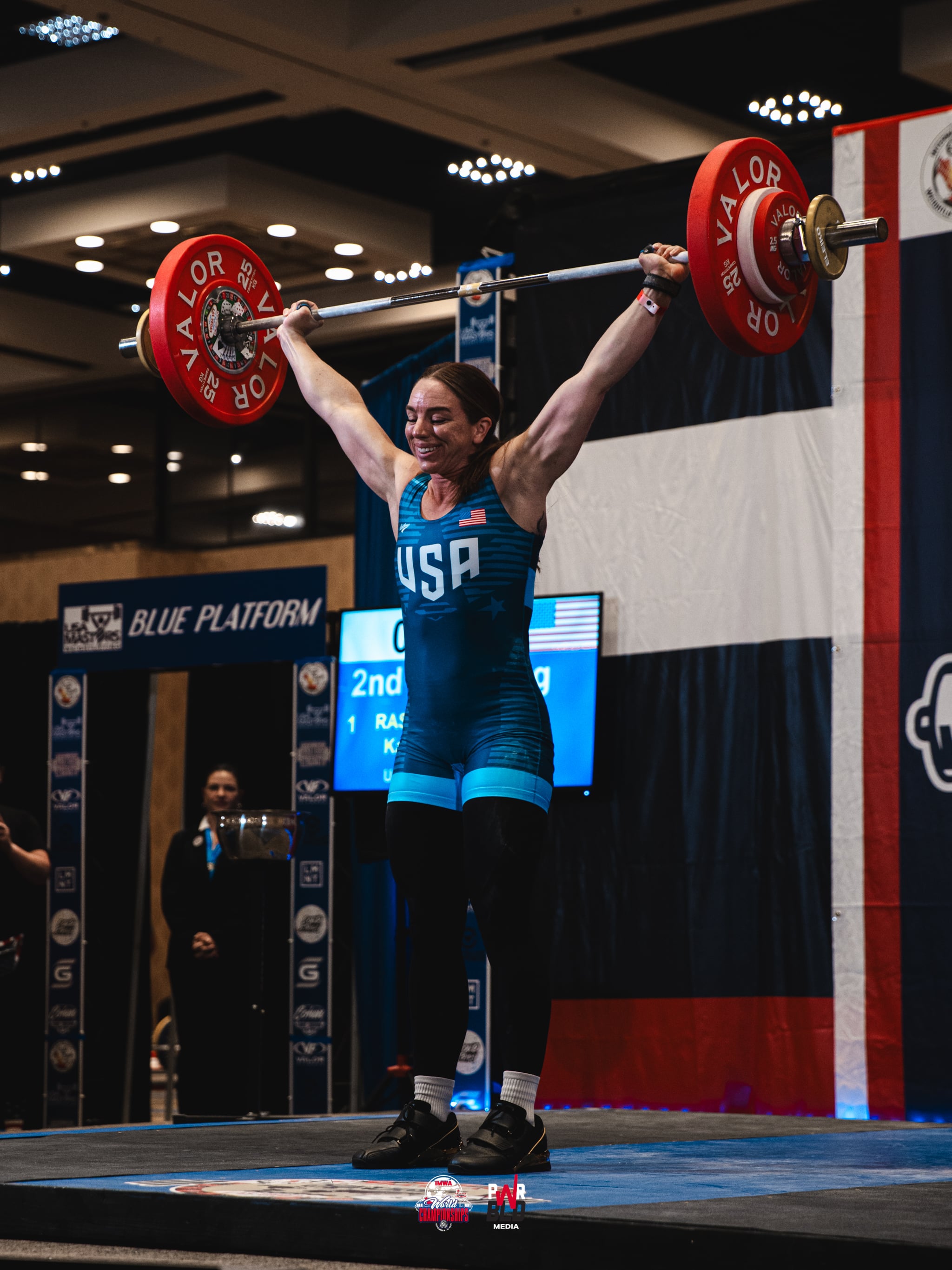
Ryann Anderegg | American Fork Citizen
When Katrina Rasmussen first stepped into a CrossFit gym after the birth of her second child, she never imagined that one day she’d be a world record–holding Olympic weightlifter. What began as a way to combat postpartum depression and regain strength soon transformed into a passion and ultimately, a platform for perseverance, self-belief, and balance. She sets a powerful example that it’s never too late to start something new, chase audacious goals, and redefine what strength looks like.

When Rasmussen tells people she competes in Olympic weightlifting, she’s used to the puzzled looks. “People always ask how much I can bench,” she said, laughing. “But this isn’t powerlifting, it’s Olympic weightlifting. It’s the snatch, clean, and jerk. And yes, I’ve broken a world record, but it’s in the Masters division. I like to joke that it’s the ‘old people record.’”
At 37 years old, Rasmussen is proving that strength and resilience don’t fade with age. The local mother of two recently broke a world record at the 2025 Masters World Weightlifting Championships in Las Vegas, reclaiming a title she first earned in 2022. Her record-breaking lift was a 116-kilogram (255-pound) lift, with a combined total of 226 kilograms (nearly 450 pounds) for both lifts.
“I actually hit that number before,” Rasmussen explained, “but to break a world record, it has to happen at an international meet. I missed my shot last year when the Worlds were in Finland; it was just too far and too expensive to travel. So, when the meet came to Vegas this year, I drove down. My 14-year-old son came to watch. That made it extra special to hit my goal with him there.”

Rasmussen didn’t start as a competitive weightlifter. In fact, her journey began just a few years ago. “I started CrossFit after my youngest was born,” she said. “I had terrible postpartum depression, and I just needed to move and needed something for myself. Fitness became my therapy.”
As she grew stronger, coaches began to notice something remarkable. “I realized I had a lot of natural strength,” Rasmussen said. “So, I shifted from CrossFit to Olympic weightlifting in 2021. That’s when I started breaking state and national records.”
Her first world record came almost by accident. “In 2022, I competed in Puerto Rico,” she said. “I was so new that I didn’t even know I had broken the record until a few months later when I got a certificate in the mail.”
But that record didn’t last long. “At Worlds later that year, another lifter broke my record,” Rasmussen recalled. “I’ve been chasing it ever since.”
Weightlifting isn’t just about brute strength. It’s a battle of nerves, focus, and mental discipline.
“You get three attempts at each lift,” Rasmussen explained. “If you miss all three in your snatch, you’re done; you don’t even get to finish the competition. The mental part is the hardest. You train for months, peak your body, and everything comes down to those few seconds on the platform.”
She knows that pressure all too well. Last December, at the American Open Finals, Rasmussen “bombed out” for the first time, missing all three of her snatch attempts. “It was awful,” she said. “My family was there, I’d sold shirts to fundraise, and I had sponsors watching. It felt like I let everyone down. That experience taught me a lot,” Rasmussen said. “When I stepped back on the big stage this year, I had to remind myself that one failure doesn’t define me. I’ve had way more successful lifts than failed ones. The key is to keep showing up.”
To stay calm under pressure, Rasmussen meticulously plans her approach. “I practice everything,” she said. “From what I’ll say to myself walking onto the stage, to where I’ll put my feet before I grab the bar. I even try to recreate the nerves in training because you can’t leave anything to chance.”
Behind the medals and records is a mom juggling it all. Rasmussen runs her own business, coaches athletes, and raises two sons, ages 14 and 10, all while training for elite competitions.
“I used to feel mom guilt,” she admitted. “I’d think, ‘I’m spending all this time at the gym, what am I taking away from my kids?’ But then I started seeing how it was impacting them. They’re learning what it means to set goals, work hard, to fail and keep trying.”
Her boys often join her at the gym or cheer her on from the stands. “It’s been cool watching them understand that being uncomfortable or failing isn’t something to fear,” she said. “They’ve learned that it’s part of growing.”
Rasmussen’s next goal is already set: the 2026 Masters World Championships in Athens, Greece. “I’ve always held the clean and jerk record,” she said. “But I’ve never held one in the snatch, that’s my mental block. That’s the lift I’ve bombed out on. But I’m close. I’m about five pounds away from the world record. Doing that in Athens would mean everything.”
Between now and then, Rasmussen is balancing training for both CrossFit and weightlifting, two disciplines that demand very different strengths. “This is the first year I’ve tried doing both,” she said. “I used to think I had to choose to be either strong or fast. Now I’m learning to be both.”
Her message to others is simple but powerful: “It’s never too late to start. It doesn’t have to be weightlifting,” she said. “Just find the thing that lights you up. It’s never too late to try something new, to get strong, to take care of yourself. When you do, you show your kids that health and passion matter and that you can build something amazing at any age.”
As she prepares for another year of competition and coaching, Rasmussen remains grounded in gratitude and grit. “Every time I lift,” she said, “I remind myself this all started because I needed hope. Now I get to show my kids what strength really looks like.”

Jennifer Thomas | American Fork Citizen
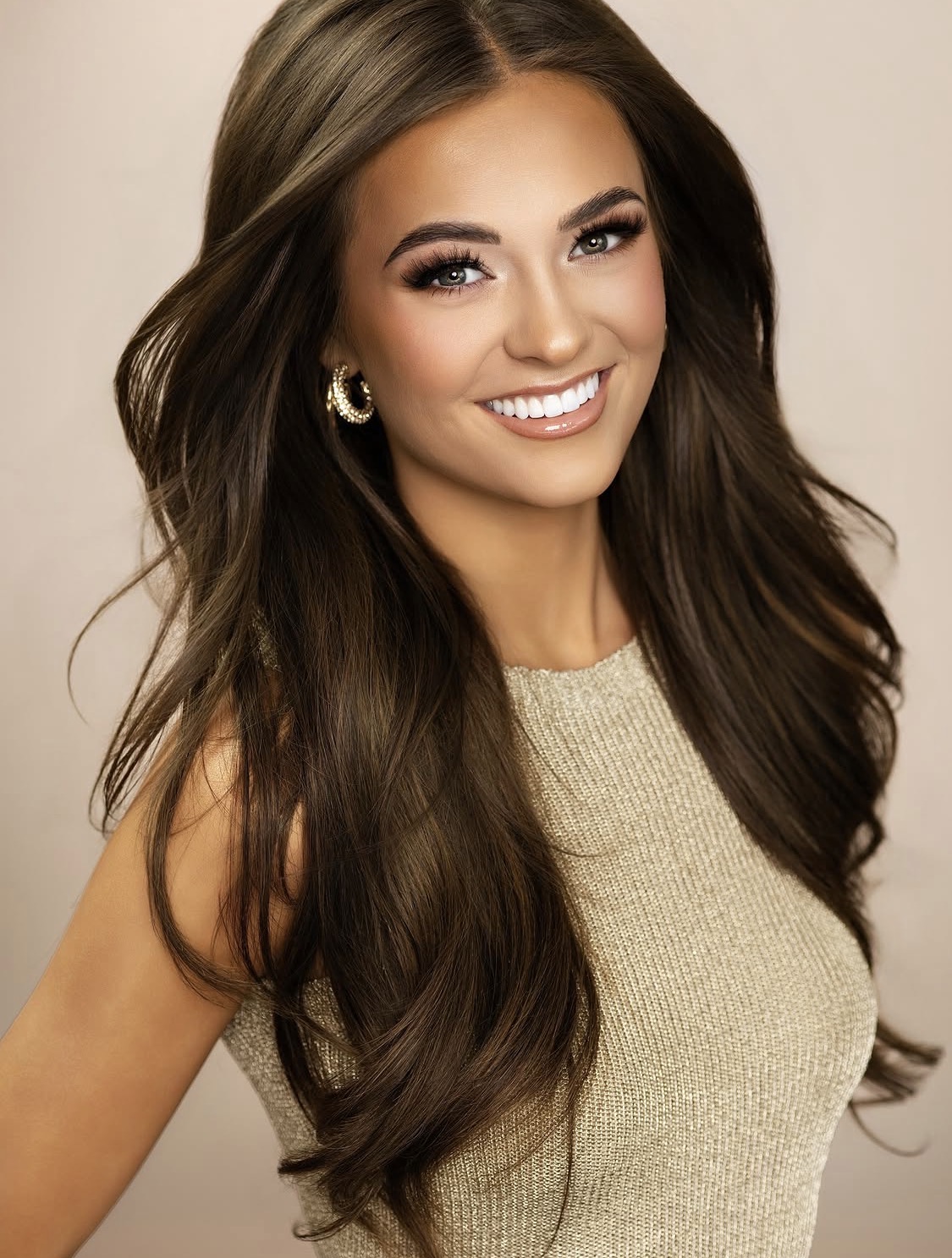
American Fork local Elle Anderson, Miss Utah’s Teen, was crowned Miss America’s Teen 2027 on Sept. 5 in West Palm Beach, FL.
Anderson made history as the first Miss Utah’s Teen to win the national title, according to the Miss America organization. Anderson is enrolled at Brigham Young University, where she plans to study journalism and business.
All Miss America contestants compete in the following areas: personal interview, health and fitness, performance talent, evening wear, and onstage question, which evaluate communication, performance and presentation.

As Miss America’s Teen, Anderson will receive a $30,000 scholarship. The national win follows Anderson’s state title of Miss Utah’s Teen, where she was awarded an $8,000 scholarship.
Anderson also received $3,000 in scholarships at the national competition after winning the preliminary evening gown award and delivering an award-winning violin performance in the talent category.
“There are so many hands in this moment besides mine. And sitting here tonight, I feel so deeply humbled that I get to wear Utah across my heart,” wrote Anderson before the final night of competition.
Anderson continued, “These past ten days, I have also felt the people I miss very close to me. My little brother Stone, whose short life became the reason behind the work I now get to do through ‘Every Beat Matters.’”
“My nana, who I loved so deeply, who taught me to use my voice, to stand up for what I believe in, and to protect the people I love.”
“And my sweet friend Brynn, who passed away only a month ago, and who showed me what it looks like to love people completely, gently, and without condition.”
“I wish more than anything they could be here. But maybe, in a way I don’t know fully know how to explain, they are.”
During her year serving as Miss America’s Teen, Anderson will travel the country to promote her community service initiative, “Every Beat Matters: Confidence. Preparation. Rescue.” In honor of her brother, her initiative empowers children and teens with the confidence and skills needed to perform CPR in emergencies.
Since embracing her role earlier this year as Miss Utah’s Teen, Anderson has brought warmth and compassion to communities across the state, and she is now set to capture the nation’s heart as Miss America’s Teen.
Elizabeth Spencer | American Fork Citizen
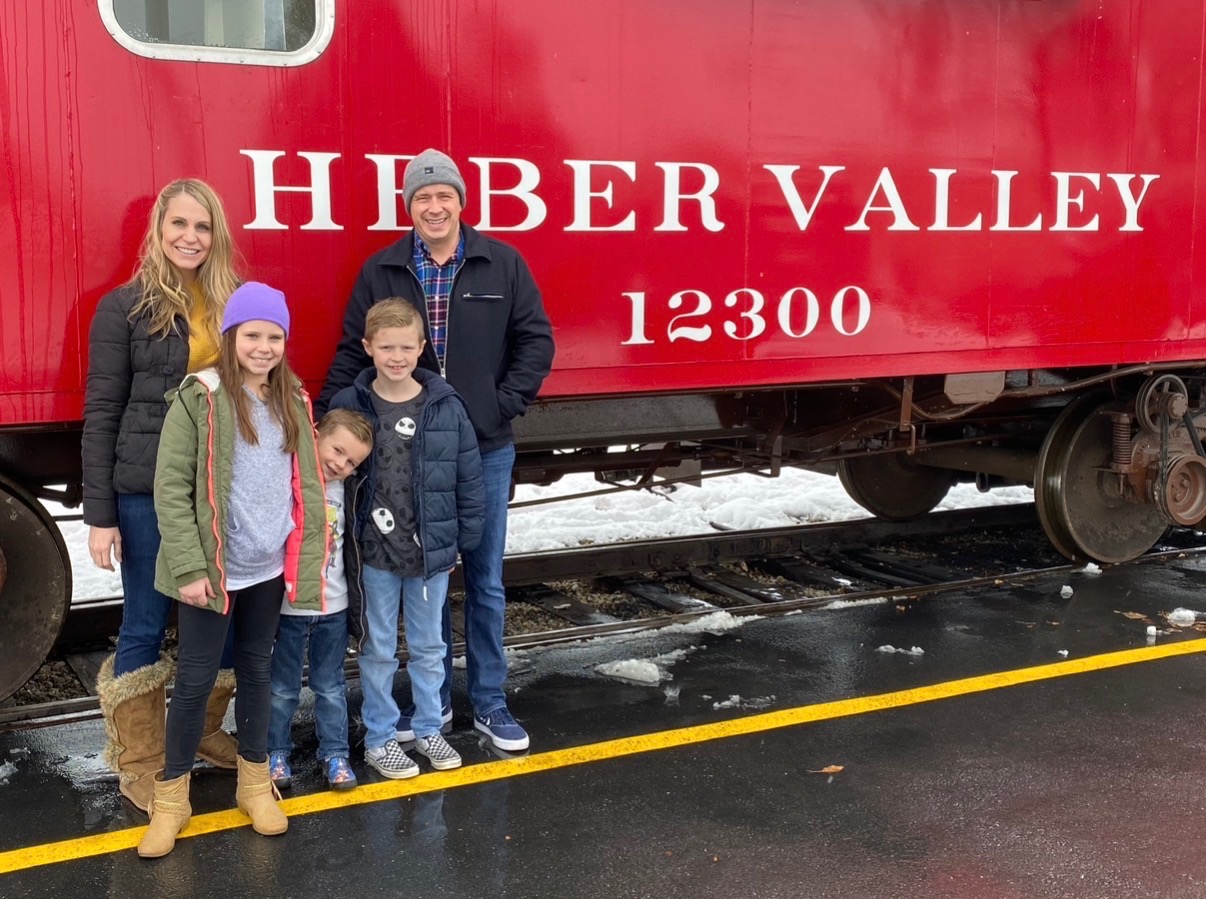
With over 120K followers on Instagram, American Fork resident Ashley Blackhurst has become a popular “mom explorer,” sharing her adventures online. What started as seeking a field trip a day has turned into an exciting hobby that has taken the mother of three all across the Beehive State.
When Ashley started having babies, she found herself spending a lot more time at home. She has never been much of a homebody, so she made a point to get out with the kids for at least one adventure a day (even if some days it was just a trip to Walmart). She describes herself as a curious person and has always loved learning.
After her second child was born, Ashley quit teaching school to be home with her children. She realized there was a lot to Utah that she hadn’t yet explored. Being a stay-at-home mom and getting out regularly made it possible to see and learn more.
“I started researching and checking off a lot of new-to-me adventures within Utah. I would share about our adventures here and there on my personal social media account. A friend mentioned that she loved mimicking the adventures I shared with her own family. She suggested I make a separate page where I exclusively shared my adventures so she and others could use it as a resource. Not thinking much of it, I thought, ‘I could do that!’” Ashley shared.
The friend who encouraged Ashley to create a page, Susan Wagstaff, is a mom and grandma who’s “always looking” for fun ways to spend time with her kids and grandkids.
“Our family started planning our hikes and adventures around what Ashley shared. It was a great way to get new ideas. I told Ashley how much she inspired us with fun ways to spend time together as a family and that I had started sharing with other friends and family her posts so they could join in the fun too,” Wagstaff said.
With that encouragement and mom’s sharing her Instagram with other moms, Ashley created @utah.fun.guide, which now has 129k followers.
“I personally love being outside: hiking, going on walks, and exploring new places,” shared Ashley. The Blackhurst family spends a lot of time at the movies and trying new restaurants. They like to travel and make a point to explore what Ashley calls “this big, beautiful world.”
“We live for experiencing all the different cultures and tourist traps that we can. It’s probably what we do best,” Ashley added
During their family adventures, Dave, Ashley’s husband, says he’s learned that he loves ski resorts in the summertime. The mountaintop nachos at Bearclaw Cabin at Sundance or Snowbird’s all-day activity pass are two of the things he most looks forward to. Their son Cole says his favorite memories are digging for Trilobite fossils at U-Dig Fossils in Delta, or skiing at Snowbasin and Powder Mountain. And their youngest, Max, said his favorite adventure was at an indoor skydiving center, I-Fly in Ogden.
To Ashley, the best thing about being a content creator is that she has met some “wonderful people whom I would have never met otherwise. As an added bonus, I’ve also gotten to participate in a lot of unique events.”
Followers can find fun places across the state to see unique items such as Michael Jackson’s autographed fedora and sunglasses at Moon’s Rare Books in Provo.
If you’re looking for splash pads, pools, hikes, museums or restaurants with unique dining experiences, Ashley has you covered. If you would like to try Korean Snowflake ice cream or a fresh peach sundae, she has posted where to wet your whistle. Utah Fun Guide has showcased an indoor snow-skiing facility, escape rooms, a vintage boutique, a silver-mining ghost town, a unique Chinatown Supermarket and much more, all right here in Utah.
“Many businesses I’ve shared about have expressed a marked increase in customer volumes. It makes me so happy to know I’m helping these small businesses, because I know it’s not easy being a small business owner,” said Ashley.
With her large following, she recently began making a small income from her page. “It’s not a lot, but it’s neat that a silly hobby can turn into some spare change and an actual job.”
Besides showcasing fun activities, Ashley has also highlighted wonderful things happening in our community, like teachers from American Fork High School visiting incoming sophomores at home to welcome them before the school year starts.
Her single biggest accomplishment with her account came when she posted about the AFHS football team showing up to support the marching band at its home competition in 2024. That post got more attention than any other post in her account’s history, snowballing to 10.7 million views almost overnight. It led to the coach and team receiving an award and national recognition, and the band also receiving some well-deserved attention. That single post sparked national inquiries, reposts, interviews and reporting from NBC, ABC, ESPN, Good News Movement, and a dozen more. Ashley said it was “heart-warming to see our little town of American Fork taking up the headlines.”
When asked what some of her challenges have been, she replied, “Social media can be hard for a lot of reasons, but the hardest part: trolls. My account is aimed at introducing people to the goodness of Utah. I don’t try to be political or controversial on my page, but there is almost always someone who likes to sling mud or has something negative to say. It’s hard not to get sucked into the negativity.”
Another challenge she shared with being a content creator is that social media is always changing. Her page started as simple pictures and writing about their family adventures. “Now I have to produce entire videos about it! It takes a lot of time, pivoting, and motivation to keep up with the social media rollercoaster,” added Ashley.
When asked where some of her favorite places in Utah are, Ashley responded, “I do love the mountains probably the most of all. Big and Little Cottonwood Canyons have some of the most jaw-dropping scenery and family-friendly trails, and it’s just minutes away from home.”
“Even being a Utah native, I had no idea there was so much to do here,” she said. “I think everyone should actively explore and love where they live. I understand that everyone has different budgets and hobbies, but I try to share a diverse list of activities so there’s something for everyone.”
“This particular journey has enriched my life with millions of new experiences, memories, skills and knowledge. I hope it leads me to my next great adventure, whatever that may be.” Ashley concluded.
Elizabeth Spencer | American Fork Citizen
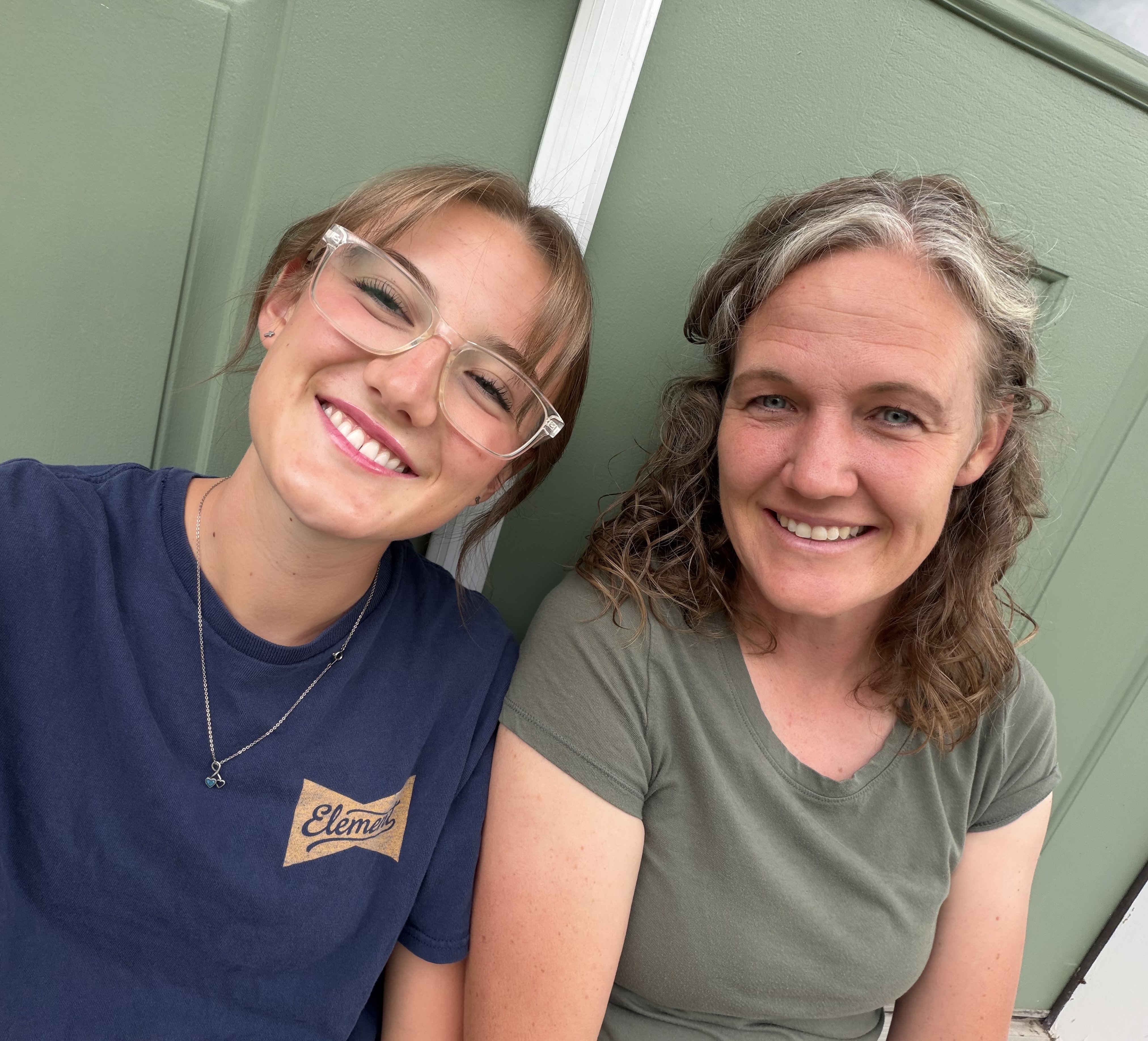
Alyson Beardall doesn’t skip a beat when following the musical lead her mother, Janice, instilled in her. This year, Alyson is one of four drum majors leading the American Fork High School Marching Band as they prepare to compete at Grand Nationals in November. Alyson’s mother, Janice, was also a drum major for the AFHS marching band 25 years ago.


Music runs deep in the family. Janice’s grandparents met in the marching band at Brigham Young University. Her grandmother continued to play the clarinet, even in her later years, in the American Fork Symphony. Because of their roots, keeping rhythm in the family came naturally to Janice and Alyson.
“I always wanted to be in the band like my two older brothers who played French horn and trombone,” shared Janice.
Janice spent most of her childhood in American Fork, except for her seventh and eighth grade years in Texas. In seventh grade, she chose to play the trumpet. The following year, Janice was allowed to march as an eighth-grader with the Natalia High School Marching Band, which performed only at football games.
Janice returned to American Fork for ninth grade, but at the time, freshmen were not allowed to march. As she entered her sophomore year, Janice was excited to march again with her brother, who was a senior, and her cousin, who was a junior. Janice graduated in 2002, after serving as drum major during the 2001 marching season.
“Following in my mom’s footsteps is a little challenging since her feet are bigger than mine. In all seriousness, I know my family supports me, so I appreciate that,” shared Alyson.
Alyson began playing in the band at American Fork Junior High during her seventh-grade year. She tried out all the instruments and ultimately chose the tuba. She played tuba in concert band during junior high and continued in high school.
During her freshman year, Alyson started on a sousaphone and was asked to switch to trombone for marching band to fill a spot. “I quickly learned to play trombone and marched it that year. I was also able to use the trombone to play in Jazz band my freshman year,” shared Alyson. The following year, she returned to playing the sousaphone.
Alyson isn’t the only Beardall family member on the band field this year. Her younger sister will march her first show as a freshman in the color guard.
Alyson shared that the reason she wanted to become a drum major was that she enjoys “helping people and supporting others. I watched the drum majors and admired how they served others, and I wanted to do the same.”
“It has been fun to watch Alyson learn and grow and become a leader. It’s always fun to see what things are the same, and what things have changed,” shared Janice.
“I have enjoyed watching Alyson grow and push herself to do hard things. I love to see that many of the core values of the band haven’t changed. Marching band is much more than a show; it’s hard work, determination, dedication and friendship. Values that are learned and kept long after the last note has been played,” concluded Janice.

April Slaughter | American Fork Citizen
A child’s hospital stay can narrow family life to the next test, the next update, and the next long stretch of waiting. In those hours, a warm meal, clean clothes, a toothbrush or a toy can offer something simple but deeply needed: a measure of comfort.
The Lehi Free Press is inviting residents throughout northern Utah County to help provide that comfort through a donation drive benefiting the Ronald McDonald House Family Room at Intermountain Primary Children’s Hospital, Miller Family Campus, in Lehi. The newspaper office will serve as a collection point through Oct. 1.
The Family Room is a place where parents and other caregivers can breathe, rest and tend to basic needs without going far from a hospitalized child. Located on the hospital’s third level, it includes a kitchen and dining area, living room, quiet meeting spaces, laundry facilities, showers, restrooms and four overnight guest rooms.
Families can find a meal, wash clothing, take a shower, rest for a while or sit in a quieter space while remaining close to their child’s bedside. All amenities are provided free of charge.
For a family focused on a child’s health, even a small practical need can become one more concern in an already difficult day. Readily available snacks, toiletries, paper goods and comfort items allow caregivers to meet those needs without leaving the hospital. A stuffed animal or game can also give a child a welcome distraction in unfamiliar surroundings.
Ronald McDonald House Mountain West has identified the following items as those most needed for the Lehi Family Room:
· New toys, games, crafts or stuffed animals
· Disposable forks and spoons
· Large paper plates and bowls
· Individually packaged snacks, including cookies and chips
· New blankets
· Travel-size toothpaste, deodorant and lotion
· Hair ties, nail clippers and hairbrushes
· Menstrual products
All donated items must be new to help protect the health of pediatric patients and their families. Food should be commercially packaged and unexpired.
The requested items offer ways to participate at nearly any price point. A resident may contribute a single blanket, a package of hair ties or a box of disposable utensils. Families, neighborhoods, schools, churches and businesses may also collect one category of supplies or assemble a larger donation from the list.
Each contribution will become part of a shared effort across surrounding communities to care for families during days that can feel frightening, exhausting and uncertain.
Donations may be brought to the Lehi Free Press office at 29 N. 100 W. in Lehi. The office is open from 10 a.m. to 5 p.m. Monday through Thursday. Readers may bring one item or several, and every contribution will be added to the community collection.
The Lehi Family Room is part of Ronald McDonald House Mountain West’s network of services for families of pediatric patients. Unlike the organization’s residential house in Salt Lake City, a Family Room is located within a hospital, allowing caregivers to remain only steps from the medical units where their children are receiving care.
Community volunteers also help make meals available through Ronald McDonald House Mountain West’s “Together at the Table” program. Groups of up to eight people may plan, purchase, prepare and serve food at the Lehi location and are asked to provide enough for about 30 individuals. Food must be store-bought, catered or prepared in the on-site kitchen rather than in a volunteer’s home.
Those who prefer to donate directly or want to view the organization’s broader wish list may visit ronaldmcdonaldhousemountainwest.org/give/inkind. Information about volunteering to provide a meal is available at ronaldmcdonaldhousemountainwest.org/serve/meals.
No donation can remove the fear that accompanies a child’s illness or injury. It can, however, make one part of a difficult day gentler. A snack within reach, clean toiletries, a soft blanket, or something new for a child to hold can remind families that they are not facing those days alone.
The Lehi Free Press encourages readers across northern Utah County to support families by bringing new donations to the newspaper office through Oct. 1.
Local People
Recent HS graduate lands lead role in Utah Opera Festival Opera Musical & Theatre production

Elizabeth Spencer | American Fork Citizen
This summer, recent Skyridge High School Graduate and American Fork resident Edyn Armitage took the stage by storm. Edyn was given the lead role at the Utah Festival Opera Musical & Theatre (UFOMT) production of Amélie the Musical (Teen Edition) in Logan, UT.

“I auditioned for Amélie and was so excited to be cast in the title role. What I love most about playing Amélie is discovering the depth of her character and the deeper meaning behind the story, and I also love the beautiful music,” wrote Edyn. “Throughout this process, I’ve learned so much from working with such a talented and creative team, and it has helped me grow as a performer.”
The production is based on the book by Craig Lucas with music composed by Daniel Messé and lyrics written by Messé and Nathan Tysen. Students from the Utah High School Musical Theatre Awards performed as the cast of Amélie. Vanessa Ballam, daughter of the famous singer and actor Michael Ballam, directed the show.
The story is about Amélie Poulin, a shy and isolated waitress in Paris who finds her voice by creating a secret world of kindness for those around her. She learns how to interact with others, finds a mysterious photo book, takes a risk on love, and finds a more meaningful and fulfilling life.
“One of the biggest things I have taken away from this story is how important connection is and how much we need the people around us. Amélie reminds us that small acts of kindness have a rippling effect, to reach out to others, and learn to forgive ourselves for the things we carry,” added Edyn.
“Watching Edyn portray Amélie has been an incredible experience. Edyn has dived deep into Amélie’s character and life experiences and does a terrific job emoting what it feels like to be lonely, awkward, and unsure of herself,” shared Edyn’s mother, Jessica Armitage.
“I hope audiences leave feeling inspired to connect with others and appreciate the little moments that make life meaningful,” shared Edyn.
Amélie is a dreamer and has a vivid imagination, which makes the story both humorous and whimsical. In the end, Amélie finds a piece of herself and overcomes her challenges by serving her family, coworkers, and many members in her community. The story is inspiring for all ages.
“This whole journey with UFOMT has been such a great learning experience both on and offstage. Edyn has grown as an actor, made many dear friends, and has loved being a part of this beautiful production. Like Amélie, I hope that Edyn continues to follow her dreams, show kindness and service to others, and find purpose and meaning in her own life,” concluded Jessica.
Edyn began acting as a seven-year-old with American Fork Youth Theater, which is now Timpanogos Arts Foundation, or Timp Artd. In high school, she acted at both American Fork and Skyridge High Schools. She played the “Sour Kangaroo” in Seussical, Paula in “Catch Me If You Can,” and was in an ensemble for “Hadestown” at AFHS. Edyn most recently played Sheridan in “Mamma Mia” at Skyridge her senior year.
“I fell in love with acting since I was a child, and being able to tell stories and connect with people through theater is what makes theater so special to me,” Edyn concluded.
By: Elizabeth Spencer
American Fork Citizen
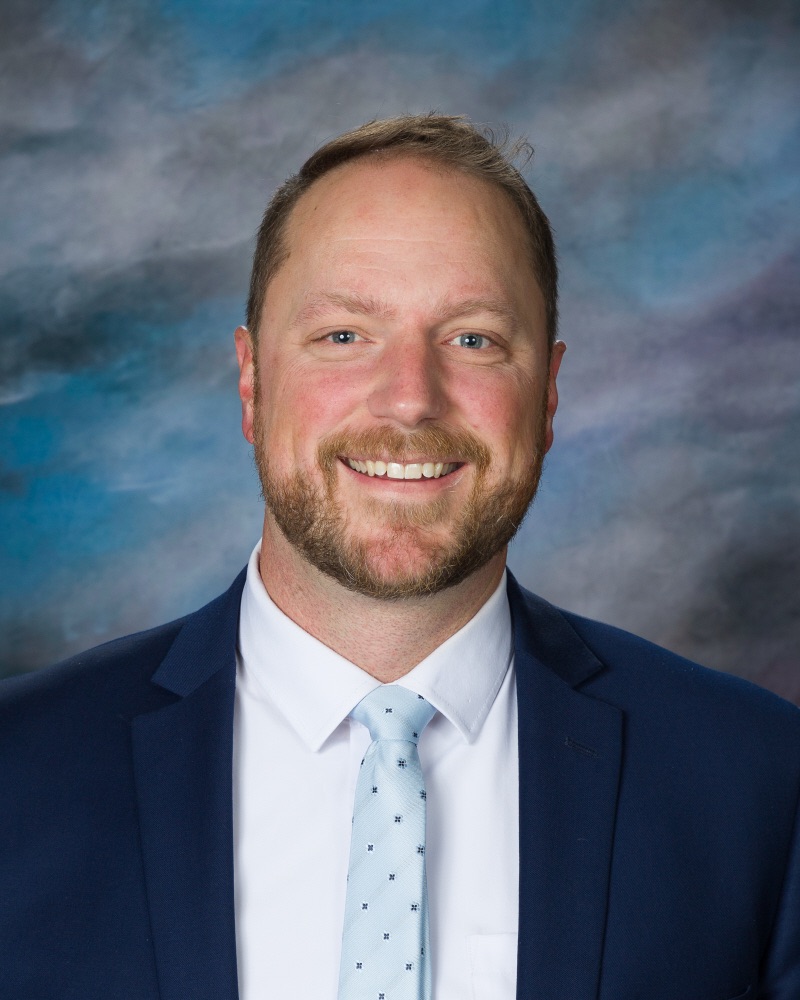
After six years working at American Fork High School, Peter Glahn announced he is leaving his position as principal to serve as assistant superintendent for the new Timpanogos School District.
“It’s been my favorite job that I’ve ever had. It has been so rewarding,” said Glahn of his position as principal. He calls his service at AFHS a “dream job,” working annually with five assistant principals, over 100 teachers, and 2,300 students. Glahn has worked on “creating a culture where people want to be.”
Those who work close to him feel that culture. AFHS Assistant Principal, Cole Perry, shared, “We are going to miss Mr. Glahn. His leadership, humor and ability to genuinely care for others have made a lasting impact on our staff, students and the community.”
“Because of Peter, there is a culture at AFHS that feels like home — a place where students and staff feel supported, valued and inspired. We are so grateful for the impact he has made here,” shared school secretary Mary Scharman.
“A strong leader makes all the difference, and Peter Glahn has made an incredible impact at AFHS. Over the past six years, Peter has led by example. He has a gift for bringing out the very best in our students and wants them to receive the very best education,” added Scharman.
Glahn recognizes how unique AFHS staff is, stating, “Some of our most veteran teachers are some of our best learners, some of our most adaptable. That culture was here when I got here.”
AFHS teacher Sam Beeson wrote, “One of Mr. Glahn’s greatest attributes is his ability to distinguish the light things from the heavy things. He refuses to take the wrong things seriously, and he refuses to take the right things lightly. I think this comes from a uniquely distinguishing characteristic that so few people possess: he is a fantastic listener. He enjoys others’ opinions, stories and triumphs. On the other hand, to Peter Glahn, no problem has ever been greater than a manageable solution. He is so very gifted at navigating difficult situations. I’m going to miss him big time.”
“My success has been because of the people I work with. This is the job that I dreamed about. I think the people that I got to work with helped me make my dream come true,” said Glahn of his time at AFHS.
In college, Glahn originally wanted to study communications, but after marrying a schoolteacher, he realized he loved being in a school setting. Glahn said he wanted to be around kids and envisioned being a principal.
His career in education began by teaching history, social studies and sociology at Mountain View High School. He later became an assistant principal there and, in 2015, was named assistant principal of the year in Utah.
Before coming to AFHS, Glahn worked as principal for five years at Timberline Middle School.
Glahn said that when the job of principal at AFHS became available, he talked to administrators and said that people who had worked at the school would often say American Fork was their favorite. “So when this opened up, I was like, ‘This is one that I want to do,’” said Glahn. “I’ve heard too many good things. I knew a couple of people who worked here already, and I thought, ‘I want to be a part of this.’”
“I didn’t have to prove myself,” noticed Glahn. He says he felt like the staff wanted him to succeed. “They knew that my success is tied to their success and the kids’ success, and that’s what they wanted. Immediately, I felt that.”
Glahn’s first year was during COVID, when everyone was wearing masks. He called it a “galvanizing year for me, my team, and for the faculty and staff.” At the conclusion of COVID, Glahn said, “We felt like we’d done something hard together.”
Glahn is now reflecting on special moments at AFHS, including when the marching band took eighth place at Grand Nationals and when the athletic department won six state titles in a single school year. He and his team have spent time outside of school hours supporting all the extracurricular activities the students are involved in.
“I enjoy going to the musicals, I love sports, and I like kids. I love learning. I love seeing kids figure things out and grow.” Glahn noted that he loves to see kids shine, saying, “We are just there to reflect the light that’s happening.”
Glahn also remembers the hard things the school has gone through, such as student tragedies. The one thing that keeps him going through the difficult times, however, is a drawer of gratitude letters from students, teachers and parents.
“Keeping the culture here is just daily habits of doing the little things; standing at the door, being in the halls when kids are in the halls, talking to them, highlighting the things that they do. It’streating people with love and respect and dignity,” said Glahn. He even spent time during his summers looking through yearbooks trying to memorize as many names as possible. “If you use a kid’sname, it’s like a superpower,” said Glahn.
“What is wonderful about Peter is how deeply he cares for the staff, teachers and especially the students. Their success isn’t just part of his job — it’s his top priority. You will find him in classrooms, sitting in the commons surrounded by students, supporting them at their athletic games, or even joining in on school plays. I don’t think the parents really see how much time Peter spends here, but the students notice. We all notice. We love and respect him because he’s genuine, approachable, and always encouraging everyone to be their best,” added Scharman. “His energy is upbeat, and his presence is felt throughout the entire school.”
Student Body President Adi Gardner wrote, “Mr. Glahn has always been a cornerstone for me during my high school years. I knew he was always going to be there for me when I needed help and support. He is always eager to get involved with the student body through the assemblies and making sure to check in on how the students are doing through casual conversation.”
One memory of Glahn that happened this school year stands out to Gardner. “He and I were welcoming students to school on one Friday morning, and he looked at me and said, ‘This is my favorite part of my job, getting to know these students, and how cool they are, and everything they do outside of school. And that’s part of your job, too.’ … Mr. Glahn is someone that I truly look up to in my position as student body president and has been a great example to me of what leadership means. Compassion, empathy, kindness and, most importantly, relationships,” Gardner shared.
The night before sharing news of his departure with school staff, Glahn was getting his thoughts down on paper. The second he wrote, “I won’t be the principal of American Fork High School next year,” he felt all the emotions, covered his face with his hands, and cried. “I just thought of all the people and all these faces that I will be leaving.”
“You’re not just leaving the school; this place is the people. Amazing people. I won’t have the frequency with these people every day. A lot of my job has been just setting a feeling, a tone, a culture.” Glahn says cultivating that culture is something that you have to do every day.
“While it’s hard to imagine AFHS without him, especially his singing in the Front Office, we are excited to see what’s ahead. His vision, energy and passion will be such a great asset to the Timpanogos District. We know he will continue to do amazing things. Peter will be deeply missed, but he won’t be forgotten,” concluded Scharman.
When asked what advice he would give the new principal, Glahn replied, “So many people care about the success of our students. You don’t have to do too much to motivate the people here. You’re lucky, you have the best kids to work with.”
“American Fork High School will surely miss his bright smiles lighting up the halls, but will never forget the fun experiences he has created for us throughout high school. At AFHS, things are always changing, and Glahn has definitely contributed to the legacy. We wish him good luck in a higher position in his career, but hope he will never forget the words ‘Dear old AF High, we will love you ‘til we die … and always fight for AF High,” concluded Gardner.
“I told the seniors I’m graduating with them,” Glahn said of his departure. He will gradually move into his new position and has already had some meetings with the new district. Glahn says it’s cool to see the three new districts working in collaboration together right now. He is excited to create a new culture in the Timpanogos School District.
“I am dedicated to creating a role where I’m not away from the reason why we do this work. The students have always been the reason,” said Glahn.
Beky Beaton / American Fork Citizen
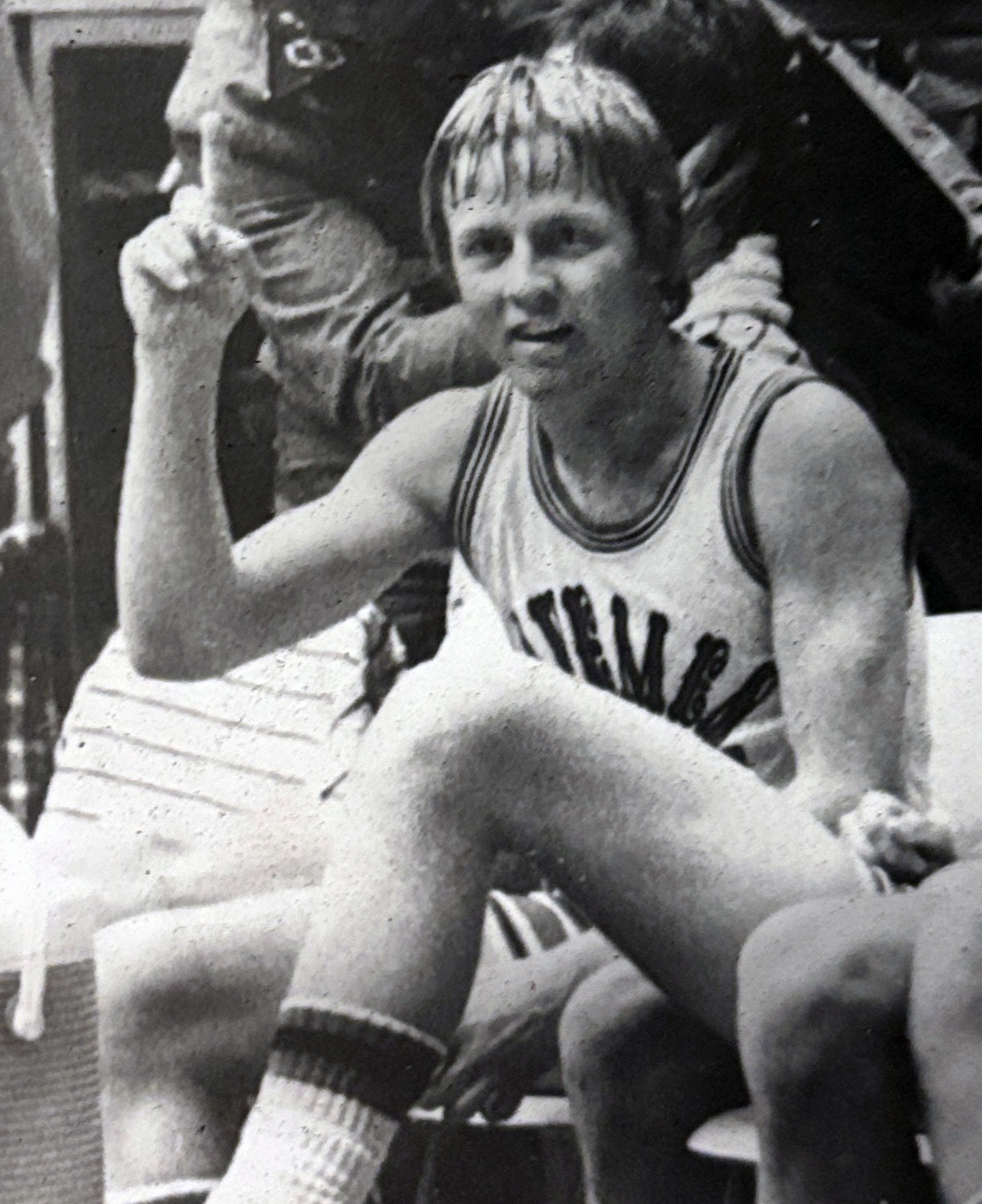
American Fork’s David Dean didn’t win the genetic lottery when it came to size. Listed at a generous 5’9” on the roster of the 1976 Caveman championship basketball team but repeatedly cited as 5’7” elsewhere, he was a small man in a big man’s game.
However, he seemed to understand from the very beginning that his stature could not limit the size of his heart. He led with that, and by so doing cast ripples of influence like a stone in the water far beyond his immediate reach.
It started very early. In 1970 as a seventh grader, Dean was making buzzer-beaters to win Bantam basketball games. The next year, he finished second in a track event at the Alpine field day, scored in double digits in some Bantam games and reached the semifinals in the junior high tennis tournament.
A long-time piano student, he also played clarinet in the band. In 1972, he attended the 2nd annual Cougar Basketball Camp, was elected president of the Boys League at school and served as a Home Room Representative.
At the end of eighth grade, he received a Certificate of Achievement for Scholarship and a Physical Fitness Presidential Award.
As he went on to high school, his muti-faceted contributions continued. He won the “No. 1 Hustler” trophy at the Cougar Basketball Camp and was vice-president of the Boys League. He earned multiple honors in basketball and football plus city and division trophies in tennis.
As a sophomore he played varsity tennis plus sophomore basketball and football. He was also a member of the chess team and served as executive vice president of his grade class in Seminary. He played the organ and served in a leadership position for his church youth group as well.
As a junior, Dean was chosen to attend Boys State and was elected as a State Delegate and City Councilman there. He earned varsity letters in football, basketball and tennis that year and also played on the baseball team. He received All-Region 6 honors in football and was voted team MVP in tennis.

Dean capped his prep experiences with a remarkable senior year. Anne Christensen, his high school counselor, wrote a scholarship letter of recommendation for him which included the following comments, among others: “David Dean is an exceptional young man who is very well-rounded. …
“David is currently serving as our Student Body President and doing a very good job. … David Dean is currently vice-president of the National Honor Society and has a 3.85 grade point average. … David has a very pleasant personality and is well-mannered and polite in all situations.”
His sports year was off the charts. He was one of three captains of the football team, played both split end (wideout) as well as defensive back and earned All-State Second Team honors. His speed and hands drew recruiting interest from in-state colleges even though he only weighed 135 pounds.

Dean was a co-captain and point guard of the basketball team too and helped lead the Cavemen to the title. He averaged eight points per game for the season but made 101 assists and 60 steals as well.
During the state tournament he averaged 9.7 points on 55 percent shooting with 23 assists, 19 steals and nine rebounds.
He was named the MVP of the 3A tournament and also received All-State MVP honors from the Deseret News, the Salt Lake Tribune and the Provo Daily Herald. In addition, longtime Ute and KUTV sports announcer Bill Marcroft selected him as the state “Playmaker of the Year” for the second consecutive time.
One writer summed it up this way: “Coach Carl Ingersoll and his team have won many post season honors with Dave Dean elected to everyone’s all-everything team.”
He collected varsity letters in tennis and track along with those other two sports and was offered multiple college scholarships in both athletics and leadership. He ultimately went on to BYU on one of the latter.
As impressive as all these achievements are – and this list doesn’t include everything – they can’t begin to give you a full sense of what kind of young man Dave really was.
When interviewed earlier this year about the championship run, he quickly gave credit to others for his accomplishments, starting with his parents Owen and Mary, and his athletic older siblings.
Owen coached him in his early years and laid the foundation for his later successes along with his older brothers Craig, Steve and Eric. Dave also singled out classmate Bruce Merkley as a source of inspiration for him.
Bruce wasn’t a teammate, or even an athlete. He was confined to a wheelchair because of a childhood illness, but he was the team’s biggest fan and always cheered the players on. Dave presented him with a signed ball on behalf of the team at the city booster celebration banquet following their title run.

Bruce passed away not long afterwards and requested that the ball be returned to the school as one of his last wishes. It’s still there today, in a display case along with his photo. Even after 50 years, Dave couldn’t speak of him without emotion.

Dave also credited the mentorship of coaches and other classmates for “what made me the athlete I had become.” His list included “Bob Eckles, Carl Ingersoll, Don Mower, Davis Knight, Wendell Hansen, all my amazing teammates and Dear Old A.F. High.”
His enthusiastic school spirit was infectious. As Student Body President, he originated the legendary AFHS chant familiar to subsequent generations of students:
“Good morning Student Body!” … (Good morning Mr. President!)
“How do you feel?” … (Proud!)
“Proud of what?” … (Proud to be a Caveman!)
Dave also earned the respect and camaraderie of his opponents. Wesley Ruff, ABC4 sports anchor, played for region foe Springville. “Dave and I became really good friends,” he said.
“He was not their best basketball player, but he was the heart and soul of that team,” Ruff continued. “He was fast, scrappy and would do anything to help his team win. It sucked to guard him, which was my responsibility most of the time.”
Ruff told how the two of them often chatted in the stands while watching the JV teams play as they waited for their own turn. “He was a good kid. He had an athletic gift and he knew how to use it, and he had a drive to succeed that couldn’t be denied.”
The two of them later competed in the same events at the state track meet in the sprints and relays. Eventually they hung out together in the Language Training Mission as they prepared for their service and they remain friends to this day.
Dave told the story himself about what happened once the season ended. “After the nets came down and the awards were over, Utah selected 20 basketball players to compete in two games. One was at AF High School. From those 20, 10 were chosen to play a game against the 10 best players from Arizona.
“The game took place at the U of U. We won in double overtime. I entered the locker room, visited with a few coaches and told them I was putting away my jersey for a few years to serve a mission. I attended BYU on a leadership scholarship.
“During the semester at BYU, Harry Anderson (an assistant basketball coach) asked me to come to their walk-on tryouts. Later in his office he presented me with a BYU uniform as part of the team. I declined the offer and said, ‘Thank you, I’m going on a mission.’
“I served two years in El Salvador. I broke one mission rule. I received a call from Steve Craig – a BYU player also serving in El Salvador. He had lined up a basketball game against the country’s national team.” Both men played in that game, but diplomacy forbids reporting the result.
Once he got home, Dave got busy with living his life and never officially continued his playing career. Instead, he gave decades of service as a coach in youth leagues and at his Alma Mater, also continuing to play whenever or wherever he could and becoming a legendary booster dad.
He is retired from competing now, after multiple surgeries on worn-out body parts, but he maintains his fitness with yoga and still plays golf.
When the chance for the 1976 team reunion came along, Dave was at the center of it all, making the calls to invite his teammates to come and hosting a night of old memories and shared laughter before the official event at the school.
The heart and soul of the team once more … just like he always was.
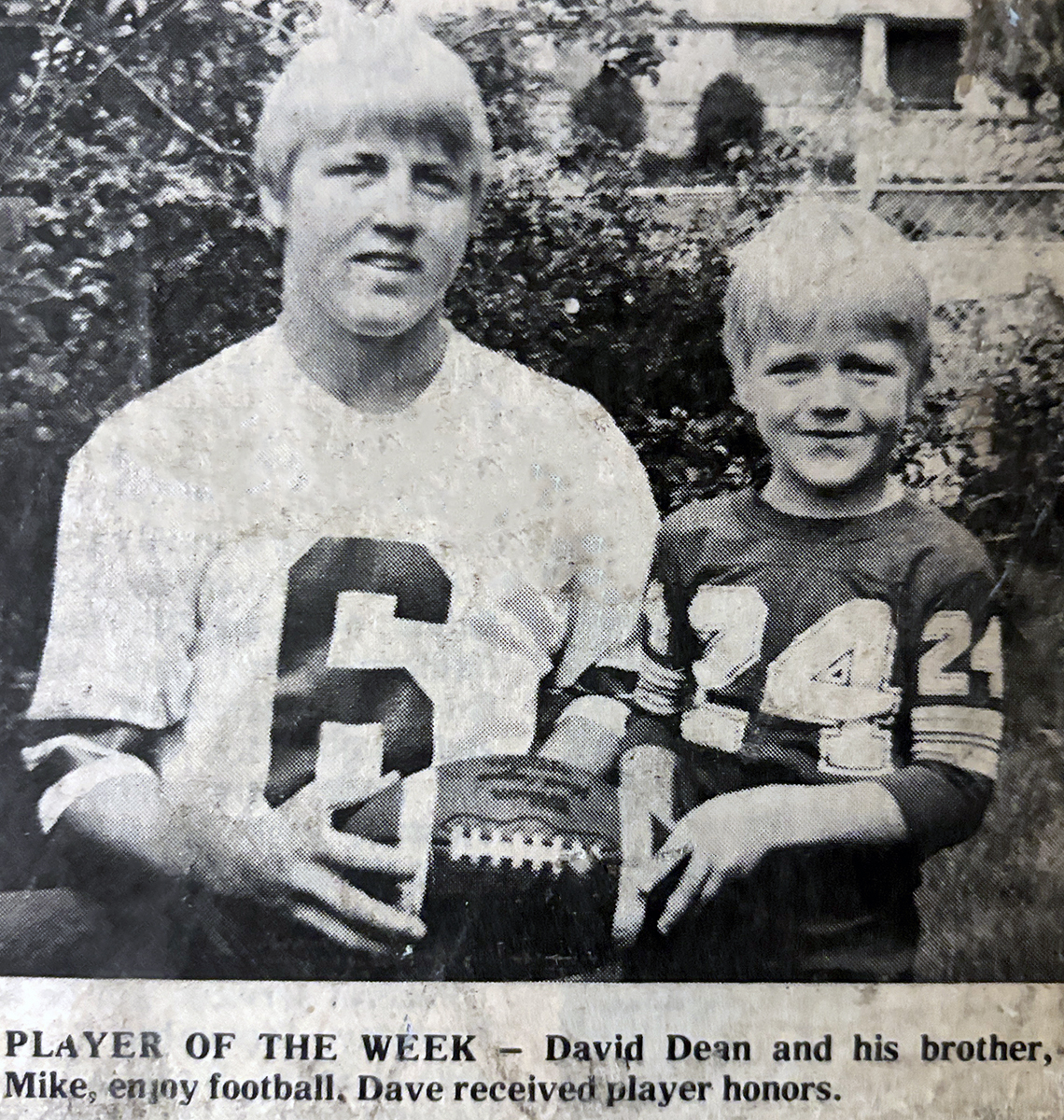
Here’s just a few samples of what the sports reporters of the day had to say about David Dean as a competitor.
- From the football season preview: “Dave Dean is the kind of player any coach would love to have. He is a good student, is studentbody president, has a cheerful attitude, and a lot of ability. Dean will work from split end and hold down a defensive secondary job.”
- From an early-season football contest: “In the first quarter, after holding the Pirates, Dave Dean, Caveman team captain and deep return man on punts, fielded the Pirates first punt of the game and behind a wall of blockers returned the ball down to the five yard line.” He went on to score two touchdowns in that game as a wide receiver. “I would say that in Dean, Thomas has a most elusive catcher as Dave covers the entire field going for the ball.”
- More football: “Randy Thomas, AF quarterback, tossed to Dave Dean who then latteraled to Tony in the famous ‘hook and trailer’ play good for a 19-yard score.”
- On the other side of the line: “Dave, who in addition to his fine defensive game where he had eight tackles, batted down at least 10 passes and was very instrumental in the Cavemen shutout.”
- Switching to the basketball season: “The floor leadership of David Dean also began to help as he penetrated the middle passing to his teammates for easy buckets underneath.”
- “Dave Dean was on the receiving end of a few passes during the game and the AF passing wizard who usually sets up his teammates ended up high point man for the game with 15 points, and I do not know how many assists and steals he had, but he had another fine all-around game.”
- “The Dons even led by 7 points at times, then with one minute and 39 seconds left in the first half, Dave Dean ignited an AF rally that left the Dons trailing in the Cavemen’s dust. Dean had four steals and four assists in that outburst.”
- “The turning point in the see-saw game came late in the third period and early in the final quarter when American Fork ran off 11 straight points to break the game open, 61-46. Igniting the streak was quick little Davey Dean who didn’t score a point during the streak but penetrated the Ute defense and set Nerdin, Thomas, Burgess and Hansen up for easy baskets. Dean scored nine points during the game but his worth to the team is not reflected in the box score. His ball-handling abilities and quiet leadership on the floor are not always appreciated by those not well-acquainted with the team. ‘He is what makes us the team that we are,’ praised Coach Carl Ingersoll. ‘He is the one player I don’t think we could win without.’”
- “David Dean, the little playmaker guard who is not blessed with a great shooting touch but who more than makes up for it with his offensive penetration, dribbling and defense, was another who played an important part in the victory.”
- After the championship contest: “David Homlstead Dean, the ‘littlest’ Caveman of them all ‘dribbled’ himself and his teammates into the ‘hearts’ of all American Forkers for years to come as ‘Davy’ quarterbacked the Cavemen to the ‘State Championship’ with a revenge win over Davis in the final game.”
After the tournament: “Brightest light was 5-7 Dave Dean of 3-A champ American Fork, who could be elected president of the national under-six-foot club after what he did to Davis in the championship. He turned in the best advertisement for little guys since Monte Towe, or Robert Redford. He directed A.F.’s effective fullcourt press, he set up a couple of dozen buckets by lankier friends, and he dribbled through a few legs. Then he cut down the net – demonstrating that a little guy can touch the rim with a little teamwork.” (His teammates lifted him up on their shoulders for this duty.)

Beky Beaton / American Fork Citizen
Most Utah teenagers who are members of the Church of Jesus Christ of Latter-day Saints have the opportunity at least once to spend a few days walking in the footsteps of those who emigrated to our not-yet state along the Pioneer Trail.
This activity is officially called the Pioneer Trek Experience but is usually referred to simply as Trek. Utah residents generally go to the well-known trail locations in Wyoming, but there are also dedicated sites in Utah, Idaho, California, Washington state and even Argentina.
Those who don’t live near any of these places also organize Treks on public or private land with appropriate permissions.
Even though short in duration, Trek is a full-blown reenactment of the pioneer experience. Participants dress as the pioneers did and pull their own handcarts. They are limited to the 17 pounds per person that the pioneers were allocated for their personal effects, and they eat and sleep as the pioneers did.
Youth members and adult leaders of the Lehi Hunter’s Grove Ward were among those who had the chance to go to Wyoming this year, but the congregation decided to try to extend the experience to families whose members were not of the appropriate age to participate.
Retired Army Colonel James Comish and his wife Karen were asked to take on this ambitious assignment, and they enthusiastically jumped right in.

Those who go on Trek are asked to choose a pioneer, preferably a relative when possible, to represent during the activity. They research the individual they have chosen and learn their personal story.
The Comishes had those who were going to participate in the home Trek do the same, and they posted a photo when available and information about those selected on 3×5 cards around the chapel.
On Saturday, July 18, the appropriately-attired Comishes staged the home Trek at Quail Cove Park in American Fork at the same time as the youth were returning from their experience in Wyoming. Pioneer dress was optional, but many pulled together what costumes they could in the spirit of the event.
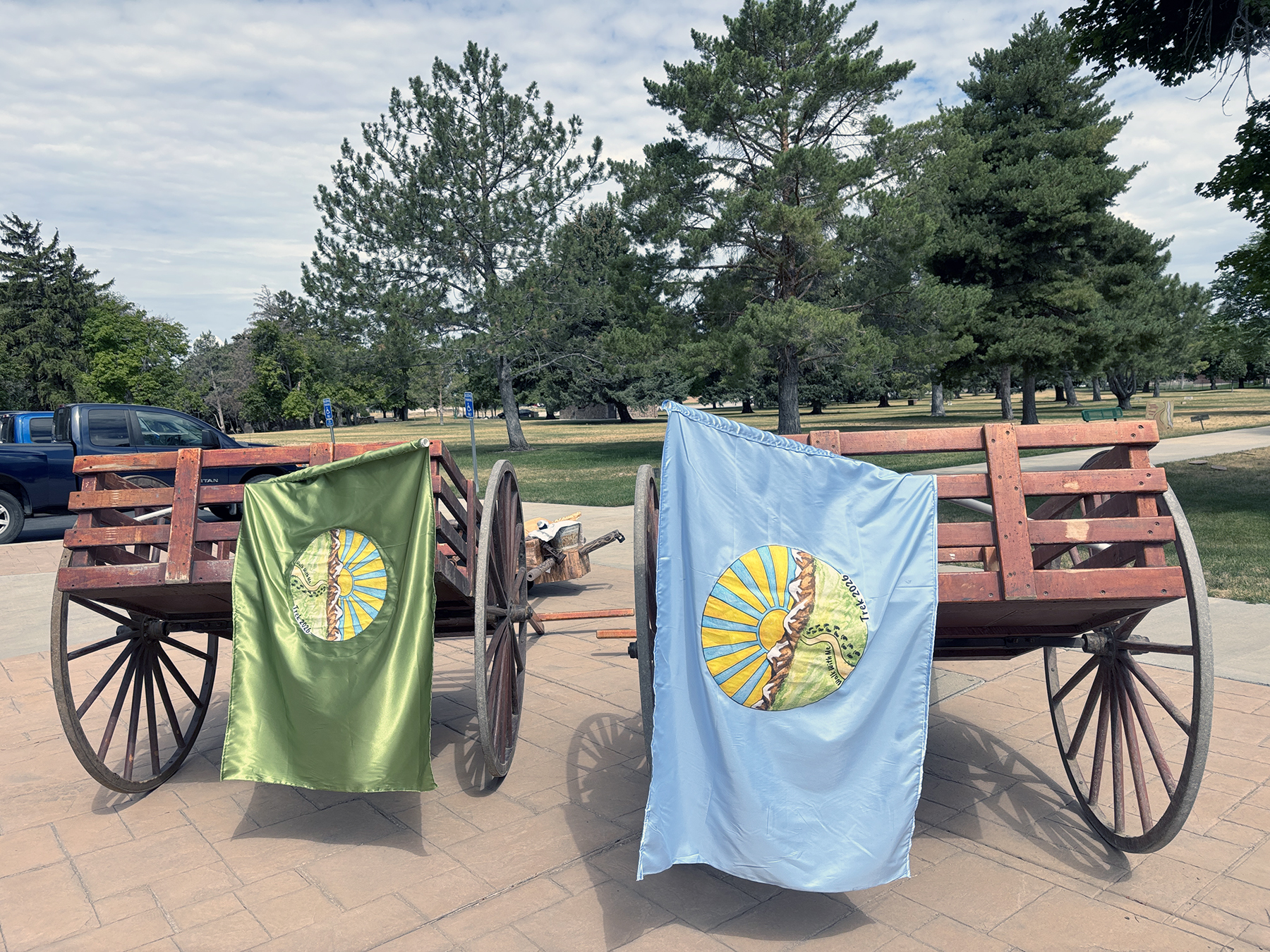
It got started with a chuckwagon luncheon in the pavilion. The group was divided into three companies. Two full-size handcarts were borrowed for the event, complete with trail flags, and James made a smaller version himself so younger children could try that too.
The Comishes selected 20 stops along the real Pioneer Trail for their reenactment. Each was indicated by a sign, and James drew a picture of each location on large pieces of cardboard. As the companies moved to each stop, they were given historical information about the location.
In addition, there was an activity associated with each stop. The Comishes made 20 different pioneer-inspired games or toys for family members to try out. The event concluded with treats and dancing.

“The Park Trek turned out magnificently, people told us,” James said. “They were thrilled by our every detail from 20 stops along the trail to 20 famous geological landscapes to 20 pioneer games and toys.
“The adults were so amazed by the sheer joy on their children’s faces,” he added. “Adults participated with the children and seemed to enjoy themselves as well.”
“We had a great turnout,” Karen said. “We had about 40 children. Since the children had never played the games before, they really enjoyed learning how. The adults seemed to have fun alongside the kids.
“Everyone experienced pulling the real handcarts,” she continued. “The park itself was wonderful for this event because of the size and shade trees. We had protection from the heat. Everyone got a historical perspective at each of the stops with landmarks Jamie drew to provide a visual perspective.
“We had a chance at the end to dance to the Virginia reel, catch candy from the candy cannon and make homemade ice cream in zip-lock bags,” Karen said. “We simply loved the day.” It’s surely one the rest of the company won’t soon forget either.
Brynn Carnesecca
American Fork Citizen
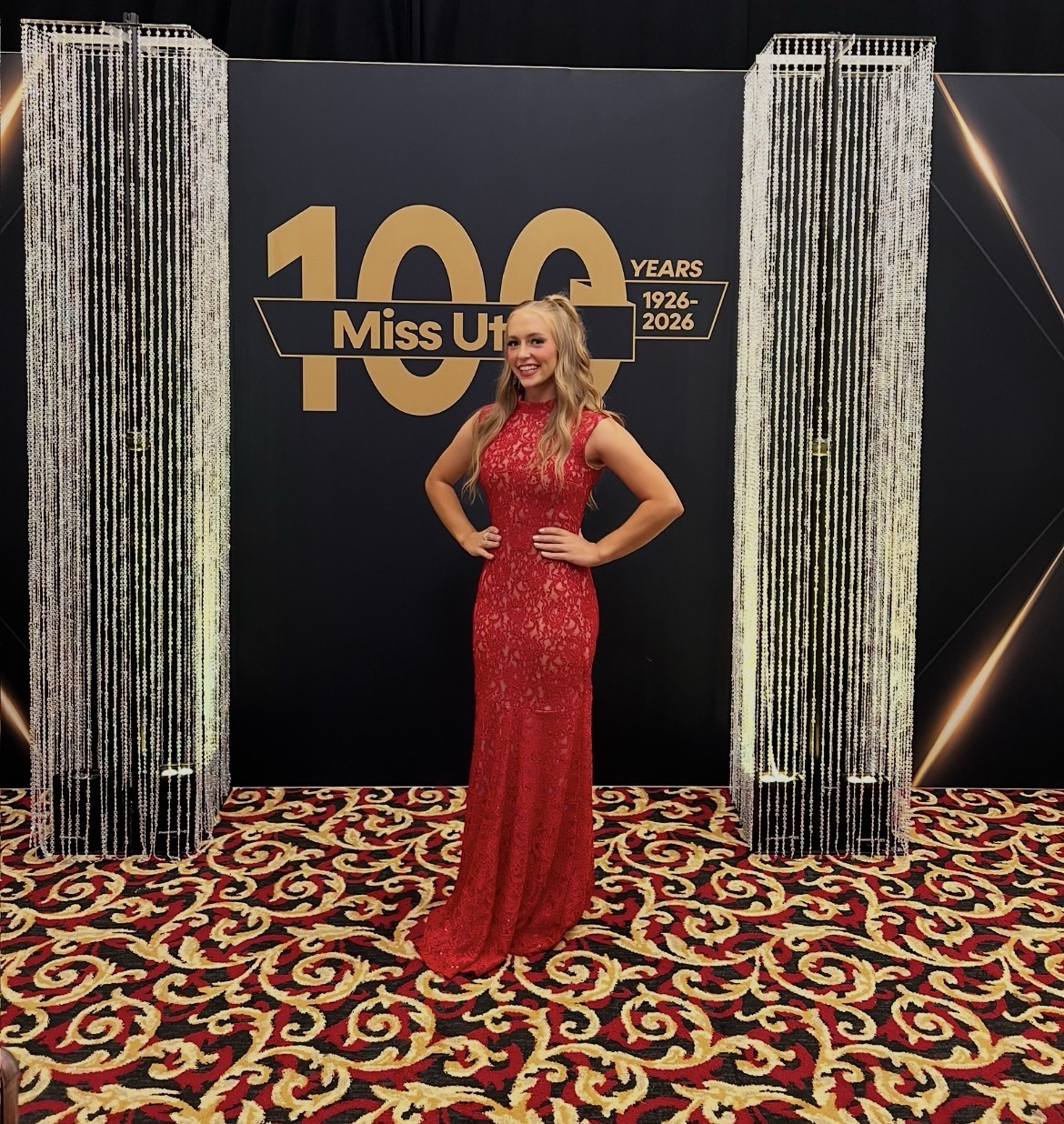
Whitney Wilkins, the current Miss American Fork, competed on the Miss Utah stage this past weekend. She won the Non-Finalist Interview Award ($250 scholarship), the Evans Education & Agriculture Scholarship Award ($1500 scholarship), and was the 2nd Runner-Up in Ad Page Sales.
Wilkins spent the last year preparing for the competition. Her preparation included mock interviews, dance rehearsals, and practice with the fitness and evening-gown walks.
“Preparation was everything,” Wilkins said. “I wanted it to feel easy, so I didn’t have to stress or think about it the week of the competition.”
The Miss Utah competition took place over three nights. The program included three preliminary competitions followed by a final’s night featuring the top 15. 52 girls competed for the title of Miss Utah, with Miss Nebo, Erika Dalton, securing the title on Saturday night. This year marked the 100th anniversary of Miss Utah, so everything was centennial-themed.
Through the process, Wilkins grew as a titleholder and a representative for the city.
“I became more confident in who I am and what I stand for. I also learned how to articulate myself better,” Wilkins shared. “Interviews always made me so nervous, but to receive the highest non-finalist interview score was truly a testament to my hard work and how much I grew throughout the process.”
The Miss Utah opportunity also allowed Wilkins to become a role model and friend to younger girls. Each competitor has a Honeybee, a younger girl who performs on stage and serves as an escort during the evening gown section. Brooklyn Towner was Wilkins’ honeybee, joining her onstage and at the Taylor Swift-themed Honeybee party. Other little girls also looked up to Wilkins.
“One of the nights, a mom and her little girl came up and introduced themselves to me. I had never met them, but they said they had been watching the competition and became fans. They and many others thanked me for being such a modest and gracious role model to these girls,” Wilkins said. “People are always watching, and I am so grateful that I was able to stay true to my values…I am very humbled and honored that these girls chose me as their role model.”
At each phase of competition, Wilkins represented not only herself, but the city of American Fork.
“Representing American Fork all week was truly such an honor,” Wilkins shared. “I absolutely love AF, and it has played a big part in who I am today and who I showed up as on that stage.”
Additionally, Wilkins made friendships with many of the other competitors.
She said, “I absolutely love these girls. It’s crazy how even though we were so stressed and competing against each other, we could truly support one another… I hope I stay friends with these girls long after the competition. These girls are incredible,and I love seeing how much good they are accomplishing in their communities.”
Overall, Wilkins is thankful for the encouragement she received from friends, family and the community.
“I was blown away by the amount of love and support I received throughout this week. Everyone was so willing to jump in to help and support me in any way possible. I am walking away from this week feeling so loved and so grateful for this opportunity and the incredible people in my life,” Wilkins said.
Wilkins is finishing up her year as Miss American Fork this Saturday, June 27, at American Fork Junior High. After giving up her crown, Wilkins plans to continue attending school at BYU. She will receive her degree in Human Development next June, with hopes to go into nonprofit work. The scholarships she received from Miss American Fork and the Miss Utah competition have helped her substantially in receiving her education.

Bonnie Lee Dalton

American Fork’s Elle Anderson makes history as Miss America’s Teen

Cavemen improving placements at Region 3 golf tourneys

‘BIGGEST LOSER’ CONTESTANT FROM AF DIES TRAGICALLY

Aspen Peaks School Board “Meet the Candidates” night recap

Tragedy Strikes American Fork: Local Couple Found Dead in Apparent Murder-Suicide
-

 AF City News3 weeks ago
Mayor silences cheers as Booker announces lawsuit against AF Police
-

 Obituaries1 month ago
Brynn Leigh Carnesecca
-

 Local News1 month ago
American dream of homeownership on hold for most young Utahns
-

 Local News1 month ago
August brings “catastrophic” wildfire conditions to Utah
-

 AF City News3 weeks ago
American Fork disclosures show gaps, unanswered questions
-
Local News1 month ago
Utah’s CommonSpirit Hospitals receive transparency badge
-

 Local News1 month ago
Wildfire smoke is now the primary pollutant affecting pregnancy, study shows
-

 Local News1 month ago
A recent Utah court decision may let homeownership transfer before required payments are made
-

 Local News1 month ago
You’re not imagining it: Your kid’s school supplies cost more this year
-

 AF City News1 month ago
American Fork Citizen honors journalist and friend Brynn Carnesecca