
AF City News
American Fork proposes 9% property tax hike


Rob Shelton | American Fork Citizen
Homeowners in American Fork would see about $2.83 more per month on their property tax bills under a tentative fiscal year 2026-2027 city budget totaling nearly $209 million. City leaders say that money is non-negotiable if they want firefighters staffing a new station by October.
The city presented the tentative budget May 12, outlining a 9% property tax increase that would generate $660,000 in additional annual revenue. Every dollar goes toward one thing: partially staffing Fire Station 53, a third fire station set to open in the Lakeview area south of Interstate 15.
Finance Director Anna Montoya was direct about what happens if the increase doesn’t pass.
“Should the proposed tax increase not be passed, the new fire station will not have full shift coverage, leaving only five of the nine positions filled, resulting in gaps without staff at the new station,” she told the council.
The public hearing on the budget is set for June 9 at 7 p.m.
Property taxes and the new fire station
Station 53 will require nine full-time firefighter-paramedics to run properly. The 9% property tax increase equates to $34 annually, or $2.83 per month, on a median-value home assessed at $492,300. This increase covers four of those nine positions. The remaining five get funded by squeezing savings from elsewhere in the budget.
“We’re trying to grab every dollar we can, squeeze every dollar we can out of this budget to fund the staffing for this new station,” Montoya said.
Councilmember Ryan Hunter noted the scale of that internal effort. “You had to find $750,000 in addition to this tax increase just to kind of break even right now,” he said, thanking Montoya and her team publicly during the meeting.
Montoya also pushed back on the notion that 9% is steep. The city’s last tax increase came in 2022 and, since then, the Consumer Price Index has climbed 18%. “We’re asking for 9%,” she said. “We’re not even meeting CPI to cover inflation.”
The city went more than 14 years without a property tax increase before 2022, which resulted in about a 33% increase.
Mayor Brad Frost framed the immediate goal simply: Getting bodies on the south side of the city before a permanent station can be built. “We’re just getting bodies down there,” he said. “It’s our primary responsibility.”
The temporary station: Coverage now, construction later
Station 53 won’t open in a purpose-built facility. The city spent $200,000 in last year’s budget securing a temporary location in the southwest portion of the city, in the Lakeview region south of Interstate 15, and this year’s spending is entirely about getting firefighters inside it.
That temporary setup was a deliberate choice. Mayor Frost told the council the city hasn’t yet hit the population density to justify breaking ground on a full permanent station. The goal right now is coverage, not construction.
What that permanent station looks like and what it will cost remains an open question. The fire department’s own goals listed in the tentative budget include a line that underscores just how early-stage the planning is: “Develop plan for Fire Station 53. Determine scope and cost and timeline.” No price tag. No groundbreaking date.
In the meantime, staffing the temporary location requires 11.25 new full-time equivalent positions: three new captains, three new lieutenants, three new firefighter-paramedics and 2.25 part-time ambulance transport staff. Montoya noted the $1.4 million cost covers salaries and benefits only, uniforms and equipment for the new hires come on top of that.
The urgency behind all of it comes down to geography and growth. Fire Station 51, the city’s original station, currently ranks as the busiest single-station fire facility in Utah County.
American Fork’s population has nearly doubled since 2010, climbing from 26,263 residents to an estimated 48,536, and the bulk of new development is pushing south and west, far from Station 51’s response area.
A deficit that shows the pace of growth
There’s a number buried in the back of the budget that tells a broader story about what rapid growth costs a city trying to keep up.
The Fire Impact Fee Fund, the account that collects fees from new home and commercial developers to help pay for fire infrastructure made necessary by growth, is projected to end fiscal year 2026-27 more than $1 million in the red. Specifically, the fund is on track to carry a negative ending balance of $1,036,074.
That deficit isn’t a crisis, but it is a signal. The city is building and staffing fire infrastructure faster than developer fees are coming in to cover it, spending down reserves to make sure public safety keeps pace with the rooftops going up.
It’s the same dynamic playing out across the budget. American Fork has an anticipated buildout of 80,000 residents by 2041, nearly double today’s population. The city is already racing to widen roads, extend water lines, build parks and plan a $40 million public works facility, all while managing a population that has grown 50% in the past 12 years.
The fire impact fee fund deficit puts that race in concrete terms: Right now, the city is investing ahead of the revenue that new growth is supposed to generate. Whether that gap closes depends on how fast development, and the fees that come with it, continues.
Roads: $15.7 million in work
Road repair and connectivity has been the top resident priority in city surveys and the budget reflects that. Total road work expected to begin or continue in fiscal year 2026-27 reaches $15.7 million across multiple projects.
The biggest single item is the first phase of Lakeshore Drive, a $3.72 million extension from the existing road terminus to 1500 South and 100 West. Also on the list: a $2.59 million extension of 700 North from 100 East to 200 East, a $780,000 roundabout at 300 West and 200 South carried over from the prior fiscal year, $775,000 in improvements to the 1100 South and 100 East intersection, and $1.15 million in improvements to 100 West from 100 North to 700 North.
Road funding draws from multiple sources: Utah Department of Transportation Class C Road Funds, a quarter-cent sales tax dedicated to roads and transit, and a local portion of the county public transit tax. The Class C Road Allotment alone hits $2 million this year, up from $1.8 million in the prior year.
Fitness center: A $4 million fix
The city’s fitness center needs work, $4 million worth. That’s the single largest general fund capital expenditure in this year’s budget and will draw the general fund balance from a near-maximum 35% of revenues down to 25%. City officials describe it as a one-time outlay.
The fitness center question doesn’t end with the $4 million repair. Scott Roudabush, chairperson of the city’s Parks and Recreation Committee, told the council during the May 12 public comment period that his committee is unified behind pursuing a bond for an entirely new recreation center.
“We are on the same page and supporting doing a bond for a new rec center,” he said, noting the facility ranked second in the community survey behind roads.
The fitness center already operates with a 35% general fund subsidy, a rate that has held steady for the past six years.
Public safety beyond the new station
The police department isn’t standing still, either. The budget adds two full-time officers and two part-time crossing guard positions, with total increased personnel costs of nearly $695,000. Fleet spending jumps $432,000 as the department shifts from leasing vehicles to purchasing them outright.
Councilmember Hunter, who praised staff for finding budget savings wherever possible, pointed to the fleet decision as an example of the kind of line-by-line work happening behind the scenes.
What’s next
The City Council unanimously approved the tentative budget May 12. Final adoption requires a public hearing, set for Tuesday, June 9, at 7 p.m. and a council vote no later than June 30.
A truth-in-taxation hearing on the proposed property tax rate increase, required by state law any time a city seeks a rate above the certified tax rate, is tentatively scheduled for Aug. 11.
One note from the May 12 meeting: Zero residents attended the city’s budget open house on May 5, but the tentative budget was not released until after the public hearing.
Residents can view the full tentative budget at http://www.americanfork.gov/DocumentCenter/View/19313/FY-2027-Tentative-Budget.


Rob Shelton | American Fork Citizen
The City Council voted Sept. 8 to sell city-owned land along 100 West for $1.4 million, a sale tied to the Chipman/Stake Center annexation.
The council approved the resolution with little discussion beyond a brief mix-up over the property’s address. They accepted an offer from buyers LeRoy Love and Devin Chipman under a real estate purchase contract and a second addendum negotiated alongside the roughly 24-acre annexation agreement.
City documents place the property near 700 South and 100 West, though the printed meeting agenda listed the annexation itself at 510 South 100 West. Council Member Tim Holley asked for clarification just before the vote.
“The address is 700 South, not 510 South,” Holley said.
Mayor Bradley Frost acknowledged the mix-up. City Administrator David Bunker told the council the annexation covers “a long strip from about 500 to 700,” with the two addresses reflecting different points along that stretch.
Council Member Ryan Hunter made the motion to approve the land sale, and Holley seconded it. Council Members Ernie John, Clark Taylor, Holley and Hunter each voted yes. Council Member Staci Carroll’s vote on this item was not clearly recorded before the meeting moved to the next agenda item.
The resolution’s own language does not agree on how many parcels are involved. Its preamble lists three Utah County parcels — 13:050:0262, 13:050:0263 and 13:066:0024 — but the section formally defining the “City Parcels” being sold lists only two, leaving out 13:050:0263. The underlying real estate purchase contract, signed by Love and Chipman in July, backs the three-parcel version, also listing 13:050:0263 among the property for sale.
That contract contains its own apparent error, though: It lists one parcel as 03:050:0262, not 13:050:0262, the number used everywhere else in the packet. Under the deal, Love and Chipman agree to dedicate portions of the property back to the city, without compensation, for future roadway improvements and protections along the American Fork River corridor, according to the resolution’s dedication covenant. The covenant is written to bind future owners to those obligations even after the land changes hands.
The resolution states that accepting the offer does not grant the buyers any vested development rights and does not itself approve the annexation. It also says that if the purchase agreement makes closing contingent on the annexation’s completion, city staff cannot close the sale until that condition is satisfied.
The council approved the annexation ordinance later in the same meeting on a 5-0 vote, placing the roughly 24-acre area in the city’s PR-3.0 zone. Before that vote, John said the annexation has come before the council “in a couple of different guises” over the past two years and thanked city staff for their work on it.
Frost is authorized under the resolution to sign the purchase agreement, the dedication covenant and any deed conveying the property. The city attorney may approve minor, non-material revisions to the closing paperwork, as long as those changes don’t change the purchase price or materially expand the city’s obligations, among other conditions.
Rob Shelton | American Fork Citizen
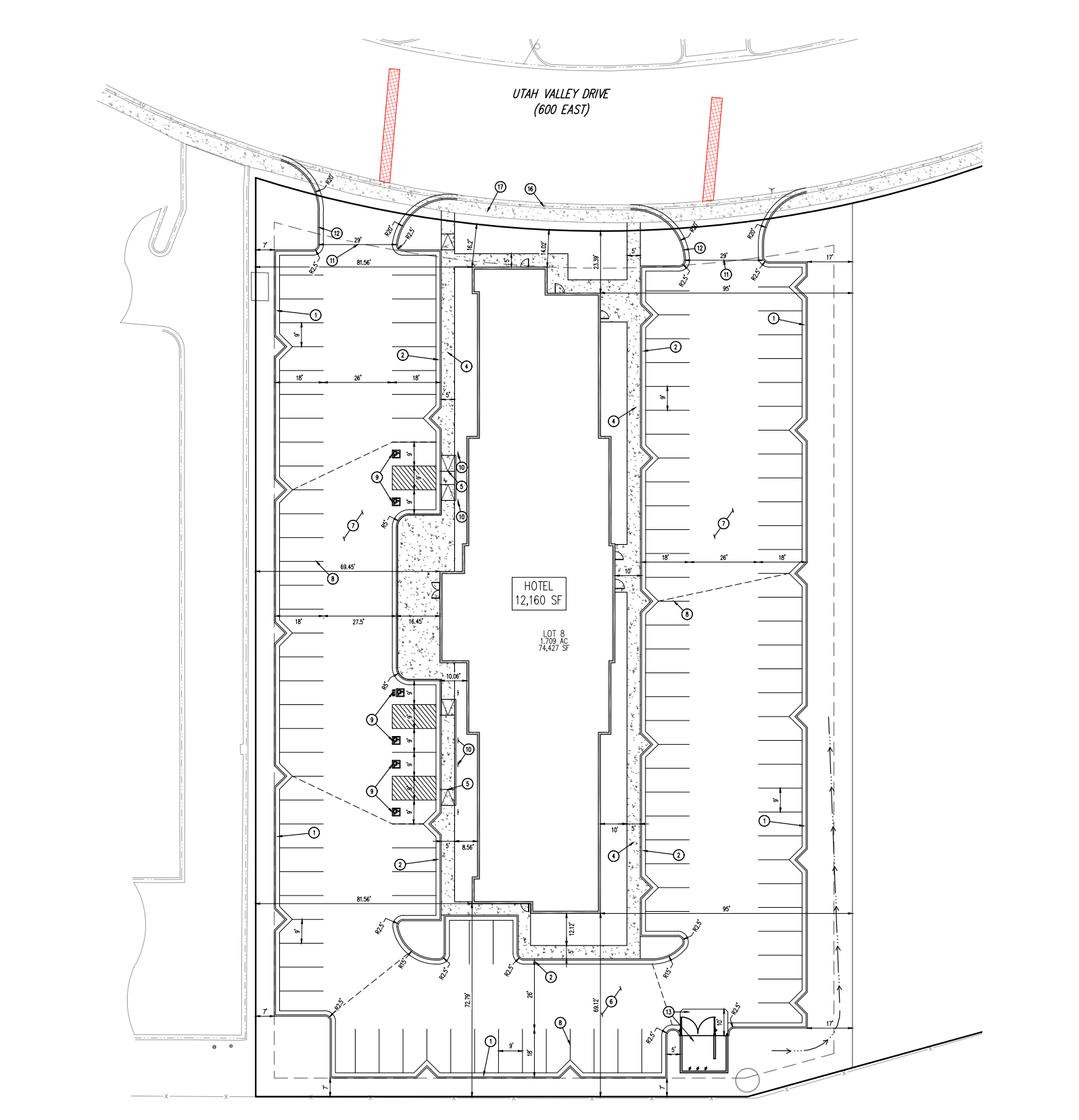
American Fork City Council members voted unanimously Sept. 8 to let a proposed extended-stay hotel build fewer parking stalls than city code requires, siding with the developer over the city’s own planning commission.
The project, known as American Fork Hotel, would rise at 714 South 600 East in the city’s GC-2 zone. Developer TGC Group wants to build a 122-room hotel under the Woodspring Suites brand with 129 parking stalls, a ratio of 1.06 stalls per room. City code calls for 1.25 stalls per room, or 153 stalls total.
Patrick O’Brien, with the city’s Development Services Department, told the council the applicant had not yet filed a formal land use application. Instead, the developer used a provision in city code that lets a property owner petition for a parking reduction early, before spending money on design work that could later be rejected.
“You are the final step in that process,” O’Brien said. “You make that ultimate determination of whether you think that reduction is something that is appropriate for that site.”
The city’s planning commission had already reviewed the request Aug. 19 and voted 5-2 to recommend denying it. Concerns raised there centered on oversized vehicles and trailers taking up extra space, along with comparisons to high-density housing where multiple cars per unit are common.
According to the planning commission’s Aug. 19 minutes, Commissioner Rodney Martin compared the project to the neighboring Holiday Inn, which he said has 120 stalls for its 80 rooms, a 1.5-to-1 ratio, and warned that under-parking the new hotel could push overflow onto nearby properties. Commissioner Geoff Dupaix said he was open to a compromise splitting the difference on the 24-stall gap between the applicant’s request and the city standard, though not as far as the developer wanted. An initial motion to recommend approval failed on a 3-4 vote before commissioners moved instead to recommend denial, which passed 5-2.
Back before the council, O’Brien addressed Martin’s trailer concern directly, saying it was not the kind of issue that could sink the request.
“It’s not something that’s codified that we have any control over,” O’Brien said, “but his main concern was someone traveling with a large vehicle towing a trailer, and they’re going to take up significant space.”
Council members largely disagreed with the planning commission’s overall assessment. Council member Tim Holley said neighboring cities already allow parking ratios closer to one stall per room.
“I think 1.25 seems like a lot,” Holley said. “I’d love to see this hotel come in there and be another business in the community.”
Councilmember Ryan Hunter pushed back harder, questioning whether the site plan left enough of a buffer if landscaping requirements later forced the loss of more stalls. He noted the 122-room hotel would be larger than the company’s typical property, which runs closer to 101 rooms.
“Very seldom does a hotel run at 100% occupancy,” Hunter said, adding he did not want the council’s approval “construed as, ‘Oh, now we go to a landscape evaluation,’” only to find the numbers no longer work.
Blake Heiman, representing TGC Group, told the council his company operates 41 hotels in 23 states with an average parking ratio near 1.08 stalls per room. He said newer projects under construction in five states use one-to-one parking or close to it.
“I will absolutely not be back here to ask for a further reduction,” Heiman said. He predicted actual demand would run below the cap regardless, telling council members, “I think we’ll average about 100 of the 129 stalls on any given night.”
Councilmember Staci Carroll told her colleagues she had not been able to review the planning commission’s minutes before the vote, having received them only hours before the meeting.
“I didn’t get the planning commission meeting minutes until later, like today,” Carroll said. “I would like an opportunity to look at their discussion.”
Despite not having reviewed the board’s full reasoning, Carroll said she was inclined to support the reduction. She also raised the possibility that extended-stay guests could bring more than one vehicle.
“I don’t have a lot of problems with reducing the parking,” Carroll said. “There seems to be some good explanation for why.”
O’Brien cautioned the council that a future, formal land use application would still require a traffic impact study to confirm the reduced parking would not push vehicles onto neighboring streets.
Council member Clark Taylor moved to approve the reduction to 129 stalls for the 122-room hotel. Council member Ernie John seconded the motion. It passed unanimously, with Holley, Carroll, Hunter, Taylor and John all voting yes.
The project still needs to clear a formal land use application and site plan review before construction can begin.
Rob Shelton | American Fork Citizen
American Fork City Council members voted 4-1 Aug. 25 to raise property taxes by 5.7% for the current fiscal year, scaling back an 8.7% increase the council had proposed two months earlier.
Council Member Staci Carroll made the motion to adopt the reduced rate, and Council Member Ernie John seconded it. Council Member Tim Holley cast the lone no vote. Council members Ryan Hunter, Clark Taylor, Carroll and John all voted yes.
The new rate raises the city’s general fund property tax revenue by $435,000, according to Finance Director Anna Montoya. That’s down from the $660,000 increase, or 8.7%, the council adopted in its interim budget June 23 and later put through a Truth in Taxation hearing Aug. 11, as state law requires whenever a city raises property taxes.
Montoya told the council the money is earmarked for one purpose. “This is approximately $33 per year for the average resident … and will be used for partial staffing of a new fire station,” she said, describing the original proposal before the council trimmed it.
City staff found roughly $100,000 in insurance premium savings after the interim budget passed in June, letting the council soften the increase without giving up the fire staffing plan. The revised budget also shifts $125,000 out of economic development funding, combining with the insurance savings to add $225,000 to fire department personnel costs.
Council members spent nearly 20 minutes debating the increase, and the discussion exposed a familiar tension between the city’s finances and residents’ own tightening budgets.
Taylor set the tone early, telling colleagues he opposed a tax increase when the council first discussed it earlier this year but had come around to the smaller number. “I’m not in love with it, but I am more in favor of the reduced, where we would have a 5.7% increase, which would amount to less than $2 a month for residents, us included,” he said.
John pointed to the city’s bond rating as a reason to avoid pulling money from reserves to cover fire station costs instead. “If we were to pull a continuing use out of reserves, that’s going to affect our bond rate,” he said. “That bond rate is really important to our city and could affect the residents down the road in terms of millions and millions of dollars.”
Carroll, who made the final motion, said the decision never gets easier, even when she agrees with the need behind it. “It’s never easy, even when you agree with the need,” she said, adding, “I think I might have to bite the bullet and do the 5.7% increase.”
Holley held to a position he had staked out over the summer, saying residents are already squeezed by rising costs across the board and pointing to his own city utility bill as an example. “I’m going to vote no for a tax increase this year, simply for the purpose of … we’re getting hammered. Residents are getting hammered,” he said. He also criticized how the city communicated the increase to the public. “I didn’t like the messaging around this tax increase about what it was funding,” he said.
Hunter argued for a different long-term approach, saying smaller, more frequent tax increases would spare residents the kind of large jump American Fork saw this year. He pointed back to a 2021 Truth in Taxation hearing where residents asked the city to avoid big, infrequent hikes.
After the tax rate passed, the council voted 5-0, with Holley joining the majority, to adopt the full fiscal year 2027 budget built around the new rate.
Mayor Brad Frost closed out months of budget work by thanking Montoya and city staff. “What started in February ends tonight, as far as just that process of the budgeting,” he said. “It’s really the most important thing we do. It sets priorities. … Anything that touches our citizens is going to be set forth in the budget, for the most part.”
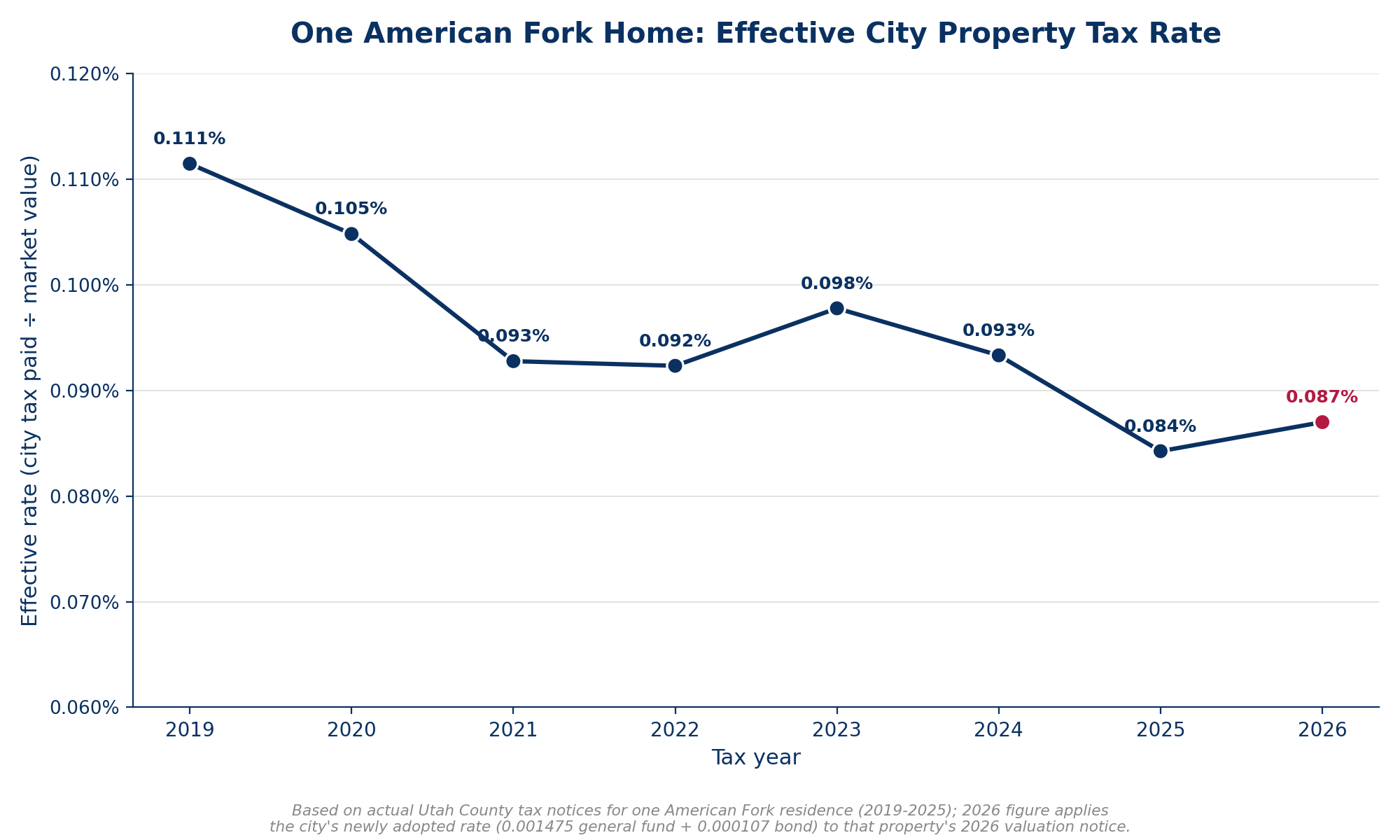
The new tax rate, 0.001475, applies to the fiscal year that began July 1 and runs through June 30, 2027.
The chart shows one home’s effective tax rate over time in American Fork. The effective rate matters more to a homeowner than the nominal rate because it answers the real question people want to know: how much of my house’s value am I paying to the city each year? The nominal rate doesn’t fully answer that.
It’s calculated after a home’s taxable value has already been cut by 45% for a primary residence, and it can go up or down based on how much home values changed across the whole city, not just your home. That means your own tax bill could go up even while the nominal rate goes down, if your home’s value rose faster than the city average. Or your bill could go down even while the rate goes up, if your home’s value rose slower.
The effective rate skips all that confusion. It compares what you actually paid to what your home is actually worth, so you can see your true tax burden and compare it fairly from one year to the next. Anyone can figure out their own effective rate using the tax notice Utah County mails out each year. First, find the dollar amount listed for “American Fork City.” Second, find the “Full Market Value” listed for your home that same year. Third, divide the city dollar amount by the market value. Finally, multiply that number by 100 to turn it into a percentage. That percentage is your own effective rate, and you can do the same math for past years to see how it has changed over time.
Rob Shelton | American Fork Citizen
American Fork’s park strip tree ordinance, the one that threatened to put a 90-year-old man on trial over seven cherry trees, has a new author.
The City Council voted 5-0 on Sept. 8 to repeal Chapter 12.16 and replace it with a new chapter titled “Park Strips and Trees.” Council members Ryan Hunter, Ernie John, Clark Taylor, Tim Holley and Staci Carroll all voted yes.
The rewrite lands four months after the American Fork Citizen reported that Harry and Verna Gammon faced up to 90 days in jail or an $1,800 fine for planting trees based on an outdated guide they found through a Google search that led to an old PDF on the city’s domain. American Fork dropped the charges May 6, the day of the Gammons’ trial, and the city’s statement that day said the council had committed to reviewing the ordinance. The Sept. 8 vote is that review’s result, though no one named the Gammons.
Under the old code, no new trees could go into a park strip narrower than 8 feet. The rewrite loosens that: strips as narrow as 4 feet can take a small tree from the Approved Tree List, and 6-to-8-foot strips qualify for medium trees. Strips of 8 feet or more can still take a large tree.
The new code adds a grandfather clause the old one lacked: Trees “lawfully planted prior to the effective date of this ordinance may remain unless determined to be a hazard tree, nuisance tree, or otherwise required to be removed,” the ordinance states.
Derric Rykert, Community Services Director for the city, presented the rewrite for Urban Forester Brady McNaughton, who was absent, saying city attorney Heather Schriever had suggested starting over: “What if we just rewrite this thing? It’ll be more clean that way.” Planning Commission asked for one change first: measuring a tree’s location from the center of its trunk rather than its outer edge, “just in case it gets [bigger] as the tree grows.”
The new chapter requires the Approved and Prohibited Tree Lists to stay posted on the website going forward. That doesn’t address what tripped up the Gammons, though: a Google search, not a walk through the site’s menus, surfaced the old guide on the city website, which the city has since taken down. Council Member Ernie John tested the site’s navigation anyway. “I went to the city website to see. It’s not hard to find this on the city website,” John said. “You can go right to it with just three clicks and you’re there.”
Council members spent more time on enforcement than the ordinance’s text, led by Clark Taylor. He said the rewrite handles existing trees well, since old trees can stay unless they’re nuisance trees. “So I’m good to go forward with this,” Taylor said. But he called enforcement an unsolved problem well beyond trees, pointing to homes along 900 West, south of 700 South, where fenced yards back onto park strips filled with rocks that “look like trash.”
“None of them are coming over on the other side of their fence to clean that up,” he said. He described a similar stretch along North County Boulevard, past the developmental center and the temple, where a cinder block wall runs with no gates. “Who’s going to come all the way out and clean up that area? They’re not going to do it,” he said. Taylor said he’d still vote yes, since “there’s no change in what we’re doing that’s going to all of a sudden give us a light bulb for that,” but called enforcement his central concern.
“I don’t know how we make that work,” Taylor said. Staci Carroll agreed, saying the council had discussed at a work session that many homeowners likely don’t even realize the park strip behind their fence is their responsibility.
Assistant City Administrator Camden Bird said code enforcement plans education before citations. “The intent is that code enforcement would go through and could give them materials that have the findings and the facts and the information and set the expectations with them there, and it’d be a conversation,” Bird said.
Carroll, who made the motion to adopt the new chapter, said it at least gives residents and code enforcement a clearer starting point. “I think this provides a lot of clarity compared to where we were,” she said. “It’s just clear.”
Rykert agreed it won’t resolve every dispute. “It’s not going to fix everything,” he said, “but it is going to give us somewhere to start with the trees.”
AF City News
Incorrect measuring led to oversized AF structure approval; Lehi neighbor files court injunction

Rob Shelton | American Fork Citizen
A fight over a massive backyard structure on 900 West in American Fork is headed towards court. A Lehi homeowner, whose property is adjacent to the structure, told the American Fork City Council at its Sept. 8 meeting that he has retained an attorney and plans to seek an injunction. The city has responded by routing all further communication through its own attorney. This is the second announcement of legal action against the city this past month during the public comment period of a city council meeting.
The structure sits at 731 N 900 W, on a parcel the city’s Development Review Committee approved on April 6. City records list the building at 7,910 square feet of footprint and 11,146 square feet total, standing roughly 35 feet tall, compared to the single-story “rambler” homes that back up to it in American Fork and neighboring Lehi.
“The Rovig accessory structure was approved on April 6, 2026,” Dale Stewart, a Lehi resident whose backyard abuts the project, told the council Sept. 8. “Many of you have seen the news reports now on KSL and Fox 13 regarding the size of the structure and the undue negative impact it has created on the neighborhood.”

Stewart’s case turns largely on how the city measured the property’s required “rear yard,” the open space behind a home where accessory-building coverage is capped. American Fork code defines a rear yard as the space between a building’s rear outer wall and the closest opposite property line. But when Stewart called the city on Aug. 24 asking how the calculation was done, city planner Cody Opperman told him the city had measured from “the plane that’s flush with the front of the home, and anything behind that is rear yard,” using the front of the house, not its rear wall, as the starting point. The city approved the project in April with no side yard calculated at all, according to Stewart.
After Stewart raised the issue, Patrick O’Brien, director of development services for the city, acknowledged in an Aug. 25 email that a side yard needed to be calculated and sent a drawing showing the correct approach: measuring from the rear of the dwelling, not the front. But the drawing excluded part of the home’s attached addition, labeling it a “detached structure.” Stewart said the addition was attached, and O’Brien agreed after sending an inspector to confirm it. “They confirmed that it is attached,” O’Brien wrote back.
Using the full, attached dwelling, Stewart calculates the rear yard at roughly 28,181 square feet. The accessory structure’s 7,910-square-foot footprint is 28.1% of that space, which Stewart says exceeds the 25% cap set by Section 17.5.105(1)(f) of the city code. He also told the council the building’s height, including a decorative cupola, could reach 37.5 feet, exceeding the city’s 35-foot maximum.

City records suggest officials anticipated a dispute like this well before it arrived. At an Aug. 19, 2025 Planning Commission meeting, eight months before Rovig was approved, O’Brien told the commission a code-compliant building could still feel “out of place and create a sense of concern,” citing a different accessory structure that had “met all code requirements” yet still drew complaints. Mayor Frost said the city needed rules flexible enough “while preventing someone from building something disruptive.” He asked staff what steps it could take “to prevent serious issues like the one that occurred previously.”
Stewart also quoted O’Brien from a December 2023 meeting, saying an accessory building “should be considered something subservient. If we have something that is borderline two times the size of the primary structure, it challenges that role.” Stewart said the structure behind his home is three times the size of the primary residence.
“Mr. Mayor, you made a commitment to us that evening that you would review the matter and, quote, ‘make it right if the city made a mistake’,” Stewart said, referencing a visit Mayor Frost made to his home. “I’m asking you to follow through with that tonight. I have hired an attorney, and they will be seeking an injunction this week.”
The fallout arrived by email two days later. David Bunker, American Fork’s city administrator, wrote to Stewart and his attorney, Jeffrey Colemere of the Draper firm Colemere Gibbs & Stout, on Sept. 10, copying the mayor, the council and the city attorney. “With the notification you provided during the city council meeting on Tuesday, September 8, 2026, that you are seeking legal recourse regarding this issue, we respectfully request that all communication with the city shall proceed through our city attorney,” Bunker wrote. “Heather [city attorney Heather Schriever] will be the point of contact for all communications with you or Mr. Colemere.”
Stewart first raised the issue publicly at the council’s Aug. 25 meeting, two days after construction began, and local media reported on the dispute the next day.
Rob Shelton | American Fork Citizen
American Fork’s City Council voted 5-0 Sept. 8 to adopt an updated general plan, closing out a two-year rewrite that opened with a standing-room-only backlash and ended, on a Tuesday night, with barely 15 minutes of discussion.
Council Members Ryan Hunter, Ernie John, Staci Carroll, Tim Holley and Clark Taylor all voted yes. Mayor Brad Frost presided.
Development Services Director Patrick O’Brien told the council the update has been in the works since roughly the end of spring 2024. An early version reached the Planning Commission for a public hearing in February that drew about 350 residents, most of them objecting to a sweeping companion rezoning proposal tied to the plan.
The city walked back the bulk of that proposal by April, the American Fork Citizen reported at the time, after officials acknowledged an outside consultant had taken a broad-brush approach to citywide zoning changes that staff never intended.
“We’ve taken into consideration a significant amount of public comment,” O’Brien said Sept. 8. “We’ve walked back a huge amount of the changes that were being proposed.”
State law requires every Utah municipality to adopt a comprehensive general plan and typically update it every 10 to 15 years. Utah Code 10-20-401 sets the requirement. American Fork’s new document covers seven required elements, including land use, transportation, moderate income housing, parks and open space, water, historic preservation, and a new “development focus areas” component tied to economic development around the downtown core and the city’s commercial gateways.
O’Brien said the land use and transportation maps remain largely unchanged from the current plan, with growth projections and water planning driving most of the substantive updates. The plan also renames some residential zoning categories, replacing “single-family low density” and “single-family very low density” with “single-family detached,” a change O’Brien said gives the council more discretion on density when it considers future rezoning requests.
Before the vote, O’Brien flagged one correction the council needed to approve along with the broader document: a parcel south of 1100 South and east of Boat Harbor Road, identified as parcel number 13-067-0017, had been left showing as residential on the map by mistake. He asked the council to reclassify it for planned light industrial use instead, describing the sliver of land as too narrow to support a residential subdivision.
Council Member John moved to approve the plan with that parcel correction included. Council Member Carroll seconded the motion, and the roll call vote followed with no dissent.
John said the plan reflects long-running efforts to plan for the city’s water needs and eventual build-out. He recalled walking the city’s irrigation ditches with a former city engineer more than 20 years ago and being told American Fork would reach 40,000 residents by 2050, a benchmark the city is on pace to exceed years early. He also asked O’Brien directly whether the document meets the state’s requirements. O’Brien confirmed it does.
The general plan itself carries a project cost of $162,222, according to city budget documents, with the city’s share at $16,222, and the Mountainland Association of Governments covering the rest through a grant. O’Brien told the council that award was combined with funding for a related station-area planning project, bringing the full grant package to $222,000 and the city’s total match to $22,000.
O’Brien repeatedly called the plan “a living document,” one he said the city will revisit rather than shelve for another decade. Planning Commission members were told last month that staff intends to formally review the plan roughly every five years, or sooner if major developments or new state mandates demand it.
“As the city changes over time, we’ll look back into this document,” O’Brien told the council. “Are we moving in the correct direction? We’ll update it so we don’t end up in 15 years’ time saying this is nowhere near where we went, because the plan did not change with the changes that happened in the city.”


Staff Writer | American Fork Citizen
Construction on Huntsman Cancer Institute’s new Vineyard campus is beginning to rise above ground following months of site preparation and foundation work.
Institute leaders joined elected officials, donors, community partners and residents for a cornerstone celebration Sept. 1, marking the start of vertical construction on the future cancer care and research campus.
Crews have prepared the site, removed groundwater to allow excavation, and installed 830 deep foundation supports since the project broke ground in April 2025, Huntsman Cancer Institute said. Work will now shift toward construction of the building’s exterior structure.
The 284,000-square-foot campus will be built on 20 acres between Interstate 15 and Utah Lake. Plans call for a five-story clinical care building and a three-story research building connected by space for community engagement and education.
The first phase is expected to include multidisciplinary cancer clinics, radiation oncology, diagnostic imaging, endoscopy, infusion and pharmacy services, wellness and integrative health programs, cancer screenings and urgent care. Inpatient treatment and a surgery center are planned for a future phase.
Research and education will also be central to the Vineyard campus. Planned programs include clinical trials, computational oncology and data science, along with collaborations involving Utah Valley University, Brigham Young University and businesses in the Silicon Slopes area.

The site is adjacent to the Vineyard FrontRunner station and approximately 20 minutes from Provo Airport, providing transportation access for patients, employees and visitors throughout the region.
Huntsman Cancer Institute reported more than 52,000 patient visits in 2025 from Utah County and surrounding areas. Those patients traveled about 3.9 million miles—an estimated 86,000 hours of travel time—to receive care at the institute’s Salt Lake City facilities.
Officials estimate the Vineyard location could reduce that travel by approximately 1.1 million miles each year while bringing cancer treatment, research and support services closer to patients in central and southern Utah.
“Huntsman Cancer Institute in Vineyard is about much more than a new building,” institute CEO Bradley Cairns said during the celebration.
Vineyard Mayor Zack Stratton said the project represents the type of intentional growth that can strengthen the community for generations. He said it will improve access to cancer care, create jobs and contribute to a healthier future for area families.
The $400 million development is the largest single investment in Huntsman Cancer Institute’s history, according to the institute. The first phase is expected to create about 450 jobs in clinical care, research, administration and support services once it is fully operational.
Construction of the exterior structure is scheduled to begin this fall, with the building expected to be fully enclosed by summer 2027. That would allow interior construction and installation of major systems to proceed.
The facility is expected to receive its certificate of occupancy in June 2028 and welcome its first patients in September 2028.
Huntsman Cancer Institute is the National Cancer Institute-designated comprehensive cancer center serving Utah, Idaho, Montana, Nevada and Wyoming. The Vineyard campus is intended to expand the institute’s reach across Utah and the wider Mountain West while providing additional training opportunities for future health care workers and researchers.
Rob Shelton | American Fork Citizen
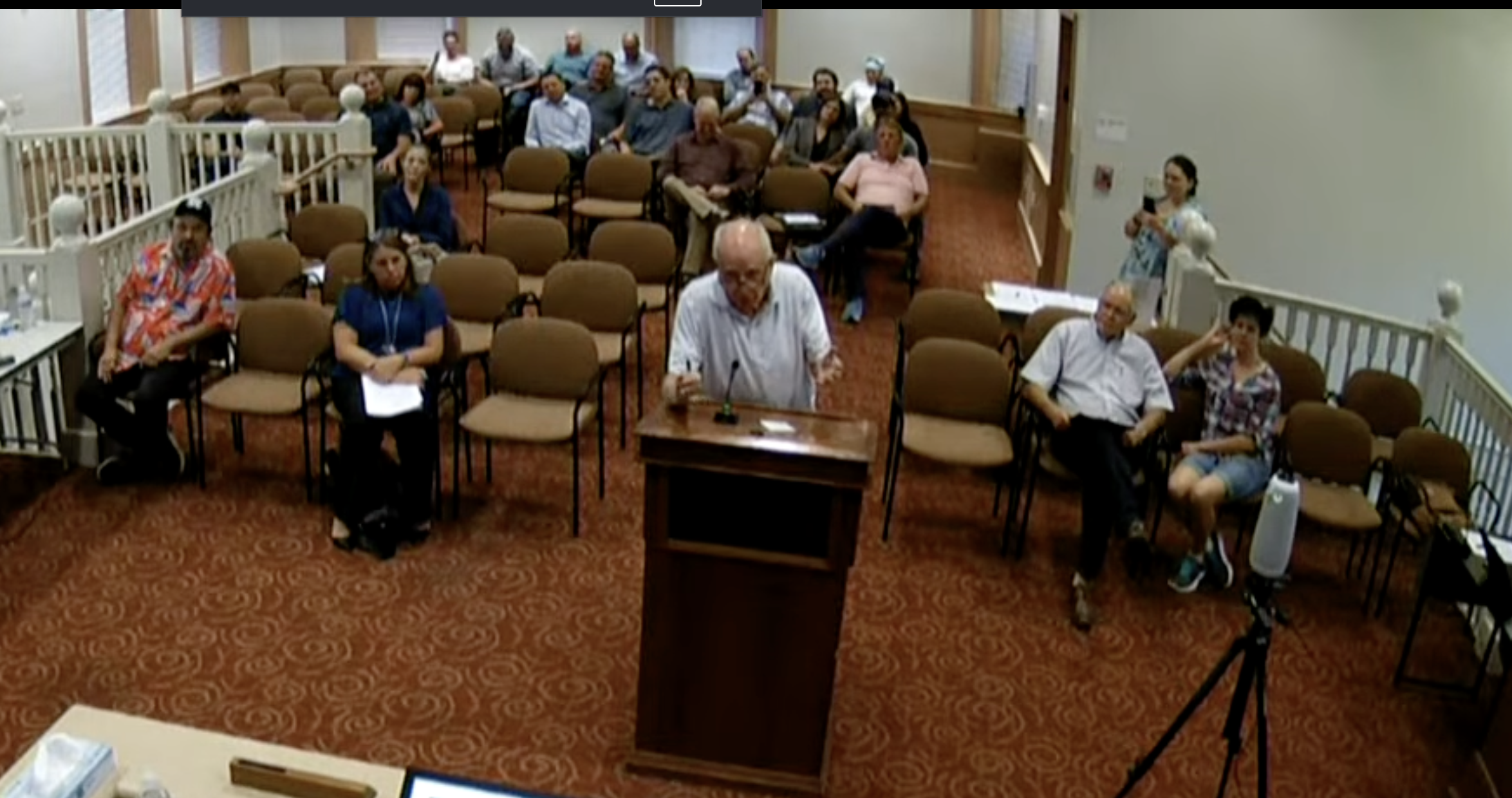
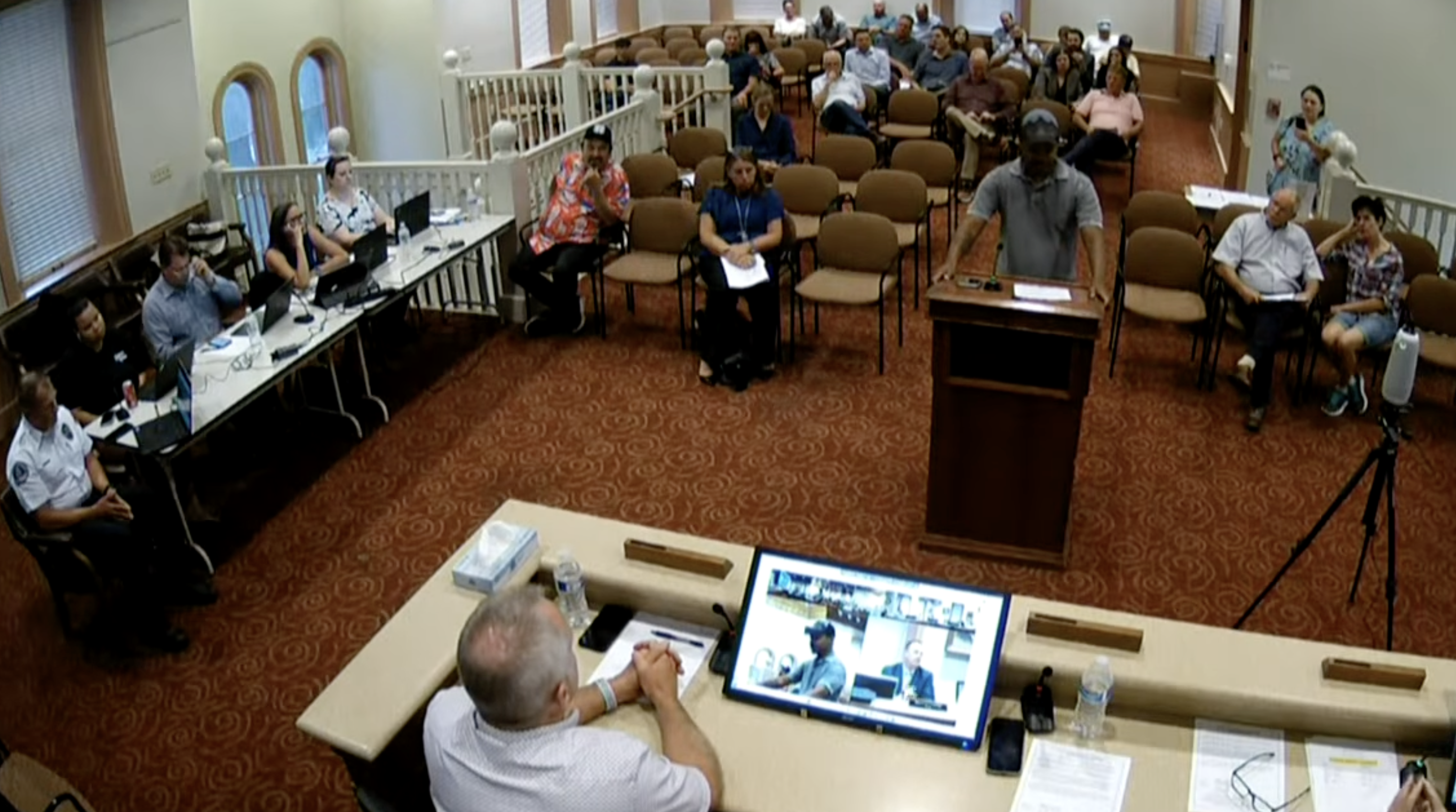
American Fork residents voiced their opinions during a public hearing on a proposed 8.7% property tax increase, with retirees warning the hike could price them out of their homes and other residents defending it as the cost of keeping firefighters on the street.
Mayor Brad Frost opened the hearing by stressing the council would take no formal action that evening. City officials say the increase would generate $660,000 in new general fund revenue, adding $33.41 a year, or $2.78 a month, to a typical property tax bill. The council is expected to adopt a final rate at its August 25 meeting.
City Administrator David Bunker told the council the money is intended to help staff Fire Station 53, a temporary station planned for 620 South. He said the budget covers nine new firefighters, though the department needs 12 staff members across three shifts around the clock.
Personnel costs for a fully staffed station run about $1.5 million a year, Bunker said, and the city cut other departmental budgets to cover more than half that total before asking taxpayers for the rest.
Bunker pointed to regional growth as the driver behind rising costs. He said American Fork’s population has grown about 23% over the past five years, trailing faster-growing neighbors Saratoga Springs and Eagle Mountain but still outpacing the statewide average. Inflation, he added, has run about 21% over the same stretch, according to U.S. Bureau of Labor Statistics data, driving up the cost of contractors, materials and labor citywide.
Not every resident who spoke was persuaded. Ryan Walker, who said his family has lived in American Fork for several years, told the council he opposes the increase and pointed to city employee raises he called out of step with the private sector. “Wages of city employees have gone up about 10% year over year, and I’m in the wrong business,” Walker said. “In the private sector, raises are between three and 5% a year.”
City budgets show salary and wage spending per full-time-equivalent position increased by an average of about 7.8% annually over the past three budget cycles.
Kevin Barnes, a former City Council member, faulted the city for how it financed the proposed public works building, saying it should have gone before voters as a bond rather than being funded without one. “There’s no reason to spend 40 million dollars without going to the public, in my opinion,” Barnes said.
He then urged the city to abandon large one-time increases in favor of smaller, more frequent ones, a philosophy he said the council considered after its last tax hike. “I think you ought to keep the increase to about 4%,” Barnes said.
Chris Chamberlain, who said he built his home 40 years ago, told the council his property tax bill now exceeds his original house payment. “The property taxes in the last 10 years have doubled,” Chamberlain said. “You’re pricing it so that no resident can stay here.”
Chamberlain returned to the pulpit later in the meeting and said,
“You go to the Art Dye Park, and you’ll see all the fire trucks there and they’re playing pickleball… I don’t know how many fires we have in American Fork in a year, but whether there could be a dual usage to their time to offset to work through that budget.”
Longtime resident Klein Long raised similar concerns about seniors on fixed incomes, saying his own property taxes have climbed 30% over five years even as his retirement income has stayed flat. “It’s the only tax that you have to pay every year, no matter how much you make,” Long said. Long closed his comments by saying, “Something’s really screwed up here in the city, as far as I’m concerned.”
Not all the comments ran against the increase. Terry Lee Bennett, who said she has a medically fragile nephew, told the council she supports the tax hike because a nearby fire station could matter in an emergency. “I am in favor of the property tax increase,” Bennett said. “I think that the reason for it is justified.”
Curtis Graham struck a middle note, acknowledging city services require funding but pressing officials for more detail on where the rest of the fire station money is coming from. Invoking Benjamin Franklin’s warning, “a small leak will sink a mighty ship,” Graham asked the city to publish a fuller breakdown of departmental budget cuts and firefighter wages before the council’s final vote.
Frost closed the hearing without further council discussion, thanking the public who spoke. The council’s vote on the final rate is set for August 25.
Rob Shelton | American Fork Citizen
At the August 11 public hearing on a proposed property tax increase, Mayor Brad Frost made an unusual request.
“We don’t need claps. We don’t need cheers,” Frost told the packed council chamber. “I’m asking you not to.”
An audience member pushed back, asking whether Frost was ordering the crowd to stay silent or simply requesting it. Frost said he was asking, not telling. No one clapped or cheered again for the rest of the meeting.
The request stood out because it wasn’t consistent. American Fork hasn’t enforced a no-clapping policy, and it didn’t apply during the June 9 meeting when parents packed the council chambers to advocate for the city’s gymnastics program. Clapping and cheering could be heard through public comments with no objection from the dais.
So, what got this crowd clapping? Comments asked the city for accountability and change in the police department.
Aaron Booker, who told the council he does not live in American Fork, said an American Fork police officer, Bronson Kitchen, pulled him over in May on Interstate 15 near Bountiful.
“Under the false guise of an HOV violation, the real intent of the stop was to be an off-the-books intimidation ploy,” Booker said. “He wore no body cam. There was no call to dispatch.”
Booker said Kitchen “immediately resorted to threats of violence” when Booker declined to comply with an order he considered unlawful. Booker referenced how Kitchen refused to issue a citation despite “numerous requests” by Booker that would have let him contest the stop in court. Booker said he filed a complaint with the department, and the stop recording went viral days later.
“Shortly after, Officer Kitchen then called me and delivered a clearly coerced and forced apology,” Booker said. “Regardless, I accepted it and moved on until I obtained the police report.”
Booker told the council that Kitchen’s police report, written after the apology call, contained statements that “are categorically false” and contradict both the video and Kitchen’s own admission. He argued the city should not keep Kitchen in a role as a school resource officer (SRO) with regular contact with children as young as 12.
“It is indefensible to allow this officer to continue serving as an SRO,” Booker said, “retaining someone who is now on the Brady list because he simply can’t tell the truth.”
“Your inactions speak volumes,” Booker told the council. “It signals your willingness to tolerate abuse of authority. Since the city refuses to act voluntarily, then outside legal action will force you to change.”
Booker said he intends to pursue civil rights litigation with the same attorney representing Benjamin Schneider. Schneider is the YouTuber whose viral American Fork police interactions over several days drew national attention, with several nationally known civil rights attorneys weighing in on the department’s conduct.
The lawsuit announcement echoed through the rest of the meeting. Greg Hazard told the council he has been “the victim of two incidents” with department officers. In the first, he said, he was issued a criminal trespass citation “in retaliation for simply inquiring of an officer parked in a handicap stall in a non-emergency situation.”
In the second incident, Hazard said, he called American Fork police to report a trespasser blocking his office entrance. “I was called an A-word by one of the police officers,” he said. “And even worse, this American Fork police officer said he would traumatize me. Who says that? What officer says that?”
Hazard said he received apology letters “and ownership from Chief Paul on behalf of the police department” after both incidents, and that he has the encounters on body camera footage. “Only Councilman Ryan Hunter reached out to me and ensured that I was satisfied with the outcome of the cases,” Hazard said. “I expected a little more communication.”
Hazard also addressed threats Hunter has said he and his family received over the department controversy, telling the packed chambers he’d texted Hunter an apology on others’ behalf as soon as he heard.
“Let me be clear to all the people that may be listening,” Hazard said. “There is no room for threats on anyone, any officer, any council member, the mayor. There is no room for any of that at any time.”
Hazard also echoed concerns Booker had raised earlier in the meeting about Kitchen’s continued assignment as a school resource officer at American Fork Junior High. He told the council there are two ways this plays out: either members are right and there’s no issue with Kitchen serving as an SRO, or he is right and an issue surfaces during the school year involving behavior not becoming of an officer. Hazard said he hopes he’s wrong and the council is right but warned that city leadership will be to blame for not heeding the warning if it plays out otherwise.
Daniel Sonoma, an accountant who addressed the council next, argued that legal settlements, not firefighter staffing, are the hidden cost residents should worry about.
“We just learned of another lawsuit potentially today, and that costs lawyer fees, that costs settlement fees, and that’s very, very expensive,” Sonoma said. “Why are the residents the ones being held accountable when the city does not uphold our constitutional rights?” he asked.
Heidi Barbin told the council she was “one more voice” concerned about the department, describing “a kind of a weird incident years ago of swatting situation” at her home.
John Mulholland, who said he has lived in the city for 16 years, renewed a call for outside oversight of the department.
“I wrote a piece recently asking for a citizen review board, because what we’re hearing from the police is very different than what we’re actually seeing on video,” Mulholland said.
Julie Rodriguez, a Utah County resident who said she frequently does business in American Fork, told the council she still doesn’t trust the department despite years of otherwise positive experiences with police statewide.
“We have still not seen a positive change in accountability and transparency in the American Fork Police Department,” Rodriguez said. “I do not trust this department. I do not trust this city.” She asked to meet privately with Frost to talk it through. “I promise there will be no clapping,” she added.
Steve Goodwin asked the council directly whether officers would ever answer to residents for their conduct.
“Is there going to be a meeting to have these officers tell us residents what’s going on, or are they going to be accountable for anything?” Goodwin asked. “Because from what I see, it’s an embarrassment.”
Goodwin said he’s stopped telling people where he’s from. He travels out of state, gets asked where he’s from, says American Fork, and inevitably gets pulled into a conversation about the police department. “I don’t even say that anymore,” he said. “I just say Provo.”
City staff and elected officials offered no response to any of the comments. That’s standard for a public hearing, which exists to collect input, not answer it. Frost adjourned the meeting shortly after the last speaker sat down.

Rob Shelton | American Fork Citizen
American Fork’s elected officials are required by state law to disclose outside jobs, business ownership and financial relationships that could create a conflict of interest. A review of those disclosures, along with city compensation records and written responses gathered by the American Fork Citizen, shows a mixed picture. Some potential conflicts are acknowledged and appear to be managed. Others went unaddressed in written responses. And the disclosure forms themselves were filled out inconsistently, particularly the section covering spouses.
This is the third and final installment in a series examining potential conflicts of interest in local government. The first article, published June 4, drew on the experience of John Dougall, who spent 12 years as Utah’s state auditor before leaving office last year. The second, published July 13, examined the three-way split of the Alpine School District. This installment turns to American Fork City government.
Dougall’s message in June was straightforward: having a conflict of interest is common among public officials and isn’t, by itself, evidence of wrongdoing. What matters, he said, is whether an official discloses it and steps aside when it counts. Staying quiet is what causes trouble. “People start to speculate,” he said, even when an official’s conduct is fair and reasonable.
The AFC sent detailed written questions to Mayor Brad Frost and all five city council members, giving each four business days to respond ahead of the print deadline. Council Member Clark Taylor answered in detail. Council Member Staci Carroll provided a written statement. Mayor Frost provided a brief statement that did not address any of the specific questions asked. Assistant City Administrator Camden Bird answered several questions on behalf of the city. Council members Ryan Hunter, Ernie John and Tim Holley did not respond.
Frost’s 2025 and January 2026 disclosures list Valley View Landscaping, describing his role there as “Member.” His May 2026 disclosure removes that listing and instead identifies his employer as the American Fork Chamber of Commerce, where he became president and CEO.
Records the city provided in response to a public-records request show American Fork recently solicited new bids for grass and landscaping maintenance previously performed by Valley View. Cowley’s Lawn Care bid about $610 a week; a second bidder came in at $1,360; Valley View bid $1,610; and the city’s own estimate to perform the work with its own staff was $612.65 a week.
City records reviewed separately by the AFC show the last time the work was competitively bid before this year’s solicitation was April 2013, when the council awarded Valley View the landscaping contract for 18 city locations. Valley View agreed to $785 a week after it underbid other contractors, saving the city an estimated $8,000 against staff’s own $29,000 estimate for the work.
Then, Councilman Frost, listed as Valley View’s manager on the signed 2013 agreement, disclosed his ownership on the record and abstained from the vote. The council approved the contract 4-0. Invoices obtained by the AFC show Valley View billed the city $1,020 a week from at least June 2020 through 2025, the same rate across all six years. The invoices reviewed do not cover 2014 through 2019, so when the rate moved from $785 in 2013 to $1,020 by 2020, a 29% increase, is not established in the record the AFC has in hand. The city has since moved to perform the work on their own at the calculated rate $612.65.
Bird, in a written statement, said the bids were “based on the same parameters, allowing the City to compare the proposed costs for the same scope of work.” He said Valley View had “held its rate rather than increasing its pricing to match inflation as is custom for contract services,” calling the arrangement “the best deal residents could have received from these services.”
Bird said the city and Valley View “both determined it was appropriate to competitively bid the work again, consistent with current purchasing practices.” He added that “elected officials also receive conflict-of-interest training, disclose applicable conflicts, and coordinate with the City Attorney regarding ethical requirements.” Neither Bird nor Frost’s statement addressed questions about how long the arrangement ran between competitive solicitations. City Council minutes and invoices reviewed separately by the AFC put that span at 13 years, from April 2013 to this year’s bid.
Frost’s May 2026 disclosure lists his position with the Chamber of Commerce as “President/CEO, Day to Day Operations of the Chamber.” In a statement, the Chamber’s board of directors said it made the hiring decision independently, weighing Frost’s qualifications alongside his position as mayor, and identified the Chamber’s Steel Days contract with the city as the clearest area where the two roles could intersect. The board said Frost will not represent the Chamber in Steel Days negotiations or decisions where doing so would place him on both sides of the matter. Bird stated that the contract was revised this year so the mayor pro tem manages it instead.
Bird said the city provides the Chamber office space in Historic City Hall as part of the city’s broader support arrangement with the organization. Asked whether a written lease governs that space and how its value is calculated, Bird said in his most recent email that he could not speak to a lease agreement with the Chamber. Neither Frost’s statement nor the Chamber’s addressed the office-space arrangement. Whether the city receives fair value for that space, or whether a lease exists spelling out the terms of the arrangement, remains unanswered.
Two council members’ disclosures list SIRQ Construction, the firm that built American Fork’s newest fire station. Hunter’s January 2025 and January 2026 disclosures identify SIRQ as his current employer, with his position listed as business development.
Both filings also list SIRQ under the sections covering ownership interest, income of $5,000 or more, and stock or equity holdings worth $5,000 or more. Hunter did not respond to questions asking about the nature of that ownership stake, whether SIRQ has received other city business during his time on the council, or how he would handle a future SIRQ bid.
Taylor’s disclosure also lists SIRQ as his current employer, with his occupation given as marketing and his title as Marketing Coordinator. Taylor said he is an hourly SIRQ employee who works about 10 hours a week on marketing projects, website content and trade events, and that he started in late September 2025, after the fire station contract had already been awarded.
He said his SIRQ position has nothing to do with his council seat, that he holds no ownership stake in the company, and that he would recuse himself completely if SIRQ bid on another city project while he remains employed there.
Taylor’s disclosure also lists Fox Hollow Golf Club, where he is a board member, and Red Rider Creative, the advertising agency he owned until selling it February 27, 2025. He told the AFC he began working in business development for Backside Branding in mid-June, after a lawsuit that had barred him from Utah’s advertising industry was resolved in his favor.
Council Member Ernie John’s disclosure identifies him as president and watermaster of the American Fork Irrigation Company and as president and chairman of the American Fork Metro Water District, two organizations that interact with the city over water rights, infrastructure and development.
John’s disclosure on file for the 2026 cycle appears to be the same filing he made in 2025 with the signature date being January 2025. John did not respond to written questions asking about his current roles with the irrigation company and water district, whether he has recused himself from council matters touching either organization, and why the 2026 disclosure appears to be the same form he filled out in 2025.
Council Member Tim Holley’s disclosures show shifting outside business interests. His January 2025 filing lists him as self-employed, owner of Launch Group LLC, described as a karaoke and entertainment business, with IBM listed as his prior-year employer.
His January 2026 filing lists Strider Technologies as his current employer and identifies Heart & Seoul Karaoke, not Launch Group, as a business he owns. Holley did not respond to questions asking whether Heart & Seoul grew out of Launch Group, whether either business has done work with the city, or whether his current employer has any relationship with American Fork.
The disclosure form itself raised questions for this series. State law (UCA 20A-11-1604(6)(h)) requires a spouse to be listed on the disclosure form. State law does allow an officeholder’s spouse privacy if the spouse is an “at-risk government employee”, but requires the information to be redacted, not left blank on the form.
Use of that section varied widely among the mayor and council. Frost’s 2025 and January 2026 disclosures mark the entire spouse and household section not applicable, without listing a spouse name or invoking the at-risk-employee provision. His wife, Jodi, is a records specialist with the American Fork Police Department. Frost marked the box that he did not believe his wife’s employment at the city was a conflict of interest in all three filings and checking the box as an at risk employee, for both him and his wife, on the May 2026 filing.
While Frost’s response did not address questions about his wife’s city job, Bird said in a written statement that her position “operates within the City’s normal administrative structure.” Bird continued to describe that the city administrator, not the mayor or council, manages individual employees, and that her chain of command is independent of the mayor’s office. Bird did not address a question about why her reported benefits rose from $11,136.52 in 2024 to $22,640.23 in 2025, and Frost’s statement did not address it either.
Hunter’s and John’s disclosures likewise mark the entire spouse section not applicable, with no name entered. Carroll’s disclosure names her husband, Diego Carroll, but marks that she believes his employment to not be a conflict of interest. Holley’s disclosures name his wife, Clara del Barrio, in both 2025 and 2026, also marking her employment as not a conflict. Taylor’s forms show no name entered for a spouse.
Carroll, asked directly about the spouse section on her form, said she reviewed her filings after being contacted by the AFC and determined there were discrepancies needing correction. She said she has since filed amended disclosures, calling the gaps inadvertent errors and adding that she takes her disclosure obligations seriously.
State compensation records show Frost’s total pay, wages plus benefits, has climbed steadily since he became mayor. His wages rose from $10,038.66 in 2018 to $26,800 in 2025, an increase of about $16,761. His reported benefits rose from $19,066.78 to $44,155.22 over the same span, an increase of about $25,088. Combined, his total compensation rose from $29,105.44 to $70,955.22 between 2018 and 2025.
Bird said mayor and council compensation “has only adjusted once, in 2021” over roughly the last 20 years, following a market analysis staff periodically conducts against comparable cities. The wage figures through transparent.utah.gov show changes to all elected officials wages in multiple years beyond 2021, including 2019, 2022 and 2025.
Bird mentioned that Utah Retirement Systems notified the city that Frost qualified for city-paid retirement contributions because he was a full-time Tier 1 employee of the city earlier in his career. With Frost earning more than $17,000 a year the city was required to pay that contribution retroactively to 2021. Bird did not provide a specific dollar amount or detailed accounting of the benefits increase.
Dougall, reflecting in June on his years auditing state and local government, said the pattern he saw wasn’t that officials with outside interests were automatically a problem. It was silence that caused it. Officials who were upfront about their conflicts, he said, gave constituents reason to trust the decisions they made anyway. Whether American Fork’s disclosure practices meet that standard, and whether the questions that went unanswered in this series get answered later, is something residents will have to judge for themselves.

Staying connected can save a life during Suicide Prevention Month and all year long

Local senior athlete wins two world titles in Korea

Caveman girls soccer wins three in league

‘BIGGEST LOSER’ CONTESTANT FROM AF DIES TRAGICALLY

Aspen Peaks School Board “Meet the Candidates” night recap

Tragedy Strikes American Fork: Local Couple Found Dead in Apparent Murder-Suicide
-

 AF City News1 month ago
Mayor silences cheers as Booker announces lawsuit against AF Police
-

 AF City News1 month ago
American Fork disclosures show gaps, unanswered questions
-
Opinion1 month ago
OPINION: Brick by brick
-

 AF City News1 month ago
AFHS Marching Band kicks off hotter-than-usual season
-

 AF City News1 month ago
AF City Council hears mixed verdict on proposed tax hike
-
Local News1 month ago
Utah Valley Job Fair connects job seekers with more than 100 employers
-
Opinion1 month ago
OPINION: We gotta eat (out), right?
-
Local News1 month ago
Silver Peak, TTEC open doors to students with disabilities in Orem
-

 Local People1 month ago
AFHS drum major follows mother’s musical example
-

 Obituaries1 month ago
Muriel Allred Allridge