
Local News
F-35 JETS TO FLY OVER AM. FORK TOMORROW

Written by Danny Crivello April 30, 3030
The most advanced and the most lethal (and the most expensive) aerial weapon system ever developed, the F-35, will make a low pass over American Fork after taking off from Hill AFB at 1pm Thursday. The four-jet formation will be coming from the northwest to salute and thank health care workers, first responders, military members and essential personnel, as well as those who are staying home to help “flatten the curve” in a historic moment.
The four Lockheed Martin F-35 Lightning II aircraft will be led by Capt. Kristin “Beo” Wolfe, a young female F-35 pilot, who has recently taken the command of the fleet’s demo team. Ms. Wolfe was a former F-35 instructor pilot and is based at Hill AFB.
“This flyover is our way of saluting those that are keeping our home-front safe during these unique times,” Ms. Wolfe said.


Jacob Fischler | Utah News Dispatch
September 22, 2026
Federal officials charged a Utah letter carrier Tuesday with throwing 300 primary ballots in a church parking lot dumpster, an incident that a top U.S. Justice Department official said made the case for stricter regulations of voting.
The prosecution of Damon Matai Seei, of Payson, Utah, showed “voting fraud is real,” acting Deputy Attorney General Trent McCotter said at a press conference at DOJ headquarters in Washington.
The Justice Department gave the arrest an unusually high profile, spotlighting the administration’s efforts to combat voter fraud after the U.S. Supreme Court this month blocked a new U.S. Postal Service rule limiting mail voting from going into effect for this year’s elections.
The regulation was meant to “address the chronically abused mail-in ballot system,” McCotter said. He criticized the trial judge who initially blocked the rule, which would have required special tracking and design features, among other things such as creating a national database of eligible voters.
“Election integrity should not be a political or partisan issue,” McCotter said. “Who could be against properly tracking mail-in ballots? Unfortunately, but entirely predictably, that regulation was blocked by a judge in Massachusetts. … The Trump administration, however, will continue taking aggressive actions to protect our elections.”
Postal Service rule
U.S. District Judge Indiria Talwani’s order blocking the rule is only in effect for the Nov. 3 elections, a provision meant to preserve the status quo because the rule was finalized mere months before the midterms. The merits of the case are still being argued. The U.S. Supreme Court upheld Talwani’s decision.
The prosecution of Seei, and the attention the administration sought to give it, undercut a key argument the administration made in the case: The rule included only “modest” technical specifications for a category of mail and should not be interpreted as an election regulation.
The U.S. Constitution grants states the authority to administer elections, with policy oversight from Congress.
In siding with the Democratic states and voting rights groups who filed suit, Talwani and the U.S. Court of Appeals for the 1st Circuit said the rule was clearly an attempt to affect election policy and was not restricted to a modest mail regulation.
Trump and mail-in voting
President Donald Trump has railed against mail-in voting and claimed, without evidence, that it is a major source of election fraud and contributed to his 2020 loss to President Joe Biden.
Since Trump retook office in January 2025, the department has charged 70 immigrants with illegally voting, compared with only 13 in the four years of Biden’s term, McCotter said Tuesday.
“And we intend to bring many more,” he added.
Homeland Security Investigations, a Homeland Security Department agency, has made 160 recent arrests, from 1,600 open voter fraud cases, HSI acting Deputy Executive Associate Director Matthew Millhollin said.
A reporter in the room noted that 70 prosecutions amounted to a bare fraction of the 150 million votes cast in the 2024 election.
McCotter responded that the Utah case involved 300 ballots, and that law enforcement had only scratched the surface of possible incidents. “Thousands more” cases were being investigated, he said.
“The folks on the other side, the opponents of the president, insist this has never happened, that there is no voting fraud,” he said. “And so when we have dozens of cases … I think that discourages and defeats their characterization.”
No partisan motive alleged
Seei, who is no longer a postal worker, intentionally threw out about 300 mail ballots on June 3 that were being mailed to voters in advance of the June 23 primary in Utah, according to charging documents.
In an interview with law enforcement, he indicated he did not have a political motive but said he threw away the mail, which also included advertisements, “because he wanted to ‘lighten his workload’ so he could presumably go home earlier,” prosecutors said.
Melissa Holyoak, the top federal prosecutor for Utah, traveled to Washington, D.C., for Tuesday’s press conference. She noted that 95% of the state’s voters cast their ballots by mail.
Many people in Seei’s delivery area in Eagle Mountain, Utah, complained to the Utah County Clerk that they hadn’t received ballots, Holyoak said. Using county databases, the clerk found that voter participation was “remarkably low” in the area where complaints originated.
“As American citizens, we have certain freedoms and rights,” Holyoak said. “And one of those fundamental rights is the right to vote. But when defendant allegedly tossed the mail-in ballots into a parking lot dumpster, those citizens’ right to vote were also thrown away.”
The federal public defender representing Seei did not immediately return a call seeking comment.
Utah News Dispatch is part of States Newsroom, a nonprofit news network supported by grants and a coalition of donors as a 501c(3) public charity. Utah News Dispatch maintains editorial independence. Contact Editor McKenzie Romero for questions: [email protected].

Nichole Coombs | American Fork Citizen
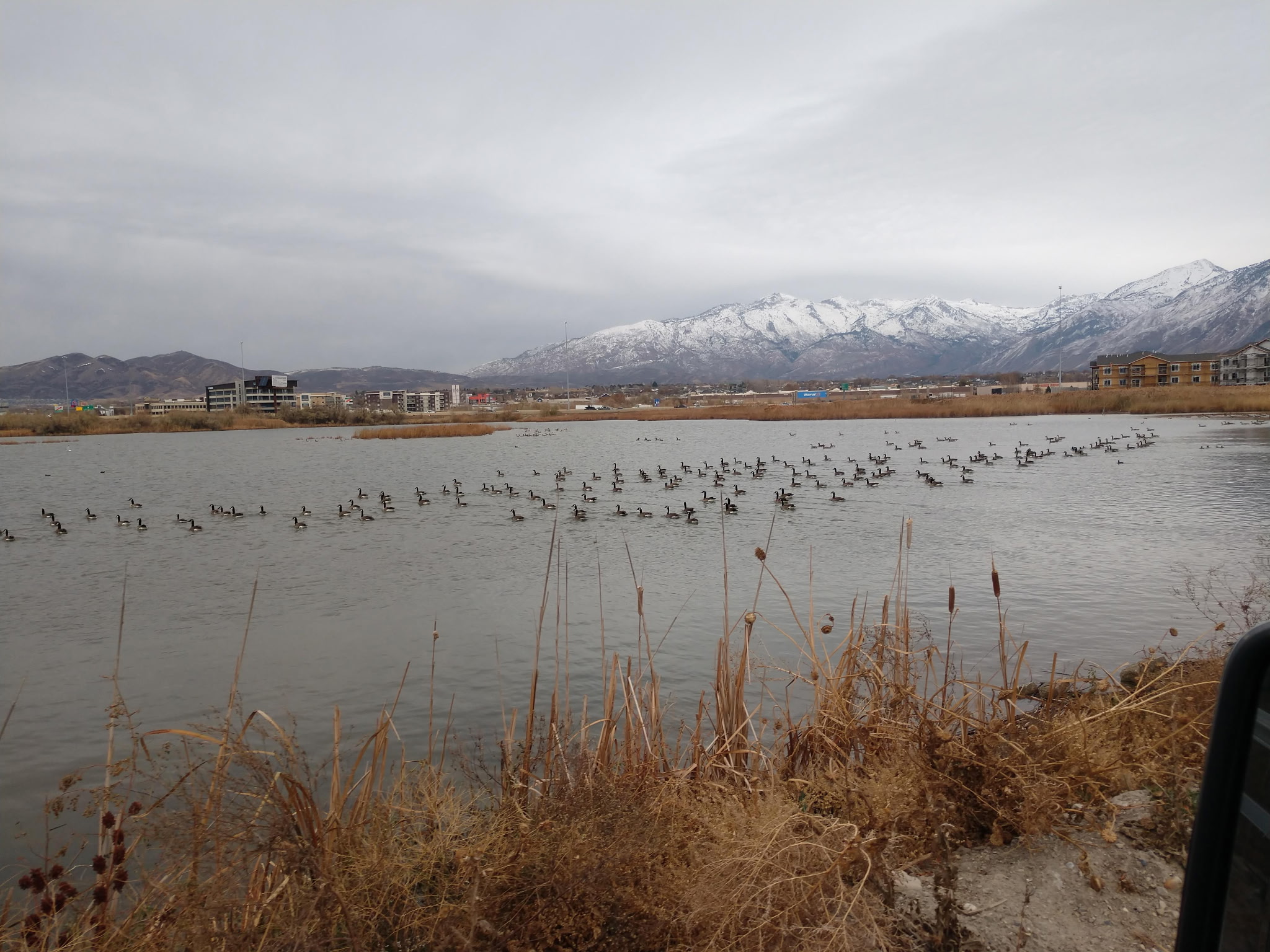
Lehi residents will have a new place to enjoy the outdoors in the future, thanks to a generous donation from the Peck family.
“This is what my dad would have wanted,” said Cole Peck. “He said we had been blessed, but nothing matters more than making memories with your family.”
Siblings Cole Peck and Megan Peck Butler made the significant land donation official at the Lehi City Council meeting on September 8, 2026. The donation includes 20.34 acres of land located under the Mill Pond.
“It’s really the land under the water,” said Peck. “It’s a beautiful area.”
The city will now be responsible for turning the area into a usable space for residents to enjoy. Talks have included adding walking paths adjacent to the Mill Pond and stocking the pond with fish, but no official plans have been made.
“The Mill Pond has been part of Lehi’s history for decades,” said Peck. “My family has used the property for many different things, including supporting various businesses. We even stocked the pond with fish at one point”
Besides giving families opportunities to make memories together, the pond also serves as a secondary water source for the community. The pond has several natural springs that feed it, but without some human intervention, the pond would have disappeared.
“Silt washes into the pond from upstream, and we have to dredge it to keep the water in it,” said Peck. “The water feeds into the city’s secondary irrigation system. Without this water source, Lehi would have even less water. We’ve been doing this for the past two years. If we weren’t taking care of it, the pond would disappear.”

With the donation, Peck says the city may now apply for federal funding and grants to cover the cost of dredging out more silt, deepening the pond, and storing more water for irrigation.
“We turned down 20 to 50 offers to buy the land,” said Butler. “Developers offered our family generational wealth and all sorts of things. But we felt like we wanted to leave it.”
The Peck family says the donation fulfills the dream Loren Powell, Tony Train, and their dad, Tony Peck, had for many years.
“My dad wanted to beautify the city. He wanted people to enjoy being together. This is how we are choosing to honor him and the others who saw his vision,” said Peck.
The land will officially be called the Peck Mill Pond Area in recognition of the family’s generous donation. The Peck family are a multigenerational Lehi family.
“It’s taken many years to get this where it needs to be,” said Peck. “It will be a great thing for the city.”
“I’m proud we did the right thing by all the families,” said Butler. “My dad taught us to work hard and do the right thing. He would be happy about this but probably embarrassed by his name being attached to it.”
The city has no timeline for developing the land. The Peck Mill Pond Area will remain closed until it is safe for the public to enjoy.
AF City News
Incorrect measuring led to oversized AF structure approval; Lehi neighbor files court injunction


Rob Shelton | American Fork Citizen
A fight over a massive backyard structure on 900 West in American Fork is headed towards court. A Lehi homeowner, whose property is adjacent to the structure, told the American Fork City Council at its Sept. 8 meeting that he has retained an attorney and plans to seek an injunction. The city has responded by routing all further communication through its own attorney. This is the second announcement of legal action against the city this past month during the public comment period of a city council meeting.
The structure sits at 731 N 900 W, on a parcel the city’s Development Review Committee approved on April 6. City records list the building at 7,910 square feet of footprint and 11,146 square feet total, standing roughly 35 feet tall, compared to the single-story “rambler” homes that back up to it in American Fork and neighboring Lehi.
“The Rovig accessory structure was approved on April 6, 2026,” Dale Stewart, a Lehi resident whose backyard abuts the project, told the council Sept. 8. “Many of you have seen the news reports now on KSL and Fox 13 regarding the size of the structure and the undue negative impact it has created on the neighborhood.”

Stewart’s case turns largely on how the city measured the property’s required “rear yard,” the open space behind a home where accessory-building coverage is capped. American Fork code defines a rear yard as the space between a building’s rear outer wall and the closest opposite property line. But when Stewart called the city on Aug. 24 asking how the calculation was done, city planner Cody Opperman told him the city had measured from “the plane that’s flush with the front of the home, and anything behind that is rear yard,” using the front of the house, not its rear wall, as the starting point. The city approved the project in April with no side yard calculated at all, according to Stewart.
After Stewart raised the issue, Patrick O’Brien, director of development services for the city, acknowledged in an Aug. 25 email that a side yard needed to be calculated and sent a drawing showing the correct approach: measuring from the rear of the dwelling, not the front. But the drawing excluded part of the home’s attached addition, labeling it a “detached structure.” Stewart said the addition was attached, and O’Brien agreed after sending an inspector to confirm it. “They confirmed that it is attached,” O’Brien wrote back.
Using the full, attached dwelling, Stewart calculates the rear yard at roughly 28,181 square feet. The accessory structure’s 7,910-square-foot footprint is 28.1% of that space, which Stewart says exceeds the 25% cap set by Section 17.5.105(1)(f) of the city code. He also told the council the building’s height, including a decorative cupola, could reach 37.5 feet, exceeding the city’s 35-foot maximum.

City records suggest officials anticipated a dispute like this well before it arrived. At an Aug. 19, 2025 Planning Commission meeting, eight months before Rovig was approved, O’Brien told the commission a code-compliant building could still feel “out of place and create a sense of concern,” citing a different accessory structure that had “met all code requirements” yet still drew complaints. Mayor Frost said the city needed rules flexible enough “while preventing someone from building something disruptive.” He asked staff what steps it could take “to prevent serious issues like the one that occurred previously.”
Stewart also quoted O’Brien from a December 2023 meeting, saying an accessory building “should be considered something subservient. If we have something that is borderline two times the size of the primary structure, it challenges that role.” Stewart said the structure behind his home is three times the size of the primary residence.
“Mr. Mayor, you made a commitment to us that evening that you would review the matter and, quote, ‘make it right if the city made a mistake’,” Stewart said, referencing a visit Mayor Frost made to his home. “I’m asking you to follow through with that tonight. I have hired an attorney, and they will be seeking an injunction this week.”
The fallout arrived by email two days later. David Bunker, American Fork’s city administrator, wrote to Stewart and his attorney, Jeffrey Colemere of the Draper firm Colemere Gibbs & Stout, on Sept. 10, copying the mayor, the council and the city attorney. “With the notification you provided during the city council meeting on Tuesday, September 8, 2026, that you are seeking legal recourse regarding this issue, we respectfully request that all communication with the city shall proceed through our city attorney,” Bunker wrote. “Heather [city attorney Heather Schriever] will be the point of contact for all communications with you or Mr. Colemere.”
Stewart first raised the issue publicly at the council’s Aug. 25 meeting, two days after construction began, and local media reported on the dispute the next day.

Elizabeth Spencer | American Fork Citizen
Friday night’s football game started a little differently at American Fork High School as players and fans took a moment to remember 9/11. The Cavemen started and ended their game with a big win, honoring those who made the ultimate sacrifice 25 years ago.
Players, along with volunteers from Follow the Flag (FTF), unfurled their massive “Lady Liberty” American flag on the field. Teacher Sam Beeson, in his last year of teaching at AFHS, led the national anthem, followed by a breathtaking Apache helicopter flyover.
Military, police, and firefighters received free game admission and free concessions. A generous donor made the evening possible and remains anonymous in our community. The game was a “USA-Out,” which means that students were asked to wear red, white and blue.
“We have a community that really embraces our first responders, police, fire, vets, and active military duty. It’s just a feel- good event. It’s nice when you can help put something on that supports those people that take care of us,” said Jeremy Lewis, Athletic Director at AFHS.
“It’s always important to have perspective, especially at the young age of high school,” said a member of the Navy who attended the game. He said some of these [high school] kids are going to go straight into the military, so it’s important to understand that the community respects and acknowledges that it is an important lifelong decision.”

“We are here to serve the community and those that need our help,” said AF Firefighter Justin Whatcott, who was on shift Friday evening. “As for 9/11, the biggest thing for me is remembering those who served in the military at both the Twin Towers, the Pentagon, and the Flight 93 crash site. They are the ones we need to never forget, and we need to remember the sacrifice they made for our community. I feel like it’s so important to remember those that gave it all.”
Whatcott said seeing the flag ceremony stirred feelings. “It’s an honor to be here and to be a part of that with the youth and be able to support this program that they have honoring those that gave it all”
“I just love being part of something that recognizes those people who responded: the firefighters, the police, the paramedics, the military and the veterans. It’s really special to be a part of that and to recognize them without worrying about political differences. It’s really an important time just to set those things aside and say thank you,” said Lewis.
Delmar Dade was on the field during the flag ceremony. As a police officer, he has served the community of Crystal Lake, Illinois, a suburb of Chicago, for 16 years. Dade flew in for the occasion and to watch his nephew, a senior, play football. “I thought it was awesome to be able to be out there and honor those who gave their life and sacrificed for our country.”

“These kids weren’t alive when 9/11 happened. It’s like they always say to ‘never forget,’ it’s easy when times are okay to kind of forget where we’ve come from or forget the sacrifices. It’s important for them to see that there are people that came before them that had to sacrifice,” added Dade.
Senior Christian Hanshaw plays tight end. He was also on the field during the pre-game event and said he could feel the sacredness and solemnity. “We are doing this to honor everyone who died and trying to honor something very sacred to our American culture. It was really cool to honor our country.”
“I hope our players honor our servicemen and women and first responders by emulating and living their lives with discipline, service, and being selfless. I think for our kids, that is the best way to honor them,” shared AFHS Football Coach Aaron Behm. “I think there is so much our kids can learn from 9/11 about unity, service, and how much we have to be grateful for living in this country.”
“It was really cool to honor everything that happened 25 years ago today. It’s nice to recognize everyone who sacrificed their lives that day. It means a lot,” said Captain Sam Thompson, who plays linebacker.
Speaking of 9/11, Lewis added, “I think for people in our generation, this is our JFK moment. This was the big moment for us where we remember where we were and what we were doing.”
“I remember hearing what was happening on the news that morning, and calling Carrie (his wife) and telling her to turn on the TV. Like so many other Americans, we couldn’t stop watching the news, and honestly, we didn’t sleep well for weeks afterward,” shared Kyle Fox, founder of FTF.
“It felt like the whole world had changed. But I also remember what happened after, when Americans seemed to forget their differences for a while and just stood together. Twenty-five years later, that’s something worth remembering. For Follow the Flag, honoring those who lost their lives and those who ran toward danger is also a way of reminding the next generation what that kind of sacrifice and unity looks like,” added Kyle.
“I think one of the most important things we can do twenty-five years later is make sure September 11th doesn’t become just another date in a history book, especially for a generation that wasn’t alive to experience it. I vividly remember watching the news that morning while my two young sons played on our living room floor. It changed me forever. There was so much heartbreak that day, but there was also an incredible sense of unity in the weeks that followed,” shared Carrie Fox.

“I love that AFHS is creating a moment where young people can stop, remember, and honor those who sacrificed. Seeing that giant flag carried onto a high school football field is an awesome reminder that remembering is now our responsibility,” concluded Carrie.
Honoring 9/11 at AFHS didn’t begin that evening on the field. During the school day between class breaks, inspiring patriotic songs played over the loudspeaker, reminding kids that 9/11 is a unique day of reflection, remembering those who sacrificed.
Fittingly, AFHS took home the win, 45-0.


Alixel Cabrera | Utah News Dispatch
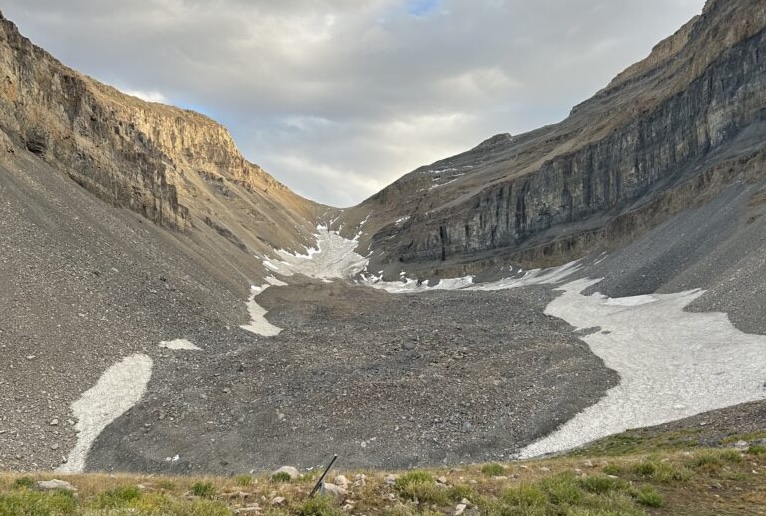
With a novel 3D technique, a University of Utah team has brought to light the unaccounted masses of ice hidden at the Timpanogos Rock Glacier, finding both a good measurement of how much ice it contains, and also how the rock glacier located near Salt Lake City and Provo formed.
The Timpanogos Rock Glacier stores 1.5 million cubic meters of ice, a University of Utah news release says. That’s enough frozen water to fill 600 Olympic-sized swimming pools. The number is also similar to the volume of the largest pyramid in Giza, Egypt, said Bronson Cvijanovich, a former graduate student in the Department of Geology & Geophysics.
“Timpanogos Rock Glacier is surprisingly ice rich. It is 83% ice and 17% loose rock,” said Cvijanovich, lead author of a study measuring the internal ice content of the rock glacier.
Rock glaciers are common in the Wasatch and Uinta ranges. Timpanogos is one of 836 in the state. While their footprints can be outlined with satellite imagery, “the 3D shape, depth and ice they obscure is harder to reveal,” the university said in the release.
“There’s a lot of ice that’s hidden in Utah’s mountains,” said Leif Anderson, a glaciology professor who oversaw the study. “When we are high in the mountains and walking across loose rocks or rubble, you don’t realize there could be 120 feet of ice buried beneath your feet.”
To estimate the ice content, a team hiked about five miles in an elevation gain of 3,500 feet to get to the rock glacier on different occasions in 2024, hauling sensitive instruments, like a gravimeter, and took gravity readings at 232 spots separated by about 80 feet in a grid atop the rock glacier.

The gravimeter measures density differences between rock and ice, the university said in the release, which allowed the researchers to calculate the 3D shape of the buried ice body. After those measurements were collected, the team had to correct them to take into account differences in gravity due to factors like the position of the sun and the moon, the location’s terrain, latitude and elevation.
But how does ice get into the rock glacier in the first place? Another study from U of U researchers showed with a new mathematical model that rock glaciers gain mass because “rockfalls bury persistent snow in the upper parts of rock glaciers,” according to the release.
“In the Wasatch, the mountains themselves are eroding and burying the snow, and that’s why the rock glaciers exist,” Anderson said.
Despite climate change, the Timpanogos Rock Glacier apparently keeps on adding ice, the researchers said.
“Rock glaciers flow downhill just like a glacier or river, but the important distinction here is that the thick carapace of loose rock actually protects and hides the ice, making these climate-resilient water storage sites that may still be adding frozen water. From a water resource standpoint, it is really important, especially in a warm and arid state like Utah,” Cvijanovich said.
This story was originally published by utahnewsdispatch.com and written by Alixel Cabrera. Adjustments for style and clarity have been made.

Elizabeth Spencer | American Fork Citizen
September 17 marks 239 years since the signing of our nation’s Constitution, which established America’s government and citizens’ rights. American Heritage School (AHS), in American Fork, honors this day annually, with learning focused on the founding of our country.
During the school day, kindergarten through eighth grade students step out of the classroom and onto the school’s football field, journeying back in time. The field becomes a present-day history experience as students rotate through interactive stations. Each station includes people from the colonial period, with stories that connect youth with founders of the USA. Lives of people like Betsy Ross, the young George Washington, Thomas Jefferson, and Patrick Henry are just a few characters to be portrayed at this year’s Constitution Day. Students participate as if they are living in that era as performers share stories, historical experiences, and perspectives from their lives hundreds of years ago.
“It is so important that the children understand the celebrations we have for America, because if they are not explicitly taught, they won’t know. When we share with them what Constitution Day is about or anything else to do with America and the celebrations we have, if they don’t get taught the specifics of it, they won’t come to appreciate and understand the depth of the sacrifice and those that have come before us,” said AHS Assistant Principal Charne Adams.

“At American Heritage School, we hold a deep conviction that our faith is intimately connected to the blessing of living in a nation where God-given freedoms are safeguarded by the United States Constitution,” shared AHS employee Jennilyn Burr. “Through our annual September Constitution Day celebrations of learning, students engage in interactive rotations that bring our heritage to life. By highlighting the diverse men and women whose sacrifices—both quiet and monumental—have preserved our nation’s freedom, we teach the rising generation to love, honor, and carry forward the legacy of liberty.”
The Constitution Day Celebration supports the school’s desire for students to learn about America’s founding. “When they [the students] learn specifically the sacrifices of all those that came before us, they’ll appreciate it more. They won’t take it for granted,” said Adams.
AHS invites the entire community to commemorate Constitution Day that evening during a celebration. Neighbors and friends are welcome to join from 5-9 p.m. at AHS to experience inspiring presentations on freedom through music and activities that invite reflection and gratitude for our rights.
The festival includes activities such as bounce houses, face painting, a petting zoo, colonial stations and games on the field, along with food trucks. The America 250 Celebration Program and Fireworks show begins at 8 p.m. on Thursday, September 17.
Spectators are invited to bring a picnic or purchase food at the event and enjoy the program and fireworks on a blanket or lawn chair. Tickets are available on the AHS website at af.americanheritageschool.org.
David Condos | KUER 90.1
Many Utah cities want to ditch thirsty grass. But trees are a different story. It comes down to cooling. As climate change ramps up Utah heat, a leafy canopy provides relief from the blistering sun in ways that grass can’t.
“Ask yourself: Would you rather park next to a small lawn or would you rather park under the shade of a tree?” said Doug Bennett, conservation manager with the Washington County Water Conservancy District. “It makes the point very quickly.”
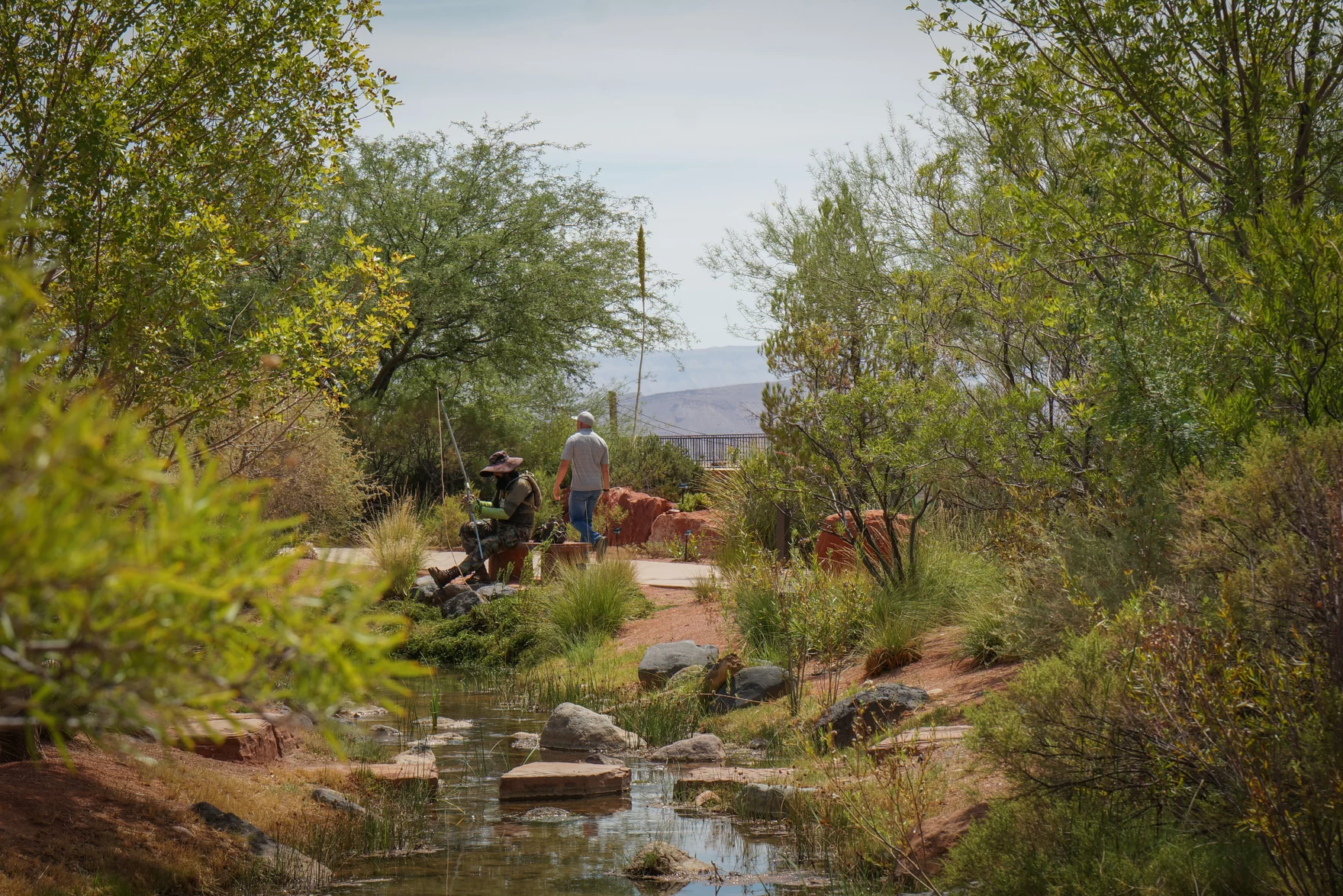
On a bright, 100-degree day in St. George, Bennett walked beneath the shadow of a mesquite tree. It’s one of roughly 200 trees growing at the Red Hills Desert Garden, which the conservancy district runs on a cliff above downtown.
He aimed a handheld infrared thermometer at the concrete sidewalk next to his feet. The shaded surface read 93 degrees. The exposed asphalt parking lot nearby registered 45 degrees warmer. That’s a good example of how Southwest native trees like mesquite, desert willow and palo verde can mitigate urban hot spots while barely sipping on the region’s precious water.
“This garden uses about 11 gallons per square foot per year,” Bennett said. “That is about one-fifth of what people would apply to a lawn.”
Now, the water district is paying residents to swap their grass for some drought-tolerant shade. This summer, it began offering a $100 incentive to motivate people to plant trees as part of a lawn makeover.
Residents can qualify for the “treebate” by notifying the district of their plans and confirming the desired species is on the list of climate-appropriate options. People can get one tree rebate for every 700 square feet of landscaping that’s replaced. In northern Utah, the Jordan Valley Water Conservancy District and Central Utah Water Conservancy District offer a similar rebate at $50 per tree.
Just one-tenth of a typical urban area is devoted to landscaping, Bennett said.
On one hand, that means cities can’t expect plants to fix all their warming problems. Dark roofs, asphalt and concrete block walls contribute to heat islands, too. On the other, it means cities need to get the biggest possible impact from that small sliver of green space. Grass isn’t holding up its end of the bargain.
“The biggest misconception is that lawns are cooling our urban areas,” Bennett said. “Don’t get me wrong — if you lay down on well-watered grass, you’re going to feel a cooling effect. That cooling effect is not the grass. It is the water being transpired out of that grass and past you to the atmosphere.”
That’s a big part of why grass requires so much irrigation, he said, which runs afoul of the district’s conservation efforts.
One recent study of desert cities worldwide suggests that grass can actually warm things up because the water it releases has minimal cooling impact and its dark leaves absorb plenty of the sun’s heat.
That finding may be skewed by parts of the world that don’t irrigate grass as much as the U.S. does, said Diane Pataki, chief scientist and vice president of science with the conservation group National Wildlife Federation. But it points to a tricky balance arid communities need to strike.
“If we stopped irrigating cities, they’d get a lot hotter,” Pataki said. “So, we have to use some water, and the question is how much.”
Pataki previously researched urban heat and landscaping as a professor at the University of Utah, seeking to find the best tradeoff between landscape cooling effects and water use.
Because trees generally need a different style of irrigation than lawns — less frequent, more targeted — she said they can provide a lot of cooling on a small water budget. Trees can even make grass less thirsty.
“We found that adding trees to landscapes can lower the water requirement of the landscape, even if you don’t do anything else,” Pataki said. “It’s counterintuitive because you’re adding more plants, and you think, ‘Oh, I have to add more water now because I added more trees.’ But the shading effect reduces the water requirement of the lawn so much that you can actually lower the water requirement of the whole landscape.”
That illustrates how the benefits can start with a single tree, she said. Another high-impact planting spot is on the west side of a home, where a tree could keep the living space cooler and reduce air conditioning demand.
“It’s definitely worth doing in your own backyard,” Pataki said, “even if you’re the only person on your block doing it.”
As Utah cities rapidly grow and the state gets hotter, she said it’s vital for communities to consider trees’ cooling benefits as part of their future designs.
This article is published through the Utah News Collaborative, a partnership of news organizations in Utah that aims to inform readers across the state. Adjustments have been made for style and clarity.
Staff Writer | American Fork Citizen
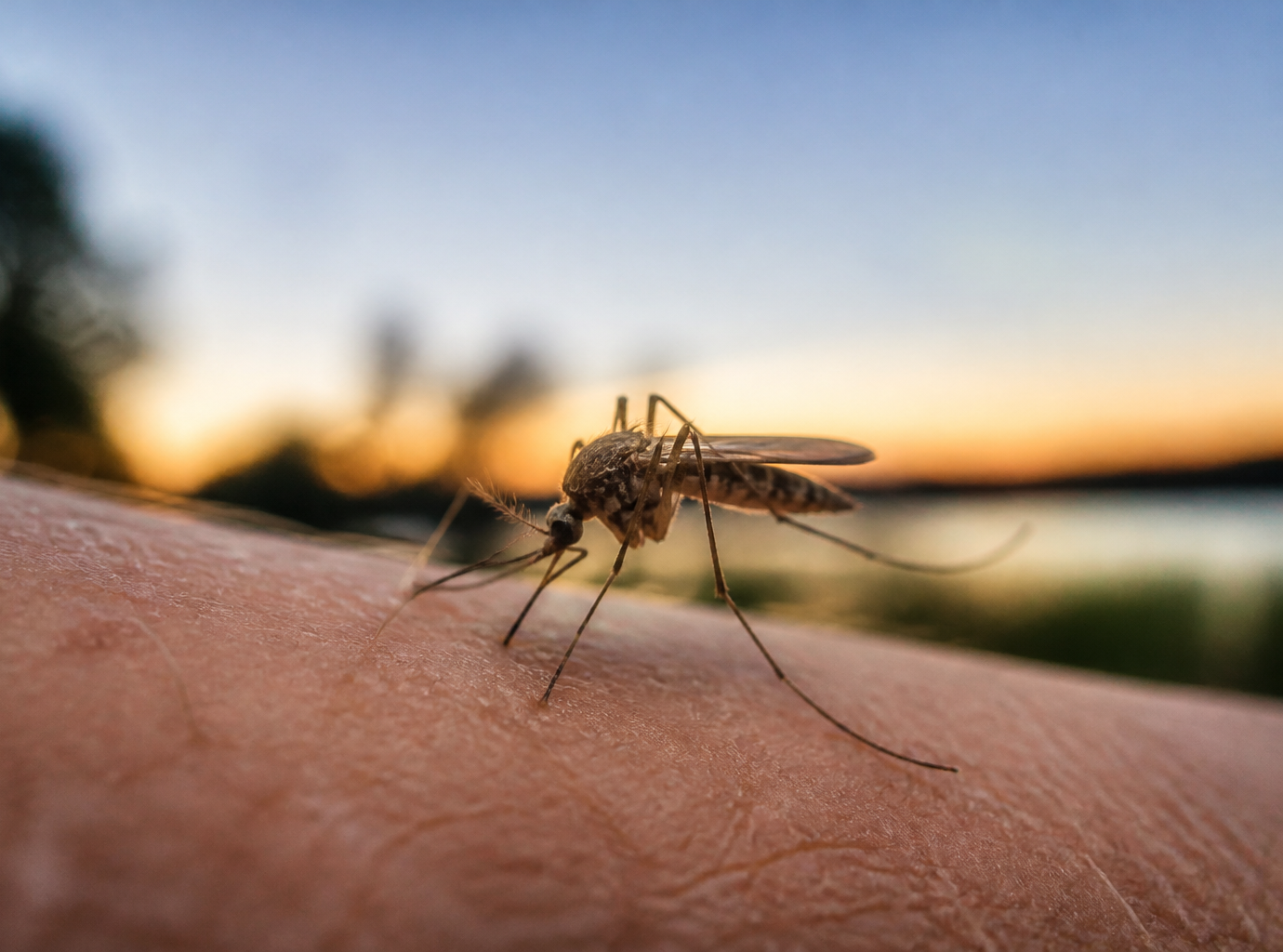
Utah County has confirmed its first human case of West Nile virus this season. The patient developed a rare, serious form of the illness, prompting health officials to urge residents to take precautions against mosquito bites.
The patient developed neuroinvasive disease, which can affect the nervous system and may require hospitalization. The Utah County Health Department said it will not release additional information about the patient to protect the individual’s privacy.
“This case is an important reminder that West Nile virus is present in our community and can cause serious illness,” Aislynn Tolman-Hill said in the department’s announcement. “Residents can reduce their risk by using insect repellent, wearing protective clothing, and removing standing water around their homes.”
The Health Department and Utah County Mosquito Abatement are reviewing mosquito-surveillance information and conducting an additional assessment in the area associated with the case. Decisions about mosquito-control measures are based on surveillance results, mosquito activity, weather conditions and established intervention thresholds.
Most people infected with West Nile virus do not develop symptoms; about one in five experience a fever or symptoms such as headaches, body aches, joint pain, vomiting, diarrhea or a rash.
Less than 1% of infected people develop neuroinvasive disease, which can include meningitis, encephalitis or acute flaccid myelitis. Warning signs may include a high fever, severe headache, neck stiffness, confusion, seizures, tremors or muscle weakness. The department advises people with severe or concerning symptoms to seek medical care promptly.
Mosquitoes that carry West Nile virus are most active around dawn and dusk. Residents can reduce their risk of being bitten by using insect repellents containing DEET, picaridin or oil of lemon eucalyptus; wearing long sleeves and pants when possible; and checking that window and door screens are intact.
Residents are also encouraged to remove standing water around their homes. Residents can report heavy mosquito activity or standing water that cannot be eliminated to Utah County Mosquito Abatement. Those reports help crews locate and treat hidden mosquito-breeding areas before populations increase.
Mosquito trap counts, spray schedules, treatment maps, educational materials and an online service-request form are available at https://health.utahcounty.gov/mosquito-abatement.
STAFF WRITER | American Fork Citizen
Two new schools serving students with disabilities have opened at the former Sharon Elementary School in Orem.
Alpine School District held a ribbon-cutting ceremony Monday, Aug. 17, for Silver Peak School and the Timpanogos Transition and Education Center. The renovated facility is located at 525 N. 400 East within the boundaries of the future Timpanogos School District.
Silver Peak will serve students with severe disabilities in grades pre-K through 12. Principal Dan Heaps said students will have access to teachers and therapists who can address their individual needs.
“Every child deserves an education built around who they are, not in spite of it,” Heaps said.
The Timpanogos Transition and Education Center, or TTEC, will serve students ages 18 to 22. Its programs will focus on life skills, recreation and preparation for greater independence within the community.
TTEC Principal Melanie Adams said the school will provide individualized support as students prepare for life after school.
“This new facility will give us an even better opportunity to support our adult students right in their communities,” Adams said.
Both schools will begin serving students during the 2026-27 school year.
Jennifer Thomas | American Fork Citizen
Utah’s unemployment rate stands at a low 3.6% with roughly 67,900 residents looking for work. Yet job hunting has grown increasingly frustrating as the labor market slows. To bypass online application backlogs, upcoming events like the Utah Valley Job Fair offer face-to-face access to recruiters and on-the-spot interviews.
The Utah Valley Job Fair will be held on Tuesday, Aug. 25, from 2-5:00 p.m. at the Utah Valley Convention Center in Provo. “The Utah Valley Job Fair is Utah’s largest community job fair with more than 100 participating employers,” said Allison Keller, Public Information Officer for the Utah Department of Workforce Services.
Searching for a job can feel like a frustrating bottleneck, as many applicants frequently report sending dozens of digital resumes without a response, making the search feel like an isolated uphill battle.
“Search for a job is frustrating because you can spend so much time applying and rarely hear anything back, sometimes not even a rejection email is sent. I get hopeful because I wonder if I still have a chance only to realize later that I will not ever get a response,” said Shailey Stubbs, Lehi City resident.
A job fair can help with the bottleneck because it allows direct, face-to-face connection with employers. The Utah Valley Job Fair is a “dynamic, in-person event which connects job seekers and employers for a day of meaningful conversations, career exploration and real hiring opportunities,” according to Keller.
The free event offers job seekers opportunities to meet with employers and find open jobs that could lead to real interviews and possible offers of employment.
“The Utah Valley Job Fair is a great opportunity to explore career options for anyone just starting their career or those looking for a new opportunity to meet with more than 100 employers across various industries,” said Mark Middlebrook, Director of Outreach at Mountainland Technical College. “Job seekers should prepare for the fair by updating their resume and preparing a 30-second elevator pitch to share with potential employers.”
Visit utahvalleyjobfair.com or https://www.linkedin.com/events/2026inpersonutahvalleyjobfair7416487168564441088/ for more details and a list of participating employers.

American Fork MTB team leads Region 6

Trump DOJ uses case of Utah letter carrier to highlight allegations of voting fraud

Staying connected can save a life during Suicide Prevention Month and all year long

‘BIGGEST LOSER’ CONTESTANT FROM AF DIES TRAGICALLY

Aspen Peaks School Board “Meet the Candidates” night recap

Tragedy Strikes American Fork: Local Couple Found Dead in Apparent Murder-Suicide
-

 AF City News1 month ago
Mayor silences cheers as Booker announces lawsuit against AF Police
-

 AF City News1 month ago
American Fork disclosures show gaps, unanswered questions
-
Opinion1 month ago
OPINION: Brick by brick
-

 AF City News1 month ago
AFHS Marching Band kicks off hotter-than-usual season
-

 AF City News1 month ago
AF City Council hears mixed verdict on proposed tax hike
-
Local News1 month ago
Utah Valley Job Fair connects job seekers with more than 100 employers
-
Opinion1 month ago
OPINION: We gotta eat (out), right?
-
Local News1 month ago
Silver Peak, TTEC open doors to students with disabilities in Orem
-

 Obituaries1 month ago
Muriel Allred Allridge
-

 Local People1 month ago
AFHS drum major follows mother’s musical example