
Local News
Lehi siblings get back-to-back T1D diagnoses


Megan Wallgren | American Fork Citizen
The Grimes family of Lehi is raising money to get a diabetic alert dog after two of their children were diagnosed with Type 1 diabetes in two month’s time. They are holding a bake sale on Saturday, July 19, from 10 a.m.-12 p.m. at the Ivory Ridge Splash Pad (601 W. 3200 N.) to help cover the cost of a highly-trained service animal.
“A couple of months ago, I had perfectly healthy kids. We went to two Type 1 diabetic babies in just 63 days,” said Kylie Grimes.
Her son Noble, just 10 months old, was first diagnosed at Primary Children’s Hospital at the end of April after going into Diabetic Ketoacidosis. Her daughter Goldie, 6, was diagnosed at the end of June after she used one of her brother’s testing strips out of curiosity and tested in the diabetic range. Doctors then confirmed Goldie’s diagnosis. Luckily, they caught it early.
The general risk of developing Type 1 diabetes is relatively low, around 0.4%. If one child has Type 1, the risk for a sibling is about 5%, according to WebMD, so finding out they had two Type 1 diabetic children in such a short period of time was a shock to Kylie and her husband, Kyle.
Their lives are now full of doctor’s appointments, blood testing and insulin shots. Because it’s so rarely found in babies, Noble spent eight days in the hospital while doctors and nurses did their best to diagnose and treat him.
“I didn’t see any big change in him, but he was a little more tired and not acting like himself. One morning he woke up and was vomiting. He kept throwing up and would fall asleep between it. I knew stomach flu was making its rounds, and so I chalked it up to that. Around 5 p.m., he wasn’t waking. I knew he was getting dehydrated because of the amount he was puking, so I made the decision to take him into the hospital,” Kylie said.
It was a frightening experience. “There were doctors and nurses everywhere. I thought I was just getting him fluids because he was dehydrated, and the next thing I know my baby is dying in my arms.”
Because Noble is so young and can’t communicate enough to participate in his care, it’s been hard to get him regulated. Treatments are designed for children for 4 years or older, and the Grimes have had to adapt those treatments to Noble’s care. This is one of the reasons the family is raising money for a diabetic alert dog.
“We’ve spoken to parents with young Type 1 kids, and they all talk about how crucial a diabetic alert dog is. They are worth their weight in gold because they can detect changes in blood glucose levels sooner than the technology can,” said Grimes.
The animals go through extensive training lasting a couple of years and therefore come at a high price, around $20,000 to $30,000. The Grimes cannot meet this on their own but have felt uplifted by the number of people, including strangers, who have offered to help. The Grimes children have wanted to help too, and have offered their own money from odd jobs they do to help pay for the dog. They decided to hold the bake sale as a way to let their kids participate in the fundraising without raiding their piggy banks.
“We have so many things that have been donated to the fundraiser, it’s been amazing. Now we just need people to show up,” Kylie said. Beyond the bake sale, a GoFundMe has also been set up to help.
After getting further along in the process, Kylie hopes to be able to give back and help those families struggling with a Type 1 child’s diagnosis and help the diabetic community in general. “Once we get out of this learning curve, we can hopefully be a face and resource to help people along the way,” she said.
“Kyle and I have felt extremely guided through this process. It hasn’t been pretty, but it has worked out,” Kylie said. “We’ve felt like we have been walked with through this journey. Even though it’s completely sucked and not been fun, I don’t feel alone in this. I don’t feel like this is in vain. I feel like there is a higher purpose.”
You can follow the Grimes family and their journey with Type 1 diabetes on Instagram @doubledoseofdiabetes.

Nichole Coombs | American Fork Citizen
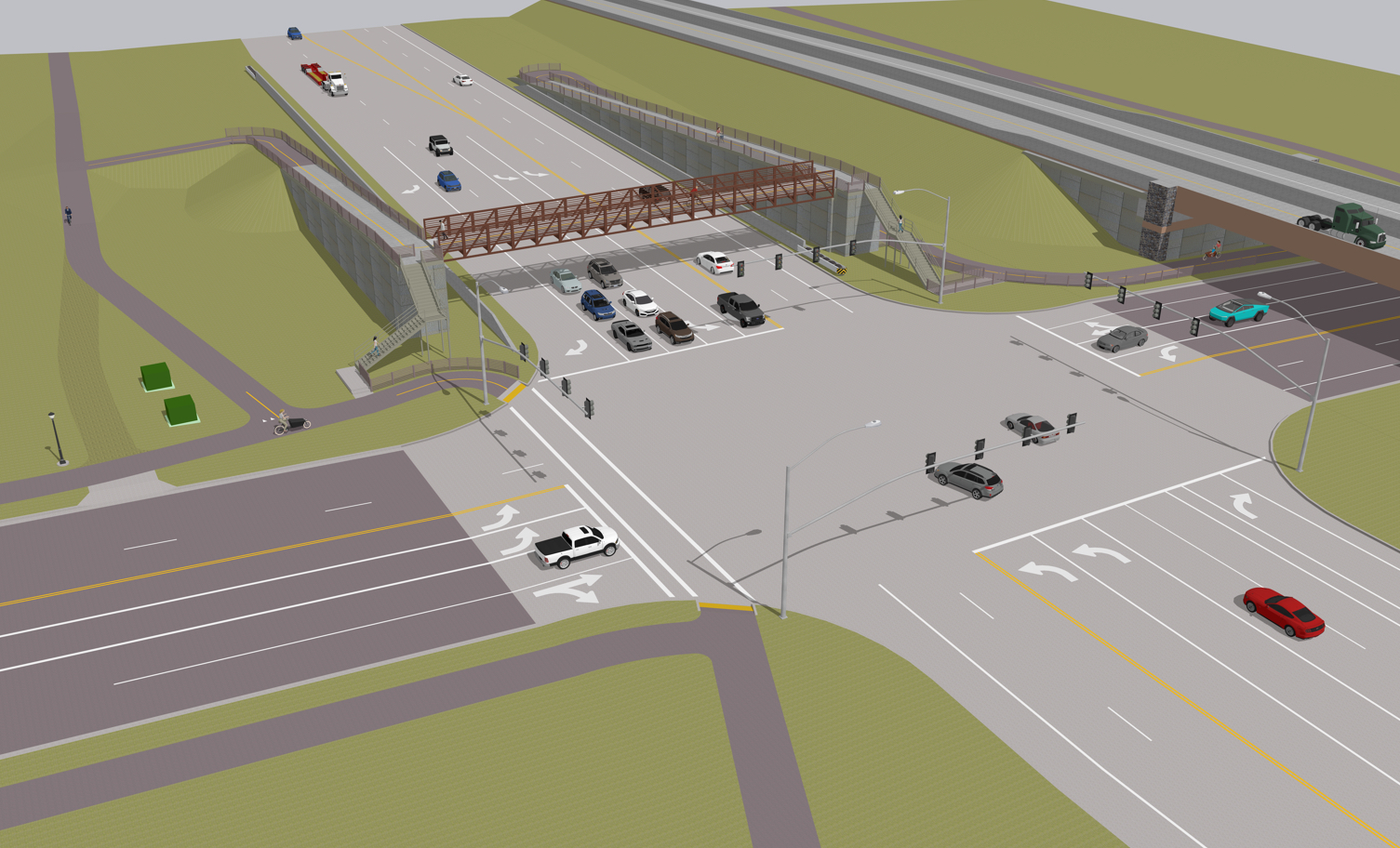
In a move that will improve safety for students, residents, and bikers crossing SR92, UDOT has partnered with Lehi City to fund a north-to-south pedestrian bridge.
“This is great for our city,” said council member Heather Newall. “It will connect our residents, support the businesses, and most of all keep everyone safe.”
UDOT and Lehi City have discussed the project for many years, and it was a top-three priority for funding but wasn’t expected to be funded this year. Then, on November 6, 2026, during a UDOT Commission meeting held in St. George, the bridge project was approved.
“Each region of UDOT brings forth its projects and what they need funded, and then the commission has the right to approve them or deny them,” said Mayor Paul Binns. “Some of these projects have been on the list for years, some for just a few months.”
Mayor Binns, city administrator Jason Walker, and council member Michelle Stallings attended the meeting. Before making any decisions, the commission opens the floor to public comment.
“I gave a comment on how much we appreciate the partnership with UDOT and with MAG,” said Binns. “And the importance of this bridge that had been needed and the importance of the funding to expedite the project.”
The commission then voted to fund the additional money needed to build it.
The bridge will cost between $8 and $9 million to build. The city secured half of that money through various grants. UDOT is partnering with the city and funding the other half.
“This process started many years ago,” said former Lehi Mayor Mark Johnson. “It was amplified once the middle school was built [in 2021]. That’s when talks about a pedestrian bridge started.”
In May 2024, during a city council meeting, Mayor Johnson and then-city engineer Lorin Powell discussed next steps and securing grant funding for the project.
During the council meeting on June 11, 2024, resident Johnathan Madsen addressed the council about issues he has observed with students trying to cross SR92.
“With the right-hand turn lane coming in and the crosswalk, I want to get it on the record: [I have concerns]. It’s going to be a challenge to get that thing [pedestrian walkway] in there because of all the entities who are involved,” said Madsen.
The Viewpoint Middle School Community Council has been aware of SR92’s challenges since the school opened.
“One of our state-mandated jobs as a council is to ensure each child has a safe way to get to and from the school,” said Viewpoint Middle School community council chairperson, Jenny Timmerman. “I’m just filled with joy, relief, and gratitude for everyone who worked on this in the past ten years. It is amazing what we can accomplish as a community when we come together for a single purpose.”
The process of getting the bridge started in 2018. City engineer Mike West began developing design concepts. In June 2024, UDOT and Lehi City met to discuss those concepts and review the feasibility study. In August 2025, Lehi City started writing grants to help fund the project. In March 2026, Utah County Commissioner Skyler Beltran submitted federal funding requests. In August 2026, Lehi secured 4.5 million dollars through grants and MAG.
On September 2, 2026, a child was hit while crossing SR-92 in the crosswalk. Public outcry amplified, and several news outlets covered the issue.
With Lehi’s $4.5 million contribution and a $4.5 million partnership with UDOT, the bridge project is set to begin.
“It’s not just Lehi City that got this project across the finish line,” said Binns. “It’s multiple agencies sitting around the table making the plans to make it work.”
Most of Lehi’s money comes from the MAG (Mountainland Association of Governments). The association is focused on Utah, Summit and Wasatch counties. MAG consists of the mayors and county commissioners in those counties, who make up a board. That board oversees regional transportation needs and trails. They focus on the connectivity between regions.
“UDOT takes care of most of the high-end [high dollar] stuff,” said Binns. “The middle stuff, the interregional roads and connectivity, is usually provided by MAG. They approve their projects two to three years out. Their funds come from the state.”
MAG approved the pedestrian bridge this year, assuming it would be built in 2029 or 2030.
“We had to go out and find the other $4.5 million, and that’s where our friends at UDOT partnered with us to provide it,” said Binns.
But the city wants the bridge built sooner than 2029.
“So, we will work with the county and will swap another one of our MAG projects for this one. Once it’s approved [presumably at the city council meeting on Tuesday], it can go to design on Wednesday. The reason it can is because Lehi will pay the first $300,000 to $400,000. We have to pay that anyway; that’s our portion. So, what we can do is use our funds upfront to start the planning.”
The pedestrian walkway is expected to take eight to ten months to engineer.
“Because we’ve done it this way, we’ve sped up the project 12 to 18 months,” said Binns.
Residents won’t see construction until the engineering and design phases are complete, likely by the end of 2027. However, if that process moves more quickly, construction could start that winter.
“This is so important for the Skyridge cluster,” said Alpine School District vice president Stacy Bateman. “Lehi is extraordinary. It really does take people in leadership positions to champion something like this and see it through to the end. Thank you to everyone who’s been a part of it.”
Staff Writer | American Fork Citizen
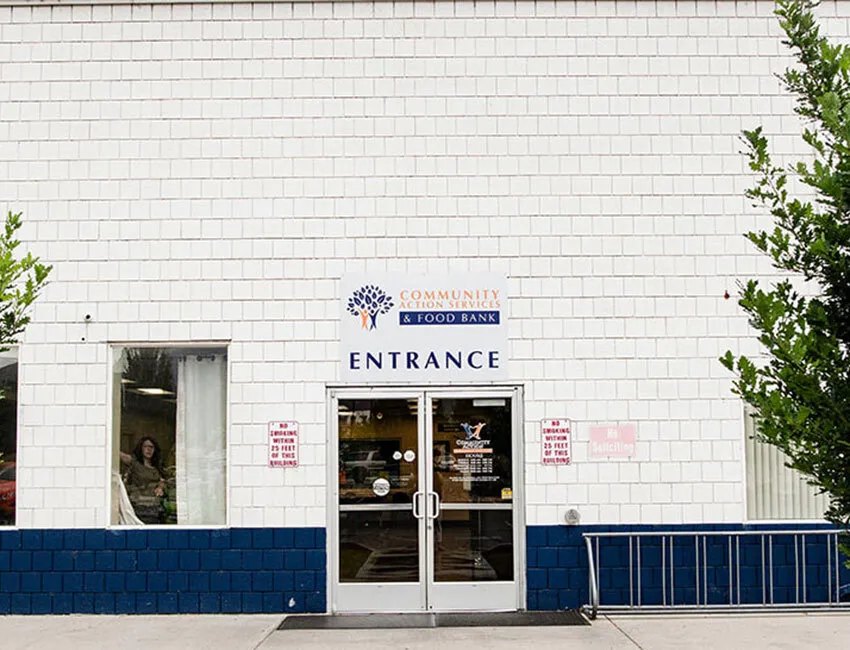
After decades of helping individuals and families overcome hunger, housing instability and poverty, Community Action Services and Food Bank (CASFB) has temporarily closed its doors effective Nov. 1 while the Board of Trustees determines the best course of action in our current circumstances.
The temporary closure follows an increasingly difficult financial environment marked by declining grant funding and donations, and growing demand for services.
For generations, the work of CASFB has been powered by people who believed their neighbors deserved a hand up during difficult times. Employees and volunteers have served families in crisis, donors and funders have invested in solutions, and community partners have worked alongside the organization to strengthen communities throughout Utah, Wasatch, and Summit counties.
“Our greatest sadness is knowing that the need for these services has not gone away,” said Caitlin Rangel, Interim CEO. “We are profoundly grateful to every person who has given their time, resources, expertise, and heart to this organization. Whatever has been accomplished through Community Action Services and Food Bank belongs to this community.”
Utah County Commissioner Skyler Beltran issued a statement about the closure on Facebook.
“It is a travesty to see such a crucial organization in our community close its doors. For decades, Community Action has provided essential services to some of our most vulnerable residents and its closure leaves a significant void in Utah County,” the statement begins. “We have been actively involved in coordinating efforts to ensure these critical services continue with as little disruption as possible. This includes taking over operations of the Utah County Warming Center, which will open tomorrow, November 1, as scheduled.”
The statement continues, “Years of financial and operational mismanagement, coupled with a recent escalation of financial instability, should not be mistaken for a failure of the government partners who have consistently supported these programs and services.
“What cannot be lost in this transition are the more than 20,000 residents who rely on these critical services and the more than 50 dedicated employees who have spent years serving others. These are real people, real families and real livelihoods impacted by this unfortunate situation,” Beltran states.
“I also want to recognize several furloughed Community Action employees who are generously volunteering their time to help us transition operations of the Warming Center. Their continued dedication to serving others, even in the face of their own uncertainty, speaks volumes about their character.
“There is a lot of work ahead but Utah County always comes through,” the statement concludes.
The organization recognizes that the temporary closure will create uncertainty for clients, employees, volunteers, donors, and community partners.

Annie Knox | Utah News Dispatch
Utah Valley University is bringing on a past leader of the state’s highway patrol to fill a new safety post after the assassination of Charlie Kirk on the campus last year.
The announcement comes a month after an outside review identified gaps in the university’s planning and protocols. The report recommended Utah Valley create a top administrative role to oversee safety operations and emergency management, and the university said in response it was already doing so.
Michael Rapich is taking the job at the university in Orem after 33 years with the Utah Highway Patrol, where he served at the helm for nine years before retiring in November 2025.
University President Jon Anderson said in a prepared statement that Rapich “brings decades of public safety leadership, sound judgment, and trusted relationships across Utah. His experience and collaborative approach will strengthen how UVU prepares, responds, and works together to serve our campus community.”
The university has faced criticism for failing to secure each rooftop and assigning just six police officers to staff the event attended by some 3,000 people. Kirk’s family blames lapses in event security for his death and has taken a first step toward suing the school by sending a notice of claim.
Rapich’s longtime relationships with law enforcers throughout the state will help enhance emergency response and coordination with other agencies, the university said.
Rapich said in a statement that he’s honored and looks forward to working with students, employees, and others in public safety at the university and surrounding communities “to identify every opportunity to ensure that UVU Campus is a trusted place for learning, growth, and engagement.”
Rapich became a state trooper in 1992 after serving in the U.S. Coast Guard and working as a 911 dispatcher, the university said.
Kirk, a founder of the student organization Turning Point USA and a close ally of President Donald Trump, was shot and killed just minutes into an outdoor speaking event in a courtyard on Sept. 10, 2025.
Tyler Robinson, 23, is accused of using his grandfather’s hunting rifle to fatally shoot Kirk from a rooftop on the campus. He has pleaded not guilty to aggravated murder.
A judge last month ordered Robinson to stand trial. If he’s convicted, prosecutors have said they’ll seek the death penalty. They expect a trial to take place in 2028, while Robinson’s defense team says they will need until 2029 to adequately prepare for a trial.
This story was originally published by utahnewsdispatch.com and written by Annie Knox. Adjustments for style and clarity have been made.
Local News
Utah County Planning Commission meeting disruption ends in protester’s arrest outside commission chambers

Jennifer Thomas | American Fork Citizen
The Utah County Planning Commission voted unanimously to recommend a controversial new data center zoning ordinance during a tense, packed meeting on October 20, 2026, which ended in a physical confrontation and the arrest of a protester.
The Utah County Government land use proposal added data centers as a permitted use within Mining and Grazing (M&G-1) and Industrial (I-1) zones, while establishing a new Data Center Overlay Zone.
The recommended framework includes development standards such as:
• Capping individual data center size at 1 million square feet and 500 megawatts
• Limiting annual water usage to 300,000 gallons
• Mandating strict noise and traffic studies
The Planning Commission’s vote serves as a recommendation only. The full Utah County Commission holds final authority and will review and vote on the ordinance at a later date.
Over 100 local residents filled the chambers in Provo to voice deep opposition to the proposal. Speakers and local advocacy groups—including UT for the People — No Tech Billionaires and Protect Utah—expressed concern that large-scale data centers will strain local water and electricity grids, disrupt rural grazing and industrial spaces, and impact the environment.
Critics also condemned the commission for advancing the recommendation amid vocal public pushback.
After the vote, tensions escalated as attendees voiced loud objections in the room. When deputies moved to clear disruptive individuals, a physical altercation broke out in the lobby and seating area.

Activist, Aspen Azalea was taken to the ground by a Utah County Sheriff’s deputy, evaluated by EMS, and booked into the Utah County Jail.
According to the Affidavit of Probable Cause, Azalea was charged with “disrupting a meeting/procession, interfering with a peace officer, and assault on a peace officer.”
According to the Affidavit, during the meeting, there was a “disruption by some of the attendees, the commission chair asked for those individuals to be removed, one did so voluntarily, one did not, she was later identified as Aspen Azalea. Despite being asked and ordered several times by law enforcement officers to remove herself from the meeting she did not.”
The deputy stated in the Affidavit, “I grabbed ahold of her (Azalea) arm and stood her up to remove her from the area, as I was pulling her out of the row of chairs, it felt like she attempted to go limp and dump her body weight on me, when I pulled her out of the row of chairs and into the isle I felt a sharp pain in my groin, it felt like I had been kneed or kicked in the testicles by Aspen, simultaneously two other individuals latched onto Aspen and had to be physically removed from the commission chambers.”
“The individuals were told to stop resisting and separate from each other, they did not and had to be physically separated from one another.”
Utah County Sheriff Mike Smith defended the use of force and arrests made during the Planning Commission meeting in a public statement on the Utah County Sheriff’s Office website at https://sheriff.utahcounty.gov/news/260978:
Video footage shared by advocacy groups dispute the official account, claiming Azalea was not actively being vocal when she was removed from the meeting and was subjected to excessive force that caused her chin/jaw to hit the ground. Audio from the Utah County Planning Commission meeting captures shouting and public disruption.
The Utah County Sheriff’s Office confirmed that the use-of-force incident is under internal supervisory review.
Rallies demanding accountability and a full moratorium on private data center developments have since formed at the Utah State Capitol.

Nichole Coombs | American Fork Citizen
The Fox Hollow Golf Course in American Fork is ready to grow, but how and where that growth occurs will depend on a feasibility study and possibly a new bond.
Mayor Paul Binns chose Lehi City Council member James Harrison to represent Lehi on the golf course steering committee.
“The golf course is paying for its own feasibility study,” said Harrison. “Once that study is completed, we will come together as staff and elected officials on that committee and evaluate what we want to do.”
Fox Hollow, located at 1400 North 200 East in American Fork, is funded and operated through a partnership between Lehi, American Fork, and Pleasant Grove. The golf course was formerly called Tri-City Golf Course. All three cities are helping pay off the current bond, which expires at the end of 2027. Fox Hollow wants a new bond to replace it and help fund course upgrades.
“They are looking to add covered bays that can bring in revenue throughout the winter,” said Harrison. “They would like to offer golfers one more option. It’s really hard to get on the schedule [a tee time] because the course is so popular. By adding bays that can be used year-round, they add another option for golfers who may not be able to get on the course and a way to generate revenue.”

American Fork has offered to provide acreage on the west side of the golf course for the expansion at no cost to Fox Hollow. Currently, all three cities contribute $225,000 per year to help pay the bond and operating expenses, and about $10,000 is contributed to an emergency fund.
“Depending on the course’s performance each year, the city gets refunded a certain amount,” said Harrison. “And the last few years [the profit sharing] has been going really well.”
In addition to the covered bays (similar to Top Golf), the golf course wants to add a food court to serve customers and generate additional revenue, especially during the winter months when the main course is closed.
Harrison says the bond would be about $7,000,000 if it passes, but there are many steps before that happens. The three participating cities would pay the bond collectively.
“We need the results of the feasibility study, then the proposal is brought to the Lehi City Council, and we will vote on whether to support a bond. We will need to look at it from the perspective of Lehi residents and ask whether it really benefits a broad enough population in our city. The best-case scenario is it would bring in tons of revenue, and we would have a net gain in revenue,” said Harrison.
But Harrison is also skeptical about what the study’s results will show.
“The results can vary widely,” said Harrison. “The market isn’t very mature in this space. Having a public golf course and adding covered bays could be a benefit, but it’s also a risk.”
The feasibility study is expected by year-end. Then, all three cities- Pleasant Grove, American Fork, and Lehi- will meet to discuss the expansion and must agree on a bond before it moves forward.

Staff Writer | American Fork Citizen
Groundbreaking for the Lehi Utah Temple is scheduled for Saturday, Dec. 5, The Church of Jesus Christ of Latter-day Saints announced Oct. 26.
Elder John A. McCune, a member of the church’s Utah Area Presidency, will preside at the ceremony.
The temple was announced in April 2024. The groundbreaking announcement did not include a ceremony time, attendance information or an estimated construction completion date.

The Lehi temple is among 32 temples in Utah that are operating, undergoing renovation, under construction or announced, according to the church. The church reports approximately 2.2 million members in more than 5,000 congregations statewide.
Temples serve a different purpose from the church’s meetinghouses, where Sunday worship services and other activities are open to the public. In temples, eligible church members participate in religious ceremonies, including marriages and baptisms performed on behalf of deceased ancestors.
Latter-day Saints believe temple ceremonies unite families beyond death.
Staff Writer | American Fork Citizen
Intermountain Health opened a specialty clinic and cancer center Monday in Saratoga Springs, adding services for residents of the city, Eagle Mountain, West Lehi and nearby communities.
The 48,000-square-foot facility is part of Intermountain’s existing campus, which also includes emergency services and a surgery center. The clinic offers cardiology, gastroenterology, orthopedics and sports medicine, women’s health and pediatrics.
The cancer center provides medical and radiation oncology, infusion therapy, survivorship support and advanced radiation treatment.
“We’re proud to bring this level of coordinated care closer to the families we serve,” said Jason Wilson, president of Intermountain Health American Fork Hospital. “This is one of Utah’s fastest-growing areas, and we will help ensure people here have the medical care they need.”

The campus expansion is intended to reduce patient travel and help providers coordinate care, Intermountain said.
“When someone is going through cancer treatment, being close to home matters,” said Dr. Tawnya Bowles, senior medical director for oncology at Intermountain Health. “This center will help patients stay connected to family, work and daily life while receiving compassionate, high-quality care.”
“Bringing these services together makes it easier for providers to collaborate and for patients to get the care they need in one place,” said Lyndsey Russell, market vice president of Medical Group operations for Intermountain.
Staff Writer | American Fork Citizen
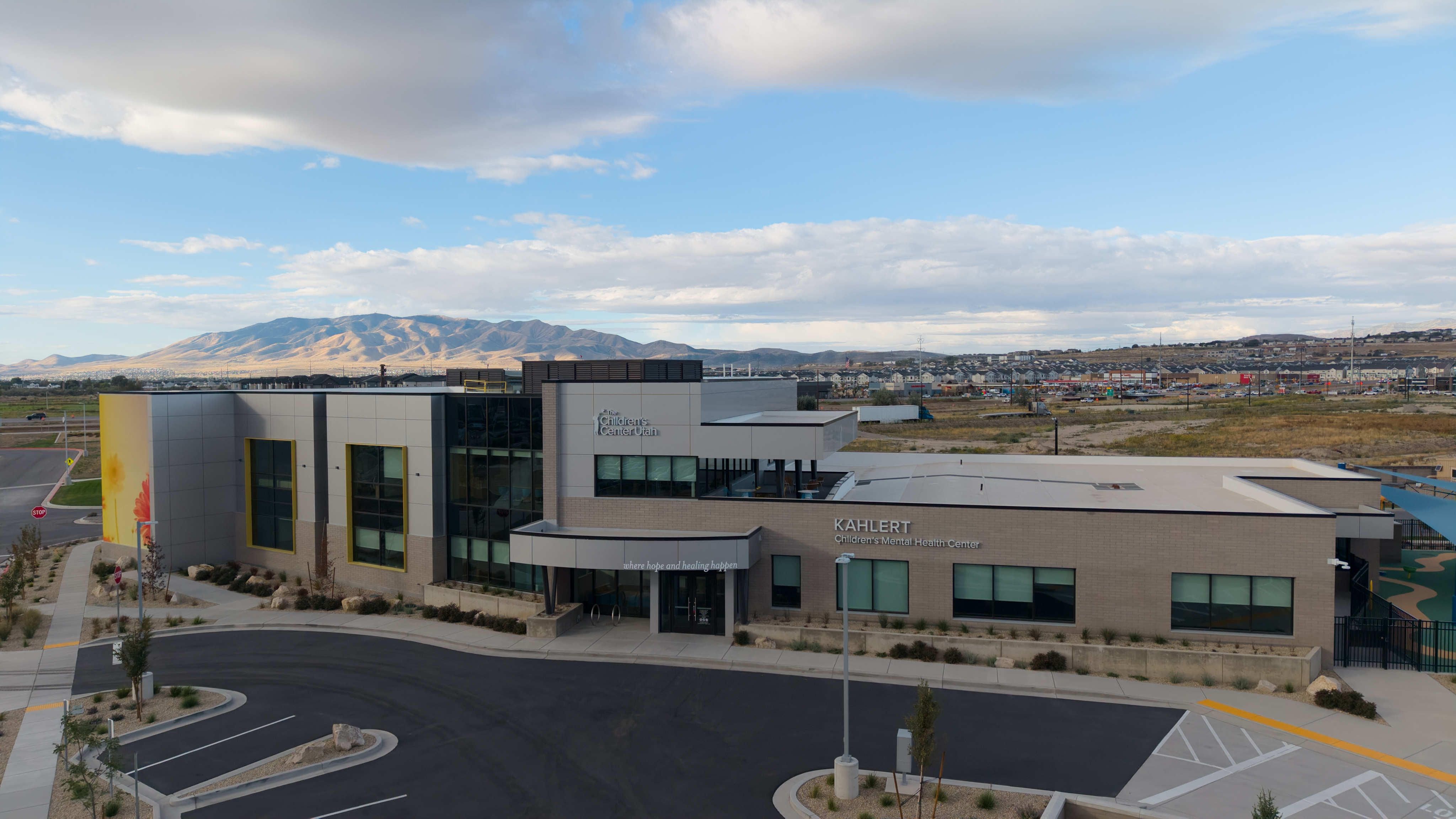
On Thursday, Oct. 1, The Children’s Center Utah celebrated the grand opening of its Kahlert Children’s Mental Health Center, its first location outside of Salt Lake County, expanding access to specialized infant and early childhood mental health care for children (from birth through age six) and their families and caregivers.
Located on the Intermountain Primary Children’s Hospital, Larry H. & Gail Miller Family Campus in Lehi, the new center brings The Children’s Center Utah’s services closer to families in one of the state’s fastest-growing regions. Approximately 60,000 children from birth through age six live in Utah County, and previously many families seeking care from The Children’s Center Utah had to travel to Salt Lake County to access services at the organization’s existing West Valley City location.
The Kahlert Children’s Mental Health Center is currently providing outpatient mental health services, with The Children’s Center Utah’s Therapeutic Preschool Program set to begin in January 2027. Together, the programs will provide Utah County families with greater access to comprehensive, effective mental health care during the earliest years of a child’s development.
“This center represents what is possible when people come together around a shared goal of improving children’s mental health in our state,” said Rebecca Dutson, president and CEO of The Children’s Center Utah. “We are deeply grateful to the individuals and organizations who recognize the importance of infant and early childhood mental health and have been willing to lead the way. If we want to stem the tide against Utah’s mental health crisis, we have to start earlier—giving young children and families access to the support they need from the very beginning.”
The Kahlert Children’s Mental Health Center was made possible through strong public/private partnership. The State of Utah appropriated funding for the project, which was matched two-to-one by private investments including land donated by Intermountain Health and critical philanthropic support from The Kahlert Foundation, The Church of Jesus Christ of Latter-day Saints, Clark and Christine Ivory Foundation, Central Bank, and Christian and Marie Gardner, among others.

“Every child deserves the chance to grow up healthy and supported,” Gov. Spencer J. Cox said. “When a child is struggling, families need to know where to turn and be able to get help early. The Kahlert Children’s Mental Health Center will bring more specialized care to Utah children during some of their most important years. I’m grateful to everyone who came together to build this center and give more families the support they need.”
Directly across from Intermountain Primary Children’s Hospital, the Kahlert Children’s Mental Health Center complements the pediatric medical services available on the campus and reflects a shared recognition that children’s physical and mental well-being are deeply connected. The location is part of The Children’s Center Utah’s broader commitment to increase access to services statewide.
“We are so proud to stand alongside The Children’s Center Utah as they bring this extraordinary work to more children and families across our state,” said Heather Kahlert, Executive Vice President of The Kahlert Foundation. “At The Kahlert Foundation, we believe deeply in showing up for families at the moments when support can make the greatest difference. This new center is about creating a place where children can be cared for, families can feel supported, and healing can begin early. It is incredibly meaningful to us to help make that possible.”
The opening also coincides with the release of new research commissioned by The Children’s Center Utah and conducted independently by the Kem C. Gardner Policy Institute. One data point shows that 20% of screenings for social or emotional issues among children ages 0-5 are in the concerning range, further underscoring the need to expand access to infant and early childhood mental health care as Utah’s communities continue to grow.
“I’m thrilled to welcome this new resource to Utah County,” said County Commissioner Skyler Beltran in a Facebook post about the ribbon cutting. “What a great investment in our children and families and an exciting addition to our community.”
For The Children’s Center Utah, the Lehi expansion is part of a broader effort to reach children earlier and remove barriers that can make it difficult for families to access specialized mental health care. By bringing services closer to home, the new Center will help more of Utah’s youngest children and their families and caregivers get the support they need, when they need it most.
Jennifer Thomas | American Fork Citizen
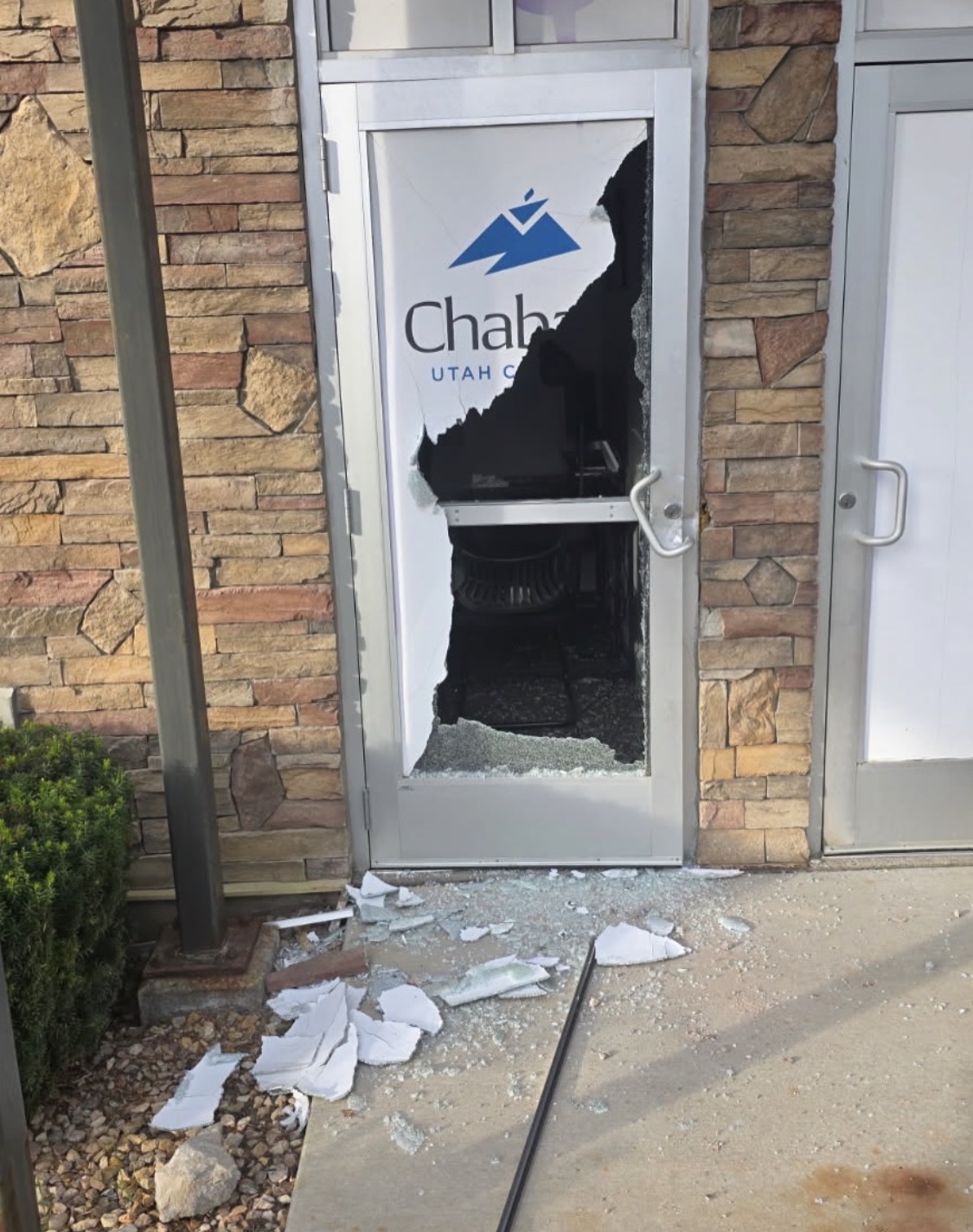
A recent break-in at the Chabad of Utah County, headquartered in Lehi, has only strengthened the resolve of its members. Following a Saturday, Sept. 26 incident at the commercial complex housing the Jewish office and classroom space, the Lehi Police Department has launched an investigation.
Fortunately, the building sustained no structural damage, and the community has emerged more united than ever.
According to Hadley Milner, Lehi City Communications Coordinator, “Officers responded to the scene around 11:30 p.m. after the east glass entry door of the multi-unit complex was shattered. Officers searched the building and confirmed that the building had been entered.”
A subsequent search of the property, located on Mayflower Avenue in Lehi, confirmed that the building had been unlawfully entered. The complex houses four separate businesses.
“At this time, no additional vandalism has been identified, and no property has been reported stolen from the other businesses within the complex,” said Milner. “No other commercial space was damaged.”
The incident stands in stark contrast to the overwhelming warmth and rapid expansion the organization has experienced since its founding.
Rabbi Chaim Zippel—the first Utah-born Chabad Rabbi—and his wife, Esty, co-founded Chabad of Utah County out of their Lehi home in November 2022. Starting with just eight loaves the first week, they delivered homemade challah bread to local Jewish families. At the time, many Jewish residents lived in such deep isolation that they frequently asked the Rabbi, “if they were the only Jewish family in the entire county.”
After almost four years based out of their home, they were fortunate to utilize other locations to host events. “In August of 2026, we leased an office/classroom space in Lehi. We were excited to have a home base and a place where we could be found online,” said the Rabbi.
He continued, “On August 27, we installed the door sign, and on September 26, one month later, we had the break-in.”
The front door was completely smashed and destroyed just before midnight on Saturday, triggering a security alarm. Because the incident took place on the first day of the Jewish holiday of Sukkot, Rabbi Chaim Zippel and his family—who observe Jewish holidays and Shabbat electronics-free—did not discover the damage or the flood of community messages until a day later.
“We just finished Shabbat and our phones were off as we do not use electronics throughout the holiday,” said the Rabbi. “We were unaware of the incident because our phones were off. The police and the building manager responded to the incident. But at 11:30 p.m. on Sunday night, when we turned on our phones, we discovered the messages letting us know what had happened.”
Investigators are pursuing all possible leads and motives, including whether bias or prejudice may have played a role in the incident. “At this stage of the investigation, there is not enough information to determine whether this incident was a hate crime. Investigators will continue to evaluate all available evidence and information as the investigation progresses,” noted Hadley Milner, Lehi City Communications Coordinator.
No suspects have been arrested.
Despite the break-in, Rabbi Zippel and Chabad of Utah County are undeterred and continue to expand their outreach. They remain focused on fostering a secure, meaningful, and inclusive space for the local Jewish community.
“While we must remain vigilant and take steps to protect ourselves, we refuse to let negative news disrupt our momentum. We are deeply grateful for our neighbors, as well as the Jewish, non-Jewish, and interfaith leaders whose kindness and support help our community thrive,” said the Rabbi. “Having experienced so much growth over the past few years, we know that a few anonymous online cowards cannot diminish the profound love and solidarity we share. We will continue to move forward, uplifted by the strength of our community.”
The Lehi City Police Department asks anyone with information about the incident, or who may have witnessed suspicious activity in the area, to contact their non-emergency line at (385) 201-1005.

Megan Wallgren | American Fork Citizen
*This story was updated on Oct.2, at 7:33 p.m.
An email sent on September 15 to Alpine School District classified employees left some recipients feeling attacked, despite the good news it contained.
The email announced an additional $250 to a one-time payment of $500 for classified employees added during contract negotiations with the Alpine Education Support Professionals union earlier this year. “The Board of Education and District leaders are pleased to announce an additional $250 to the one-time payment of $500, making a total of $750 to be paid to classified employees in the fall of 2026, prorated based on the employee’s contract or hours worked each week,” the email stated.
The bonus announcement was followed by a statement calling out bad behavior during the negotiations.
“Let us be very clear, the additional payment is in spite of the poor behaviors, inaccurate depictions and statements about the board and superintendent’s value of and support for this essential group of team members in both public and private settings by several leaders of AESP during the negotiation process, ratification meetings, and proposal consideration in official public meetings,” the email read.
“Our hope is this message will acknowledge the unfortunate situation created by a few individuals as an opportunity for us all to self-reflect and seek improvement while inviting future AESP leaders in the new school districts to return to long-standing, positive, and mutually beneficial discussions, solutions to problems and validation of all members involved in this important work – serving children, parents, team members and communities.”
Alpine Food Services employee Sarah Fotheringham said, “We were all jaw-wide open with the letter. We felt like it was written in bad taste and intended to intimidate us.” Fotheringham continued, “I’m very happy the School Board came through with their willingness to give us additional compensation after giving us a .5% COLA.”
Classified employees are support personnel who handle non-instructional and operational roles critical to running the district. These include school office staff, facilities and maintenance crews, and transportation and nutrition services workers, along with other various part-time employees.
The cost-of-living adjustment (COLA) pay increase, just 0.5%, that classified employees received in their paychecks for the ‘27 fiscal year was a sticking point in negotiations earlier this year. The union rejected the initial contract proposal. As part of a compromise, the contract included a one-time bonus payment.
The email stated, “This additional [$250] payment reflects the long-standing commitment of the board of education and superintendent to invest in and advocate for our “hands-on” technicians and support team members, which group has and will always be a high priority to the leaders of Alpine School District.”
ASD Superintendent Robert Smith addressed the controversy by affirming Alpine’s commitment to its classified employees. “Alpine’s Board of Education and Superintendent value their classified employees,” he said. “In the negotiation agreement, a statement to revisit the amount of the one-time bonus was included. This message was the announcement of that review and determination.”
Of the paragraphs that raised eyebrows, Smith said, “The intent of the message and section you referenced was to decouple the increased amount from a process this year that was unlike any experienced in the past 20 years with AESP.”
Smith continued, “Wording of any communication could be improved, which is true in this case. The intent was to celebrate our employees, follow through on a commitment, and invite a more positive dialogue in the new districts.”
When asked who wrote the email, Smith responded, “The message was approved for distribution by a majority of the Board and Superintendent and sent by the ASD communications team.”
Fotheringham also wants to leave any bad feelings between Alpine and classified employees behind. “My hope is that, with the new school board and new AESP boards, they will work together better with patience and understanding. I’m hopeful that the employees will be valued by the new school boards more than what was displayed in the announcement,” she said.

Caveman football ends season with quarterfinal loss

Johnson honored with USTA Dowse Award

Funding for SR-92 pedestrian bridge approved, project accelerated

‘BIGGEST LOSER’ CONTESTANT FROM AF DIES TRAGICALLY

Aspen Peaks School Board “Meet the Candidates” night recap

Tragedy Strikes American Fork: Local Couple Found Dead in Apparent Murder-Suicide
-

 Local News1 month ago
ASD classified employee announcement brings controversy despite one-time payment
-

 Local News1 month ago
Student struck by car; Lehi residents rally for SR-92 pedestrian walkway
-

 AF City News4 weeks ago
American Fork City and 13 AFPD officers sued by four plaintiffs in ‘Reckless Ben’ saga
-

 Politics3 weeks ago
Utah County Commission Seat B:
-

 AF City News1 month ago
American Fork beats state deadline of Oct. 1 to allow backyard housing
-

 Politics3 weeks ago
Utah County Auditor and Clerk:
-

 Politics3 weeks ago
Utah County Commission Seat A: Voters to choose Bowen, Kaufusi or Oaks
-

 Local News1 month ago
The Children’s Center Utah opens first Utah County location
-

 Business1 month ago
Rancho Markets opens in American Fork
-

 Local News1 month ago
LPD investigates Chabad of Utah County break-in as Jewish leadership remains resolute