
Local News
All welcome as American Fork hosts’ Gathering of Tribes’


Elizabeth Spencer | American Fork Citizen
Hundreds of Indigenous people from the United States and Canada are gathering in American Fork to celebrate their heritage and faith in Jesus Christ on Saturday, Sept. 13. The Gathering of Tribes (G.O.T.) is hosting the conference, whose mission is to meet the needs of Indigenous members of the Church of Jesus Christ of Latter-day Saints.

The Church supports the gathering and strengthening of Indigenous members. Hand in hand, the non-profit group and religious organization work to connect and nurture their faith in Jesus Christ, care for the poor, celebrate their cultural heritage, and unite families through temple and family history work. Members of the Church, along with non-members, indigenous people, and non indigenous people, are all invited to participate in the upcoming event.
The title of this year’s conference is “Utah 2025: Good Medicine,” centering on the healing power of traditional arts and connection for Indigenous people’s faith in Christ.
“I always love seeing people of all ages and cultures embracing the gospel together! My favorite part of the gathering is seeing all of the diverse cultural attire on temple grounds together and the strong spirit that is felt there,” Amy Fa’atoafe of the Navajo/Hopi tribe shared.
Traditional clothing is welcome and encouraged for the Saturday morning commencement of the conference at a 7 AM sunrise ceremony at Quail Cove Park Pavilion (885 E. 700 N., American Fork). The special ceremony will honor ancestors and express gratitude for the doctrine of eternal families. The group will have its photo taken at 8:15 AM on the grounds of the Mt. Timpanogos Temple, and an endowment session will follow at 9:30 AM. A Welcome Brunch will be held afterwards at the Developmental Center Chapel (835 N. 900 E., American Fork), where a keynote speaker will address the group. Workshops will take place at the same location from 1-4 PM with special youth sessions included. The conference will conclude at 4 PM with a closing fireside and remarks by Elder Craig Teuscher of the Area Seventy. Elder Jose Alonso, president of the U.S. Southwest Area of the Church, will also be joining the group at the conference.
“I grew up in the gospel and have always had a passion for serving my native people. The gatherings are a wonderful way to bring our Indigenous families together in healing and reminding us where we came from and how together we can embrace the Savior’s love and teachings,” added Fa’atoafe.
This year’s gathering will not only include the Native American culture, but also the Polynesian and Latino cultures. “Each culture is so different but so similar as well. Some of our traditional teachings are so similar and to me, that only solidifies the truthfulness of the gospel teachings and scripture stories,” wrote Fa’atoafe whose husband is Polynesian. “It will be a beautiful gathering to see each culture represented and learn how each share their cultural arts and talents to turn towards the Savior.”
Since 2022, events have been approved by the area authorities of the Church and have been held in Calgary and Cardston, Alberta, Canada; Mesa, Arizona; and South Jordan, Utah. Gatherings are two-day events where members attend the temple, wear cultural clothing, enjoy traditional music and dancing, listen to speakers, attend workshops, and attend a testimony meeting and fireside.

Cindy Quinney, Executive Director of G.O.T. and member of the Onion Lake Cree Nation tribe, caught the vision and importance of gathering years ago when she was invited to an Indigenous peoples’ testimony meeting in Canada. “At first, I felt like we wanted to gather the Indigenous to let them know there is a community, but then it’s also about gathering Israel. The gathering of the tribes doesn’t just mean indigenous, it’s a double meaning in gathering Israel and creating a place where everybody can feel that same way,” remarked Quinney.
Quinney says G.O.T. builds relationships with the community wherever they go. With volunteers who serve during the conference, she says the family keeps growing. “We don’t want anyone to miss out. This is for everyone. One heart, one mind, one people.” She encourages everyone to attend, hoping they feel comfortable asking questions. She will do her best to answer so that others can gain a deeper understanding of their culture and its connection to Jesus Christ.
Citizen of the Muscogee (Creek) Nation, Shane Manning, is Director of Operations for G.O.T. Manning shared, “I am most looking forward to being with our people and sharing our traditions and knowledge. We have over 500 people registered now, and for over 80% of them, this is the first time they’ve been to a Gathering of Tribes event. At least half are not Indigenous but are coming because they have open hearts and want to learn and connect. I am so grateful. As an organization, it’s important for us to be able to show that this kind of outreach is valued and important, and I think this level of engagement shows that.”
“This gathering is an open invitation for anyone who would like to attend and learn, regardless of their race or religion. We welcome everyone!” Fa’atoafe reminds others they don’t have to be of Indigenous decent to attend.
In regards to American Fork hosting the conference, Quinney concluded, “I feel there is a purpose for us to be in that community.”
For more information, please email hello@gatheringoftribes.org or look online at gatheringoftribes.org/utah.2025

Nichole Coombs | American Fork Citizen
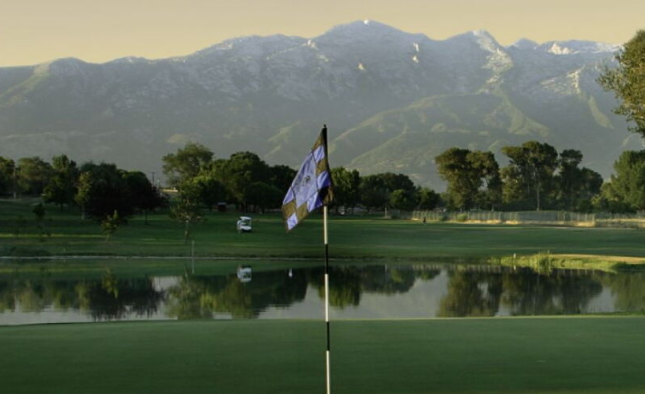
The Fox Hollow Golf Course in American Fork is ready to grow, but how and where that growth occurs will depend on a feasibility study and possibly a new bond.
Mayor Paul Binns chose Lehi City Council member James Harrison to represent Lehi on the golf course steering committee.
“The golf course is paying for its own feasibility study,” said Harrison. “Once that study is completed, we will come together as staff and elected officials on that committee and evaluate what we want to do.”
Fox Hollow, located at 1400 North 200 East in American Fork, is funded and operated through a partnership between Lehi, American Fork, and Pleasant Grove. The golf course was formerly called Tri-City Golf Course. All three cities are helping pay off the current bond, which expires at the end of 2027. Fox Hollow wants a new bond to replace it and help fund course upgrades.
“They are looking to add covered bays that can bring in revenue throughout the winter,” said Harrison. “They would like to offer golfers one more option. It’s really hard to get on the schedule [a tee time] because the course is so popular. By adding bays that can be used year-round, they add another option for golfers who may not be able to get on the course and a way to generate revenue.”

American Fork has offered to provide acreage on the west side of the golf course for the expansion at no cost to Fox Hollow. Currently, all three cities contribute $225,000 per year to help pay the bond and operating expenses, and about $10,000 is contributed to an emergency fund.
“Depending on the course’s performance each year, the city gets refunded a certain amount,” said Harrison. “And the last few years [the profit sharing] has been going really well.”
In addition to the covered bays (similar to Top Golf), the golf course wants to add a food court to serve customers and generate additional revenue, especially during the winter months when the main course is closed.
Harrison says the bond would be about $7,000,000 if it passes, but there are many steps before that happens. The three participating cities would pay the bond collectively.
“We need the results of the feasibility study, then the proposal is brought to the Lehi City Council, and we will vote on whether to support a bond. We will need to look at it from the perspective of Lehi residents and ask whether it really benefits a broad enough population in our city. The best-case scenario is it would bring in tons of revenue, and we would have a net gain in revenue,” said Harrison.
But Harrison is also skeptical about what the study’s results will show.
“The results can vary widely,” said Harrison. “The market isn’t very mature in this space. Having a public golf course and adding covered bays could be a benefit, but it’s also a risk.”
The feasibility study is expected by year-end. Then, all three cities- Pleasant Grove, American Fork, and Lehi- will meet to discuss the expansion and must agree on a bond before it moves forward.

Staff Writer | American Fork Citizen
Groundbreaking for the Lehi Utah Temple is scheduled for Saturday, Dec. 5, The Church of Jesus Christ of Latter-day Saints announced Oct. 26.
Elder John A. McCune, a member of the church’s Utah Area Presidency, will preside at the ceremony.
The temple was announced in April 2024. The groundbreaking announcement did not include a ceremony time, attendance information or an estimated construction completion date.

The Lehi temple is among 32 temples in Utah that are operating, undergoing renovation, under construction or announced, according to the church. The church reports approximately 2.2 million members in more than 5,000 congregations statewide.
Temples serve a different purpose from the church’s meetinghouses, where Sunday worship services and other activities are open to the public. In temples, eligible church members participate in religious ceremonies, including marriages and baptisms performed on behalf of deceased ancestors.
Latter-day Saints believe temple ceremonies unite families beyond death.
Staff Writer | American Fork Citizen
Intermountain Health opened a specialty clinic and cancer center Monday in Saratoga Springs, adding services for residents of the city, Eagle Mountain, West Lehi and nearby communities.
The 48,000-square-foot facility is part of Intermountain’s existing campus, which also includes emergency services and a surgery center. The clinic offers cardiology, gastroenterology, orthopedics and sports medicine, women’s health and pediatrics.
The cancer center provides medical and radiation oncology, infusion therapy, survivorship support and advanced radiation treatment.
“We’re proud to bring this level of coordinated care closer to the families we serve,” said Jason Wilson, president of Intermountain Health American Fork Hospital. “This is one of Utah’s fastest-growing areas, and we will help ensure people here have the medical care they need.”

The campus expansion is intended to reduce patient travel and help providers coordinate care, Intermountain said.
“When someone is going through cancer treatment, being close to home matters,” said Dr. Tawnya Bowles, senior medical director for oncology at Intermountain Health. “This center will help patients stay connected to family, work and daily life while receiving compassionate, high-quality care.”
“Bringing these services together makes it easier for providers to collaborate and for patients to get the care they need in one place,” said Lyndsey Russell, market vice president of Medical Group operations for Intermountain.
Staff Writer | American Fork Citizen
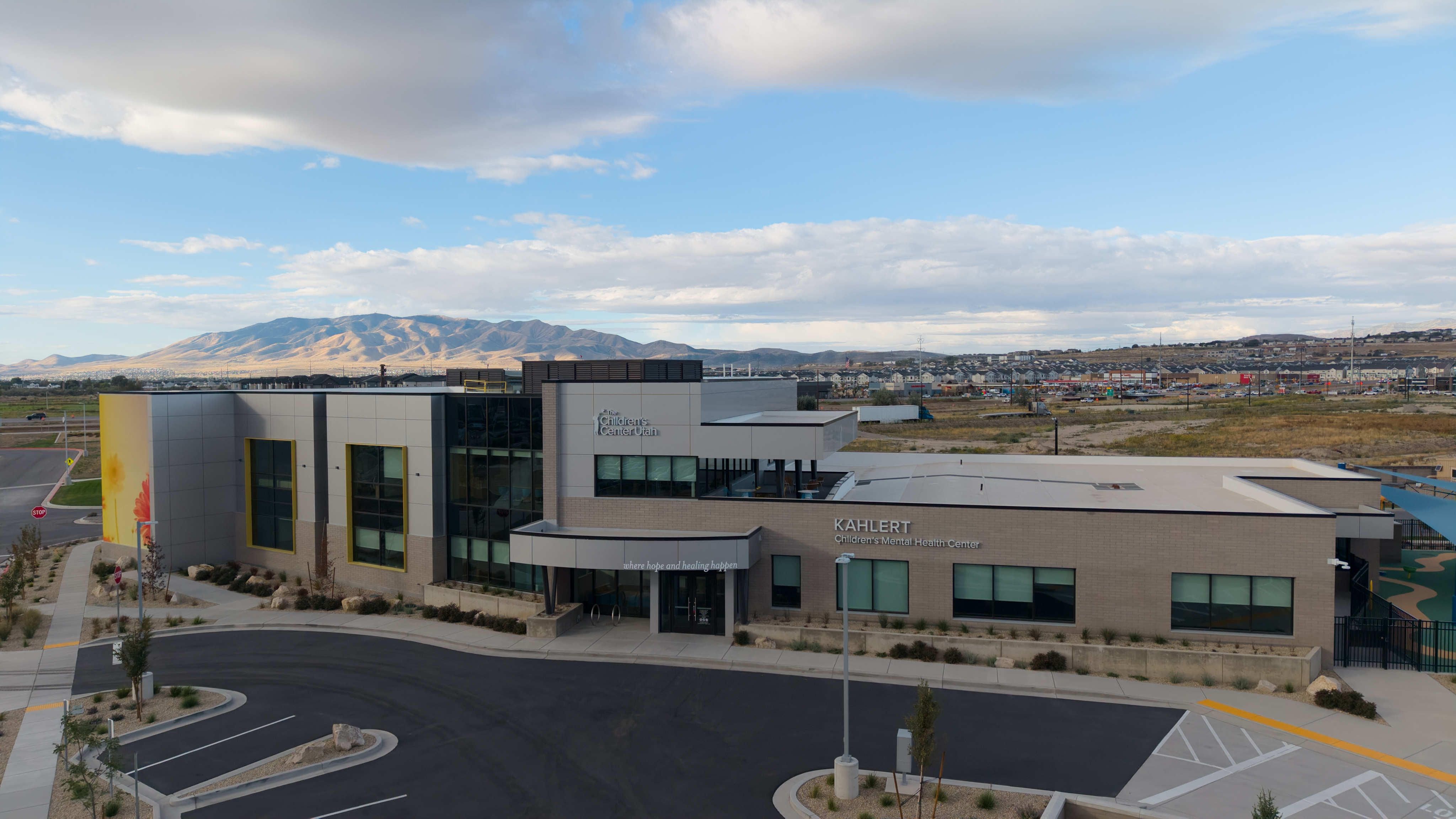
On Thursday, Oct. 1, The Children’s Center Utah celebrated the grand opening of its Kahlert Children’s Mental Health Center, its first location outside of Salt Lake County, expanding access to specialized infant and early childhood mental health care for children (from birth through age six) and their families and caregivers.
Located on the Intermountain Primary Children’s Hospital, Larry H. & Gail Miller Family Campus in Lehi, the new center brings The Children’s Center Utah’s services closer to families in one of the state’s fastest-growing regions. Approximately 60,000 children from birth through age six live in Utah County, and previously many families seeking care from The Children’s Center Utah had to travel to Salt Lake County to access services at the organization’s existing West Valley City location.
The Kahlert Children’s Mental Health Center is currently providing outpatient mental health services, with The Children’s Center Utah’s Therapeutic Preschool Program set to begin in January 2027. Together, the programs will provide Utah County families with greater access to comprehensive, effective mental health care during the earliest years of a child’s development.
“This center represents what is possible when people come together around a shared goal of improving children’s mental health in our state,” said Rebecca Dutson, president and CEO of The Children’s Center Utah. “We are deeply grateful to the individuals and organizations who recognize the importance of infant and early childhood mental health and have been willing to lead the way. If we want to stem the tide against Utah’s mental health crisis, we have to start earlier—giving young children and families access to the support they need from the very beginning.”
The Kahlert Children’s Mental Health Center was made possible through strong public/private partnership. The State of Utah appropriated funding for the project, which was matched two-to-one by private investments including land donated by Intermountain Health and critical philanthropic support from The Kahlert Foundation, The Church of Jesus Christ of Latter-day Saints, Clark and Christine Ivory Foundation, Central Bank, and Christian and Marie Gardner, among others.

“Every child deserves the chance to grow up healthy and supported,” Gov. Spencer J. Cox said. “When a child is struggling, families need to know where to turn and be able to get help early. The Kahlert Children’s Mental Health Center will bring more specialized care to Utah children during some of their most important years. I’m grateful to everyone who came together to build this center and give more families the support they need.”
Directly across from Intermountain Primary Children’s Hospital, the Kahlert Children’s Mental Health Center complements the pediatric medical services available on the campus and reflects a shared recognition that children’s physical and mental well-being are deeply connected. The location is part of The Children’s Center Utah’s broader commitment to increase access to services statewide.
“We are so proud to stand alongside The Children’s Center Utah as they bring this extraordinary work to more children and families across our state,” said Heather Kahlert, Executive Vice President of The Kahlert Foundation. “At The Kahlert Foundation, we believe deeply in showing up for families at the moments when support can make the greatest difference. This new center is about creating a place where children can be cared for, families can feel supported, and healing can begin early. It is incredibly meaningful to us to help make that possible.”
The opening also coincides with the release of new research commissioned by The Children’s Center Utah and conducted independently by the Kem C. Gardner Policy Institute. One data point shows that 20% of screenings for social or emotional issues among children ages 0-5 are in the concerning range, further underscoring the need to expand access to infant and early childhood mental health care as Utah’s communities continue to grow.
“I’m thrilled to welcome this new resource to Utah County,” said County Commissioner Skyler Beltran in a Facebook post about the ribbon cutting. “What a great investment in our children and families and an exciting addition to our community.”
For The Children’s Center Utah, the Lehi expansion is part of a broader effort to reach children earlier and remove barriers that can make it difficult for families to access specialized mental health care. By bringing services closer to home, the new Center will help more of Utah’s youngest children and their families and caregivers get the support they need, when they need it most.
Jennifer Thomas | American Fork Citizen
A recent break-in at the Chabad of Utah County, headquartered in Lehi, has only strengthened the resolve of its members. Following a Saturday, Sept. 26 incident at the commercial complex housing the Jewish office and classroom space, the Lehi Police Department has launched an investigation.
Fortunately, the building sustained no structural damage, and the community has emerged more united than ever.
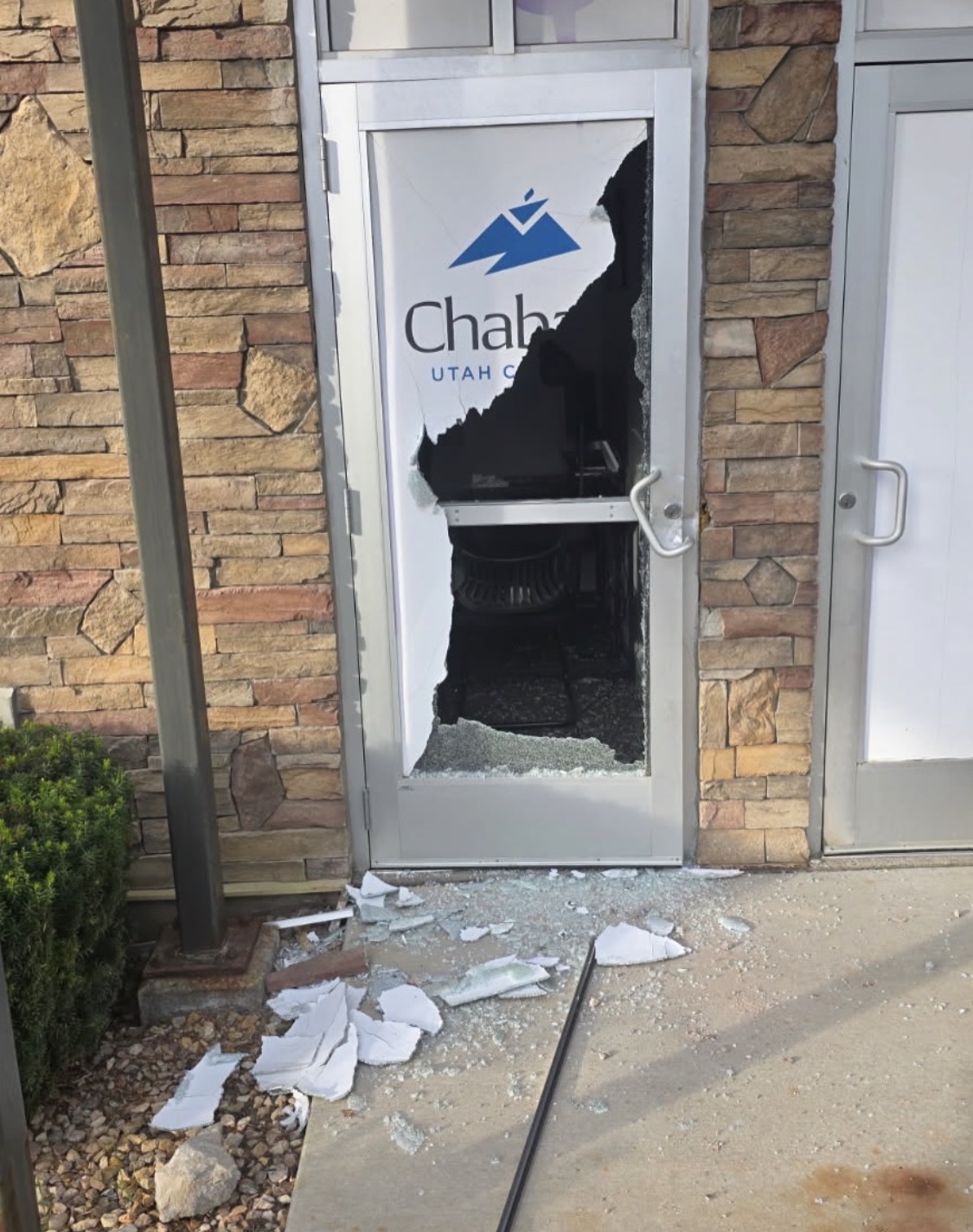
According to Hadley Milner, Lehi City Communications Coordinator, “Officers responded to the scene around 11:30 p.m. after the east glass entry door of the multi-unit complex was shattered. Officers searched the building and confirmed that the building had been entered.”
A subsequent search of the property, located on Mayflower Avenue in Lehi, confirmed that the building had been unlawfully entered. The complex houses four separate businesses.
“At this time, no additional vandalism has been identified, and no property has been reported stolen from the other businesses within the complex,” said Milner. “No other commercial space was damaged.”
The incident stands in stark contrast to the overwhelming warmth and rapid expansion the organization has experienced since its founding.
Rabbi Chaim Zippel—the first Utah-born Chabad Rabbi—and his wife, Esty, co-founded Chabad of Utah County out of their Lehi home in November 2022. Starting with just eight loaves the first week, they delivered homemade challah bread to local Jewish families. At the time, many Jewish residents lived in such deep isolation that they frequently asked the Rabbi, “if they were the only Jewish family in the entire county.”
After almost four years based out of their home, they were fortunate to utilize other locations to host events. “In August of 2026, we leased an office/classroom space in Lehi. We were excited to have a home base and a place where we could be found online,” said the Rabbi.
He continued, “On August 27, we installed the door sign, and on September 26, one month later, we had the break-in.”
The front door was completely smashed and destroyed just before midnight on Saturday, triggering a security alarm. Because the incident took place on the first day of the Jewish holiday of Sukkot, Rabbi Chaim Zippel and his family—who observe Jewish holidays and Shabbat electronics-free—did not discover the damage or the flood of community messages until a day later.
“We just finished Shabbat and our phones were off as we do not use electronics throughout the holiday,” said the Rabbi. “We were unaware of the incident because our phones were off. The police and the building manager responded to the incident. But at 11:30 p.m. on Sunday night, when we turned on our phones, we discovered the messages letting us know what had happened.”
Investigators are pursuing all possible leads and motives, including whether bias or prejudice may have played a role in the incident. “At this stage of the investigation, there is not enough information to determine whether this incident was a hate crime. Investigators will continue to evaluate all available evidence and information as the investigation progresses,” noted Hadley Milner, Lehi City Communications Coordinator.
No suspects have been arrested.
Despite the break-in, Rabbi Zippel and Chabad of Utah County are undeterred and continue to expand their outreach. They remain focused on fostering a secure, meaningful, and inclusive space for the local Jewish community.
“While we must remain vigilant and take steps to protect ourselves, we refuse to let negative news disrupt our momentum. We are deeply grateful for our neighbors, as well as the Jewish, non-Jewish, and interfaith leaders whose kindness and support help our community thrive,” said the Rabbi. “Having experienced so much growth over the past few years, we know that a few anonymous online cowards cannot diminish the profound love and solidarity we share. We will continue to move forward, uplifted by the strength of our community.”
The Lehi City Police Department asks anyone with information about the incident, or who may have witnessed suspicious activity in the area, to contact their non-emergency line at (385) 201-1005.

Megan Wallgren | American Fork Citizen
*This story was updated on Oct.2, at 7:33 p.m.
An email sent on September 15 to Alpine School District classified employees left some recipients feeling attacked, despite the good news it contained.
The email announced an additional $250 to a one-time payment of $500 for classified employees added during contract negotiations with the Alpine Education Support Professionals union earlier this year. “The Board of Education and District leaders are pleased to announce an additional $250 to the one-time payment of $500, making a total of $750 to be paid to classified employees in the fall of 2026, prorated based on the employee’s contract or hours worked each week,” the email stated.
The bonus announcement was followed by a statement calling out bad behavior during the negotiations.
“Let us be very clear, the additional payment is in spite of the poor behaviors, inaccurate depictions and statements about the board and superintendent’s value of and support for this essential group of team members in both public and private settings by several leaders of AESP during the negotiation process, ratification meetings, and proposal consideration in official public meetings,” the email read.
“Our hope is this message will acknowledge the unfortunate situation created by a few individuals as an opportunity for us all to self-reflect and seek improvement while inviting future AESP leaders in the new school districts to return to long-standing, positive, and mutually beneficial discussions, solutions to problems and validation of all members involved in this important work – serving children, parents, team members and communities.”
Alpine Food Services employee Sarah Fotheringham said, “We were all jaw-wide open with the letter. We felt like it was written in bad taste and intended to intimidate us.” Fotheringham continued, “I’m very happy the School Board came through with their willingness to give us additional compensation after giving us a .5% COLA.”
Classified employees are support personnel who handle non-instructional and operational roles critical to running the district. These include school office staff, facilities and maintenance crews, and transportation and nutrition services workers, along with other various part-time employees.
The cost-of-living adjustment (COLA) pay increase, just 0.5%, that classified employees received in their paychecks for the ‘27 fiscal year was a sticking point in negotiations earlier this year. The union rejected the initial contract proposal. As part of a compromise, the contract included a one-time bonus payment.
The email stated, “This additional [$250] payment reflects the long-standing commitment of the board of education and superintendent to invest in and advocate for our “hands-on” technicians and support team members, which group has and will always be a high priority to the leaders of Alpine School District.”
ASD Superintendent Robert Smith addressed the controversy by affirming Alpine’s commitment to its classified employees. “Alpine’s Board of Education and Superintendent value their classified employees,” he said. “In the negotiation agreement, a statement to revisit the amount of the one-time bonus was included. This message was the announcement of that review and determination.”
Of the paragraphs that raised eyebrows, Smith said, “The intent of the message and section you referenced was to decouple the increased amount from a process this year that was unlike any experienced in the past 20 years with AESP.”
Smith continued, “Wording of any communication could be improved, which is true in this case. The intent was to celebrate our employees, follow through on a commitment, and invite a more positive dialogue in the new districts.”
When asked who wrote the email, Smith responded, “The message was approved for distribution by a majority of the Board and Superintendent and sent by the ASD communications team.”
Fotheringham also wants to leave any bad feelings between Alpine and classified employees behind. “My hope is that, with the new school board and new AESP boards, they will work together better with patience and understanding. I’m hopeful that the employees will be valued by the new school boards more than what was displayed in the announcement,” she said.
UDOT aware of the problem
Nichole Coombs | American Fork Citizen
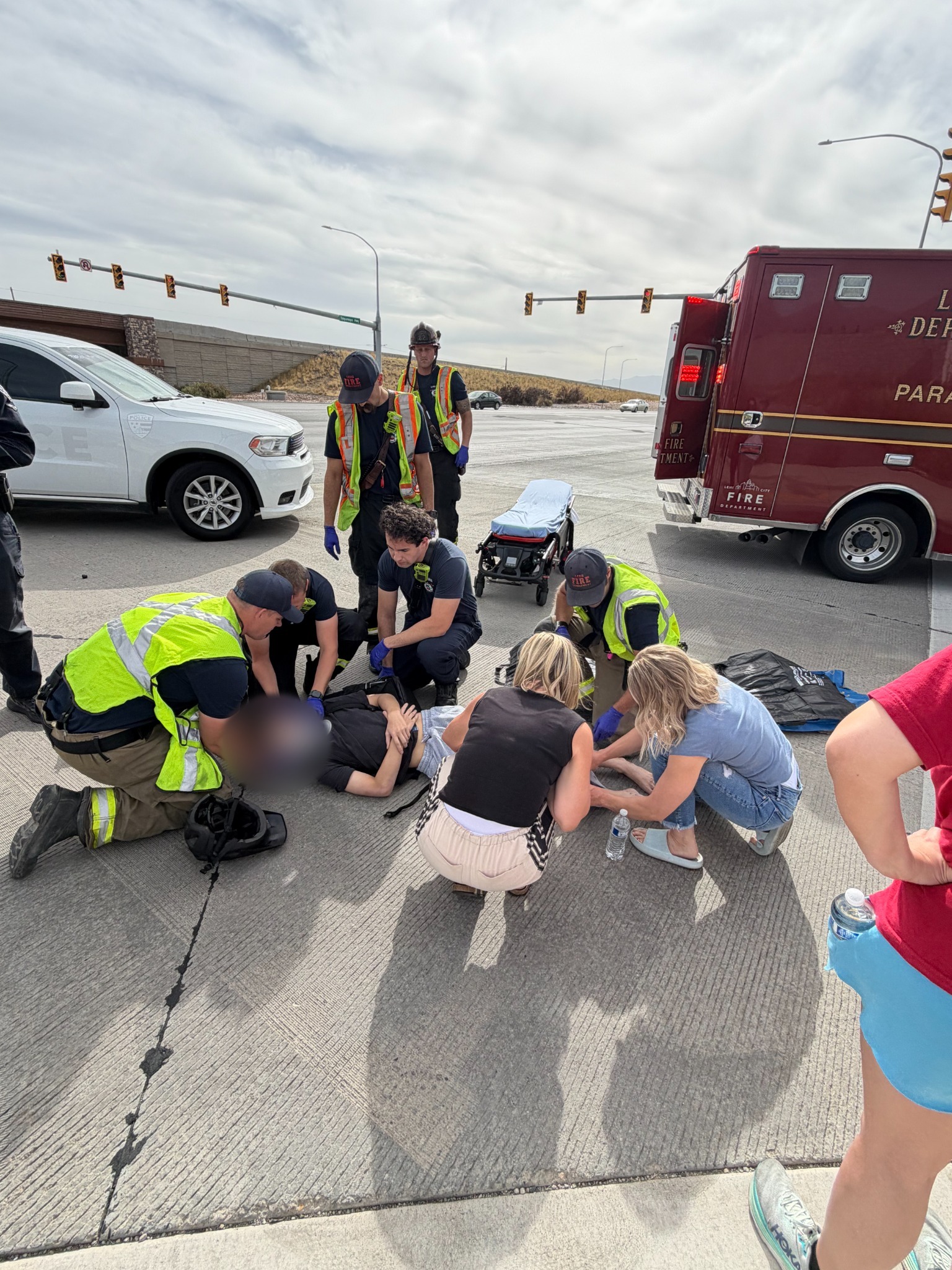
It’s been three weeks since a 15-year-old Skyridge student was hit while crossing SR-92 and Center Street in Lehi. The teen, whose name has not been released, is healing from a fractured wrist, but his accident has brought attention to something neighbors say they’ve seen coming.
“He was in the crosswalk on his e-bike,” said Tiffany Barker, a Lehi resident who lives near the intersection. “He was doing everything right, and a big truck turning right didn’t see him start to cross and hit him. I was the third person on the scene, and the boy was rolling around on the ground saying he was in pain. We kept him still until paramedics arrived.”
This intersection is frequented by students coming and going from Skyridge High School and Viewpoint Middle School. Residents say ninth graders going to the high school for some special classes have to cross this intersection during the day.
“We really need a walking bridge,” said Barker. “Students are coming back and forth, people coming to the businesses, and there are walking paths on both sides. There’s a lot of foot traffic.”
The intersection has been on Lehi City Council members’ minds for some time.
“I’ve been worried about it for a long time,” said council member Rachel Freeman. “I don’t want any family in our community to have to deal with a tragedy. I go into that intersection daily, if not multiple times a day, and feel like there are some blind spots. I think a pedestrian bridge would help.”
SR-92 is not a Lehi City road, but that doesn’t mean the city isn’t working to get a bridge.
“Lehi City has been working on a design and working on securing funds for a bridge for some time because our engineers anticipated this intersection would be busy,” said Freeman. “Lehi has been able to secure about half the funding for the bridge so far, but we are still waiting, hopefully, for the other half of the funding to come from UDOT.”
The Utah Department of Transportation, or UDOT, is aware of the safety concerns over this intersection.
“This is a priority for Lehi,” said John Gleason, UDOT’s director of public relations. “We are working to come up with solutions. School boundaries have recently changed in the area, and so we are working to make it safe for everyone, so we don’t have situations like the one that recently happened.”
UDOT doesn’t have an exact timeline for a pedestrian bridge in the area.
“We are aware of the funding that Lehi has secured,” said Boyde Humpherys, region three deputy director for UDOT. “We are working as fast as we can through the process for everyone.”
UDOT uses data from multiple sources, including local committees, to create a prioritization list. Currently, a pedestrian bridge across SR-92 ranks among the top three.
“It’s about an $8-9 million project,” said Humpherys.
Council member Michelle Stallings says the pedestrian bridge is a high priority and there are a couple of ways Lehi City can help.
“It could be a partnership,” said Stallings. “We have another pedestrian bridge further west, and it was a partnership between Lehi, UDOT and UTA. Federal grants were used for that one, so the funding was different, but it could be a joint project.”
Several petitions have been circulated locally to bring attention to the problem.
For Barker and her neighbors, time is of the essence.
“We really need this bridge now. We can’t wait for another kid to get injured before it becomes a priority.”

Jacob Fischler | Utah News Dispatch
September 22, 2026
Federal officials charged a Utah letter carrier Tuesday with throwing 300 primary ballots in a church parking lot dumpster, an incident that a top U.S. Justice Department official said made the case for stricter regulations of voting.
The prosecution of Damon Matai Seei, of Payson, Utah, showed “voting fraud is real,” acting Deputy Attorney General Trent McCotter said at a press conference at DOJ headquarters in Washington.
The Justice Department gave the arrest an unusually high profile, spotlighting the administration’s efforts to combat voter fraud after the U.S. Supreme Court this month blocked a new U.S. Postal Service rule limiting mail voting from going into effect for this year’s elections.
The regulation was meant to “address the chronically abused mail-in ballot system,” McCotter said. He criticized the trial judge who initially blocked the rule, which would have required special tracking and design features, among other things such as creating a national database of eligible voters.
“Election integrity should not be a political or partisan issue,” McCotter said. “Who could be against properly tracking mail-in ballots? Unfortunately, but entirely predictably, that regulation was blocked by a judge in Massachusetts. … The Trump administration, however, will continue taking aggressive actions to protect our elections.”
Postal Service rule
U.S. District Judge Indiria Talwani’s order blocking the rule is only in effect for the Nov. 3 elections, a provision meant to preserve the status quo because the rule was finalized mere months before the midterms. The merits of the case are still being argued. The U.S. Supreme Court upheld Talwani’s decision.
The prosecution of Seei, and the attention the administration sought to give it, undercut a key argument the administration made in the case: The rule included only “modest” technical specifications for a category of mail and should not be interpreted as an election regulation.
The U.S. Constitution grants states the authority to administer elections, with policy oversight from Congress.
In siding with the Democratic states and voting rights groups who filed suit, Talwani and the U.S. Court of Appeals for the 1st Circuit said the rule was clearly an attempt to affect election policy and was not restricted to a modest mail regulation.
Trump and mail-in voting
President Donald Trump has railed against mail-in voting and claimed, without evidence, that it is a major source of election fraud and contributed to his 2020 loss to President Joe Biden.
Since Trump retook office in January 2025, the department has charged 70 immigrants with illegally voting, compared with only 13 in the four years of Biden’s term, McCotter said Tuesday.
“And we intend to bring many more,” he added.
Homeland Security Investigations, a Homeland Security Department agency, has made 160 recent arrests, from 1,600 open voter fraud cases, HSI acting Deputy Executive Associate Director Matthew Millhollin said.
A reporter in the room noted that 70 prosecutions amounted to a bare fraction of the 150 million votes cast in the 2024 election.
McCotter responded that the Utah case involved 300 ballots, and that law enforcement had only scratched the surface of possible incidents. “Thousands more” cases were being investigated, he said.
“The folks on the other side, the opponents of the president, insist this has never happened, that there is no voting fraud,” he said. “And so when we have dozens of cases … I think that discourages and defeats their characterization.”
No partisan motive alleged
Seei, who is no longer a postal worker, intentionally threw out about 300 mail ballots on June 3 that were being mailed to voters in advance of the June 23 primary in Utah, according to charging documents.
In an interview with law enforcement, he indicated he did not have a political motive but said he threw away the mail, which also included advertisements, “because he wanted to ‘lighten his workload’ so he could presumably go home earlier,” prosecutors said.
Melissa Holyoak, the top federal prosecutor for Utah, traveled to Washington, D.C., for Tuesday’s press conference. She noted that 95% of the state’s voters cast their ballots by mail.
Many people in Seei’s delivery area in Eagle Mountain, Utah, complained to the Utah County Clerk that they hadn’t received ballots, Holyoak said. Using county databases, the clerk found that voter participation was “remarkably low” in the area where complaints originated.
“As American citizens, we have certain freedoms and rights,” Holyoak said. “And one of those fundamental rights is the right to vote. But when defendant allegedly tossed the mail-in ballots into a parking lot dumpster, those citizens’ right to vote were also thrown away.”
The federal public defender representing Seei did not immediately return a call seeking comment.
Utah News Dispatch is part of States Newsroom, a nonprofit news network supported by grants and a coalition of donors as a 501c(3) public charity. Utah News Dispatch maintains editorial independence. Contact Editor McKenzie Romero for questions: [email protected].

Nichole Coombs | American Fork Citizen
Lehi residents will have a new place to enjoy the outdoors in the future, thanks to a generous donation from the Peck family.
“This is what my dad would have wanted,” said Cole Peck. “He said we had been blessed, but nothing matters more than making memories with your family.”
Siblings Cole Peck and Megan Peck Butler made the significant land donation official at the Lehi City Council meeting on September 8, 2026. The donation includes 20.34 acres of land located under the Mill Pond.
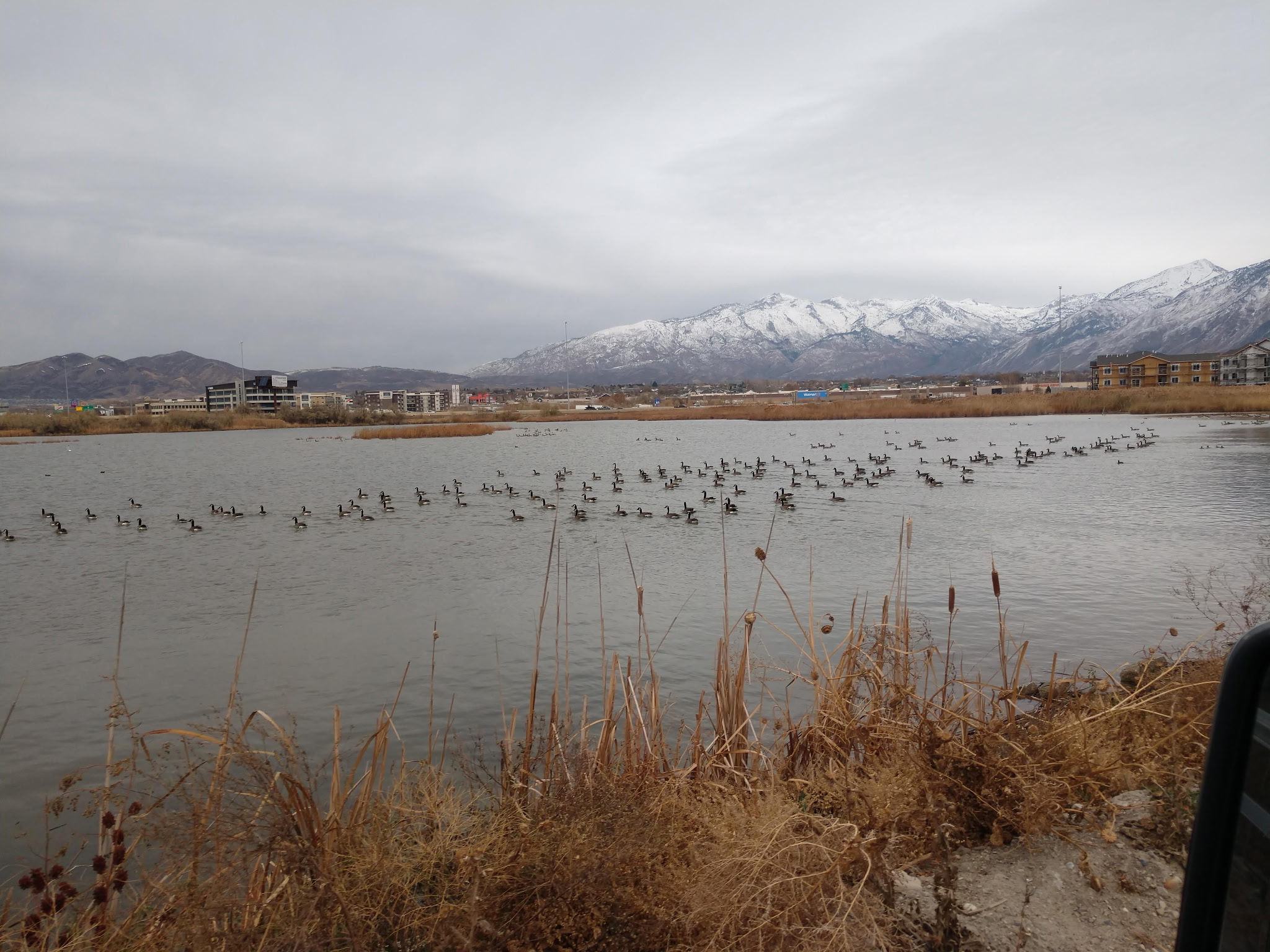
“It’s really the land under the water,” said Peck. “It’s a beautiful area.”
The city will now be responsible for turning the area into a usable space for residents to enjoy. Talks have included adding walking paths adjacent to the Mill Pond and stocking the pond with fish, but no official plans have been made.
“The Mill Pond has been part of Lehi’s history for decades,” said Peck. “My family has used the property for many different things, including supporting various businesses. We even stocked the pond with fish at one point”
Besides giving families opportunities to make memories together, the pond also serves as a secondary water source for the community. The pond has several natural springs that feed it, but without some human intervention, the pond would have disappeared.
“Silt washes into the pond from upstream, and we have to dredge it to keep the water in it,” said Peck. “The water feeds into the city’s secondary irrigation system. Without this water source, Lehi would have even less water. We’ve been doing this for the past two years. If we weren’t taking care of it, the pond would disappear.”

With the donation, Peck says the city may now apply for federal funding and grants to cover the cost of dredging out more silt, deepening the pond, and storing more water for irrigation.
“We turned down 20 to 50 offers to buy the land,” said Butler. “Developers offered our family generational wealth and all sorts of things. But we felt like we wanted to leave it.”
The Peck family says the donation fulfills the dream Loren Powell, Tony Train, and their dad, Tony Peck, had for many years.
“My dad wanted to beautify the city. He wanted people to enjoy being together. This is how we are choosing to honor him and the others who saw his vision,” said Peck.
The land will officially be called the Peck Mill Pond Area in recognition of the family’s generous donation. The Peck family are a multigenerational Lehi family.
“It’s taken many years to get this where it needs to be,” said Peck. “It will be a great thing for the city.”
“I’m proud we did the right thing by all the families,” said Butler. “My dad taught us to work hard and do the right thing. He would be happy about this but probably embarrassed by his name being attached to it.”
The city has no timeline for developing the land. The Peck Mill Pond Area will remain closed until it is safe for the public to enjoy.
AF City News
Incorrect measuring led to oversized AF structure approval; Lehi neighbor files court injunction


Rob Shelton | American Fork Citizen
A fight over a massive backyard structure on 900 West in American Fork is headed towards court. A Lehi homeowner, whose property is adjacent to the structure, told the American Fork City Council at its Sept. 8 meeting that he has retained an attorney and plans to seek an injunction. The city has responded by routing all further communication through its own attorney. This is the second announcement of legal action against the city this past month during the public comment period of a city council meeting.
The structure sits at 731 N 900 W, on a parcel the city’s Development Review Committee approved on April 6. City records list the building at 7,910 square feet of footprint and 11,146 square feet total, standing roughly 35 feet tall, compared to the single-story “rambler” homes that back up to it in American Fork and neighboring Lehi.
“The Rovig accessory structure was approved on April 6, 2026,” Dale Stewart, a Lehi resident whose backyard abuts the project, told the council Sept. 8. “Many of you have seen the news reports now on KSL and Fox 13 regarding the size of the structure and the undue negative impact it has created on the neighborhood.”

Stewart’s case turns largely on how the city measured the property’s required “rear yard,” the open space behind a home where accessory-building coverage is capped. American Fork code defines a rear yard as the space between a building’s rear outer wall and the closest opposite property line. But when Stewart called the city on Aug. 24 asking how the calculation was done, city planner Cody Opperman told him the city had measured from “the plane that’s flush with the front of the home, and anything behind that is rear yard,” using the front of the house, not its rear wall, as the starting point. The city approved the project in April with no side yard calculated at all, according to Stewart.
After Stewart raised the issue, Patrick O’Brien, director of development services for the city, acknowledged in an Aug. 25 email that a side yard needed to be calculated and sent a drawing showing the correct approach: measuring from the rear of the dwelling, not the front. But the drawing excluded part of the home’s attached addition, labeling it a “detached structure.” Stewart said the addition was attached, and O’Brien agreed after sending an inspector to confirm it. “They confirmed that it is attached,” O’Brien wrote back.
Using the full, attached dwelling, Stewart calculates the rear yard at roughly 28,181 square feet. The accessory structure’s 7,910-square-foot footprint is 28.1% of that space, which Stewart says exceeds the 25% cap set by Section 17.5.105(1)(f) of the city code. He also told the council the building’s height, including a decorative cupola, could reach 37.5 feet, exceeding the city’s 35-foot maximum.

City records suggest officials anticipated a dispute like this well before it arrived. At an Aug. 19, 2025 Planning Commission meeting, eight months before Rovig was approved, O’Brien told the commission a code-compliant building could still feel “out of place and create a sense of concern,” citing a different accessory structure that had “met all code requirements” yet still drew complaints. Mayor Frost said the city needed rules flexible enough “while preventing someone from building something disruptive.” He asked staff what steps it could take “to prevent serious issues like the one that occurred previously.”
Stewart also quoted O’Brien from a December 2023 meeting, saying an accessory building “should be considered something subservient. If we have something that is borderline two times the size of the primary structure, it challenges that role.” Stewart said the structure behind his home is three times the size of the primary residence.
“Mr. Mayor, you made a commitment to us that evening that you would review the matter and, quote, ‘make it right if the city made a mistake’,” Stewart said, referencing a visit Mayor Frost made to his home. “I’m asking you to follow through with that tonight. I have hired an attorney, and they will be seeking an injunction this week.”
The fallout arrived by email two days later. David Bunker, American Fork’s city administrator, wrote to Stewart and his attorney, Jeffrey Colemere of the Draper firm Colemere Gibbs & Stout, on Sept. 10, copying the mayor, the council and the city attorney. “With the notification you provided during the city council meeting on Tuesday, September 8, 2026, that you are seeking legal recourse regarding this issue, we respectfully request that all communication with the city shall proceed through our city attorney,” Bunker wrote. “Heather [city attorney Heather Schriever] will be the point of contact for all communications with you or Mr. Colemere.”
Stewart first raised the issue publicly at the council’s Aug. 25 meeting, two days after construction began, and local media reported on the dispute the next day.

Fox Hollow Golf Course looks to expand with covered bays for year-round use

Thomas Lynn Kummer

Lehi temple groundbreaking set for Dec. 5

‘BIGGEST LOSER’ CONTESTANT FROM AF DIES TRAGICALLY

Aspen Peaks School Board “Meet the Candidates” night recap

Tragedy Strikes American Fork: Local Couple Found Dead in Apparent Murder-Suicide
-

 AF City News1 month ago
Incorrect measuring led to oversized AF structure approval; Lehi neighbor files court injunction
-

 Local News4 weeks ago
ASD classified employee announcement brings controversy despite one-time payment
-

 Local News1 month ago
Trump DOJ uses case of Utah letter carrier to highlight allegations of voting fraud
-

 Local News1 month ago
Peck family donates Mill Pond to Lehi City
-

 Local News4 weeks ago
Student struck by car; Lehi residents rally for SR-92 pedestrian walkway
-

 AF City News1 month ago
AF City sells south side property for $1.4 million
-

 AF City News1 month ago
Council approves hotel parking reduction against planning commission’s recommendation
-

 Obituaries1 month ago
Travis Parley Deming
-

 AF City News4 weeks ago
American Fork beats state deadline of Oct. 1 to allow backyard housing
-

 AF City News2 weeks ago
American Fork City and 13 AFPD officers sued by four plaintiffs in ‘Reckless Ben’ saga