AF City News
AF Mayor and City Council candidates profiled


Rob Shelton
The general campaign season for the 2025 American Fork City elections is in full swing. The American Fork Citizen reached out to candidates for American Fork Mayor and City Council through their emails provided on the elections page of the city’s website to provide candidate profiles to our readers. The profiles below are provided in the order in which they were received.
Mayoral Candidates:
George Brown
Where did you grow up? How did you come to live in American Fork, and how long have you lived here?
I was born and raised in American Fork. My parents were Easton and Millie Brown. My father was the Post Master of the American Fork Post Office. My parents had the red barn next to the freeway that said “Browns Arabians.” I graduated from American Fork High School. I was an Honor Student and was selected to speak at my graduation ceremony. I did live indifferent places while on a mission and in pursuing education, but my wife and I have lived in American Fork for the last 42 years.
Why are you running for American Fork City Mayor?
1. I want American Fork police and fire departments to be able to prevent a terrorist attack. They are well prepared to respond to a terrorist attack, but the most important thing is to prevent a terrorist attack. We have just seen a terrorist attack at UVU.
2. I want to improve the drinking (potable) water system in American Fork. I believe the water pressure can be more consistent which better supports the fire hydrants. I also wantthe water system to be less vulnerable to contamination or poisoning.
3. I want to improve the roads in American Fork that were impaired when the pressurized irrigation water system was installed. Roads are important for public safety personnel to toassist us.
4. I want to provide financial support and training to our police and fire department personnel who provide us with public safety. These departments are critical to our city.
What is your experience with city governance and municipal financial frameworks? Does experience matter?
From 1994 to 1998, I served as a member of the American Fork City Council. I had
many interesting and educational experiences. One of which was Mayor Green assigning me to the Library Committee and asking me to get the city a new library. I worked with the City Council to get the votes for the library to be put on the ballet. The citizens voted to have a new library. Everyone worked hard, and we now have the new library which has proven to be veryimportant to the citizens of American Fork. From this experience and others, I learned how city government functions. I also learned how the city obtains money for projects and repays the money. Experience in municipal matters is important.
What sets you apart from the other candidates?
I served as a missionary in Southeast Asia in Hong Kong, Taiwan, and Thailand. I studied Mandarin, Cantonese, and the Thai language. I graduated from BYU in business management. I also graduated from the J. Reuben Clark Law School at BYU. I became a member of the Utah State Bar and the State Bar ofArizona. I have practiced law to the current date.
In the Utah National Guard, I was assigned to command a company and reorganize it to work with NSA (National Security Agency). In the Army Reserve, I was assigned to command anew military intelligence battalion. The activation was so successful that representatives from OSD (Office of Secretary of Defense) came to investigate the secret of our success because they said our 500-soldier battalion was head and shoulders above the other 14 battalions. I retired from the military with over 33 years of service.
How will you manage the full-time demands of the mayoral role alongside other current significant time commitments (other employment, etc.)?
I will not have trouble with full-time demands because I am in the process of retiring. At the current time, I do not have any other significant time commitments. Although, I will spendsome time feeding and riding horses.
Brad Frost
Where did you grow up? How did you come to live in American Fork, and how long have you lived here?
I grew up right here in American Fork, and it’s always been home to me. My wife and I chose to raise our family here because of the values, the schools, and the spirit of community we both love. I’ve now lived here for decades and have seen how the city has grown, while still keeping that hometown feel. This is where my roots are, and it’s where I want to continue giving back.
2. Why are you running for American Fork City Mayor?
I love this city and its people. American Fork is full of neighbors who serve quietly behind the scenes, strong youth who represent our future, and incredible seniors with wisdom to share. As mayor, I’ve been blessed to witness that cumulative good. I want to continue building on it, helping us grow in the right ways, while keeping our sense of community strong. My hope is to make American Fork a place where our children and grandchildren will thrive for generations to come.
3. What is your experience with city governance and municipal financial frameworks? Does experience matter?
Yes, experience matters. I’ve served as both a City Council member and as Mayor, giving me the chance to understand city operations and financial responsibilities in depth. In addition, I’m appointed to key leadership roles to position our city and region in regards to transportation challenges. More importantly, I’ve learned how to work with others, residents, staff, and leaders to make decisions that keep our city strong and sustainable.
4. What sets you apart from the other candidates?
I know the people, the neighborhoods, and the challenges because they’re mine too. I lead by listening, working with others, and keeping politics out of the way. I’ve also focused on the things that truly matter like infrastructure, public safety, protecting and conserving our water supply, and ensuring that we are well positioned for the growth ahead. My focus has always been on helping this community succeed together.
5. How will you manage the full-time demands of the mayoral role alongside other current significant time commitments (other employment, etc.)?
Being Mayor is one of my highest priorities, and I treat it as such. Time management plays a key role in success, and I’ve learned to balance my schedule so the cities needs are accomplished while meeting the needs of my family. I could not do this without the outstanding team of city employees who work tirelessly every day to keep American Fork running smoothly. For me, it’s not just a job rather it’s a privilege to serve, and deserves my commitment to being fully present for the people and businesses of American Fork.
Editors note: Mr. Frost was not included in the print edition as we did not receive a response as of the date of publication. After publication Mr. Frost reached out and it was discovered that the city’s election page had listed an incorrect email address for him.
City Council Candidates:
Staci Carroll
Where did you grow up? How did you come to live in American Fork, and how long have you lived here?
I grew up in Orem, Utah. Our family moved to American Fork 15 years ago. When my husband and I were looking for a place to live, we wanted a strong community, good schools for our kids, access to trails and parks, and to be close to the mountains. American Fork proved to be a little pocket of all those things and more.
We have three children who have all been in American Fork recreation program, schools, and community events. Two have graduated from American Fork High School and one is currently a junior. We are Caveman through and through.
Why are you running for American Fork City Council?
I have served on the city council for almost 8 years. I am running because the relationships, trust, and knowledge that I have built make me more valuable now than ever. I understand the city budget and how to get things done in our city. I see the roadblocks and ways to overcome them. I am more qualified, dedicated and excited about our city than ever.
I love American Fork and the history that we share. We have things to fix (ahem, roads) but there is so much good. If elected, I will continue to focus on infrastructure: water, sewer, and road/bike/pedestrian networks. In the past four years, the council has allocated significantly more funds for road repair and doing so smartly. We have made significant progress but there is more to do. I will pursue paths to accelerate road repair.
What is your experience with city governance and municipal financial frameworks? Does experience matter?
Framework—I was raised to be frugal and am as careful with your money as I am my own.
I do not defer knowledge to city staff; I make sure that I thoroughly understand everything we do and the implications.
Experience—I have learned a lot about city governance and budgeting in the last 8 years. My financial training and experience also include BYU education, ongoing public administration courses through my work at BYU, and 8 years of nerding-out about city finances and taxes with my dad, chair of the state Tax Commission.
Experience matters—It can all be learned but there is a learning curve. It takes time to gain understanding of ongoing issues and projects, which I have. It takes time to master the specifics of our city budget, which I have. Most importantly, it takes time to build confidence and trust, which I have.
What sets you apart from the other candidates?
I am a Consensus Builder—I’ve built trust with the council, staff, and residents, which allows me to be an effective consensus builder. Collaboration starts with listening. I can scrutinize without alienating.
I build Community Relationships—Over time, I have built relationships with state and regional leaders that help our city navigate complex challenges, and allows me to advocate for resources and needs for American Fork residents. This has come from both a lifetime of community involvement and intentional time on the city council connecting with other community leaders.
I offer a Unique Perspective—I bring the perspective of a mom with kids who have been/are in American Fork schools, sports, and friendships. This critical perspective needs to be well represented in our council.
How will you manage the demands of a city councilmember role alongside other current significant time commitments (other employment, etc.)?
Juggling it all can be a challenge. I typically spend around 15 hours per week with city related work. This includes reading materials in preparation for meetings; attending work sessions and council meetings; participating in my assigned committees (currently Library Board, PARC Tax Advisory Board, and Legislative Policy Committee); having phone calls and emails with residents; having additional meetings with city staff; and attending conferences and regional events.
My actions speak louder than words; I don’t think any words can say more than what I have shown by my dedication. I remain committed to fully participating in the legislative functions of the office. I am known for being prepared, even teased for being overprepared at times, and that is not going to change.
Deb Anderson
Where did you grow up? How did you come to live in AF and how long have
you lived here?
I was born and bred in AF. I had a short stint in Lehi for 3 years early on in our
marriage (p.s. my husband Rich… of 30 years…is also an AF lifer) and I have
lived in AF for 50 years!
Why are you running for AF city council?
I believe so much in our unique people: the hardworking, collaborative, and kind
humans who make AF so special.
I want to build together with AF citizens to help ensure American Fork remains a
place where our traditions of hard work & kindness are honored and where future
generations can flourish.
What is your experience with city governance and municipal financial
frameworks? Does experience matter?
I haven’t had experience in city governance… yet. But I have had the privilege of
serving and interacting with so many of the diverse and varied citizens of
American Fork, whether working at the AFFC for over 7 years, to serving meals
at the Senior Center, to volunteering for years at our community events. Even in
all my hours of recent campaigning, I’ve been learning and listening to the
collective strengths, fears, frustrations, concerns and overall desires of what
people are hoping to get from this community.
And I feel, coming in with a fresh set of eyes and ears and a strong pulse of what
our every day people are hoping for, can actually bring more to the table and
might be exactly what our community needs.
What sets your apart from the other candidates?
It has been my joy serving people from all walks of life here in American Fork,
from our youngest residents all the way up to those elders who’ve helped build
our city. I have witnessed firsthand the heart of our communityand I have such a
desire to represent the good of the whole. Without an agenda, I would be a
level-headed leader who votes for decisions only after intently gathering all the
pieces.
How will you manage the demands of a city council member role alongside
other current significant time commitments?
Well, I had to actually quit my position at AFFC to run for city council— so that
means all working hours can be committed to my role if elected.
Also, 3 out of my 4 children have graduated high school and are self sufficient—
so my once very demanding home life has decidedly become less busy.
Ryan Hunter
Where did you grow up? How did you come to live in American Fork, and how long
have you lived here?
Born in a Salt Lake City hospital, I moved to American Fork at just one year old. My roots here run deep—my mother is from Alpine, and my father grew up in American Fork. I attended Greenwood Elementary, American Fork Junior High, and American Fork High School. My family were among the early settlers of this city, and today we’re raising the seventh generation in the same home my grandparents built in the 1960s. As a sixth-generation resident, American Fork isn’t just where I live—it’s home.
I feel a strong responsibility to preserve theheritage that built this community while helping shape its future. With over 19years of service in various public roles, I’ve developed the experience and relationships to work effectively for the people of our city. I’m proud to serve and give back to the place that’s given me so much.
Why are you running for American Fork City Council?
I feel a deep responsibility to honor our city’s history while helping shape its future.
These are critical times, and preserving the heritage of our hometown must remain a
priority. My time on the council has allowed me to begin working on the issues that
matter most to you. Moving forward, I believe we must focus on:
• Long-Term Infrastructure – Roads (yes, even lakeside), sidewalks, utilities, and fiber
• Public Safety – Competitive wages, training, mental and physical wellness, TOD
Station (2026), and designing Station 53
• Community Investment – PARC, embracing volunteerism, and comprehensive city
planning
• A Future for Our Children – Generational decision-making that puts them first
• Common Sense Leadership – Fiscal responsibility as the foundation for future success
I’m committed to thoughtful, forward-thinking leadership that protects what we love
about American Fork while preparing us for what’s ahead.
What is your experience with city governance and municipal financial frameworks?
Does experience matter?
Yes, experience matters. Over the past 19 years, I’ve had the privilege of serving
in multiple public roles, including more than 12 years with Bank of American
Fork. I’ve also served as treasurer for several organizations and currently chair
the City’s Audit Committee. I’m proud to say our city maintains one of the
cleanest audits in the state—a testament to our strong fiscal stewardship. Turning good ideas into real, lasting solutions takes time, collaboration, and persistence. I’ve learned how to work with local and state leaders to move important priorities forward, and today, I believe we’re on the verge of launchingseveral generationally significant initiatives. These efforts reflect what matters most to American Fork residents, and I’m committed to seeing them through. Our best days are ahead, and with continued focus and teamwork, we can strengthen our community for the future.
What sets you apart from the other candidates?
I’m humbled to have served the past few years on the city council. Through my
day job, I work closely with municipalities and government organizations across
the state, giving me a unique perspective on what’s working well in other communities. This experience has allowed me to bring valuable ideas back to our city over the last 4½ years. I’ve worked alongside many residents to find practical solutions that improve our daily lives. But we’re not done—we still have important work ahead.
I’m excited to continue representing you and to be your advocate for the issues that matter most. Every vote I cast is with the intention of protecting what American Fork is today and what it can responsibly become—without ulterior motives. I believe we can preserve our strengths, improve our weaknesses, and move forward together with a vision rooted in service,transparency, and respect for our shared future.
How will you manage the demands of a city councilmember role alongside other
Current significant time commitments (other employment, etc.)?
I’m able to manage the demands of a city councilmember role through the strong
support of my wife and family, whose commitment makes it possible for me to serve effectively. Additionally, my current professional responsibilities align closely with the work of the council, allowing for meaningful overlap. This synergy enables me to contribute to both roles without compromising either. My daily work provides valuable insights and experiences that directly benefit the city, while my service on the council enhances my broader perspective and leadership.
I look forward to being able to represent you on the council for the next four years
and I ask for your vote this election.
Seth Stewart
Mr. Stewart did not provide a response as of the date of publication.


Rob Shelton | American Fork Citizen
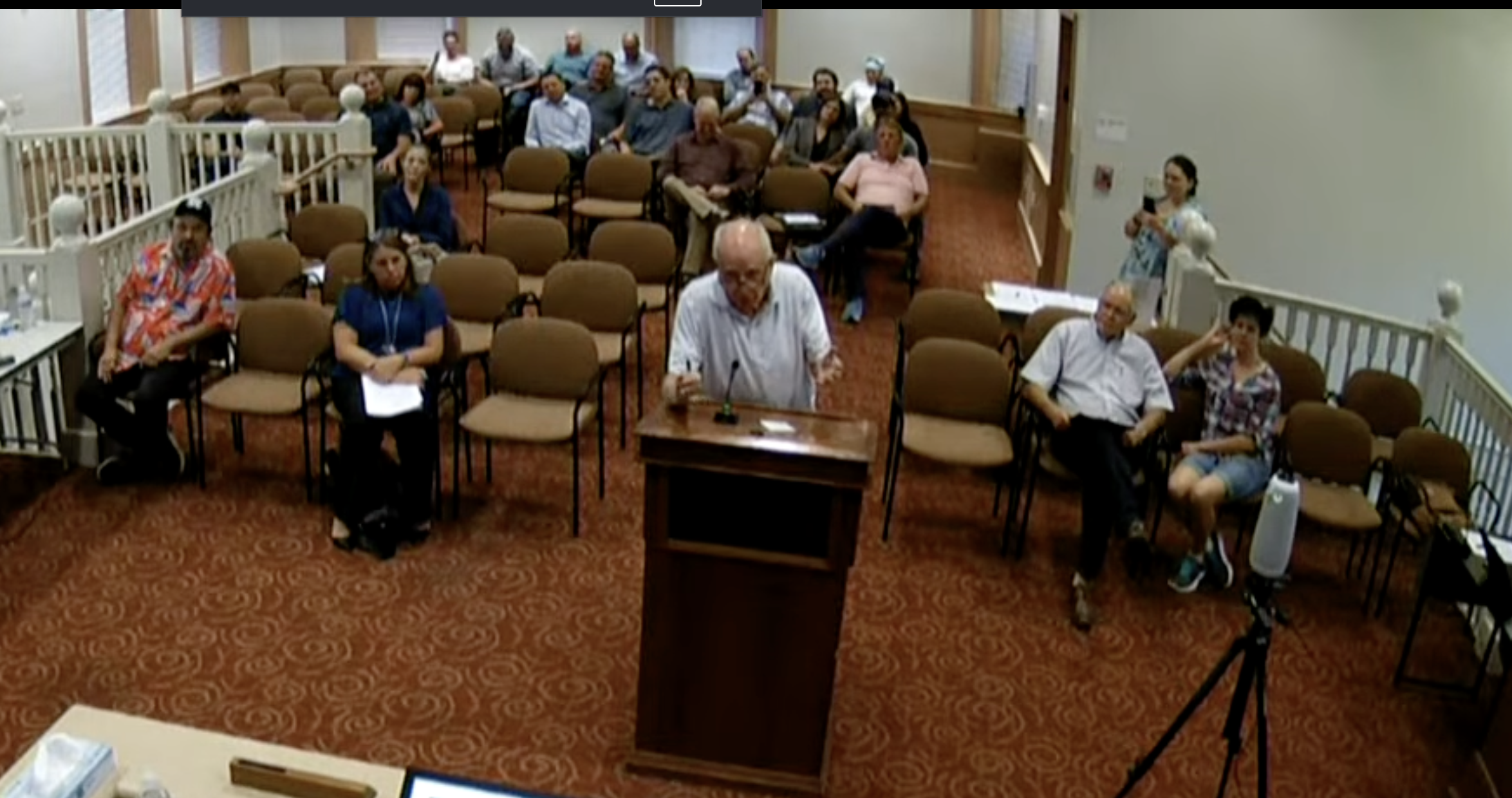
American Fork residents voiced their opinions during a public hearing on a proposed 8.7% property tax increase, with retirees warning the hike could price them out of their homes and other residents defending it as the cost of keeping firefighters on the street.
Mayor Brad Frost opened the hearing by stressing the council would take no formal action that evening. City officials say the increase would generate $660,000 in new general fund revenue, adding $33.41 a year, or $2.78 a month, to a typical property tax bill. The council is expected to adopt a final rate at its August 25 meeting.
City Administrator David Bunker told the council the money is intended to help staff Fire Station 53, a temporary station planned for 620 South. He said the budget covers nine new firefighters, though the department needs 12 staff members across three shifts around the clock.
Personnel costs for a fully staffed station run about $1.5 million a year, Bunker said, and the city cut other departmental budgets to cover more than half that total before asking taxpayers for the rest.
Bunker pointed to regional growth as the driver behind rising costs. He said American Fork’s population has grown about 23% over the past five years, trailing faster-growing neighbors Saratoga Springs and Eagle Mountain but still outpacing the statewide average. Inflation, he added, has run about 21% over the same stretch, according to U.S. Bureau of Labor Statistics data, driving up the cost of contractors, materials and labor citywide.
Not every resident who spoke was persuaded. Ryan Walker, who said his family has lived in American Fork for several years, told the council he opposes the increase and pointed to city employee raises he called out of step with the private sector. “Wages of city employees have gone up about 10% year over year, and I’m in the wrong business,” Walker said. “In the private sector, raises are between three and 5% a year.”
City budgets show salary and wage spending per full-time-equivalent position increased by an average of about 7.8% annually over the past three budget cycles.
Kevin Barnes, a former City Council member, faulted the city for how it financed the proposed public works building, saying it should have gone before voters as a bond rather than being funded without one. “There’s no reason to spend 40 million dollars without going to the public, in my opinion,” Barnes said.
He then urged the city to abandon large one-time increases in favor of smaller, more frequent ones, a philosophy he said the council considered after its last tax hike. “I think you ought to keep the increase to about 4%,” Barnes said.
Chris Chamberlain, who said he built his home 40 years ago, told the council his property tax bill now exceeds his original house payment. “The property taxes in the last 10 years have doubled,” Chamberlain said. “You’re pricing it so that no resident can stay here.”
Chamberlain returned to the pulpit later in the meeting and said,
“You go to the Art Dye Park, and you’ll see all the fire trucks there and they’re playing pickleball… I don’t know how many fires we have in American Fork in a year, but whether there could be a dual usage to their time to offset to work through that budget.”
Longtime resident Klein Long raised similar concerns about seniors on fixed incomes, saying his own property taxes have climbed 30% over five years even as his retirement income has stayed flat. “It’s the only tax that you have to pay every year, no matter how much you make,” Long said. Long closed his comments by saying, “Something’s really screwed up here in the city, as far as I’m concerned.”
Not all the comments ran against the increase. Terry Lee Bennett, who said she has a medically fragile nephew, told the council she supports the tax hike because a nearby fire station could matter in an emergency. “I am in favor of the property tax increase,” Bennett said. “I think that the reason for it is justified.”
Curtis Graham struck a middle note, acknowledging city services require funding but pressing officials for more detail on where the rest of the fire station money is coming from. Invoking Benjamin Franklin’s warning, “a small leak will sink a mighty ship,” Graham asked the city to publish a fuller breakdown of departmental budget cuts and firefighter wages before the council’s final vote.
Frost closed the hearing without further council discussion, thanking the public who spoke. The council’s vote on the final rate is set for August 25.
Rob Shelton | American Fork Citizen
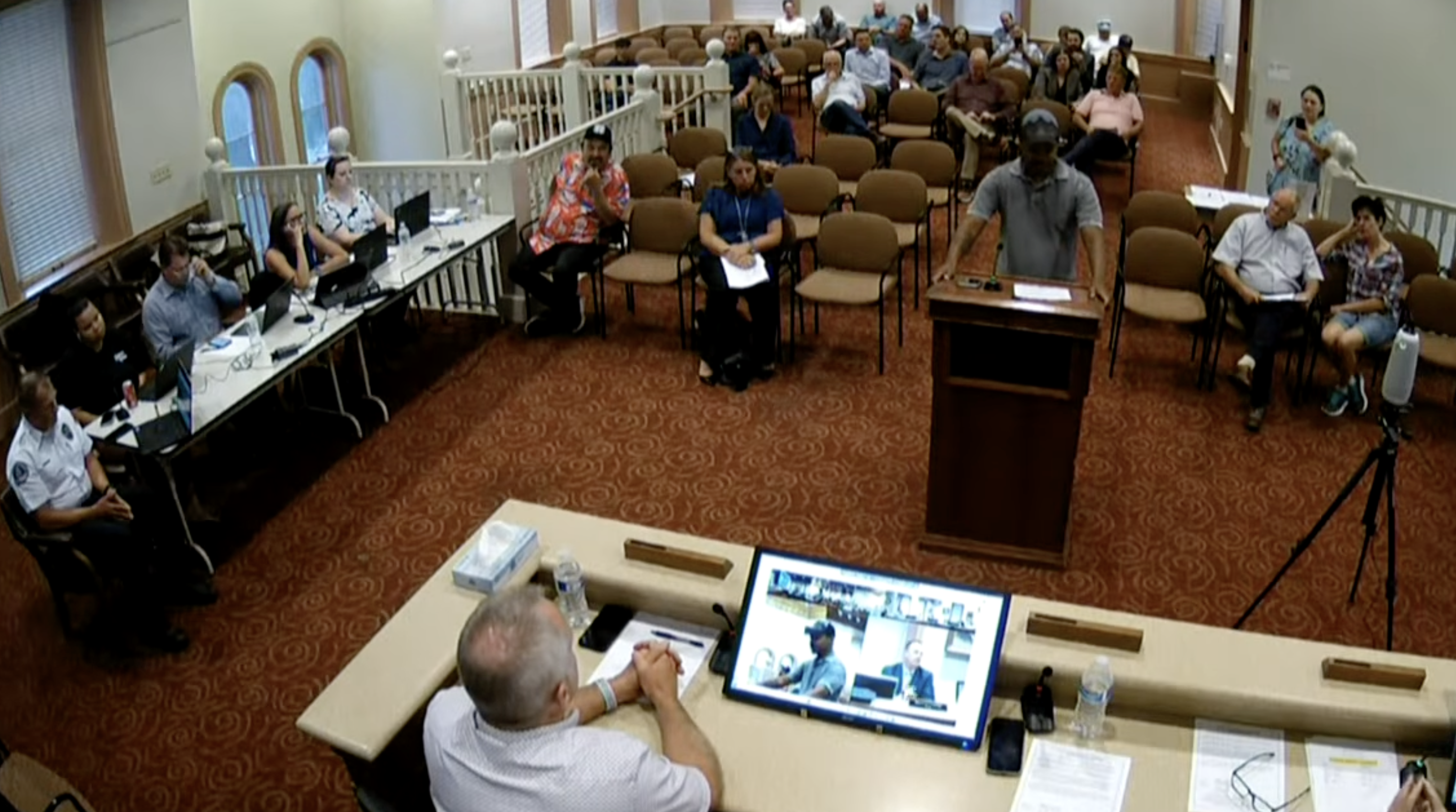
At the August 11 public hearing on a proposed property tax increase, Mayor Brad Frost made an unusual request.
“We don’t need claps. We don’t need cheers,” Frost told the packed council chamber. “I’m asking you not to.”
An audience member pushed back, asking whether Frost was ordering the crowd to stay silent or simply requesting it. Frost said he was asking, not telling. No one clapped or cheered again for the rest of the meeting.
The request stood out because it wasn’t consistent. American Fork hasn’t enforced a no-clapping policy, and it didn’t apply during the June 9 meeting when parents packed the council chambers to advocate for the city’s gymnastics program. Clapping and cheering could be heard through public comments with no objection from the dais.
So, what got this crowd clapping? Comments asked the city for accountability and change in the police department.
Aaron Booker, who told the council he does not live in American Fork, said an American Fork police officer, Bronson Kitchen, pulled him over in May on Interstate 15 near Bountiful.
“Under the false guise of an HOV violation, the real intent of the stop was to be an off-the-books intimidation ploy,” Booker said. “He wore no body cam. There was no call to dispatch.”
Booker said Kitchen “immediately resorted to threats of violence” when Booker declined to comply with an order he considered unlawful. Booker referenced how Kitchen refused to issue a citation despite “numerous requests” by Booker that would have let him contest the stop in court. Booker said he filed a complaint with the department, and the stop recording went viral days later.
“Shortly after, Officer Kitchen then called me and delivered a clearly coerced and forced apology,” Booker said. “Regardless, I accepted it and moved on until I obtained the police report.”
Booker told the council that Kitchen’s police report, written after the apology call, contained statements that “are categorically false” and contradict both the video and Kitchen’s own admission. He argued the city should not keep Kitchen in a role as a school resource officer (SRO) with regular contact with children as young as 12.
“It is indefensible to allow this officer to continue serving as an SRO,” Booker said, “retaining someone who is now on the Brady list because he simply can’t tell the truth.”
“Your inactions speak volumes,” Booker told the council. “It signals your willingness to tolerate abuse of authority. Since the city refuses to act voluntarily, then outside legal action will force you to change.”
Booker said he intends to pursue civil rights litigation with the same attorney representing Benjamin Schneider. Schneider is the YouTuber whose viral American Fork police interactions over several days drew national attention, with several nationally known civil rights attorneys weighing in on the department’s conduct.
The lawsuit announcement echoed through the rest of the meeting. Greg Hazard told the council he has been “the victim of two incidents” with department officers. In the first, he said, he was issued a criminal trespass citation “in retaliation for simply inquiring of an officer parked in a handicap stall in a non-emergency situation.”
In the second incident, Hazard said, he called American Fork police to report a trespasser blocking his office entrance. “I was called an A-word by one of the police officers,” he said. “And even worse, this American Fork police officer said he would traumatize me. Who says that? What officer says that?”
Hazard said he received apology letters “and ownership from Chief Paul on behalf of the police department” after both incidents, and that he has the encounters on body camera footage. “Only Councilman Ryan Hunter reached out to me and ensured that I was satisfied with the outcome of the cases,” Hazard said. “I expected a little more communication.”
Hazard also addressed threats Hunter has said he and his family received over the department controversy, telling the packed chambers he’d texted Hunter an apology on others’ behalf as soon as he heard.
“Let me be clear to all the people that may be listening,” Hazard said. “There is no room for threats on anyone, any officer, any council member, the mayor. There is no room for any of that at any time.”
Hazard also echoed concerns Booker had raised earlier in the meeting about Kitchen’s continued assignment as a school resource officer at American Fork Junior High. He told the council there are two ways this plays out: either members are right and there’s no issue with Kitchen serving as an SRO, or he is right and an issue surfaces during the school year involving behavior not becoming of an officer. Hazard said he hopes he’s wrong and the council is right but warned that city leadership will be to blame for not heeding the warning if it plays out otherwise.
Daniel Sonoma, an accountant who addressed the council next, argued that legal settlements, not firefighter staffing, are the hidden cost residents should worry about.
“We just learned of another lawsuit potentially today, and that costs lawyer fees, that costs settlement fees, and that’s very, very expensive,” Sonoma said. “Why are the residents the ones being held accountable when the city does not uphold our constitutional rights?” he asked.
Heidi Barbin told the council she was “one more voice” concerned about the department, describing “a kind of a weird incident years ago of swatting situation” at her home.
John Mulholland, who said he has lived in the city for 16 years, renewed a call for outside oversight of the department.
“I wrote a piece recently asking for a citizen review board, because what we’re hearing from the police is very different than what we’re actually seeing on video,” Mulholland said.
Julie Rodriguez, a Utah County resident who said she frequently does business in American Fork, told the council she still doesn’t trust the department despite years of otherwise positive experiences with police statewide.
“We have still not seen a positive change in accountability and transparency in the American Fork Police Department,” Rodriguez said. “I do not trust this department. I do not trust this city.” She asked to meet privately with Frost to talk it through. “I promise there will be no clapping,” she added.
Steve Goodwin asked the council directly whether officers would ever answer to residents for their conduct.
“Is there going to be a meeting to have these officers tell us residents what’s going on, or are they going to be accountable for anything?” Goodwin asked. “Because from what I see, it’s an embarrassment.”
Goodwin said he’s stopped telling people where he’s from. He travels out of state, gets asked where he’s from, says American Fork, and inevitably gets pulled into a conversation about the police department. “I don’t even say that anymore,” he said. “I just say Provo.”
City staff and elected officials offered no response to any of the comments. That’s standard for a public hearing, which exists to collect input, not answer it. Frost adjourned the meeting shortly after the last speaker sat down.

Rob Shelton | American Fork Citizen
American Fork’s elected officials are required by state law to disclose outside jobs, business ownership and financial relationships that could create a conflict of interest. A review of those disclosures, along with city compensation records and written responses gathered by the American Fork Citizen, shows a mixed picture. Some potential conflicts are acknowledged and appear to be managed. Others went unaddressed in written responses. And the disclosure forms themselves were filled out inconsistently, particularly the section covering spouses.
This is the third and final installment in a series examining potential conflicts of interest in local government. The first article, published June 4, drew on the experience of John Dougall, who spent 12 years as Utah’s state auditor before leaving office last year. The second, published July 13, examined the three-way split of the Alpine School District. This installment turns to American Fork City government.
Dougall’s message in June was straightforward: having a conflict of interest is common among public officials and isn’t, by itself, evidence of wrongdoing. What matters, he said, is whether an official discloses it and steps aside when it counts. Staying quiet is what causes trouble. “People start to speculate,” he said, even when an official’s conduct is fair and reasonable.
The AFC sent detailed written questions to Mayor Brad Frost and all five city council members, giving each four business days to respond ahead of the print deadline. Council Member Clark Taylor answered in detail. Council Member Staci Carroll provided a written statement. Mayor Frost provided a brief statement that did not address any of the specific questions asked. Assistant City Administrator Camden Bird answered several questions on behalf of the city. Council members Ryan Hunter, Ernie John and Tim Holley did not respond.
Frost’s 2025 and January 2026 disclosures list Valley View Landscaping, describing his role there as “Member.” His May 2026 disclosure removes that listing and instead identifies his employer as the American Fork Chamber of Commerce, where he became president and CEO.
Records the city provided in response to a public-records request show American Fork recently solicited new bids for grass and landscaping maintenance previously performed by Valley View. Cowley’s Lawn Care bid about $610 a week; a second bidder came in at $1,360; Valley View bid $1,610; and the city’s own estimate to perform the work with its own staff was $612.65 a week.
City records reviewed separately by the AFC show the last time the work was competitively bid before this year’s solicitation was April 2013, when the council awarded Valley View the landscaping contract for 18 city locations. Valley View agreed to $785 a week after it underbid other contractors, saving the city an estimated $8,000 against staff’s own $29,000 estimate for the work.
Then, Councilman Frost, listed as Valley View’s manager on the signed 2013 agreement, disclosed his ownership on the record and abstained from the vote. The council approved the contract 4-0. Invoices obtained by the AFC show Valley View billed the city $1,020 a week from at least June 2020 through 2025, the same rate across all six years. The invoices reviewed do not cover 2014 through 2019, so when the rate moved from $785 in 2013 to $1,020 by 2020, a 29% increase, is not established in the record the AFC has in hand. The city has since moved to perform the work on their own at the calculated rate $612.65.
Bird, in a written statement, said the bids were “based on the same parameters, allowing the City to compare the proposed costs for the same scope of work.” He said Valley View had “held its rate rather than increasing its pricing to match inflation as is custom for contract services,” calling the arrangement “the best deal residents could have received from these services.”
Bird said the city and Valley View “both determined it was appropriate to competitively bid the work again, consistent with current purchasing practices.” He added that “elected officials also receive conflict-of-interest training, disclose applicable conflicts, and coordinate with the City Attorney regarding ethical requirements.” Neither Bird nor Frost’s statement addressed questions about how long the arrangement ran between competitive solicitations. City Council minutes and invoices reviewed separately by the AFC put that span at 13 years, from April 2013 to this year’s bid.
Frost’s May 2026 disclosure lists his position with the Chamber of Commerce as “President/CEO, Day to Day Operations of the Chamber.” In a statement, the Chamber’s board of directors said it made the hiring decision independently, weighing Frost’s qualifications alongside his position as mayor, and identified the Chamber’s Steel Days contract with the city as the clearest area where the two roles could intersect. The board said Frost will not represent the Chamber in Steel Days negotiations or decisions where doing so would place him on both sides of the matter. Bird stated that the contract was revised this year so the mayor pro tem manages it instead.
Bird said the city provides the Chamber office space in Historic City Hall as part of the city’s broader support arrangement with the organization. Asked whether a written lease governs that space and how its value is calculated, Bird said in his most recent email that he could not speak to a lease agreement with the Chamber. Neither Frost’s statement nor the Chamber’s addressed the office-space arrangement. Whether the city receives fair value for that space, or whether a lease exists spelling out the terms of the arrangement, remains unanswered.
Two council members’ disclosures list SIRQ Construction, the firm that built American Fork’s newest fire station. Hunter’s January 2025 and January 2026 disclosures identify SIRQ as his current employer, with his position listed as business development.
Both filings also list SIRQ under the sections covering ownership interest, income of $5,000 or more, and stock or equity holdings worth $5,000 or more. Hunter did not respond to questions asking about the nature of that ownership stake, whether SIRQ has received other city business during his time on the council, or how he would handle a future SIRQ bid.
Taylor’s disclosure also lists SIRQ as his current employer, with his occupation given as marketing and his title as Marketing Coordinator. Taylor said he is an hourly SIRQ employee who works about 10 hours a week on marketing projects, website content and trade events, and that he started in late September 2025, after the fire station contract had already been awarded.
He said his SIRQ position has nothing to do with his council seat, that he holds no ownership stake in the company, and that he would recuse himself completely if SIRQ bid on another city project while he remains employed there.
Taylor’s disclosure also lists Fox Hollow Golf Club, where he is a board member, and Red Rider Creative, the advertising agency he owned until selling it February 27, 2025. He told the AFC he began working in business development for Backside Branding in mid-June, after a lawsuit that had barred him from Utah’s advertising industry was resolved in his favor.
Council Member Ernie John’s disclosure identifies him as president and watermaster of the American Fork Irrigation Company and as president and chairman of the American Fork Metro Water District, two organizations that interact with the city over water rights, infrastructure and development.
John’s disclosure on file for the 2026 cycle appears to be the same filing he made in 2025 with the signature date being January 2025. John did not respond to written questions asking about his current roles with the irrigation company and water district, whether he has recused himself from council matters touching either organization, and why the 2026 disclosure appears to be the same form he filled out in 2025.
Council Member Tim Holley’s disclosures show shifting outside business interests. His January 2025 filing lists him as self-employed, owner of Launch Group LLC, described as a karaoke and entertainment business, with IBM listed as his prior-year employer.
His January 2026 filing lists Strider Technologies as his current employer and identifies Heart & Seoul Karaoke, not Launch Group, as a business he owns. Holley did not respond to questions asking whether Heart & Seoul grew out of Launch Group, whether either business has done work with the city, or whether his current employer has any relationship with American Fork.
The disclosure form itself raised questions for this series. State law (UCA 20A-11-1604(6)(h)) requires a spouse to be listed on the disclosure form. State law does allow an officeholder’s spouse privacy if the spouse is an “at-risk government employee”, but requires the information to be redacted, not left blank on the form.
Use of that section varied widely among the mayor and council. Frost’s 2025 and January 2026 disclosures mark the entire spouse and household section not applicable, without listing a spouse name or invoking the at-risk-employee provision. His wife, Jodi, is a records specialist with the American Fork Police Department. Frost marked the box that he did not believe his wife’s employment at the city was a conflict of interest in all three filings and checking the box as an at risk employee, for both him and his wife, on the May 2026 filing.
While Frost’s response did not address questions about his wife’s city job, Bird said in a written statement that her position “operates within the City’s normal administrative structure.” Bird continued to describe that the city administrator, not the mayor or council, manages individual employees, and that her chain of command is independent of the mayor’s office. Bird did not address a question about why her reported benefits rose from $11,136.52 in 2024 to $22,640.23 in 2025, and Frost’s statement did not address it either.
Hunter’s and John’s disclosures likewise mark the entire spouse section not applicable, with no name entered. Carroll’s disclosure names her husband, Diego Carroll, but marks that she believes his employment to not be a conflict of interest. Holley’s disclosures name his wife, Clara del Barrio, in both 2025 and 2026, also marking her employment as not a conflict. Taylor’s forms show no name entered for a spouse.
Carroll, asked directly about the spouse section on her form, said she reviewed her filings after being contacted by the AFC and determined there were discrepancies needing correction. She said she has since filed amended disclosures, calling the gaps inadvertent errors and adding that she takes her disclosure obligations seriously.
State compensation records show Frost’s total pay, wages plus benefits, has climbed steadily since he became mayor. His wages rose from $10,038.66 in 2018 to $26,800 in 2025, an increase of about $16,761. His reported benefits rose from $19,066.78 to $44,155.22 over the same span, an increase of about $25,088. Combined, his total compensation rose from $29,105.44 to $70,955.22 between 2018 and 2025.
Bird said mayor and council compensation “has only adjusted once, in 2021” over roughly the last 20 years, following a market analysis staff periodically conducts against comparable cities. The wage figures through transparent.utah.gov show changes to all elected officials wages in multiple years beyond 2021, including 2019, 2022 and 2025.
Bird mentioned that Utah Retirement Systems notified the city that Frost qualified for city-paid retirement contributions because he was a full-time Tier 1 employee of the city earlier in his career. With Frost earning more than $17,000 a year the city was required to pay that contribution retroactively to 2021. Bird did not provide a specific dollar amount or detailed accounting of the benefits increase.
Dougall, reflecting in June on his years auditing state and local government, said the pattern he saw wasn’t that officials with outside interests were automatically a problem. It was silence that caused it. Officials who were upfront about their conflicts, he said, gave constituents reason to trust the decisions they made anyway. Whether American Fork’s disclosure practices meet that standard, and whether the questions that went unanswered in this series get answered later, is something residents will have to judge for themselves.

Elizabeth Spencer | American Fork Citizen
We may be experiencing higher-than-normal temperatures this summer, but the American Fork High School Marching Band continues to keep the beat regardless of the heat. The band recently participated in back-to-back summer camps with the Steel Days Parade sandwiched in between.
The most recent camp took the band down to Gunnison Valley High School (GVHS). For the past five years, students and dozens of parent volunteers have descended upon GVHS to use all of its indoor and outdoor facilities. The marching band’s focus is preparing their show for competition season.
“There is something about having a really long day together and then having to live with one another for several days that you create memories in a way that you can’t duplicate. They’re somewhere where they have to try and live with one another; they have to overcome trials and difficulties,” said AFHS Band Director Orien Landis. “I think that, in general, it provides a lot of opportunities for the students to get some really amazing camaraderie that we can’t duplicate back in American Fork.”
During COVID, the band didn’t leave AFHS for their annual away camp. Allison Dean, AFHS Band Administrative Assistant, said because they stayed home that year, staff knew something was missing: the camaraderie. “The students had a good experience, but they didn’t quite have the opportunity to bond in the same way,” shared Landis.
Each morning, the band is startled awake by the drum line or a section of brass. Breakfast for the crew of over 180 kids and dozens of volunteers begins as early as 4 a.m. The kitchen is full of parents preparing meals with almost as much energy as the kids on the band field.
AFHS band traditional favorite recipes include sunshine lemon cake and fruit cups made with pudding and cream. Since massive quantities of food are needed to keep the kids marching, volunteers spend days shopping Costco, Sam’s Club and Walmart.
The band goes through 180 gallons of Gatorade during camp and 500 pounds of ice daily. Other large quantities of food include 53 gallons of white and chocolate milk, over 30 loaves of French Bread, 70 pounds of hamburger, 150 pounds of smoked pork, 250 hamburger patties, hundreds of eggs, 21 cake mixes, and 65 bags of marshmallows for Rice Krispies treats.
Each meal prep takes a dozen volunteers, with twenty parents in place to serve up food when the dinner bell rings. Robyn Oler oversees the kitchen and cafeteria.
“I love serving the kids food; they work so hard, and they come in, and they’ve been outside in the hot sun. They’re tired, they’re spent, and we give them a home-cooked meal that has been made with so much love,” said Oler.
Oler loves seeing their smiling faces and recognizes how relieved kids are to get a break. She says the kids are always excited to get food and they are always so grateful. “I love seeing them all sitting together and socializing and getting to take a little bit of a break before they have to go back out.”
One tradition that students love in the cafeteria is the late-night treats. “I love that one too, because the whole day is over. They’ve finished a really long day, and they go shower, and they come in, and it’s the last thing they do before they go to bed,” said Oler. “Seeing them just be able to take a load off and have a really yummy, home-cooked treat is worth the effort.”
“Our parents are amazing. They are willing to do anything,” commented Dean on the huge group of volunteers that make the Gunnison trip successful.
“These are all volunteers that are here because they love these kids,” added Oler.
Former AFHS Booster President, Brooke Fuller, said her favorite thing is seeing the kids. “They just work so hard, and they have such good attitudes.” She said Gunnison takes students out of their comfort zone and “puts them in a situation where they’re all together all the time and have to learn to be a team. They have to work together.”
By the time the marching band left Gunnison, they had completed almost two-thirds of the show. “I can’t decide whether the students are achieving much better this year than they have in years past, or if the design team has put together a design that’s just a little bit more fluid, so the students can achieve it while still having the demand on them,” Landis said, in general, the students are accomplishing what is being asked of them at a higher level this year.
“In the course of three days, I watch them become a very strong unified unit that they will use to carry them through the whole season,” added Oler.
In November, the marching band is heading to Indianapolis to compete at Grand Nationals, so the staff knew this year’s show needed emotional depth. Landis says they often talk to students about what it takes to reach a level where they could be considered a finalist band at Grand Nats, but it’s never the focus.
“The focus is always just to give your best, to figure out what that is and try and achieve that, not just by the end of the season but starting now,” said Landis. “We would love to be a band that would be considered for finals at Grands Nationals. We think that if the students put their best effort in every day, then there’s a really great chance for us to do that.”
Those best efforts are seen during band camp in Gunnison. “The thing we love about coming to Gunnison is the people,” said Dean.
“I do love coming down here. There’s a special spirit in Gunnison, and I think part of that comes from how supportive the city is,” said Oler.
One of those supporters includes the local movie theater. The night before packing up to go home, students get to enjoy a movie together at the Casino Star Movie Theater. The show house is the longest-running operating theater this side of the Mississippi, having opened in 1913.
“I value excellence. I really do, and if somebody tries to seek excellence in something, we want to support that,” said Lori Nay of hosting the band annually. Nay is the Executive Director of the Casino Star Theater Foundation and former Mayor of Gunnison.
Dean doesn’t have children in the band program anymore, but she stays for the students. “What I love is watching the kids learn, and you can see it happen. It’s not just band stuff they learn. We are teaching them life skills,” she said.
“It is such a unifying experience. I see that, over the course of a few days, these kids bond, and I love watching them love and support each other and hype each other up. It just gives me so much faith and pride in this upcoming generation. They are changing the world, and I love getting to see that at this level,” said Oler.

By Sally Francom and Rob Shelton
American Fork Citizen
Brynn Carnesecca had a way of making the person across the table feel like the only one in the room. Colleagues at the Lehi Free Press and American Fork Citizen say that gift showed up in every story she wrote, and it’s why the newsroom is struggling to say goodbye.
Carnesecca, 21, died last Sunday. Her mother, Michele Carnesecca, told KSL, “She took her own precious life, but she is more than what happened to her. We would like to celebrate the amazing life she lived.”
Carnesecca was crowned Miss American Fork in 2024 and earned the Miss Congeniality award at Miss Utah. She wrote for the American Fork Citizen, the Lehi Free Press and BYU’s Daily Universe. She interned at Utah Valley Magazine, KSL and KTVX Good Things Utah. She also founded Envelopes of Hope, a pen-pal program connecting volunteers with incarcerated Utahns, work she started while competing for Miss Utah.
Friends and readers already knew her as a musician, volunteer and pageant queen. Her coworkers at the Citizen and the Lehi Free Press knew a different side: a young reporter who chased stories with enthusiasm, bringing a positive influence to her community.
“She had a great knack for putting subjects at ease,” said Beky Beaton, sports editor, who watched Carnesecca grow from a newcomer into a steady hand on deadline. “She was able to tackle complex or controversial subjects with both determination and sensitivity. She left a lasting, positive influence on everyone she contacted.”
Beaton said sources often called back after their interviews ran just to say how much they’d appreciated working with her.
Former digital editor Skyler Beltran remembers a reporter who did more than fill column inches.
“She had an ability to light up every room she entered,” Beltran said. “She brought warmth and kindness to everyone she met. She was incredibly talented, always willing to lend a helping hand, and lived a life of service to others. Her passing is a heartbreaking loss for our community.”
Reporter Megan Wallgren said that warmth was the reason Carnesecca’s stories worked.
“She had a way of making you feel like you were the most important person in the room,” Wallgren said. “She genuinely loved people. I think that’s what made her such a great journalist. She cared about those she wrote about and those she was writing for.”
Reporter Kristen Meier, who worked alongside Carnesecca on community coverage, said the newsroom lost one of its brightest young talents.
“Her contributions to the newsroom were immeasurable,” Meier said. “She served countless hours in our community side by side with our leaders and residents. She wrote untold stories and made us all better for reading them.”
Jennifer Thomas, who also worked with Carnesecca, said Brynn’s talent extended well past reporting. “Brynn possessed a radiant spirit that comforted countless souls, a luminous smile that sparked pure joy, and a literary gift that left us with masterfully crafted stories,” Thomas said. “She inspired in me a desire to write better and to write with intent. I love her like my own.”
That reach went beyond the newsroom. Rita Law, who worked with Carnesecca on a story about a local program, said the impact was the same whether the interaction lasted an hour or a season.
“She was so wonderful to work with and helped our program tremendously,” Law said. “She will be missed not only by those who knew her closely, but those of us who only had brief interactions.”
Summerissa Bell Stevens, president of the Harrington Center for the Arts, said Carnesecca interviewed her organization countless times over the years and volunteered there as well.
“Brynn was one of those rare people who made every room brighter simply by being in it,” Stevens said. “She loved music, she loved people, and she loved this community. Our events brought together the very things she was most passionate about.”
“One of Brynn’s greatest gifts was the way she saw people,” Stevens said. “Whether you were a volunteer, an artist, a child or someone she had just met, she had a way of making you feel valued. That is a gift our community will never forget.”
“So many people carry burdens we cannot see,” Stevens said. “And to any young person who may be struggling today: please hold on. The pain you feel today does not have to define your future. Your story is not over, and this world is better with you in it.”
Publishers’ Note:
We don’t normally insert ourselves into our coverage, but this one hit home, and we are taking the liberty of saying a few things as publishers.
We never met anyone who walked away from an interview with Brynn unhappy with how she told their story. That’s rarer than people outside this business realize. She had an instinct for finding the stories that don’t announce themselves, the volunteer nobody profiles, the program running quietly in the background, the person who’s been doing good for years without anyone noticing. Brynn noticed. And she made sure the rest of us did too.
She had a laugh that put the room at ease before she’d said a word, and a smile that did the same. Brynn walked into a meeting, and the temperature of the room changed. That’s not something you can teach a reporter. It’s something you either have or you don’t, and she had it in abundance.
She came to the Lehi Free Press as a high school junior, asking for a journalism internship. She was polite, articulate and willing to learn. So, we hired her as an intern. First, she watched us edit stories and learned. Then, she started to write, and from the beginning, her stories were unusually good for a high school student. She was open to all the coaching, and every subsequent story was better and better.
After high school, we hired her to work at the Lehi Free Press office in sales and as a reporter. She was unusually mature and articulate for an 18-year-old. Honestly, she was remarkable.
Brynn’s time with us was short by any ordinary measure. But measuring her by time feels like the wrong instrument. Some people spend a lifetime and leave less behind than she did. She changed how this community saw itself, one story at a time, and that doesn’t go away because the byline stops.
We’ll miss her. American Fork and Lehi will miss her. And we’re grateful, in the middle of missing her, that we got to work alongside her at all.
Sally Francom, Publisher, Lehi Free Press
Rob Shelton, Publisher, American Fork Citizen
Need support?
If you or someone you know is struggling, help is available. Call or text 988 to reach the 988 Suicide and Crisis Lifeline. In Utah, the SafeUT Crisis Line can be reached at 833-372-3388, and the Huntsman Mental Health Institute Crisis Line is available at 801-587-3000.
Jennifer Thomas | American Fork Citizen
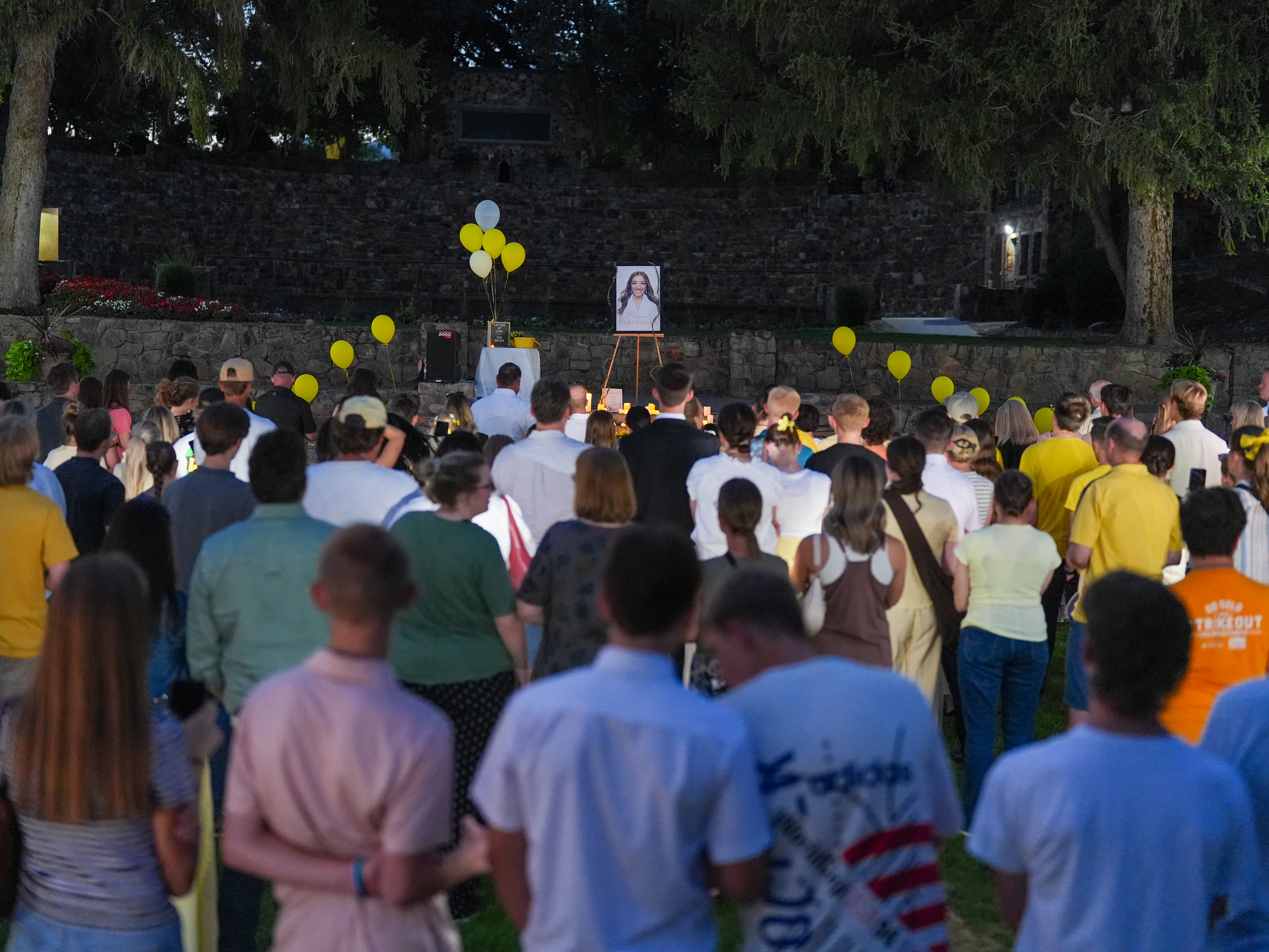
Hundreds gathered at the American Fork Amphitheater on Tuesday, August 28, under the quiet evening sky to honor Brynn Carnesecca, who touched many lives and brought a deep love to the entire community. People in yellow clothes stood by glowing candles with soft yellow flames, making the dark grass bright. Neighbors, friends, loved ones, youth groups, and emergency responders stood side by side in a silent gathering of respect.

The warm lights cut through the night, bringing strangers close together in shared grief. Tears fell and gentle hands held each other tightly. A deep silence filled the air, turning individual pain into a single, strong pulse of collective healing.
Dorinda Ledkins, who serves as the Miss American Fork director within the Miss Utah Scholarship organization, created the vigil to honor Carnesecca, who was Miss American Fork 2024.
“Holding a vigil was both to honor Brynn and also to bring hope to the communities that loved her,” said Ledkins. “I knew I needed to do something for the American Fork community as well as for the girls within the Miss Utah Organization.
Ledkins organized the vigil without knowing how many people would come.
“After I received the blessing from Brynn’s mother to hold a vigil, I called the mayor and the Miss American Fork committee and together we made it happen. American Fork police officers and firefighters were on scene to demonstrate their support,” stated Ledkins.
“I am not surprised with the amount of people in attendance tonight. They are here because Brynn loved, and she was easy to love back. Brynn makes people feel something special. She had a gift to make everyone feel better,” stated American Fork City Mayor, Brad Frost. “People are here to honor Brynn and find strength among each other, and it is important to do that.”
Brynn’s friend, Jefferson Penrod, attended the vigil and felt overwhelmed with gratitude as he witnessed the community support from the attendees.
“My friendship with Brynn meant everything. We were so close for so many years. We did everything together. The thing I cherish about our friendship is that I got to see firsthand the service she gave to her family, friends, and community. Being here tonight and feeling the support for Brynn means a lot,” said Penrod.
Shaye Johnson, Miss American Fork 2023, also attended the vigil.
“The vigil was so bittersweet. It’s so hard to let reality set in that she is actually gone, but sweet because I could feel so much love. Love from Brynn, from the people who attended and loved her and from the yellow throughout the decorations, the flowers, the candles, and the sky,” said Johnson. “Now every time I see the color yellow, I will remember Brynn,” said Johnson.
As Miss American Fork, Carnesecca created “Envelopes of Hope,” a pen pal program for Utah inmates as her service initiative, which included a yellow logo, which was her favorite color. At the vigil, in respect of that initiative, attendees wore yellow, and wrote notes in her memory.
“Brynn was such a light in the community. She showed up, worked hard, but most of all, she made sure everyone she interacted with felt seen and loved,” said Ledkins. “This love extended far beyond American Fork into the Miss Utah sisterhood and across the state to incarcerated individuals through her community service initiative, “Envelopes of Hope.”
Carnesecca was recognized by her fellow contestants with the Miss Congeniality Award at the 2025 Miss Utah competition, which is a testament to the way she made others feel valued and loved.
“Brynn quickly grew into the title of Miss American Fork. She understood the vision and the good that the title can bring. Her love and service extended far beyond her year of service. She personified light, goodness, happiness and all the great qualities we aspire to. Brynn came with these qualities and willingly shared them,” said Mayor Brad Frost.
“Brynn was one of my closest friends. We met in 2024 at the Major Brent Taylor Gala when she was Miss American Fork, and I was Miss Freedom Festival. We were introduced and became immediate friends,” stated Lilia Tavares, who attended the vigil.
“Brynn is one of those rare people that so clearly stands out and shines brighter than anything you’ve seen before. She is pure sunshine,” continued Tavares. “Brynn is one of the most intelligent and articulate people I have ever met. Completely wise beyond her years.”
“Brynn perfectly embodied what it meant to be a representative of the Miss America Organization. She was kind to every single person she interacted with,” said Johnson.
Carnesecca struggled with a mental health disorder that was often unseen by others.
“Brynn wouldn’t have wanted anyone to feel at all responsible or that they could have changed this outcome.
I believe that the most important step in bridging the mental health gap is being as vulnerable as possible with ourselves and with others. Mental health disorders thrive in isolation and darkness. We take away their power when we expose them and shine a light,” said Taveres.
“If someone you know is struggling with their mental health, reach out regularly. Make them feel included. Invite them to get out of the house with you, and provide them with resources,” said Johnson. “Most importantly, tell them how much you love and care about them every day.”
The vigil created a gathering space of remembrance, which helped mourners share grief, created comfort and brought a sense of hope.
“This means a lot to me and to everyone who knows Brynn. To know how much she was loved and the outpouring of support tonight shows how much the love she gave was reciprocated,” said Penrod.
Brynn Carnesecca | American Fork Citizen
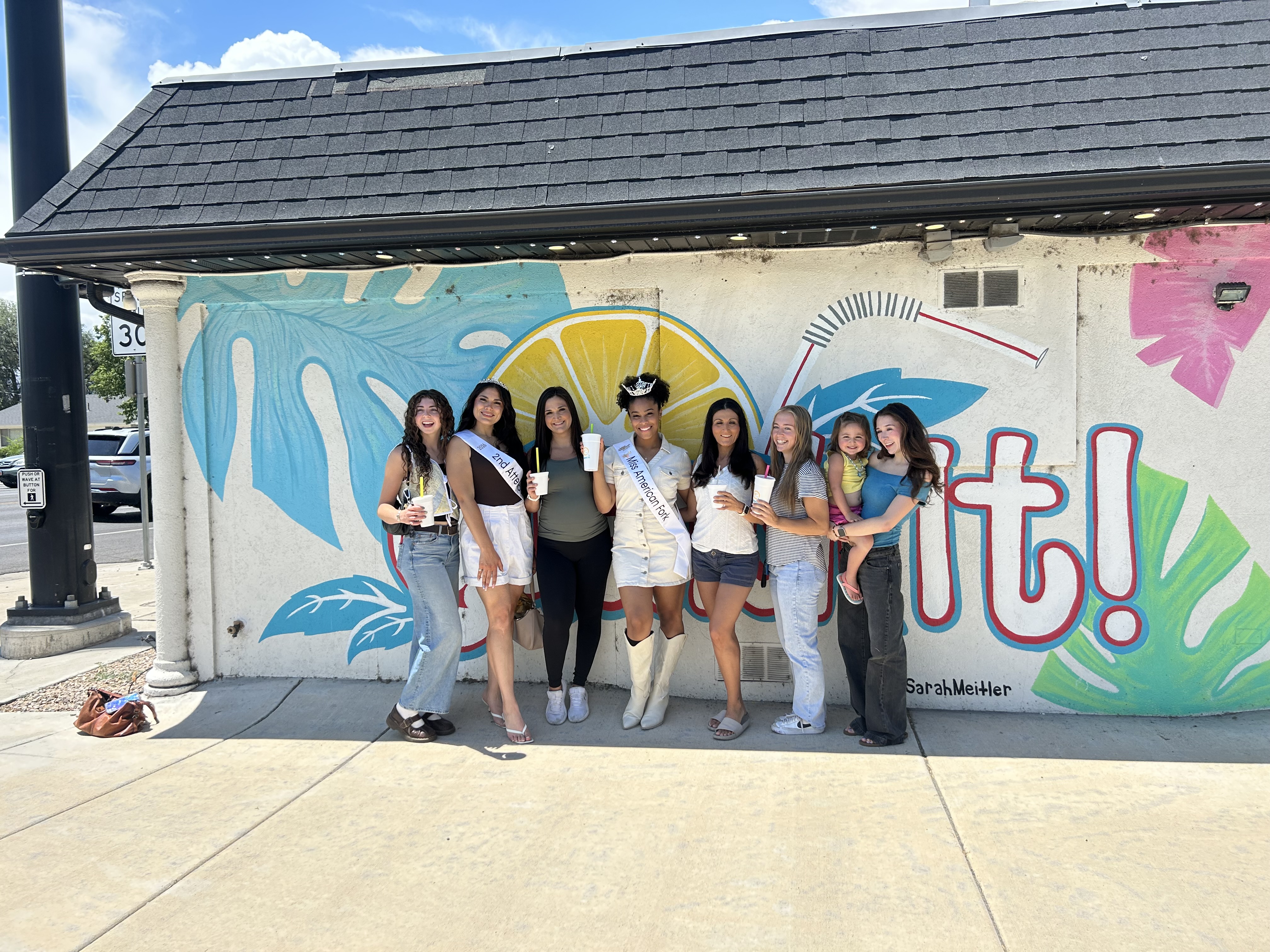
Miss American Fork 2026 Jade Turner unveiled a new drink at Quench It! that is unique to her and the city. On Saturday, July 18, Turner greeted drink tasters and celebrated this unique accomplishment.
The idea for a signature drink was always one of Turner’s goals.
“I reached out to a lot of soda shops and they said no. But when I want something, I’m going to get it,” Turner laughed. “So, I called Quench It! and said I had a proposal for him.”
Newly crowned, Turner headed to the American Fork location to try all the soda combinations she could think of. Eventually, she landed on the Miss AF Signature, a Dr. Pepper base with huckleberry syrup, frozen raspberries and coconut cream.
“Everyone seems to love it,” Turner said. “Dr. Pepper is a classic.”
Turner expressed gratitude and excitement at the support from Quench It! and the wider city.
“I think it just speaks so much about Quench It! and the owners that they were willing to support. It also shows how American Fork is so community-based and the way people look out for each other,” Turner shared.
Turner and the Miss American Fork royalty were at the soda shop for a few hours giving people the chance to try the drink and meet them. Now, the drink can be ordered from the American Fork Quench It! at any time. To order, ask for the “Miss AF Signature.” The drink is a special menu item and is not available at any other location.

Brynn Carnesecca | American Fork Citizen
American Fork City will continue the prohibition of personal fireworks within city limits. The City made the announcement yesterday via email and AF Notify. The ban is the same as the Fourth of July, meaning no personal fireworks can be discharged on Pioneer Day, or the days before and after.
In their announcement, the City stated, “Governor Spencer Cox has given local communities the authority to determine whether personal fireworks can be used based on local conditions. Due to ongoing drought, extremely dry vegetation, and firefighting resources that remain stretched thin across the state and in our city, American Fork City has determined that prohibiting personal fireworks is the safest course of action.”
Instead, AF recommends attending a public fireworks show. This week, there will be fireworks over Utah Lake at the American Fork Marina at 10 p.m. on Friday and the Steel Days Fireworks Show at Mary & Art Dye Park on Saturday at 10 p.m.
The City added, “Please note that previously published American Fork City maps showing permissible fireworks discharge areas remain suspended during this restriction. If you witness personal fireworks being discharged, please help us protect our community by contacting non-emergency dispatch at 801-794-3970. Thank you for helping keep American Fork City safe.”
Mayor Brad Frost has also spoken on the decision. After Governor Cox returned firework banning permissions to cities themselves, Mayor Frost and city officials worked together to determine whether or not fireworks would be banned.
“Even one spark can have devastating consequences for homes, businesses, open spaces and the people who call American Fork home. We ask every resident and visitor to respect this decision and comply with the temporary restriction,” Mayor Frost said. “ By choosing caution and embracing safer ways to celebrate, we can protect the people and places that make American Fork such a great community.”
For more information, visit www.americanfork.gov/fireworks.
Brynn Carnesecca | American Fork Citizen
On the afternoon of July 6, the American Fork Fitness Center released a statement regarding how the $4 million in improvement funds will be used. The funds will go towards three main priorities: improvements to the bathroom and locker room areas, essential aquatic maintenance and ways to maximize use of the current gymnasium space.
The fund allocation has upset some in the community, who allege that once the funds are given to the Fitness Center, various programs will be relocated or cut entirely from the center. This would include the Twisters program, ninja classes and preschool.
The funds will be used for the 2026-27 fiscal year. According to the center, “Fitness center staff are moving toward actionable planning. We are gathering contractor quotes and assessing the scope of work for locker room and aquatic improvements.”
Additionally, the center is focusing on listening to public voices and reviewing the 2025 survey results. Many community members have also spoken at City Council meetings, urging Council Members to exercise stricter control over how the funds will be used.
The phrase “ways to maximize use of the current gym space” is at the root of the discourse. Maximizing the gym space could include moving programs to the basement or cutting them entirely. Outside council meetings, families have spoken up in Facebook groups and online about the program’s benefits.
To remedy the situation, the Fitness Center’s statement said, “For the gymnasium space, staff is evaluating current program locations and usage, including gymnastics, tumbling, itty-bitty sports, the weight room, preschool programming, and other areas of the facility to determine the best path forward.”
The statement also assured that “No final decisions have been made. No programs have been eliminated, and no spaces have been permanently changed.”
Information regarding the use of the funds will be presented to city officials in early August, according to the Fitness Center. The Center also promises to share updates as more concrete information becomes available. They hope to find a solution that can serve Fitness Center patrons, while also maintaining programs that help children and youth develop skills such as gymnastics.
The Center hopes to be more upfront about the changes.
“We want patrons to understand that this is an active planning process,” the statement said. “When decisions are made, patrons will be notified clearly of changes and in advance. We want to express our gratitude and appreciation to all our patrons who visit the fitness center each week and make it possible for these improvements.”
However, the funds are allocated, focus will be given to the three main priorities. More information about the decision will be presented at the City Council meeting in early August. For a detailed schedule of the meetings, visit www.americanfork.gov/1128/Public-Meetings-Notices.
Those interested in providing feedback or learning more are encouraged to visit the Fitness Center website at www.americanfork.gov/229/Fitness-Center or reach out directly to center staff. Additional information can also be found on Facebook @American Fork Fitness Center.

Brynn Carnesecca | American Fork Citizen
The Steel Days festivities are right around the corner. The week will be filled with activities for the community, families and friends. The beloved week-long festival will be held from July 18 to July 25 with various events available to the public, both free and paid.
In the Steel Days magazine, Mayor Brad Frost said, “Steel Days honors our heritage while celebrating our future. It reminds us of the hardworking men and women who helped build this community and the generations who continue to make it such a wonderful place to live, work and raise a family.”
In accordance with the Mayor’s sentiments, this year’s Grand Marshals are the residents and staff of the Utah State Developmental Center. The choice also aligns with the theme, “Superheroes and Everyday Heroes.” This unique choice celebrates members of the community who are rarely recognized in this way.
This year’s lineup is full of family-favorite events, as well as new activities for all ages. Senior Center Senior Games, a Youth Entrepreneur Market, Day at the Beach/Marina, Huck Finn Fish Grab, Kids Parade, Jigsaw Puzzle Competition and Battle of the Bands will all make an appearance at the festivities. For more information beyond the schedule, visit www.steeldaysaf.com/.
Saturday, July 18
● Car Show – 10 a.m.-6:30 p.m. at Rotary Park
● Senior Center-Senior Games – 10 a.m. at the American Fork Senior Center
● Steel Days Fair – 5 p.m.-9 p.m. at Mary and Art Dye Park
● Youth Entrepreneur Market – 5 p.m.-9 p.m. at Mary and Art Dye Park
● Car Cruise – 6:30 p.m.-8 p.m. at American Fork Main Street
● Burnout Contest – 6:30 p.m.-8 p.m at City Administration Building Parking Lot
● Opening Night Concert – 7 p.m. at Mary and Art Dye Park
● Opening Ceremonies – 9 p.m. at Mary and Art Dye Park
● America 250 Drone Show & Hot Air Balloon Glow – 9:45 p.m. at Mary and Art Dye Park
Monday, July 20
● Golf Tournament – 8 a.m. at Fox Hollow Golf Club
● Day at the Beach/Marina – 12 p.m.-10 p.m. at the American Fork Beach and Boat Harbor
● Huck Finn Fish Grab – 7 p.m.-8 p.m. at the American Fork Beach and Boat Harbor
● Mario Kart Tournament – 4 p.m. at the American Fork Senior Center
● Symphony in the Park – 6:30 p.m. at Quail Cove Amphitheater
● Pickleball Glowdown – 10 p.m. at Mary and Art Dye Park
Tuesday, July 21
● Pickleball Tournament – 6 a.m., 9:30 a.m., 6 p.m. at Mary and Art Dye Park
● Art Show – 10 a.m.-9 p.m. at the American Fork Library
● Coloring Contest – 9 a.m.-9 p.m. at the American Fork Library and Fitness Center – Final Day to Submit Entries
● Kids Splash Night – 4 p.m.-8 p.m. at Mary and Art Dye Park
● Horseshoe Tournament – 5:30 p.m. at Rotary Park
● Wiffle Ball Tournament – 6 p.m. at Mary and Art Dye Park
● Fitness Festival – Free Cycle – 5 p.m.-5:30 p.m. in the Fitness Center parking lot
● Fitness Festival – Zumba – 5:45 p.m.- 6:15 p.m. in the Fitness Center parking lot
● Fitness Festival – Free HIGH Fitness – 6:30 p.m.-7 p.m. in the Fitness Center parking lot
● Fitness Festival – Free Line Dancing – 7:15 p.m.-7:45 p.m. in the Fitness Center parking lot
● Fitness Festival – Free Yoga & Sound Bath – 8 p.m.-9 p.m. at Pony Baseball Field (across the parking lot from the Fitness Center)
● Night Glow Golf Tournament – 8:30 p.m. at Fox Hollow Golf Club
● Pickleball Glowdown – 10 p.m. at Mary and Art Dye Park
Wednesday, July 22
● Pickleball Tournament – 6 a.m., 9:30 a.m., 6 p.m. at Mary and Art Dye Park
● Art Show – 10 a.m.-9 p.m. at the American Fork Library
● Discount Swim Day – 12:30 p.m.-8 p.m. at the American Fork Fitness Center
● Garden Tour – 4 p.m.-9 p.m. at various locations (see schedule on Garden Tour page)
● Kickball Tournament – 6 p.m. at Mary and Art Dye Park
● Carnival – 6 p.m.-10:30 p.m. at Mary and Art Dye Park
● Kids Parade – 7 p.m. at the Utah State Developmental Center
● Teen Pool Party – 8:30 p.m.-10:30 p.m. at American Fork Fitness Center
● Night Glow Golf Tournament – 8:30 p.m. at Fox Hollow Golf Club
Thursday, July 23
● Pickleball Tournament – 6 a.m., 9:30 a.m., 6 p.m. at Mary and Art Dye Park
● Quilt Show – 10 a.m.-7 p.m. at the Senior Center
● Art Show – 10 a.m.-9 p.m. at the American Fork Library
● Tea with the Queen – 11 a.m.-12:30 p.m. or 1 p.m.-2:30 p.m. at Northampton House
● Carnival – 4 p.m.-10:30 p.m. at Mary and Art Dye Park
● Food and Vendor Market – 4 p.m.-10:30 p.m. at Mary and Art Dye Park
● Jigsaw Puzzle Competition – 5 p.m. at the American Fork Senior Center
● Art Show Reception & Awards – 6 p.m. at Robinson Park
● Cornhole Tournament – 7 p.m. at Mary and Art Dye Park
● Battle of the Bands – 7 p.m. at Mary and Art Dye Park
Friday, July 24
● Pickleball Tournament – 6 a.m., 6 p.m. at Mary and Art Dye Park
● Art Show – 10 a.m.-9 p.m. at the American Fork Library
● Quilt Show – 10 a.m.-7 p.m. at the Senior Center
● Carnival – 10 a.m.-10:30 p.m. at Mary and Art Dye Park
● Food and Vendor Market – 10 a.m.-10:30 p.m. at Mary and Art Dye Park
● American Fork’s Got Talent – 7 p.m.-9 p.m. at Mary and Art Dye Park
● Cornhole Tournament – 7 p.m. at Mary and Art Dye Park
● Movie in the Park – Dusk (9:30 p.m.) at Mary and Art Dye Park
Saturday, July 25
● Marching Band Breakfast – 6:30 a.m.-9 a.m. in the Macey’s parking lot
● Steel Days Run 5K/10K/Kids Race – 7 a.m. at the Fire Station
● Grand Parade – 9 a.m. at Main Street and 100 E.
● Carnival – 10 a.m.-10:30 p.m. at Mary and Art Dye Park
● Art Show – 12 p.m.-4 p.m. at the American Fork Library
● Quilt Show – 12 p.m.-4 p.m. at the Senior Center
● Live Entertainment – 12:30 p.m.-6 p.m. at Mary and Art Dye Park
● Food and Vendor Market – 1 p.m.-10:30 p.m. at Mary and Art Dye Park
● Big Show Opening Act – 6:30 p.m. at Mary and Art Dye Park
● Big Show – 8 p.m. at Mary and Art Dye Park
● Fireworks – 10 p.m. at Mary and Art Dye Park

Timpanogos School Board to study potential school closures

Caveman girls soccer moves into rankings

Realignment cycle begins again, with tweaks

‘BIGGEST LOSER’ CONTESTANT FROM AF DIES TRAGICALLY

Aspen Peaks School Board “Meet the Candidates” night recap

Tragedy Strikes American Fork: Local Couple Found Dead in Apparent Murder-Suicide
-

 Local News1 month ago
Hiker dies after lightning strike on American Fork Twin Peaks
-

 Local News1 month ago
How young people are navigating Utah County housing
-

 Local News1 month ago
Man drowns while swimming across Tibble Fork Reservoir
-

 Obituaries4 weeks ago
Brynn Leigh Carnesecca
-

 Local News1 month ago
Rocky Mountain Power rate settlement awaits state decision
-

 Local News1 month ago
West Jordan man booked in connection with Timp Fire in AF Canyon
-
Opinion1 month ago
OPINION: Reading Tom Hanks
-
Local News1 month ago
Follow The Flag surprises crowd, unfurling special flag on July 4
-

 Local News4 weeks ago
American dream of homeownership on hold for most young Utahns
-

 Art/Culture1 month ago
Bachmeier brothers draw large crowd for concert in American Fork