
Local News
Trump DOJ uses case of Utah letter carrier to highlight allegations of voting fraud


Jacob Fischler | Utah News Dispatch
September 22, 2026
Federal officials charged a Utah letter carrier Tuesday with throwing 300 primary ballots in a church parking lot dumpster, an incident that a top U.S. Justice Department official said made the case for stricter regulations of voting.
The prosecution of Damon Matai Seei, of Payson, Utah, showed “voting fraud is real,” acting Deputy Attorney General Trent McCotter said at a press conference at DOJ headquarters in Washington.
The Justice Department gave the arrest an unusually high profile, spotlighting the administration’s efforts to combat voter fraud after the U.S. Supreme Court this month blocked a new U.S. Postal Service rule limiting mail voting from going into effect for this year’s elections.
The regulation was meant to “address the chronically abused mail-in ballot system,” McCotter said. He criticized the trial judge who initially blocked the rule, which would have required special tracking and design features, among other things such as creating a national database of eligible voters.
“Election integrity should not be a political or partisan issue,” McCotter said. “Who could be against properly tracking mail-in ballots? Unfortunately, but entirely predictably, that regulation was blocked by a judge in Massachusetts. … The Trump administration, however, will continue taking aggressive actions to protect our elections.”
Postal Service rule
U.S. District Judge Indiria Talwani’s order blocking the rule is only in effect for the Nov. 3 elections, a provision meant to preserve the status quo because the rule was finalized mere months before the midterms. The merits of the case are still being argued. The U.S. Supreme Court upheld Talwani’s decision.
The prosecution of Seei, and the attention the administration sought to give it, undercut a key argument the administration made in the case: The rule included only “modest” technical specifications for a category of mail and should not be interpreted as an election regulation.
The U.S. Constitution grants states the authority to administer elections, with policy oversight from Congress.
In siding with the Democratic states and voting rights groups who filed suit, Talwani and the U.S. Court of Appeals for the 1st Circuit said the rule was clearly an attempt to affect election policy and was not restricted to a modest mail regulation.
Trump and mail-in voting
President Donald Trump has railed against mail-in voting and claimed, without evidence, that it is a major source of election fraud and contributed to his 2020 loss to President Joe Biden.
Since Trump retook office in January 2025, the department has charged 70 immigrants with illegally voting, compared with only 13 in the four years of Biden’s term, McCotter said Tuesday.
“And we intend to bring many more,” he added.
Homeland Security Investigations, a Homeland Security Department agency, has made 160 recent arrests, from 1,600 open voter fraud cases, HSI acting Deputy Executive Associate Director Matthew Millhollin said.
A reporter in the room noted that 70 prosecutions amounted to a bare fraction of the 150 million votes cast in the 2024 election.
McCotter responded that the Utah case involved 300 ballots, and that law enforcement had only scratched the surface of possible incidents. “Thousands more” cases were being investigated, he said.
“The folks on the other side, the opponents of the president, insist this has never happened, that there is no voting fraud,” he said. “And so when we have dozens of cases … I think that discourages and defeats their characterization.”
No partisan motive alleged
Seei, who is no longer a postal worker, intentionally threw out about 300 mail ballots on June 3 that were being mailed to voters in advance of the June 23 primary in Utah, according to charging documents.
In an interview with law enforcement, he indicated he did not have a political motive but said he threw away the mail, which also included advertisements, “because he wanted to ‘lighten his workload’ so he could presumably go home earlier,” prosecutors said.
Melissa Holyoak, the top federal prosecutor for Utah, traveled to Washington, D.C., for Tuesday’s press conference. She noted that 95% of the state’s voters cast their ballots by mail.
Many people in Seei’s delivery area in Eagle Mountain, Utah, complained to the Utah County Clerk that they hadn’t received ballots, Holyoak said. Using county databases, the clerk found that voter participation was “remarkably low” in the area where complaints originated.
“As American citizens, we have certain freedoms and rights,” Holyoak said. “And one of those fundamental rights is the right to vote. But when defendant allegedly tossed the mail-in ballots into a parking lot dumpster, those citizens’ right to vote were also thrown away.”
The federal public defender representing Seei did not immediately return a call seeking comment.
Utah News Dispatch is part of States Newsroom, a nonprofit news network supported by grants and a coalition of donors as a 501c(3) public charity. Utah News Dispatch maintains editorial independence. Contact Editor McKenzie Romero for questions: [email protected].

Megan Wallgren | American Fork Citizen
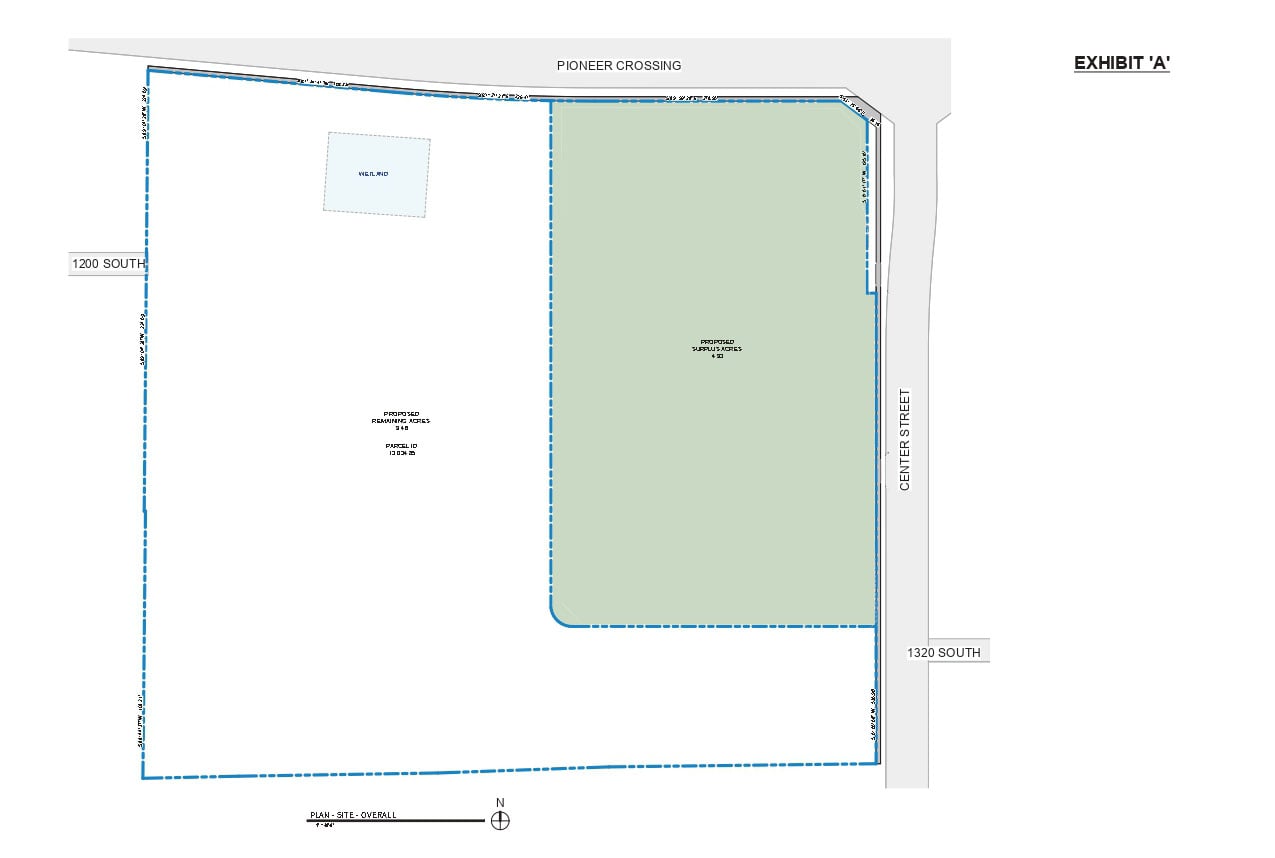
The Aspen Peaks School Board declared a parcel of land in Lehi surplus property for disposition at its October 22 board meeting.
The property, located at 7829-7753 S Center Street in Lehi, is currently owned by Alpine School District, but the title will pass to APSD by or before July 1, 2027.
The parcel consists of approximately 4.9 acres and was deemed “no longer needed for district operations of Alpine School District (“ASD”) and will not be needed for the operation of Aspen Peaks School District (“APSD”).”
The land is part of a larger parcel owned by the district with Parcel ID: 13:034:85. Much of the parcel, including the remaining 9.46 acres along Center Street and Pioneer Crossing, will remain under district ownership.
The resolution stated that “the APSD Board hereby consents to and authorizes ASD to sell the Subject Property in accordance with Utah Code §53G-4-902 and any other applicable state laws, with all proceeds of the sale to be held by ASD for the sole benefit of APSD and disbursed as requested by APSD from time to time.”
The board voted unanimously to designate the property as surplus, with Board Member Jeanne-Marie Burrows recusing herself from the vote because she lives in the area where the parcel is located.
Aspen Peaks School District Chief of Staff Rich Stowell said that while there is no specific timeline for selling the parcel, both districts have concurrently declared it surplus. “The two districts will work together, along with the assistance of an agent, to list the property and consider offers.”
Stowell said the two boards will follow the steps outlined by Utah code for how the proceeds can be used, namely for bond debt reduction or school district capital facilities.
“By responsibly converting underutilized property that is not needed for district operations into dedicated educational capital, we can reinvest directly into the learning environments, instructional tools, and innovative programs that will empower educators to deliver on our promise: Every Student, Every Day,” said Stowell.


Rob Shelton | American Fork Citizen
A Lehi man admitted in federal court Nov. 2 that his company never made the “bridge loans” it promised investors and that the returns it paid hundreds of people came from other investors’ money. Matthew Morrison Bates, 42, pleaded guilty in Salt Lake City to conspiracy to commit wire fraud and money laundering. Prosecutors say the fraudulent scheme collected more than $60 million from hundreds of investors, and the U.S. Attorney’s Office puts investor loss at more than $60 million.
Bates’ firm, Hedgehog Investments LLC, operated from about May 2020 through June 2025, according to the U.S. Attorney’s Office for the District of Utah, which filed felony charges against Bates on Sept. 30. Bates pleaded guilty at his first court appearance.
Here is how prosecutors say the scheme worked. Bates and others sold short-term promissory notes tied to his company, Hedgehog Investments LLC. They told investors the money would be used exclusively to make bridge loans to companies seeking financial help to reduce debt and boost their creditworthiness. Investors heard significant returns would follow as those businesses paid the loans back.
Hedgehog made no such bridge loans to any companies. Bates admitted at the hearing that investor returns were paid with new investor money, which the U.S. Attorney’s Office says gave the company a “false appearance of profitability.”
Prosecutors say Bates and his company found investors through in-person meetings, phone calls, electronic communications, websites and social media.
Hedgehog told the public a different story about his business dealings. An archived screenshot from Hedgehog Investments’ website, captured March 29, 2023, said the company had “honored every contract with every client to the letter.” The page said investor money moved through an insured trust account and that Hedgehog worked only with businesses it was highly confident would succeed. Notes started at 12% interest a year, and the rate rose with larger investment amounts.
A December 2022 press release from Hedgehog Investments said the company secured more than $25 million in funding that year and returned an average of 19% annually to clients. It identified Bates as a co-founder.

In an emergency order mailed May 23, 2025, the Utah Division of Securities named 16 respondents, including Hedgehog and Bates, and told them to stop selling the notes. The 41-page order said Hedgehog had sold more than 300 promissory notes since 2020 without ever holding a securities license, promising 12% to 20% on one-year notes and as much as 49% on two-year notes.
The Utah Division of Securities order says Hedgehog raised more than $54 million through its notes. A related company also held other fraudulent notes, and the order says respondents took at least $84 million from more than 300 investors. Those are the division’s findings. Its investigation continued, and the order let respondents request a hearing.
Bates admitted to securities division investigators that Hedgehog’s talk of a vetting process was false, according to the order. The division found that Hedgehog did not vet the companies it described to investors. It did not even know their names. Instead, the order says it sent investor money to an outside operator and trusted him to use it as claimed.
The Utah Division of Securities asked for proof that the scheme was not illegal. In November 2024, it met with Bates and Hedgehog’s lawyer and requested a single example of a business that had succeeded with Hedgehog’s help. Bates’ counsel agreed to provide one informally, the order says. None arrived.
How the notes were sold is in the order too. Investors were encouraged to take out home equity lines of credit to invest more, and Hedgehog offered to pay the interest on those loans for the length of the note. Veterans and first responders automatically qualified for the 20% rate.
The Utah Division of Securities investigated the federal case jointly with the FBI’s Salt Lake City Field Office. Assistant U.S. Attorneys Mark E. Woolf, Tanner Zumwalt and Brian Williams are prosecuting it.
Civil lawsuits are now beginning. Investor Robert Klingler filed a proposed class action Jan. 15, 2026, in U.S. District Court for the District of Utah, according to a Feb. 25 news release from his lawyers at Silver Law Group. The suit names Bates and several other people and companies as defendants. No class has been certified, and the court has not ruled on the claims.
The U.S. Attorney’s Office says, “Bates is scheduled to be sentenced on January 12, 2027, at 11 a.m. in courtroom 3.4 before a U.S. District Court Judge at the Orrin G. Hatch United States Courthouse in downtown Salt Lake City.”

Staff Writer | American Fork Citizen
The Church of Jesus Christ of Latter-day Saints has announced that a groundbreaking ceremony for the Lehi Utah Temple will take place Saturday, Dec. 5, marking a significant milestone for the city’s first temple.
Elder John A. McCune, a member of the church’s Utah Area Presidency, will preside over the ceremony, according to an Oct. 26 announcement from the church’s First Presidency.
The temple will be constructed on a 22.48-acre site northwest of the intersection of 3950 North and Center Street in Lehi. Plans include a multistory temple and an accompanying meetinghouse on the property.
The project was first announced April 7, 2024, by then-church President Russell M. Nelson during the church’s semiannual general conference. The temple’s location was announced later that month, and an architectural rendering depicting the planned structure was released in February 2025.
Although the official groundbreaking is scheduled for December, preliminary work at the site has been underway since at least August 2025. The initial preparations, approved by Lehi City, included installing underground water, sewer and electrical infrastructure and grading the property ahead of construction.
At the time, Elder Brian K. Taylor, president of the church’s Utah Area, thanked the city for its cooperation.
“We are excited for this first step in the process of building a house of the Lord in Lehi,” Taylor said in an August 2025 statement.
The Lehi temple will provide another worship location for Latter-day Saints in northern Utah County, where existing temples include the Mount Timpanogos Utah Temple in American Fork and the Saratoga Springs Utah Temple.
According to the church, Utah has 32 temples that are operating, undergoing renovation, under construction or announced. Approximately 2.2 million church members belong to more than 5,000 congregations throughout the state.
Unlike traditional Latter-day Saint meetinghouses, which are open to the public for Sunday worship and other activities, temples are reserved for sacred religious ceremonies performed by eligible church members. These include marriages, known as sealings, and baptisms performed on behalf of deceased ancestors.
The church typically holds public open houses for newly constructed temples before their dedication, allowing community members to tour the buildings.
A projected completion date for the Lehi Utah Temple was not included in the Oct. 26 announcement.
Nichole Coombs | American Fork Citizen
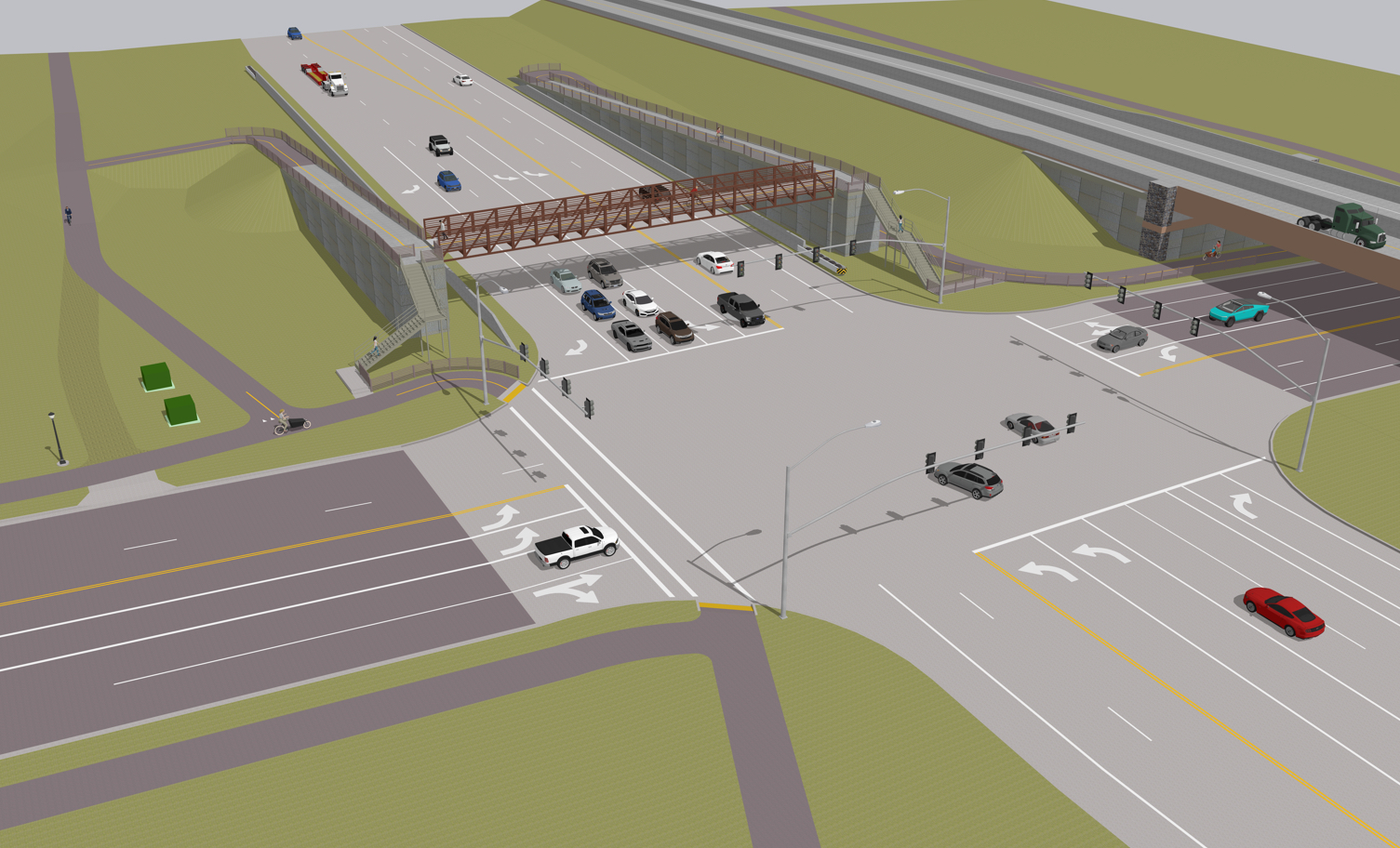
In a move that will improve safety for students, residents, and bikers crossing SR92, UDOT has partnered with Lehi City to fund a north-to-south pedestrian bridge.
“This is great for our city,” said council member Heather Newall. “It will connect our residents, support the businesses, and most of all keep everyone safe.”
UDOT and Lehi City have discussed the project for many years, and it was a top-three priority for funding but wasn’t expected to be funded this year. Then, on November 6, 2026, during a UDOT Commission meeting held in St. George, the bridge project was approved.
“Each region of UDOT brings forth its projects and what they need funded, and then the commission has the right to approve them or deny them,” said Mayor Paul Binns. “Some of these projects have been on the list for years, some for just a few months.”
Mayor Binns, city administrator Jason Walker, and council member Michelle Stallings attended the meeting. Before making any decisions, the commission opens the floor to public comment.
“I gave a comment on how much we appreciate the partnership with UDOT and with MAG,” said Binns. “And the importance of this bridge that had been needed and the importance of the funding to expedite the project.”
The commission then voted to fund the additional money needed to build it.
The bridge will cost between $8 and $9 million to build. The city secured half of that money through various grants. UDOT is partnering with the city and funding the other half.
“This process started many years ago,” said former Lehi Mayor Mark Johnson. “It was amplified once the middle school was built [in 2021]. That’s when talks about a pedestrian bridge started.”
In May 2024, during a city council meeting, Mayor Johnson and then-city engineer Lorin Powell discussed next steps and securing grant funding for the project.
During the council meeting on June 11, 2024, resident Johnathan Madsen addressed the council about issues he has observed with students trying to cross SR92.
“With the right-hand turn lane coming in and the crosswalk, I want to get it on the record: [I have concerns]. It’s going to be a challenge to get that thing [pedestrian walkway] in there because of all the entities who are involved,” said Madsen.
The Viewpoint Middle School Community Council has been aware of SR92’s challenges since the school opened.
“One of our state-mandated jobs as a council is to ensure each child has a safe way to get to and from the school,” said Viewpoint Middle School community council chairperson, Jenny Timmerman. “I’m just filled with joy, relief, and gratitude for everyone who worked on this in the past ten years. It is amazing what we can accomplish as a community when we come together for a single purpose.”
The process of getting the bridge started in 2018. City engineer Mike West began developing design concepts. In June 2024, UDOT and Lehi City met to discuss those concepts and review the feasibility study. In August 2025, Lehi City started writing grants to help fund the project. In March 2026, Utah County Commissioner Skyler Beltran submitted federal funding requests. In August 2026, Lehi secured 4.5 million dollars through grants and MAG.
On September 2, 2026, a child was hit while crossing SR-92 in the crosswalk. Public outcry amplified, and several news outlets covered the issue.
With Lehi’s $4.5 million contribution and a $4.5 million partnership with UDOT, the bridge project is set to begin.
“It’s not just Lehi City that got this project across the finish line,” said Binns. “It’s multiple agencies sitting around the table making the plans to make it work.”
Most of Lehi’s money comes from the MAG (Mountainland Association of Governments). The association is focused on Utah, Summit and Wasatch counties. MAG consists of the mayors and county commissioners in those counties, who make up a board. That board oversees regional transportation needs and trails. They focus on the connectivity between regions.
“UDOT takes care of most of the high-end [high dollar] stuff,” said Binns. “The middle stuff, the interregional roads and connectivity, is usually provided by MAG. They approve their projects two to three years out. Their funds come from the state.”
MAG approved the pedestrian bridge this year, assuming it would be built in 2029 or 2030.
“We had to go out and find the other $4.5 million, and that’s where our friends at UDOT partnered with us to provide it,” said Binns.
But the city wants the bridge built sooner than 2029.
“So, we will work with the county and will swap another one of our MAG projects for this one. Once it’s approved [presumably at the city council meeting on Tuesday], it can go to design on Wednesday. The reason it can is because Lehi will pay the first $300,000 to $400,000. We have to pay that anyway; that’s our portion. So, what we can do is use our funds upfront to start the planning.”
The pedestrian walkway is expected to take eight to ten months to engineer.
“Because we’ve done it this way, we’ve sped up the project 12 to 18 months,” said Binns.
Residents won’t see construction until the engineering and design phases are complete, likely by the end of 2027. However, if that process moves more quickly, construction could start that winter.
“This is so important for the Skyridge cluster,” said Alpine School District vice president Stacy Bateman. “Lehi is extraordinary. It really does take people in leadership positions to champion something like this and see it through to the end. Thank you to everyone who’s been a part of it.”
Staff Writer | American Fork Citizen
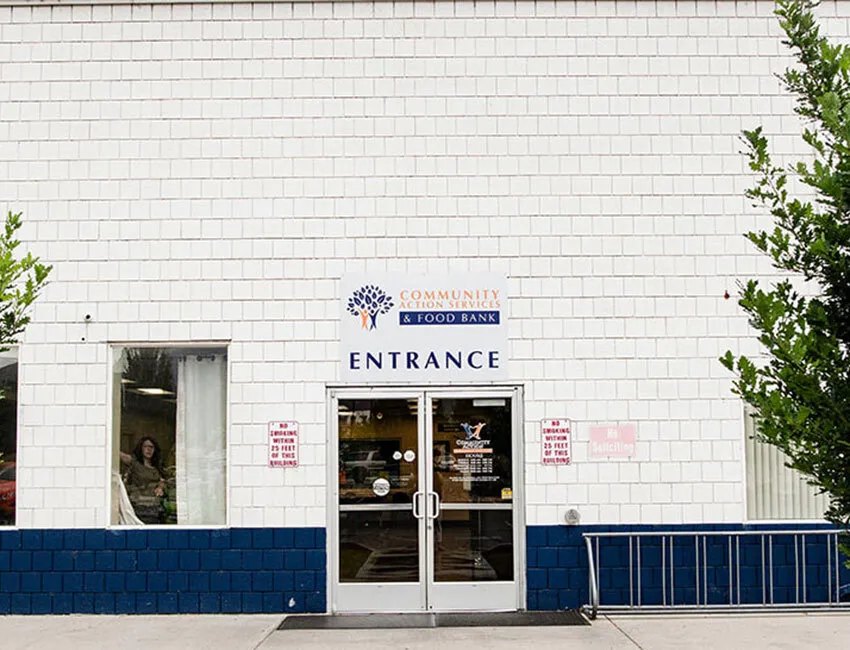
After decades of helping individuals and families overcome hunger, housing instability and poverty, Community Action Services and Food Bank (CASFB) has temporarily closed its doors effective Nov. 1 while the Board of Trustees determines the best course of action in our current circumstances.
The temporary closure follows an increasingly difficult financial environment marked by declining grant funding and donations, and growing demand for services.
For generations, the work of CASFB has been powered by people who believed their neighbors deserved a hand up during difficult times. Employees and volunteers have served families in crisis, donors and funders have invested in solutions, and community partners have worked alongside the organization to strengthen communities throughout Utah, Wasatch, and Summit counties.
“Our greatest sadness is knowing that the need for these services has not gone away,” said Caitlin Rangel, Interim CEO. “We are profoundly grateful to every person who has given their time, resources, expertise, and heart to this organization. Whatever has been accomplished through Community Action Services and Food Bank belongs to this community.”
Utah County Commissioner Skyler Beltran issued a statement about the closure on Facebook.
“It is a travesty to see such a crucial organization in our community close its doors. For decades, Community Action has provided essential services to some of our most vulnerable residents and its closure leaves a significant void in Utah County,” the statement begins. “We have been actively involved in coordinating efforts to ensure these critical services continue with as little disruption as possible. This includes taking over operations of the Utah County Warming Center, which will open tomorrow, November 1, as scheduled.”
The statement continues, “Years of financial and operational mismanagement, coupled with a recent escalation of financial instability, should not be mistaken for a failure of the government partners who have consistently supported these programs and services.
“What cannot be lost in this transition are the more than 20,000 residents who rely on these critical services and the more than 50 dedicated employees who have spent years serving others. These are real people, real families and real livelihoods impacted by this unfortunate situation,” Beltran states.
“I also want to recognize several furloughed Community Action employees who are generously volunteering their time to help us transition operations of the Warming Center. Their continued dedication to serving others, even in the face of their own uncertainty, speaks volumes about their character.
“There is a lot of work ahead but Utah County always comes through,” the statement concludes.
The organization recognizes that the temporary closure will create uncertainty for clients, employees, volunteers, donors, and community partners.

Annie Knox | Utah News Dispatch
Utah Valley University is bringing on a past leader of the state’s highway patrol to fill a new safety post after the assassination of Charlie Kirk on the campus last year.
The announcement comes a month after an outside review identified gaps in the university’s planning and protocols. The report recommended Utah Valley create a top administrative role to oversee safety operations and emergency management, and the university said in response it was already doing so.
Michael Rapich is taking the job at the university in Orem after 33 years with the Utah Highway Patrol, where he served at the helm for nine years before retiring in November 2025.
University President Jon Anderson said in a prepared statement that Rapich “brings decades of public safety leadership, sound judgment, and trusted relationships across Utah. His experience and collaborative approach will strengthen how UVU prepares, responds, and works together to serve our campus community.”
The university has faced criticism for failing to secure each rooftop and assigning just six police officers to staff the event attended by some 3,000 people. Kirk’s family blames lapses in event security for his death and has taken a first step toward suing the school by sending a notice of claim.
Rapich’s longtime relationships with law enforcers throughout the state will help enhance emergency response and coordination with other agencies, the university said.
Rapich said in a statement that he’s honored and looks forward to working with students, employees, and others in public safety at the university and surrounding communities “to identify every opportunity to ensure that UVU Campus is a trusted place for learning, growth, and engagement.”
Rapich became a state trooper in 1992 after serving in the U.S. Coast Guard and working as a 911 dispatcher, the university said.
Kirk, a founder of the student organization Turning Point USA and a close ally of President Donald Trump, was shot and killed just minutes into an outdoor speaking event in a courtyard on Sept. 10, 2025.
Tyler Robinson, 23, is accused of using his grandfather’s hunting rifle to fatally shoot Kirk from a rooftop on the campus. He has pleaded not guilty to aggravated murder.
A judge last month ordered Robinson to stand trial. If he’s convicted, prosecutors have said they’ll seek the death penalty. They expect a trial to take place in 2028, while Robinson’s defense team says they will need until 2029 to adequately prepare for a trial.
This story was originally published by utahnewsdispatch.com and written by Annie Knox. Adjustments for style and clarity have been made.
Local News
Utah County Planning Commission meeting disruption ends in protester’s arrest outside commission chambers

Jennifer Thomas | American Fork Citizen
The Utah County Planning Commission voted unanimously to recommend a controversial new data center zoning ordinance during a tense, packed meeting on October 20, 2026, which ended in a physical confrontation and the arrest of a protester.
The Utah County Government land use proposal added data centers as a permitted use within Mining and Grazing (M&G-1) and Industrial (I-1) zones, while establishing a new Data Center Overlay Zone.
The recommended framework includes development standards such as:
• Capping individual data center size at 1 million square feet and 500 megawatts
• Limiting annual water usage to 300,000 gallons
• Mandating strict noise and traffic studies
The Planning Commission’s vote serves as a recommendation only. The full Utah County Commission holds final authority and will review and vote on the ordinance at a later date.
Over 100 local residents filled the chambers in Provo to voice deep opposition to the proposal. Speakers and local advocacy groups—including UT for the People — No Tech Billionaires and Protect Utah—expressed concern that large-scale data centers will strain local water and electricity grids, disrupt rural grazing and industrial spaces, and impact the environment.
Critics also condemned the commission for advancing the recommendation amid vocal public pushback.
After the vote, tensions escalated as attendees voiced loud objections in the room. When deputies moved to clear disruptive individuals, a physical altercation broke out in the lobby and seating area.

Activist, Aspen Azalea was taken to the ground by a Utah County Sheriff’s deputy, evaluated by EMS, and booked into the Utah County Jail.
According to the Affidavit of Probable Cause, Azalea was charged with “disrupting a meeting/procession, interfering with a peace officer, and assault on a peace officer.”
According to the Affidavit, during the meeting, there was a “disruption by some of the attendees, the commission chair asked for those individuals to be removed, one did so voluntarily, one did not, she was later identified as Aspen Azalea. Despite being asked and ordered several times by law enforcement officers to remove herself from the meeting she did not.”
The deputy stated in the Affidavit, “I grabbed ahold of her (Azalea) arm and stood her up to remove her from the area, as I was pulling her out of the row of chairs, it felt like she attempted to go limp and dump her body weight on me, when I pulled her out of the row of chairs and into the isle I felt a sharp pain in my groin, it felt like I had been kneed or kicked in the testicles by Aspen, simultaneously two other individuals latched onto Aspen and had to be physically removed from the commission chambers.”
“The individuals were told to stop resisting and separate from each other, they did not and had to be physically separated from one another.”
Utah County Sheriff Mike Smith defended the use of force and arrests made during the Planning Commission meeting in a public statement on the Utah County Sheriff’s Office website at https://sheriff.utahcounty.gov/news/260978:
Video footage shared by advocacy groups dispute the official account, claiming Azalea was not actively being vocal when she was removed from the meeting and was subjected to excessive force that caused her chin/jaw to hit the ground. Audio from the Utah County Planning Commission meeting captures shouting and public disruption.
The Utah County Sheriff’s Office confirmed that the use-of-force incident is under internal supervisory review.
Rallies demanding accountability and a full moratorium on private data center developments have since formed at the Utah State Capitol.

Nichole Coombs | American Fork Citizen
The Fox Hollow Golf Course in American Fork is ready to grow, but how and where that growth occurs will depend on a feasibility study and possibly a new bond.
Mayor Paul Binns chose Lehi City Council member James Harrison to represent Lehi on the golf course steering committee.
“The golf course is paying for its own feasibility study,” said Harrison. “Once that study is completed, we will come together as staff and elected officials on that committee and evaluate what we want to do.”
Fox Hollow, located at 1400 North 200 East in American Fork, is funded and operated through a partnership between Lehi, American Fork, and Pleasant Grove. The golf course was formerly called Tri-City Golf Course. All three cities are helping pay off the current bond, which expires at the end of 2027. Fox Hollow wants a new bond to replace it and help fund course upgrades.
“They are looking to add covered bays that can bring in revenue throughout the winter,” said Harrison. “They would like to offer golfers one more option. It’s really hard to get on the schedule [a tee time] because the course is so popular. By adding bays that can be used year-round, they add another option for golfers who may not be able to get on the course and a way to generate revenue.”

American Fork has offered to provide acreage on the west side of the golf course for the expansion at no cost to Fox Hollow. Currently, all three cities contribute $225,000 per year to help pay the bond and operating expenses, and about $10,000 is contributed to an emergency fund.
“Depending on the course’s performance each year, the city gets refunded a certain amount,” said Harrison. “And the last few years [the profit sharing] has been going really well.”
In addition to the covered bays (similar to Top Golf), the golf course wants to add a food court to serve customers and generate additional revenue, especially during the winter months when the main course is closed.
Harrison says the bond would be about $7,000,000 if it passes, but there are many steps before that happens. The three participating cities would pay the bond collectively.
“We need the results of the feasibility study, then the proposal is brought to the Lehi City Council, and we will vote on whether to support a bond. We will need to look at it from the perspective of Lehi residents and ask whether it really benefits a broad enough population in our city. The best-case scenario is it would bring in tons of revenue, and we would have a net gain in revenue,” said Harrison.
But Harrison is also skeptical about what the study’s results will show.
“The results can vary widely,” said Harrison. “The market isn’t very mature in this space. Having a public golf course and adding covered bays could be a benefit, but it’s also a risk.”
The feasibility study is expected by year-end. Then, all three cities- Pleasant Grove, American Fork, and Lehi- will meet to discuss the expansion and must agree on a bond before it moves forward.
Staff Writer | American Fork Citizen
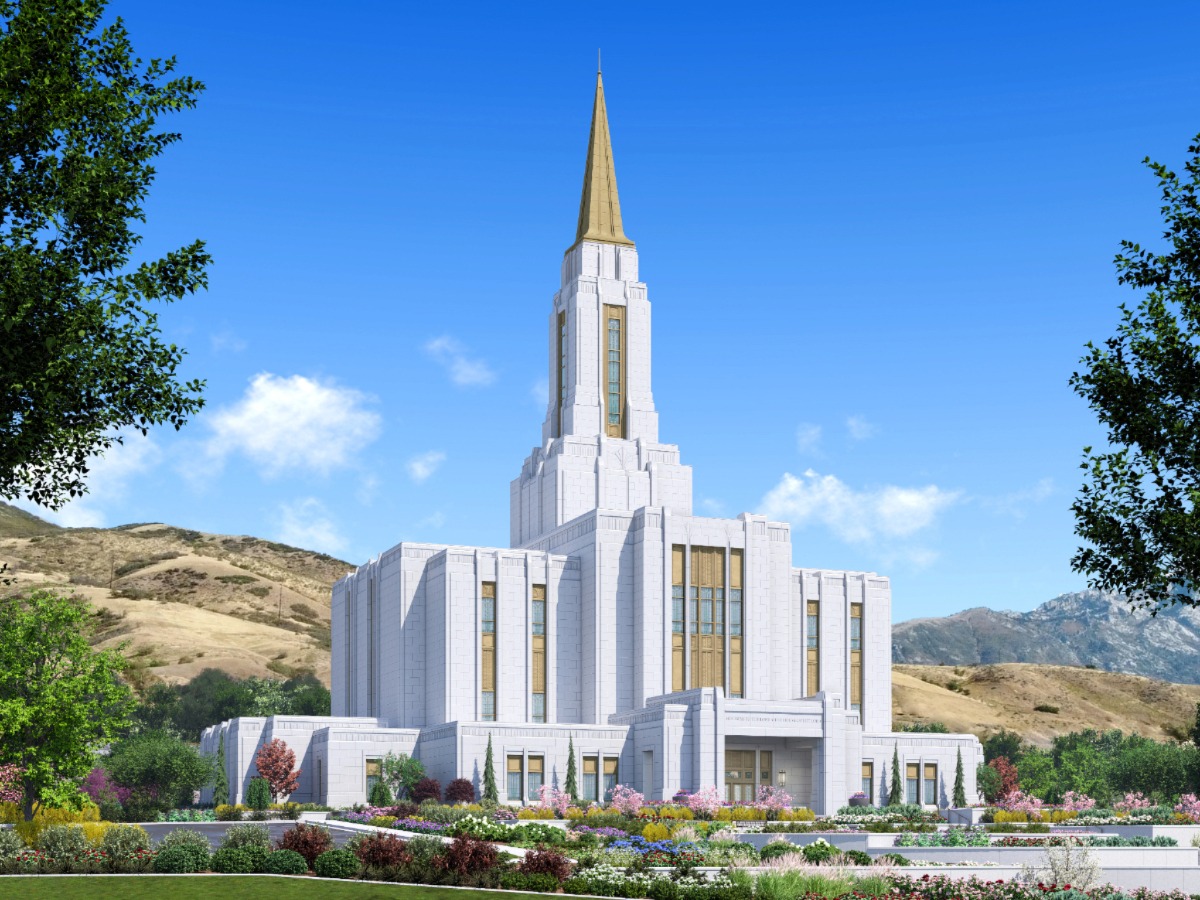
Groundbreaking for the Lehi Utah Temple is scheduled for Saturday, Dec. 5, The Church of Jesus Christ of Latter-day Saints announced Oct. 26.
Elder John A. McCune, a member of the church’s Utah Area Presidency, will preside at the ceremony.
The temple was announced in April 2024. The groundbreaking announcement did not include a ceremony time, attendance information or an estimated construction completion date.

The Lehi temple is among 32 temples in Utah that are operating, undergoing renovation, under construction or announced, according to the church. The church reports approximately 2.2 million members in more than 5,000 congregations statewide.
Temples serve a different purpose from the church’s meetinghouses, where Sunday worship services and other activities are open to the public. In temples, eligible church members participate in religious ceremonies, including marriages and baptisms performed on behalf of deceased ancestors.
Latter-day Saints believe temple ceremonies unite families beyond death.
Staff Writer | American Fork Citizen
Intermountain Health opened a specialty clinic and cancer center Monday in Saratoga Springs, adding services for residents of the city, Eagle Mountain, West Lehi and nearby communities.
The 48,000-square-foot facility is part of Intermountain’s existing campus, which also includes emergency services and a surgery center. The clinic offers cardiology, gastroenterology, orthopedics and sports medicine, women’s health and pediatrics.
The cancer center provides medical and radiation oncology, infusion therapy, survivorship support and advanced radiation treatment.
“We’re proud to bring this level of coordinated care closer to the families we serve,” said Jason Wilson, president of Intermountain Health American Fork Hospital. “This is one of Utah’s fastest-growing areas, and we will help ensure people here have the medical care they need.”

The campus expansion is intended to reduce patient travel and help providers coordinate care, Intermountain said.
“When someone is going through cancer treatment, being close to home matters,” said Dr. Tawnya Bowles, senior medical director for oncology at Intermountain Health. “This center will help patients stay connected to family, work and daily life while receiving compassionate, high-quality care.”
“Bringing these services together makes it easier for providers to collaborate and for patients to get the care they need in one place,” said Lyndsey Russell, market vice president of Medical Group operations for Intermountain.

Portion of APSD property in Lehi declared surplus, to be sold

ASD Board backs Peterson amid residency concerns and calls for resignation

American Fork XC boys punch ticket to Nationals

‘BIGGEST LOSER’ CONTESTANT FROM AF DIES TRAGICALLY

Aspen Peaks School Board “Meet the Candidates” night recap

Tragedy Strikes American Fork: Local Couple Found Dead in Apparent Murder-Suicide
-

 AF City News1 month ago
American Fork City and 13 AFPD officers sued by four plaintiffs in ‘Reckless Ben’ saga
-

 Politics1 month ago
Utah County Commission Seat B:
-

 Politics1 month ago
Utah County Auditor and Clerk:
-

 Politics1 month ago
Utah County Commission Seat A: Voters to choose Bowen, Kaufusi or Oaks
-

 Art/Culture1 month ago
10 Ways to Celebrate Halloween in Utah County
-

 Local News1 month ago
Intermountain opens specialty clinic, cancer center in Saratoga Springs
-

 Schools2 weeks ago
AFHS Marching Band sweeps state competition despite electronic failure
-

 Citizen Connect1 month ago
Community unites to support families at Primary Children’s in Lehi
-

 AF City News1 month ago
American Fork Fire Department heats up with annual open house
-

 Politics1 month ago
House District 55 candidates, profiled