Politics
Learn about Utah House District 52 candidates

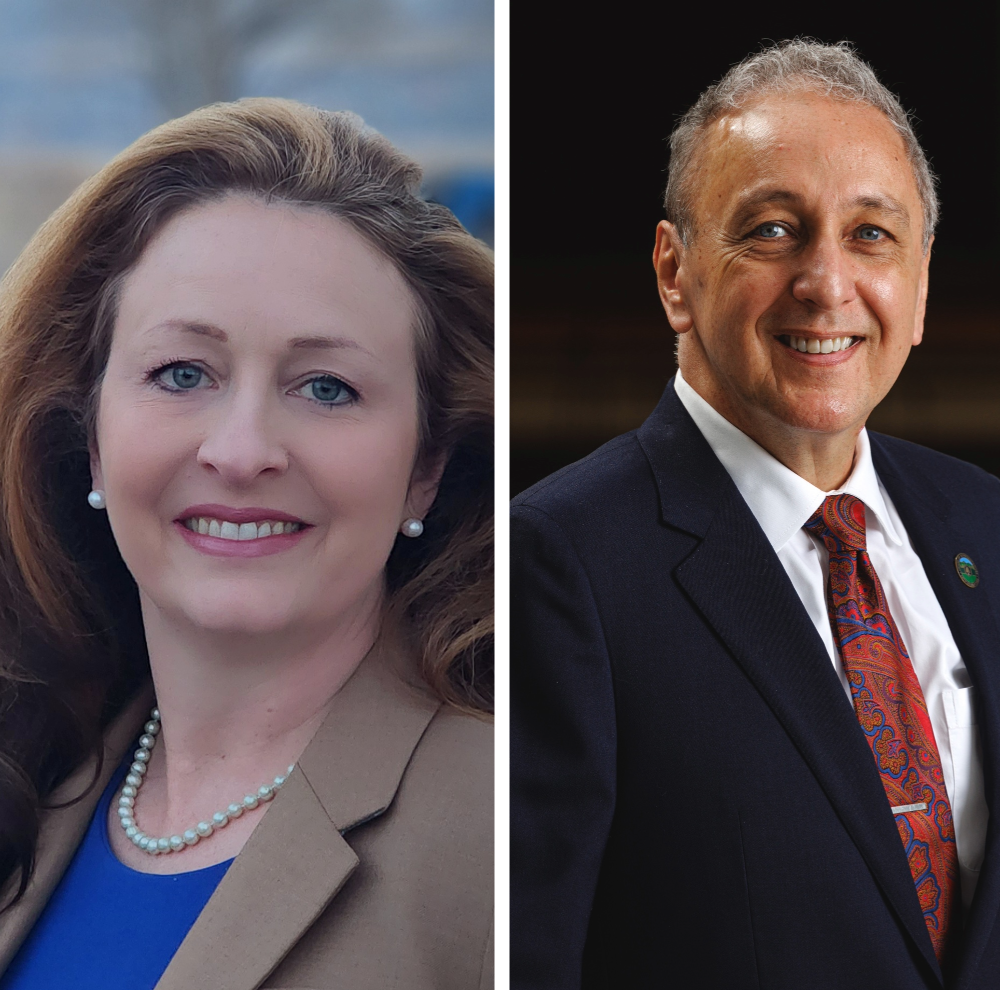
Voters in House District 52 will choose between incumbent Rep. Cory Maloy and challenger Nicole Melling on Nov. 3. The American Fork Citizen and Lehi Free Press sent the same questionnaire, with the same character limits, to every candidate on the ballot and reached out by email, text message and voicemail where available. Their answers appear below, in the order the candidates appear on the ballot, and are submitted in their own words.
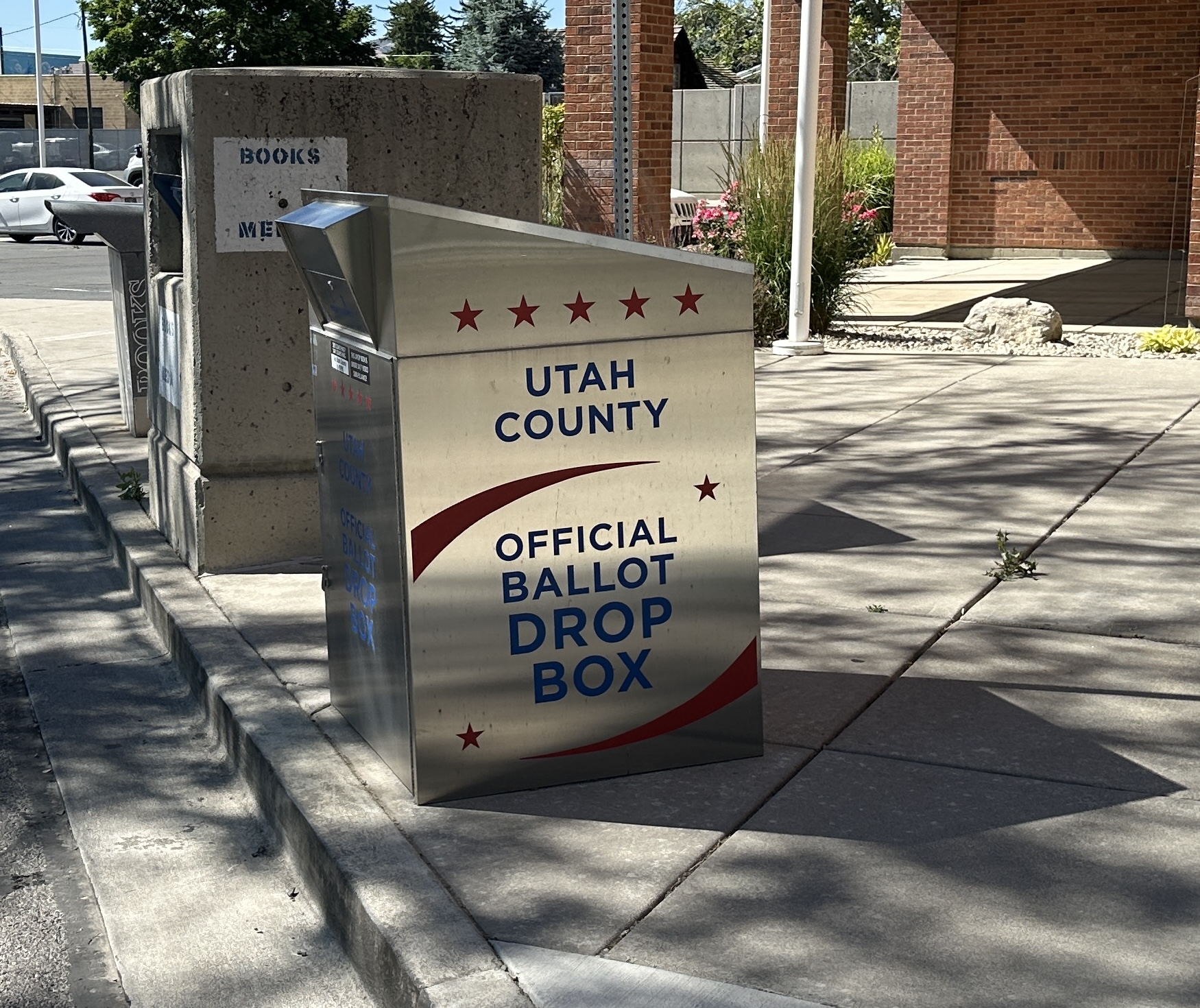
Utah County mailed a ballot to every active registered voter on Oct. 13, and completed ballots must reach the county elections office by 8 p.m. Nov. 3. A postmark no longer counts, so voters mailing ballots should send them early or use one of 28 drop boxes open around the clock across the county. Voters who’d rather vote in person can cast an early ballot from 8 a.m. to 5 p.m. Oct. 26-30 and Nov. 2 at the Health and Justice Building, 151 S. University Ave. in Provo, or visit any county vote center from 7 a.m. to 8 p.m. on Election Day.
The deadline to register or update a registration is 5 p.m. Oct. 23, though residents can still register and vote provisionally at a vote center on Election Day. More information is available at vote.utahcounty.gov or 801-851-8683.
Nicole Melling
Why did you decide to run for your filed office and what are your top priorities?
I decided to run because I got tired of waiting for someone with the courage to stand up to national party pressure. I’ve watched Utah’s legislature shift from serving Utahns to serving national party interests. My priority is listening to what Utahns care about. After asking hundreds of voters, I’ve heard affordability, restoring integrity through accountability and real transparency, and prioritizing public education by giving our dedicated teachers the resources they need. I have NOT heard that people want more data centers using up our vital resources, more drilling in our national parks, or a legislature that gets to make up its own maps, pick its own judges, and keep proposing amendments to take more power from the citizens.
What experience do you have that you feel gives you a competitive advantage over other candidates or would be helpful if elected?
Our legislature is full of businessmen who are great at passing laws that help businessmen. As a nurse and a mom, I’ll stand up for folks struggling to afford housing and put food on the table. I see what it costs our communities when healthcare is out of reach, and I will work toward solutions. I’ll work to protect families by balancing the tax burden so millionaires and businesses pay their fair share to support the communities that support them. Most importantly, I’ve heard from dozens of neighbors who have been ignored by our representative. I’m here to listen, and I’ll hold regular open office hours to hear what matters to you.
Introduce yourself to the voter, giving a little background about who you are.
My family has served in the military since the American Revolution. As an “army brat,” I’ve lived all over the US, so I know Utah is an incredibly special place to raise a family, and it’s worth fighting for. I believe our constitutional democracy is sacred, and that real representation and balance of power are essential to ensure a prosperous future for Utahns and our children, not just the privileged and the politicians. As a nurse, a mom, and a public servant, I’ll work for you and our future.
Cory Maloy
Why did you decide to run for your filed office and what are your top priorities?
I love this community and want my friends and neighbors to keep building their lives here as we grow. Everything I do stands on the founding truths of the Utah and U.S. Constitutions. I push for roads that keep pace with new neighborhoods, and housing decided locally. I work to remove government barriers so businesses can innovate, grow and offer good-paying jobs. I work diligently to help healthcare workers learn, practice and thrive in Utah, so strong healthcare is available when needed for our families throughout the state.
What experience do you have that you feel gives you a competitive advantage over other candidates or would be helpful if elected?
Legislative experience and results set me apart. No bill I have sponsored has ever failed a floor vote in the House. I fight to keep government from burdening families, workers and businesses. That job never ends. I have defended the Second Amendment with multiple bills, stood up for the unborn, championed parental choice in their children’s education, supported teachers and protected biological truth. I watch every tax, property taxes included, and push for relief. I invite citizens into the process so they can take part.
Introduce yourself to the voter, giving a little background about who you are.
I am a conservative Republican, BYU graduate and member of The Church of Jesus Christ of Latter-day Saints. I founded Maloy PR and have spent over 25 years in communications. Linda and I came here nearly 20 years ago, never knowing some of her pioneer ancestors already rest in the Lehi Cemetery. Our family now spans four generations. We host a flag-raising and prayer ceremony at our home every Fourth of July. Learn more at corymaloy.com. I would be grateful for your vote.


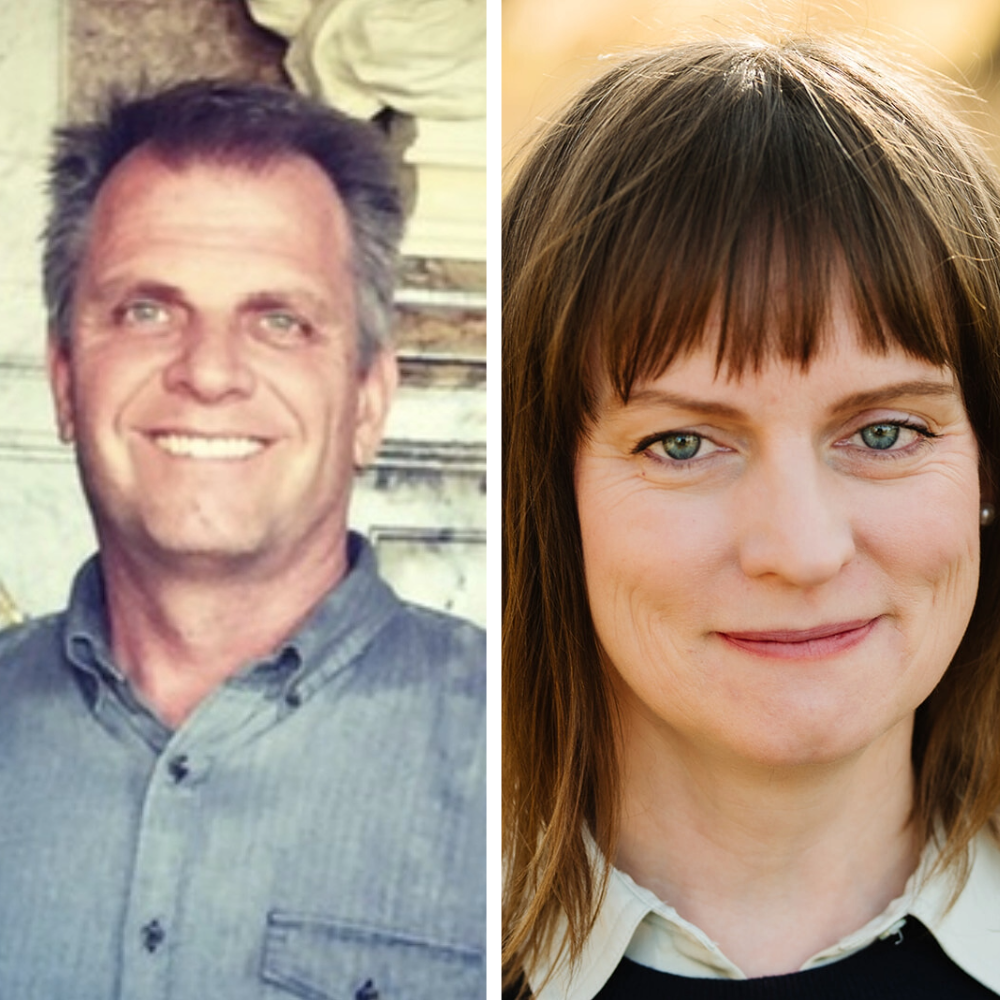
Voters in Senate District 21 will choose between incumbent Brady Brammer and challengers Kandee Myers and Wayne Woodfield on Nov. 3. The American Fork Citizen and Lehi Free Press sent the same questionnaire, with the same character limits, to every candidate on the ballot and reached out by email, text message and voicemail where available. Their answers appear below in the order the candidates appear on the ballot, and their answers are published as submitted in their own words.
Utah County mailed a ballot to every active registered voter on Oct. 13, and completed ballots must reach the county elections office by 8 p.m. Nov. 3. A postmark no longer counts, so voters mailing ballots should send them early or use one of 28 drop boxes which are available around the clock across the county. Voters who choose to vote in person may cast an early ballot from 8 a.m. to 5 p.m. Oct. 26-30 and Nov. 2 at the Health and Justice Building, 151 S. University Ave. in Provo, or visit any county vote center from 7 a.m. to 8 p.m. on Election Day.
The deadline to register or update a registration is 5 p.m. Oct. 23, though residents can still register and vote provisionally at a vote center on Election Day. More information is available at vote.utahcounty.gov or 801-851-8683.
Wayne Woodfield (Utah Forward Party)
Why did you decide to run for Senate District 21 and what are your top priorities?
I am running for Senate to bring civility, integrity, transparency, and fair governance to my Senate seat. Our two major political parties have become so polarized that our government no longer functions. Many Utahns no longer identify with either one.
I’m running with the Forward Party to give Utahns another choice. As a former Republican precinct chair, I am fluent in conservative principles, but I do not always agree with the way our elected leaders pursue those principles. I will return Utah to a more familiar style of government – one where we work pragmatically with all sides and get things done.
I will prioritize things that are important to Utahns, like affordable housing, personal and religious liberty, strong public education, a healthy Great Salt Lake, and responsible growth. I love government operations and will work for reforms such as term limits and campaign finance limits. I will strengthen institutions that foster independence and reduce incentives for corruption.
What experience do you have that you feel gives you a competitive advantage over other candidates or would be helpful if elected?
On multiple occasions, my opponent has fallen short of his duty to his constituents to represent them in good faith with transparency and integrity and has instead chosen a path of partisan power and political gamesmanship. My commitment to you is that I will always put principles ahead of partisanship and never play games with your rights. True representation means that I will listen to your perspectives and legislate in a way that addresses your concerns and treats you fairly. I am a software engineer, not a lawyer or a land developer, so I bring fresh perspectives to the Senate that are free from legislative conflicts of interest.
Introduce yourself to the voter and share a little background about who you are.
I grew up in Mapleton, and I have lived in Utah County ever since. I currently live in Lehi with my wife and three children. I am a software architect by profession, and I enjoy finding creative solutions to complex problems. I am a former Republican Party precinct chair and Vice Chair of the United Utah Party. I served on the Utah Foster Care board of directors and love Utah’s world-class foster care system. I would be honored to represent you as your next State Senator.
Kandee Myers (Democrat)
Why did you decide to run for Senate District 21 and what are your top priorities?
I decided to run because I believe Senate District 21 deserves a real choice. In 2016, when much of our community was District 14, voters elected Dan Hemmert. Since then, our Senate representation has been decided through uncontested elections or appointments by Republican delegates. I thought it was time voters had another option. My priorities include strengthening public education, affordable housing, responsible growth, protecting our natural resources, improving healthcare access, and ensuring essential services reach those who need them. Running as a Democrat in Utah County takes courage, but I believe in the goodness of our communities and the people who live here. I like people. I trust that we have more in common than our political divisions suggest. Above all, I want transparency, accountability, and a Legislature that respects the voice of its citizens. People matter more than politics. Utah. Better. Together.
What experience do you have that you feel gives you a competitive advantage over other candidates or would be helpful if elected?
I bring over 30 years of real estate experience, have owned five businesses, negotiated contracts, and helped families make important financial decisions. I hold a bachelor’s degree in Family Studies & Human Development and a master’s in Applied Positive Psychology. Life has taught me resilience, compassion, and practical problem-solving. My greatest strength may be my ability to listen, ask difficult questions, and work with people who think differently. I am curious, persistent, and willing to challenge assumptions. I believe kindness and courage belong together. I say what I mean, and people can trust that I mean what I say.
Introduce yourself to the voter and share a little background about who you are.
I’m Kandee Myers, a wife, mother, grandmother, and lifelong learner. Life hasn’t always been easy. Loss, setbacks, and new beginnings have taught me resilience, humility, and the importance of the stories we tell ourselves and others. I’m a third-generation moderate Democrat, currently teach Gospel Doctrine, and believe deeply in individual agency, personal responsibility, and caring for our neighbors. I love Utah. I’m curious by nature, optimistic by choice, and not afraid of hard work.
Brady Brammer (Republican)
Why did you decide to run for Senate District 21 and what are your top priorities?
I ran for office because I believe public service should be about solving problems and leaving Utah better for the next generation. Utah has been an incredible place to raise my family, build a business, and serve my community, and I want to preserve those opportunities. My priorities are keeping taxes low and government accountable, strengthening schools, protecting children and families, responsibly addressing growth and infrastructure, and preserving Utah’s freedoms and values. Most importantly, I focus on results, not rhetoric. That includes helping make Utah Lake the healthiest it has been in a century, reducing youth vaping from 15% to 7%, and cutting taxes by an amount that saves the average family in my district about $700 each year. My goal is simple: identify problems, find practical solutions, and deliver results.
What experience do you have that you feel gives you a competitive advantage over other candidates or would be helpful if elected?
I bring a combination of legal, business, community, and legislative experience. I have both a JD and a Master of Public Administration and am an attorney and business owner. I grew up here and have raised my family here, with all five of my children attending our local public schools (just like I did). My legislative service has also helped me build strong relationships with leaders at the city, county, and state levels. This experience helps me understand both how government works and how its decisions affect families and businesses.
Introduce yourself to the voter, giving a little background about who you are.
I grew up in Utah County and am grateful to now be raising my own family here. My wife, Nicki, and I have five children, all of whom attend or have attended our local public schools. I am an attorney and business owner with both a law degree and a Master of Public Administration from BYU. Before serving in the Legislature, I served on the Highland Planning Commission. I served in the Utah House from 2019–2024 and now represent Senate District 21 in the Utah Senate. I’m an avid golfer and skier.

Jacob Fischler | Utah News Dispatch
September 22, 2026
Federal officials charged a Utah letter carrier Tuesday with throwing 300 primary ballots in a church parking lot dumpster, an incident that a top U.S. Justice Department official said made the case for stricter regulations of voting.
The prosecution of Damon Matai Seei, of Payson, Utah, showed “voting fraud is real,” acting Deputy Attorney General Trent McCotter said at a press conference at DOJ headquarters in Washington.
The Justice Department gave the arrest an unusually high profile, spotlighting the administration’s efforts to combat voter fraud after the U.S. Supreme Court this month blocked a new U.S. Postal Service rule limiting mail voting from going into effect for this year’s elections.
The regulation was meant to “address the chronically abused mail-in ballot system,” McCotter said. He criticized the trial judge who initially blocked the rule, which would have required special tracking and design features, among other things such as creating a national database of eligible voters.
“Election integrity should not be a political or partisan issue,” McCotter said. “Who could be against properly tracking mail-in ballots? Unfortunately, but entirely predictably, that regulation was blocked by a judge in Massachusetts. … The Trump administration, however, will continue taking aggressive actions to protect our elections.”
Postal Service rule
U.S. District Judge Indiria Talwani’s order blocking the rule is only in effect for the Nov. 3 elections, a provision meant to preserve the status quo because the rule was finalized mere months before the midterms. The merits of the case are still being argued. The U.S. Supreme Court upheld Talwani’s decision.
The prosecution of Seei, and the attention the administration sought to give it, undercut a key argument the administration made in the case: The rule included only “modest” technical specifications for a category of mail and should not be interpreted as an election regulation.
The U.S. Constitution grants states the authority to administer elections, with policy oversight from Congress.
In siding with the Democratic states and voting rights groups who filed suit, Talwani and the U.S. Court of Appeals for the 1st Circuit said the rule was clearly an attempt to affect election policy and was not restricted to a modest mail regulation.
Trump and mail-in voting
President Donald Trump has railed against mail-in voting and claimed, without evidence, that it is a major source of election fraud and contributed to his 2020 loss to President Joe Biden.
Since Trump retook office in January 2025, the department has charged 70 immigrants with illegally voting, compared with only 13 in the four years of Biden’s term, McCotter said Tuesday.
“And we intend to bring many more,” he added.
Homeland Security Investigations, a Homeland Security Department agency, has made 160 recent arrests, from 1,600 open voter fraud cases, HSI acting Deputy Executive Associate Director Matthew Millhollin said.
A reporter in the room noted that 70 prosecutions amounted to a bare fraction of the 150 million votes cast in the 2024 election.
McCotter responded that the Utah case involved 300 ballots, and that law enforcement had only scratched the surface of possible incidents. “Thousands more” cases were being investigated, he said.
“The folks on the other side, the opponents of the president, insist this has never happened, that there is no voting fraud,” he said. “And so when we have dozens of cases … I think that discourages and defeats their characterization.”
No partisan motive alleged
Seei, who is no longer a postal worker, intentionally threw out about 300 mail ballots on June 3 that were being mailed to voters in advance of the June 23 primary in Utah, according to charging documents.
In an interview with law enforcement, he indicated he did not have a political motive but said he threw away the mail, which also included advertisements, “because he wanted to ‘lighten his workload’ so he could presumably go home earlier,” prosecutors said.
Melissa Holyoak, the top federal prosecutor for Utah, traveled to Washington, D.C., for Tuesday’s press conference. She noted that 95% of the state’s voters cast their ballots by mail.
Many people in Seei’s delivery area in Eagle Mountain, Utah, complained to the Utah County Clerk that they hadn’t received ballots, Holyoak said. Using county databases, the clerk found that voter participation was “remarkably low” in the area where complaints originated.
“As American citizens, we have certain freedoms and rights,” Holyoak said. “And one of those fundamental rights is the right to vote. But when defendant allegedly tossed the mail-in ballots into a parking lot dumpster, those citizens’ right to vote were also thrown away.”
The federal public defender representing Seei did not immediately return a call seeking comment.
Utah News Dispatch is part of States Newsroom, a nonprofit news network supported by grants and a coalition of donors as a 501c(3) public charity. Utah News Dispatch maintains editorial independence. Contact Editor McKenzie Romero for questions: [email protected].

Rob Shelton | American Fork Citizen
American Fork’s park strip tree ordinance, the one that threatened to put a 90-year-old man on trial over seven cherry trees, has a new author.
The City Council voted 5-0 on Sept. 8 to repeal Chapter 12.16 and replace it with a new chapter titled “Park Strips and Trees.” Council members Ryan Hunter, Ernie John, Clark Taylor, Tim Holley and Staci Carroll all voted yes.
The rewrite lands four months after the American Fork Citizen reported that Harry and Verna Gammon faced up to 90 days in jail or an $1,800 fine for planting trees based on an outdated guide they found through a Google search that led to an old PDF on the city’s domain. American Fork dropped the charges May 6, the day of the Gammons’ trial, and the city’s statement that day said the council had committed to reviewing the ordinance. The Sept. 8 vote is that review’s result, though no one named the Gammons.
Under the old code, no new trees could go into a park strip narrower than 8 feet. The rewrite loosens that: strips as narrow as 4 feet can take a small tree from the Approved Tree List, and 6-to-8-foot strips qualify for medium trees. Strips of 8 feet or more can still take a large tree.
The new code adds a grandfather clause the old one lacked: Trees “lawfully planted prior to the effective date of this ordinance may remain unless determined to be a hazard tree, nuisance tree, or otherwise required to be removed,” the ordinance states.
Derric Rykert, Community Services Director for the city, presented the rewrite for Urban Forester Brady McNaughton, who was absent, saying city attorney Heather Schriever had suggested starting over: “What if we just rewrite this thing? It’ll be more clean that way.” Planning Commission asked for one change first: measuring a tree’s location from the center of its trunk rather than its outer edge, “just in case it gets [bigger] as the tree grows.”
The new chapter requires the Approved and Prohibited Tree Lists to stay posted on the website going forward. That doesn’t address what tripped up the Gammons, though: a Google search, not a walk through the site’s menus, surfaced the old guide on the city website, which the city has since taken down. Council Member Ernie John tested the site’s navigation anyway. “I went to the city website to see. It’s not hard to find this on the city website,” John said. “You can go right to it with just three clicks and you’re there.”
Council members spent more time on enforcement than the ordinance’s text, led by Clark Taylor. He said the rewrite handles existing trees well, since old trees can stay unless they’re nuisance trees. “So I’m good to go forward with this,” Taylor said. But he called enforcement an unsolved problem well beyond trees, pointing to homes along 900 West, south of 700 South, where fenced yards back onto park strips filled with rocks that “look like trash.”
“None of them are coming over on the other side of their fence to clean that up,” he said. He described a similar stretch along North County Boulevard, past the developmental center and the temple, where a cinder block wall runs with no gates. “Who’s going to come all the way out and clean up that area? They’re not going to do it,” he said. Taylor said he’d still vote yes, since “there’s no change in what we’re doing that’s going to all of a sudden give us a light bulb for that,” but called enforcement his central concern.
“I don’t know how we make that work,” Taylor said. Staci Carroll agreed, saying the council had discussed at a work session that many homeowners likely don’t even realize the park strip behind their fence is their responsibility.
Assistant City Administrator Camden Bird said code enforcement plans education before citations. “The intent is that code enforcement would go through and could give them materials that have the findings and the facts and the information and set the expectations with them there, and it’d be a conversation,” Bird said.
Carroll, who made the motion to adopt the new chapter, said it at least gives residents and code enforcement a clearer starting point. “I think this provides a lot of clarity compared to where we were,” she said. “It’s just clear.”
Rykert agreed it won’t resolve every dispute. “It’s not going to fix everything,” he said, “but it is going to give us somewhere to start with the trees.”
Rob Shelton | American Fork Citizen
Utah County’s Republican delegates made their picks at April’s convention in Lehi. In two of four contested races in the American Fork and Lehi area, the party’s voters overruled delegate favorites in the June 23 primary.
The reversals came in contests where a candidate who’d didn’t have the majority delegate vote still reached the primary ballot. One by narrowly qualifying with 41.36% of delegate votes and the other by gathering signatures, Utah’s second route to the ballot. The signature path has been a long-running spot for the party’s convention loyalists.
One of the night’s biggest upsets was in the Utah County Clerk race. Challenger Corey Astill unseated first-term incumbent Aaron Davidson, about 56% to 44% in unofficial returns. Delegates in April’s convention chose Davidson over Astill 58.63% to 41.36%, so Astill reached the primary ballot with just 1.36% over the qualifying percentage of 40% delegate support. Astill, a former legislative director and law clerk, campaigned against what he called the office’s operational failures under Davidson. Two months after the convention, voters flipped the delegates’ verdict on its head.
Davidson’s single term as Utah County Clerk drew steady controversy over how he ran county elections, from a 2024 fight over mail-ballot postage to a county attorney inquiry into his handling of voter records to the appointment of a 23-year-old BYU student as Chief Deputy Clerk. He defended his tenure as active and “reform-minded.”
Commission Seat A is where the signature-gathering candidate won. Michelle Kaufusi, Provo’s mayor from 2018 to 2025, lost the convention vote to Brent Bowles, 64.67% to 35.32%. She gathered signatures, made the ballot, then beat Bowles in the primary by roughly 56% to 44%. Bowles, a nurse anesthetist and self-described political outsider, had the delegates. Kaufusi had the voters.
The delegates didn’t strike out completely though.
In the three-way race for Seat B, David Spencer, the convention’s top finisher and a former Orem city councilman, won the primary with about 42%. Isaac Paxman, a former Provo deputy mayor who’d petitioned onto the ballot, finished second near 35%. Carolina Herrin, the other convention qualifier, took the rest. The delegates’ favorite held.
So did their pick in state Senate District 21, the race closest to home for many voters in American Fork and Lehi. The district runs across northern Utah County, taking in Alpine, Cedar Hills, Pleasant Grove and parts of both cities. Incumbent Brady Brammer, who’d sailed through the convention 68.22% to 31.78%, turned back challenger Kelly Smith by about 56% to 44%. Smith, a Cedar Hills city councilwoman, had reached the ballot by signature gathering. The delegate favorite won anyway.
What makes the Kaufusi upset stand out is how unusual it is in Utah County. In the last three county commission elections, every winner was the convention’s nominee and no candidate who failed at the convention had even made the ballot, according to the Daily Herald. That streak snapped this year. Kaufusi is now her party’s nominee.
Turnout came in around 27%, 60,028 ballots against 224,604 voters eligible for the partisan ballot, by the county’s midweek count. That’s lower than the last midterm Republican primary in 2022, in which voter turnout was 37%. Candidates blanketed mailboxes and phones with fliers and texts this spring, and several races turned sharply negative in the final weeks. Whether that barrage kept some Republicans home is impossible to prove from the returns, which show who voted, not why others didn’t.
The figures are still unofficial. County canvassers have yet to certify the results, and late mail and provisional ballots remain to be counted.
November fields are already set. Astill will face Russ J. Rampton of the Forward Party for the clerk’s office, with no Democrat in the race. In Commission Seat A, Kaufusi draws Democrat Jeanne Marie Bowen and Jacob D. Oaks of the Independent American Party. For Seat B, Spencer meets Democrat J. Allen and the Forward Party’s David Hinckley. And in Senate District 21, Brammer faces Democrat Kandee Myers and Forward Party candidate Wayne Woodfield.
Rob Shelton| American Fork Citizen
Two Republican candidates vying for Utah State Board of Education District 11 argued last Wednesday over local control, education funding and the fallout from recent school district splits during a debate at Lehi Elementary.
Terry Hutchinson of Alpine and Tracy Nuttall of American Fork faced off in the hour-long forum, answering questions from a panel and from audience members. The seat covers communities across northern Utah County, including American Fork and Lehi.
Nuttall, an education attorney and legislative liaison for the Utah State Tax Commission, pointed to the Alpine School District split as the defining issue of the race. “The split is the biggest thing that we’re dealing with in our district right now,” she said. “I think people felt like they didn’t have a voice, and that their voice was taken away.”
Hutchinson, who spent eight years on a local school board in southern Utah before moving to Alpine, agreed that the split creates challenges, particularly for the emerging Timpanogos district, which he said faces a shrinking student base and shifting demographics. But he called the division ultimately positive. “You don’t want it to be so big that it’s not responsive to the parents,” he said of Alpine’s former 96,000-student enrollment.
Public education faces significant funding pressure after two consecutive legislative sessions with budget cuts, and both candidates acknowledged tighter times ahead. Hutchinson said he’d prioritize classroom basics first and trim administrative costs if needed. “If something has to be cut, it’s sometimes the things that go around outside,” he said.
Nuttall called taxpayer dollars “sacred” and said she would push to better document public education’s return on investment for the state economy. She also argued that the board needs to reorganize its statutory framework to find efficiencies, work she said she started during a legislative recodification project. On the direct question of property taxes, both candidates noted the state board has no authority over local property tax decisions. Nuttall acknowledged budget shortfalls tied to the district split are “interesting circumstances” but stopped short of endorsing any specific approach.
The sharpest exchange of the night came on the question of how the state board should work with the Utah Legislature. Hutchinson argued the board has too often kept legislators at arm’s length, and that the friction results in more bills which micromanage local schools. “There’s a reason for this,” he told the audience, describing what he says to fellow board members. “It’s because you’re not doing what they think you should be doing.”
Nuttall pushed back hard. “I don’t think a punitive relationship with the legislature is a healthy relationship,” she said. She argued her background, drafting public education bills at the Capitol and monitoring legislation for the tax commission, positions her to communicate what districts are actually doing rather than simply deferring to legislative pressure.
Questions surfaced a recurring theme: classroom safety and discipline. Nuttall called for more parent involvement and said teachers are reporting escalating behavior problems. “I’m hearing a lot about discipline issues and violence in the classroom,” she said, adding that teachers need more flexibility to address issues before they spiral.
Hutchinson was more direct. He said schools need state backing to keep disruptive students from remaining in classrooms where they endanger classmates and teachers. “Let’s not put them in the classroom with all the other students,” he said. “We have to be more proactive about it.”
Both candidates said state assessments serve an important purpose but acknowledged public resistance is near-universal. Hutchinson said the board should tailor testing more carefully to different student populations, pointing to career and technical education students as an example. Nuttall said she wants tests that work for teachers, parents and students simultaneously, goals she admitted can seem incompatible but said aren’t.
On attendance, Nuttall cited a recent state board initiative as a step in the right direction, noting that post-COVID habits such as finishing coursework via Canvas from home have eroded in-school attendance. “You’ve got to learn how to do that,” she said, regarding the discipline of showing up. Hutchinson agreed, calling the current attendance laws inadequate. “They keep nibbling around the edges,” he said of the Legislature’s annual attempts to fix the problem.
The debate was co-sponsored by the Hinckley Institute of Politics, United Way of Salt Lake, Utah PTA, the Utah Association of Public Charter Schools and the Deseret News. The full debate can be viewed at https://www.youtube.com/watch?v=iYpGeyNJ0Wk&t=703s.

Rob Shelton | American Fork Citizen
Two candidates vying for Utah Senate District 21 squared off on May 19 at an American Fork Chamber of Commerce forum, clashing over tax cuts, education funding and the region’s growing transportation problems, with a June 23 primary just weeks away.
Incumbent Sen. Brady Brammer and challenger Kelly Smith, a Cedar Hills city council member and retired educator, answered audience questions for nearly an hour. Chamber board chair Rod Martin reminded the crowd that “local elections are decided by a very few votes, so your voice does matter.”
The sharpest exchange came over income taxes. Brammer defended six years of incremental cuts, totaling $1.5 billion, he said, arguing they’ve grown the economy and doubled education funding over the same period. He noted Utah now ranks 46th nationally in property tax burden and that the state has the fifth-highest starting teacher salary in the country.
Smith, a former classroom teacher, wasn’t buying it. “Any cut in income taxes is a cut in education funding. It just is what it is,” she said. “Those small cuts make educators feel less valued. They make the people who work in our schools feel like we don’t care about education.”
“The proof is in the pudding,” Brammer shot back. “Six years in a row of cutting income taxes, and six years in a row of increasing what we can pay our educators.”
Both candidates named transportation as the district’s most pressing challenge. Smith called for more directed state investment in fast-growing communities west of I-15, warning that affordable housing is meaningless if people can’t get anywhere. “We’ve been kind of chasing it, and we need a more directed approach,” she said.
Brammer said the money is already moving. As chair of the Utah County caucus, he said he has secured $1.5 billion programmed for roads around Saratoga Springs, Eagle Mountain, Lehi, American Fork and Herriman over the next three to four years, including a new I-15 interchange near the Primary Children’s Hospital in Lehi.
Audience members pushed both candidates on data center development. Brammer said the legislature has legitimate oversight over water use and energy rates but cautioned against overreach. Smith focused on process, saying the state moved too fast on a recent large proposal. “We need to slow things down,” she said. “We need some serious guardrails and some serious conversations between state and local government.”
The broader state-versus-local tension surfaced throughout the night. Smith, drawing on her years on the Cedar Hills City Council, argued the legislature is too disconnected from the communities it serves. “If each of our legislators agreed with us and was working with us, we would have that same type of consensus in the legislature and we do not,” she said.
Brammer pushed back with a pointed question: “Are you here for cities, or are you here for citizens? And they’re not always the same thing.” He also addressed why American Fork was excluded from the Utah Lake Authority he created, acknowledging the city was left off the original board because of its opposition, though he said American Fork can join now through the Council of Governments.
On social issues the two drew a sharp contrast. Brammer was categorical on transgender athletes, “Men are men and women are women” and said he supports a constitutional amendment banning abortion except in cases of rape, incest, risk to the mother’s life and fetal abnormalities. He also supports local school districts’ authority to remove age-inappropriate books.
Smith agreed women’s sports need protection but said she wasn’t sure of the right policy approach. She follows her faith’s guidance on abortion while stressing the importance of protecting women’s medical health, citing situations in neighboring states where doctors couldn’t help women with dangerous, nonviable pregnancies. “That is a dangerous place to begin,” she said. “I don’t want to see us ever get there.”
Brammer closed by pointing to eight years of legislative experience and endorsements from U.S. Rep. John Curtis, Sen. Mike Kennedy and the county sheriff, among others.
Smith closed by noting that more than half of current legislators are developers or attorneys, fewer than 10% have backgrounds in education, fewer than a third have been small business owners and only a handful have served in local government.
“I have done all three,” she said. “I am running for you and your community. I would be honored to earn your vote.”
Ballots for the June 23 Republican primary arrive June 3. The debate is available to replay on the American Fork Chamber of Commerce’s YouTube channel. There will be one more in person debate on June 11 at 6 pm at the Silicon Slopes headquarters located at 2600 Executive Parkway Suite 140 in Lehi.
Previous coverage including candidate responses to questions can be found at https://afcitizen.com/2026/03/03/candidates-for-utah-legislative-senate-seat-21-profiled/ and https://afcitizen.com/2026/03/18/brammer-and-smith-vie-for-utah-senate-district-21-seat/.
Rob Shelton | American Fork Citizen
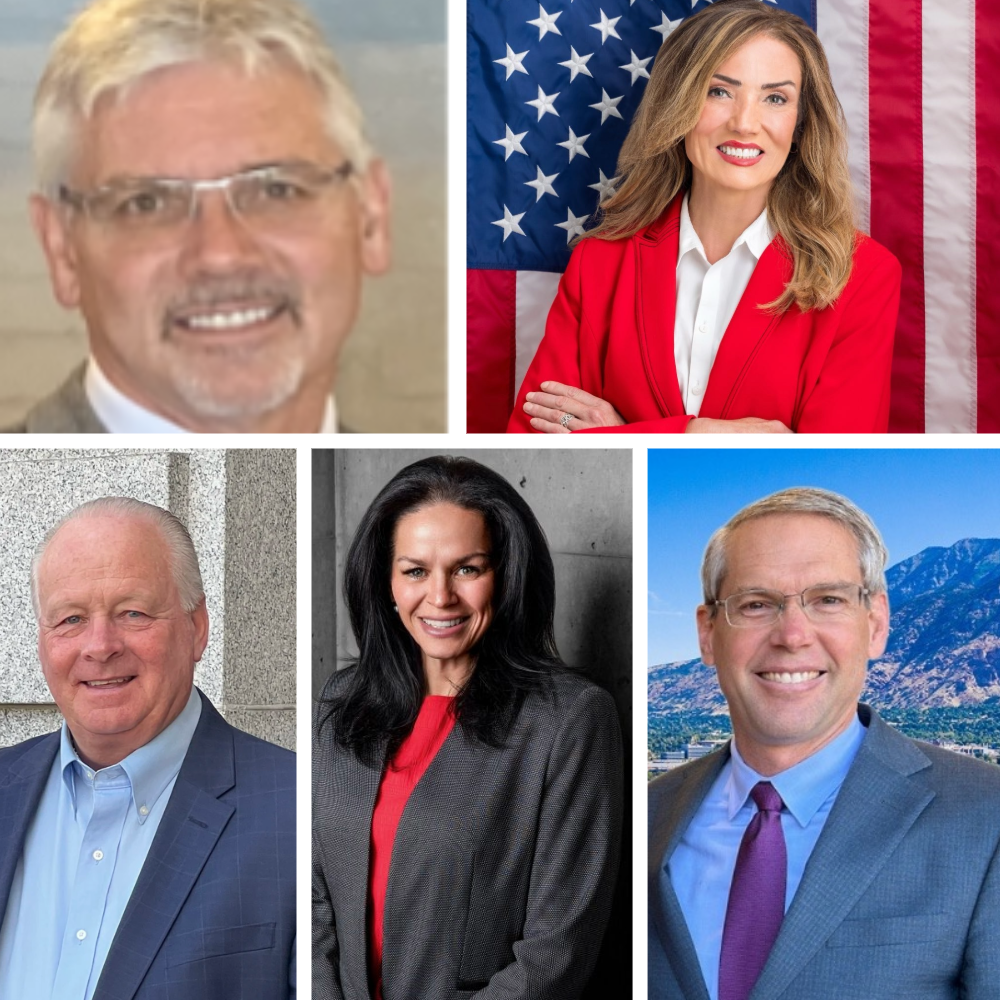
Five candidates for two seats on the Utah County Commission squared off on May 19 in a debate hosted by the American Fork Chamber, trading pointed arguments over property tax increases, bloated government and who’s best equipped to lead a county of nearly 800,000 residents.
The debate covered Seat A, where Brent Bowles and Michelle Kaufusi are competing, and Seat B, which features a three-way race between Carolina Herrin, Isaac Paxman and David Spencer. The June 23 Republican primary will determine who advances to the general election in November.
Taxes dominated the first half of the night. And it didn’t take long to find the fault lines.
Bowles, a retired anesthesiologist, laid out the case that put him in the race: property tax increases totaling more than 100% over the past several years, coupled with commissioner salaries that climbed from around $119,000 to nearly $170,000, or more than $230,000 with benefits. The commissioner’s office staff, he said, ballooned from six employees to more than 20.
“I thought, this is ridiculous,” Bowles said. He promised flatly to cut commissioner salaries, reduce staff and not raise taxes. He enters the primary with a notable edge: Bowles said he received 64% of the caucus votes, which he called his endorsement. “I trust the people who went out, vetted, talked to me,” he said.
Kaufusi pushed back on Bowles’s characterizations without naming him directly. She pointed to eight consecutive balanced budgets as Provo’s mayor, delivered, she said, without a single truth-in-taxation hearing. In her closing statement, she cited a national recognition she received while in office. “They said, ‘Mayor, no mayors even come close to this in the Western United States,’” she told the crowd, explaining the award recognized delivering the highest level of city services at the lowest tax cost for a city of Provo’s size. “Look at my record,” she said. “It speaks for itself.”
Bowles challenged Kaufusi’s fiscal record. He noted that Provo’s bonded debt roughly doubled during those years, from around $112 million to more than $200 million. “If that isn’t a tax increase, I don’t know what is,” he said. “It’s just another way of funding something.”
On the Seat B side, Spencer and Herrin both made firm pledges against tax increases. Spencer, a 12-year Orem City Council veteran, put the sharpest numbers on the table: a 67% property tax increase in 2019 followed by another 48% hike in 2024. “That’s too much,” he said. “It’s killing the citizens and the homeowners and the businesses.” He confirmed the salary figures, starting around $117,000, now at $170,000, and called the increase self-serving. He also pledged never to vote himself a raise. “I will not raise my salary. I want to decrease it.”
Herrin, who spent years in law enforcement, the department of corrections, the State Bureau of Investigations, the attorney general’s office and undercover assignments before moving into government affairs, said her experience gives her a ground-level view of where county money actually goes. She now serves as legislative affairs director for the Utah Department of Corrections. She took aim at the current commission’s attendance record. “We have not had commissioners that are fully engaged, fully active,” she said. This will be her only job if elected, she added: no side interests, no other positions.
Paxman took a different tack on taxes. The former Provo deputy mayor and current assistant attorney general declined to make an absolute promise, saying it wouldn’t be responsible. “There may be a time where I have to,” he said, citing obligations to the county sheriff and attorney’s office. He did say he wasn’t planning to raise taxes but acknowledged reality might eventually force the issue.
That answer didn’t sit well with some in the room, though it stood out as the most candid response of the night.
The candidates also waded into a question that has been discussed for years in multiple forums–should the three-commissioner structure be expanded? All five said they’d support exploring it, most pointed to a failed 2020 ballot measure, Proposition 9, as proof that change is possible, but they differed on urgency.
Herrin was among the more direct. Three commissioners, she said, is simply too few for a county this size. She’d support a resolution to put the question back before voters, though she made clear she doesn’t want more staff, just more elected representation.
Paxman urged caution. “Go and experience it for a year without making dramatic changes,” he said, citing advice from a former executive. He’s open to the idea, particularly geographic representation, but wants a deep dive, not a knee-jerk reaction.
Spencer had a sharper take. He wants to visit all 22 cities personally, get a handle on each community’s needs and then go to the legislature as a unified front. “Utah County is fragmented,” he said. “We need to become one, and then we’re powerful.”
Bowles, notably, said he was the one who first raised the five-commissioner idea publicly, pointing to voters in Eagle Mountain, Saratoga Springs and the county’s west side who feel left out when all the commissioners come from the central area.
Housing and transportation closed out the main questions. Bowles zeroed in on affordable housing, not high-density housing, he was quick to note, and raised concerns about public infrastructure districts, which he described as a workaround that lets developers pass infrastructure costs onto homebuyers through fees those developers shouldn’t legally be able to impose.
Herrin and Spencer both flagged Eagle Mountain as a pressure point. The city has more than 76,000 residents and, according to Herrin, dangerously limited evacuation routes. Spencer put the number of already permitted but unbuilt homes there at 26,000. “That’s 100% gridlock,” he said.
Kaufusi, who served as president of the Metropolitan Planning Organization and represented a multistate federal district covering Utah, Oregon, Idaho and Arizona on roads and bridges, said she has the transportation relationships to make a difference. “There is a way to get out ahead of the infrastructure,” she said. “I have not seen it, and we have got to get to it.”
Paxman argued the county needs to become the most respected government entity in the state and that reputation, more than anything, is what unlocks outside funding without raising taxes. He pointed to securing money for the Provo Airport as evidence of what legislative relationships can deliver.
The primary is June 23. Both debates from the evening were recorded and will be available on the American Fork Chamber’s YouTube channel. You can also read about the candidates profiles and answers to previous asked questions at https://afcitizen.com/2026/02/26/utah-county-commissioner-seats-a-and-b-candidates-profiled/.
John Mulholland | American Fork Citizen
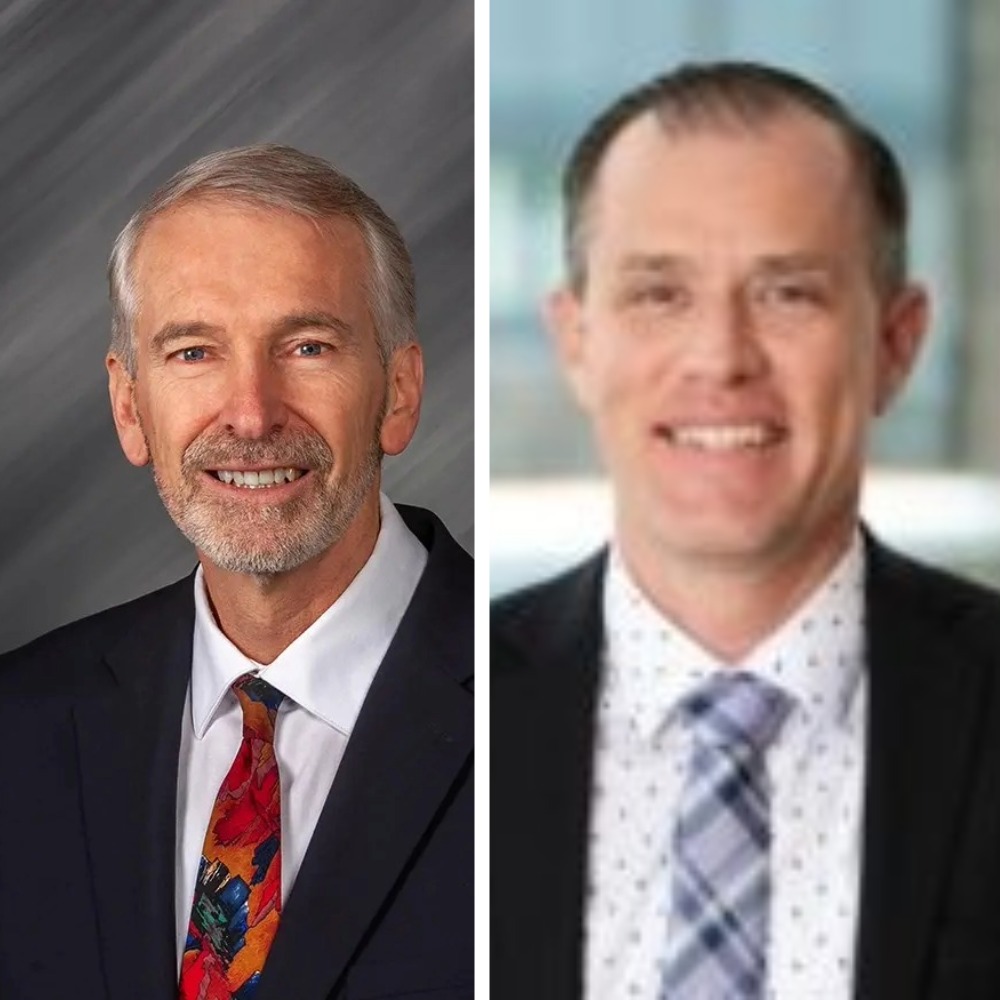
The race for Utah County Clerk has shifted with Doug Courtney recently announcing his departure from the field, the challenge to the incumbent, Aaron Davidson, has narrowed, crystallizing the options for voters this election cycle.
The Clerk’s office has been under intense public scrutiny following a series of administrative missteps over the past few years. When election systems function properly, the office receives little public attention. But when errors occur, the focus inevitably shifts to process, oversight and leadership.
For voters looking for a change in direction, the spotlight now falls squarely on Corey Astill. Bringing a background rooted in high-level federal policy and small business management, Astill offers a vastly different philosophy on how to restore predictability and public trust to the county’s elections and records.
Corey Astill: Process as the goal
Corey Astill was born and raised in West Valley City before spending significant time in Washington, D.C. During his time there, he worked for four U.S. Senators and two committees, eventually serving as Chief of Staff for the Joint Economic Committee and working with the Business Roundtable. After moving back to Utah during the pandemic, he now owns and operates two behavioral health clinics for autistic children. He is also deeply involved in the Utah County GOP, serving as a District 51 Legislative Chair and delegate, and co-hosting a podcast with State Senator Todd Weiler.
Astill views the Clerk’s office not as a policy-making body, but as a management-intensive service provider. He believes the office has drifted away from its core purpose: securing the ballot quickly, efficiently, and accurately.
His critiques of the current administration focus on a failure to execute the fundamentals:
● Unnecessary requirements: The Clerk’s request for the last four digits of a voter’s SSN when there was no place on the ballot for it. Astill argues it isn’t the Clerk’s role to add additional requirements.
● Voter confusion: Inaccurate instructions regarding postage and stamps that created a disincentive to vote.
● Transparency: He argues that “the process is the goal.” If the process is predictable, transparent, and accessible, public trust follows naturally and neutralizes disinformation. Engaging in broader national debates simply takes the eye off the ball.
Astill is a firm advocate for local control, arguing that the Utah Legislature should handle broad policy questions while the Clerk focuses strictly on local execution. He believes elections must be run locally to avoid a “single point of failure” at the federal level.
His first priority upon taking office would be restoring “competent management” and updating the office’s technology to be more digitally focused. While he acknowledges the incumbent is a “good person,” he contends that the county has simply “taken its eye off the ball” and needs a leader who treats the election process with professional rigor.
Books Astill said he has recently read or is currently reading:
● “The Anxious Generation” by Jonathan Haidt
With the field narrowed, the Clerk’s race now centers on a clear head-to-head contrast within the Republican party. Voters and delegates must decide whether they want to maintain the current administration’s trajectory or shift to Astill’s process-driven management style. His pitch relies on the idea that high-level legislative and business experience can bring much-needed discipline to an office that oversees the very bedrock of local democracy.
Because both candidates are running as Republicans, this race will not wait until November. The candidates will first compete for the support of delegates at the upcoming Utah County GOP Convention. Depending on those results — and potential signature-gathering efforts — they may then face off in a June primary. Ultimately, Republican voters will be the ones to determine whether a return to administrative “basics” is the best path to restoring the integrity of the Clerk’s office.
Incumbent Aaron Davidson declined the invitation for an interview.
John Mulholland | American Fork Citizen
The Utah County Auditor’s Office is administrative, not legislative. It does not set policy or determine tax rates. Its responsibilities include certifying tax rates, extending levies, overseeing aspects of the budgeting process, reconciling financial records, and maintaining internal controls.
When systems function properly, the office receives little public attention. When errors occur, the focus shifts to process and oversight.
Earlier this year, Utah County acknowledged a certified tax rate error affecting Provo taxpayers and the Provo City School District. Separately, a joint resolution between Provo City School District and Alpine School District identified parcels located within Provo city limits that had been assigned to Alpine School District for taxation purposes and sought to correct that boundary alignment.
Those matters are distinct, but both involve tax administration and internal controls.
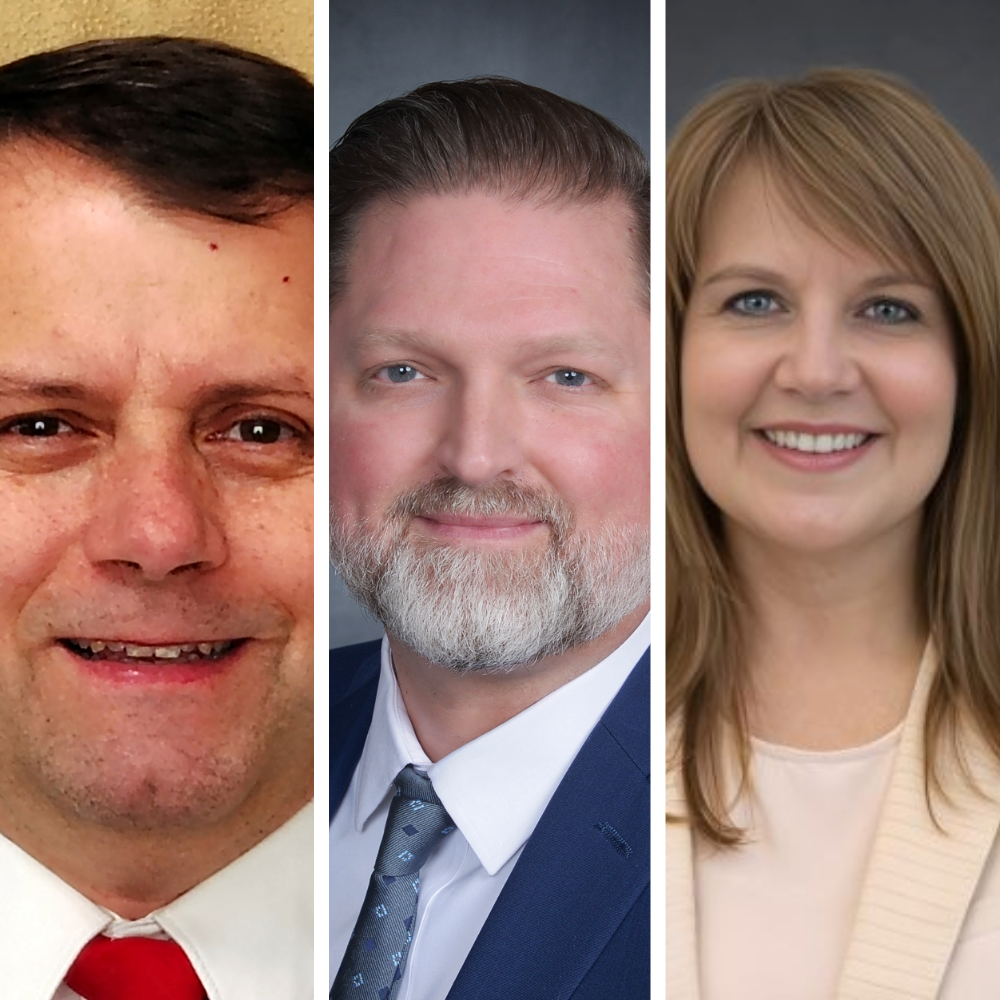
Three Republican candidates are seeking a spot on the general election ballot: Tad Rasmussen, Gina Tanner, and Travis Hoban. Each presents a different interpretation of what the office should prioritize and how broadly the auditor’s role should extend.
Tad Rasmussen: Procurement Reform and Internal Process Changes
Tad Rasmussen has worked in county government for more than two decades. He argues that long-term institutional experience has given him insight into areas where internal processes can be improved.
Rasmussen focuses heavily on procurement. He stated that in early 2024, procurement thresholds for requiring bids were raised. He expressed concern that the current structure does not allow vendor selection on an open, transparent platform. He believes the County should consistently rely on a centralized electronic bidding platform with minimum posting requirements to ensure vendors have a fair opportunity to compete to save the County money.
A new procurement system involving an outside party is expected to go live this fall. Rasmussen believes policy adjustments, combined with completion of the county’s ERP (enterprise resource planning) system, can increase transparency and reduce the risk of workarounds.
On financial systems, Rasmussen agrees that reliance on spreadsheets can introduce risk. He supports moving processes fully into the ERP system and, where appropriate, using automation, including limited AI tools. He emphasized that AI output must be verified and that internal quality control remains essential.
Rasmussen also raised questions about organizational layering within certain areas of county government, suggesting some departments may be “top-heavy.” That assessment would require examination of staffing data to confirm.
He stated that the auditor’s office does not currently require a conflict-of-interest disclosure specific to the office and said he would implement one under his authority if elected.
Books Rasmussen said he has recently read or is currently reading:
- Persuasion, the art of getting what you want — David Lakhani
- QBQ! The Question Behind the Question — John G Miller
Gina Tanner: Budget Discipline and Institutional Continuity
Gina Tanner currently serves as Budget Manager in the Auditor’s Office and entered the race after Auditor Rod Mann announced he would not seek reelection.
Tanner holds a master’s degree in accounting and has worked at both department and county levels. Her campaign centers on budgeting discipline and process refinement from within the existing structure.
Tanner highlights her role in transitioning the county toward a target-based budgeting model. Under this approach, commissioners determine service levels, departments receive baseline funding, and additional allocations must be tied to clearly defined services or programs. Departments are expected to identify efficiencies within their own budgets rather than relying on automatic increases.
She noted that budgets do not automatically rise with inflation and emphasized coordination efforts—such as combining departmental mailings—as examples of cost control.
On tax administration, Tanner supports automating tax rate inputs while maintaining human oversight. She acknowledged that past errors have occurred and emphasized strengthening review processes and documentation to prevent recurrence. She stated that many procedures currently exist informally and should be formally documented before further automation expands.
Regarding AI, Tanner described it as a tool to assist with documentation, workflow improvements, and anomaly detection, but stressed that human judgment remains essential.
She characterized the auditor’s office as a resource for both departments and the public, emphasizing clear presentation of financial data and careful analysis before drawing conclusions.
Books Tanner said she has recently read or is currently reading:
- The Speed of Trust — Stephen M. R. Covey
- The Seven Ups of Happiness — Scott Christopher
- The Making of America — Cleon Skousen
Travis Hoban: Expanded Audit Scope and External Perspective
Travis Hoban serves on the Provo City Council and works in the private sector, including experience as a fintech executive. He is a Certified Internal Auditor.
Hoban stated that the county budget has grown significantly in recent years relative to population and inflation growth. He argues that residents are feeling pressure from property taxes and that the auditor’s office should take a more assertive role in evaluating efficiency and internal controls.
While acknowledging that the auditor does not set tax rates or policy, Hoban views the position as one that should proactively identify systemic weaknesses.
In discussing the recent boundary adjustment between Provo City School District and Alpine School District, Hoban stated that certain parcels were mislabeled and that the Auditor collected taxes without sufficient due diligence. He contends that the auditor should conduct periodic reconciliation between school district boundary maps and tax area assignments rather than relying solely on Assessor-provided coding.
Utah law requires the auditor to reconcile financial books and accounts and permits performance audits as deemed necessary. The statute does not expressly mandate GIS-level boundary reconciliation. Hoban’s position reflects a broader interpretation of the internal audit function than what is explicitly required. He believes it falls under the duties of financial audits, as taxes are being collected.
Hoban also connected the boundary issue to the earlier certified tax rate error, describing both as systemic control failures. Public reporting confirms the certified tax rate error occurred; documentation has not established that the boundary alignment issue stemmed from the same operational cause.
He supports accelerating ERP implementation and reducing reliance on spreadsheet-based processes. On AI, he emphasized strong guardrails and evidence-based auditing practices.
Book Hoban said he has recently read or is currently reading:
- How to Retire — Christine Benz
Utah County Republican delegates will determine which candidate will be on the ballot in November. November’s general election winner will interpret the auditor’s role and best safeguard public funds: internal reform and procurement focus, budgeting continuity and documentation, or expanded audit oversight and independent reconciliation practices.
John Mulholland | American Fork Citizen
The race for Utah County Commission Seat B is shaping up to be one of the most crowded and consequential contests this election cycle. With incumbent Brandon Gordon stepping down, a massive field of candidates has emerged to claim the open seat. Because this is a heavily Republican county, the battle for this seat will first be fought at the upcoming GOP convention, with a likely primary to follow.
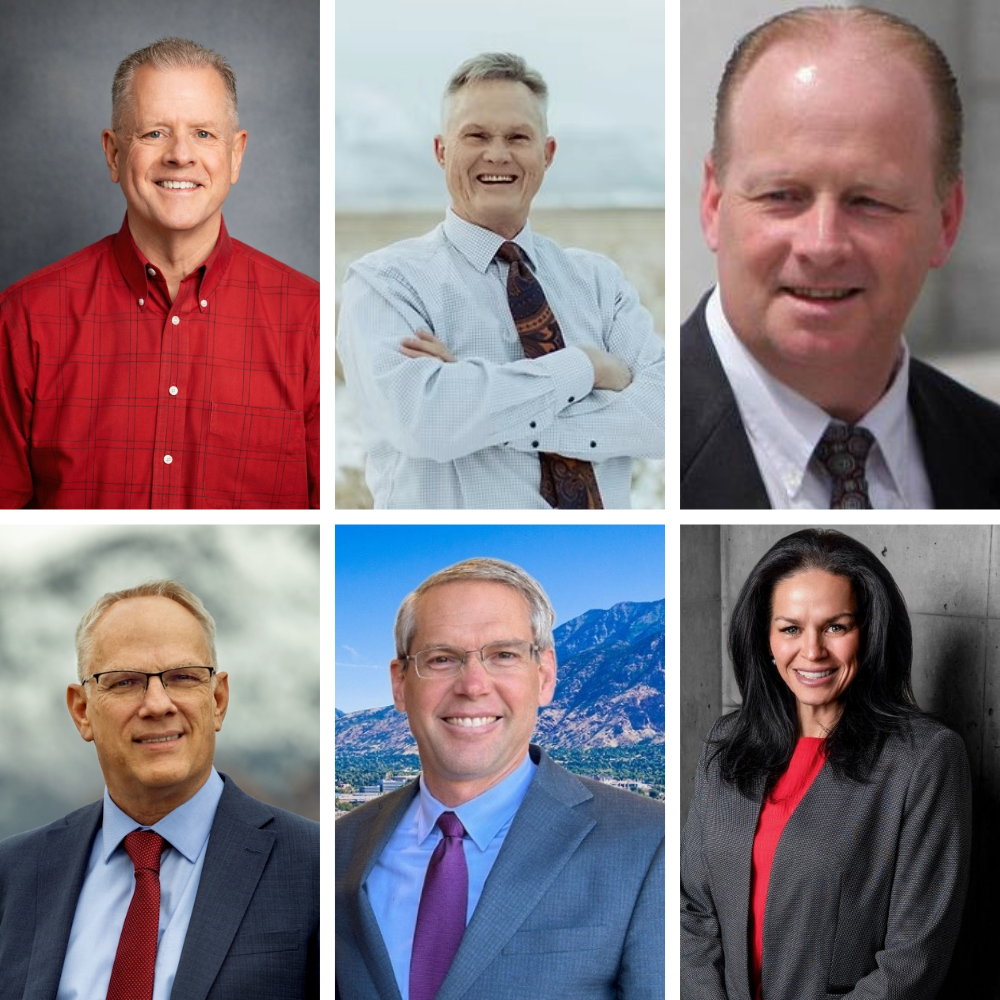
From managing explosive growth and infrastructure to tightening the county’s budget and overseeing public safety, the next commissioner will face a steep learning curve. While several candidates have thrown their hats in the ring, here is an expanded look at six of the prominent contenders who sat down to discuss their platforms and visions for Utah County.
Bill Brimley: The Servant-Hearted Realtor
Background: Realtor (20+ years), Community Leader (Rotary, Business Network International)
Bill Brimley brings over two decades of real estate experience across the Wasatch Front to his campaign. Having weathered the Great Recession by moving to Montana for four years before returning, Brimley has been politically active for years but never sought a title until now. He decided to run because he wants to see a change in how the county operates at a structural level, arguing that if he wants something different, he needs to raise his hand.
Transparency and Spending
Brimley’s primary concern is that while the tax base is increasing, individual property taxes are not getting lower. Owning various properties throughout the state, he feels the sting of rising property taxes firsthand. He advocates for lowering taxes by simply “stopping spending money we don’t have.” He points out that government is both highly complicated and lacking in transparency, making it difficult for everyday citizens to get answers. To fix this, he wants to mandate cameras and recordings for every county meeting.
Navigating Information and Tech
When asked about emerging technologies like artificial intelligence, Brimley is cautious. He prefers to focus first on halting deficit spending and mastering the basics of the budget before investing heavily in new tech integrations.
On the topic of political disinformation, his philosophy is grounded in personal accountability. He aims to “speak his truth” while acknowledging he won’t be right all the time. He prides himself on his ability to own his mistakes, noting that he is not afraid of people disagreeing with him and doesn’t need to always be the smartest person in the room—he just wants to surround himself with good people.
Brimley did not provide a current reading list.
Rod Mann: The Data-Driven Auditor
Background: Current Utah County Auditor, Former Highland Mayor, Former Highland City Council Member
Rod Mann offers a highly technical and data-driven approach to the commission. Married for 45 years with 15 grandchildren, Mann spent much of his career in the tech sector before entering politics in 2008. Having served as Highland Mayor, a City Councilman, and recently the Utah County Auditor, Mann has had a front-row seat to the county’s complex financial mechanics.
Accountability and Forecasting
Mann is deeply focused on proactive problem-solving rather than being a “bomb thrower.” He implemented 5-year forecasts, tracked sales tax revenue with advanced data tools like R, and dramatically improved the transparency of the budget process by adding a blog and public open houses. When a certified tax rate error occurred affecting Provo, Mann emphasizes that his office caught it early, took immediate ownership, and worked directly with the city to provide options and fix it—rather than letting it self-correct over three years. He wants to bring this same methodical preparedness to the commission. He notes the county is back to a positive budget, but warns of massive upcoming expenses, such as the state putting in a new district court that will cost an unplanned $2 million a year, and the Charlie Kirk trial, which has already burned through half of its $500,000 defense budget for 2026 and will likely cost up to $4 million.
Technology and Truth
Mann envisions a tech-forward county government. He advocates for using a “government-friendly” version of AI (like Copilot) for internal communications and auditing checks, leveraging the upcoming Oracle financials update for AI-assisted budgeting, and utilizing AI on the county website to help citizens find answers to their 200+ common questions.
To combat disinformation, Mann relies on raw data. As an example, he noted a time he found a 5% error rate while comparing two sources of county tax rates and built a spreadsheet to fix the data himself. He approaches claims with a healthy dose of skepticism, digging into the numbers and tracing them back to their origins.
Books Mann said he has recently read or is currently reading:
The War Correspondence of Ernie Pyle by Ernie Pyle
The Majesty of Calmness by William George Jordan
Tom Westmoreland: Infrastructure and Revenue Generation
Background: Former Mayor of Eagle Mountain, Publishing Executive
Tom Westmoreland spent eight years managing one of the state’s fastest-growing cities as the Mayor of Eagle Mountain. He believes the hard lessons learned there—particularly regarding massive corporate investments, strained infrastructure, and rapid development—translate directly to the county level.
Power and Revenue
Westmoreland points out that the state is roughly 20 years behind in power generation and transmission. He argues that the influx of major data centers (such as Meta, QTS, Traq, and Google) actually accelerates the solution by forcing infrastructure upgrades and utilizing business models that pay for those improvements. He notes that new data centers in Eagle Mountain don’t use water for cooling, preserving the area’s resources. To combat rising property taxes, Westmoreland wants to support economic plans of cities in order to generate alternative revenue streams. He points to Florida’s robust tourism industry as a model, suggesting the county needs a serious strategic plan to preserve and restore assets like Utah Lake and other recreation areas to draw outside dollars and ease the burden on residents.
Information and Technology
Westmoreland views AI through a strict business lens, arguing the county should use it to automate manual data entry and speed up processes. He also wants to launch a citizens academy for the county, similar to the one he started in Eagle Mountain, to make government less mysterious.
Coming from a background in publishing, he approaches the modern wave of disinformation analytically rather than emotionally. He notes that he can easily recognize “red flags” from the sending side of the media. Grounding his worldview in a spiritual base, he focuses strictly on information that directly impacts and is important to residents, like paying rent and putting food on the table—rather than getting swept up in national noise.
Books Westmoreland said he has recently read or is currently reading:
The Warrior Poet Way by John Lovell
(He also noted he is currently writing a book about the founding fathers)
David Spencer: Fiscal Conservatism and Back to Basics
Background: Former Orem City Council, Private Sector (Import/Export)
David Spencer brings years of Orem City Council experience and a sharp eye for fiscal contraction to the race. He originally entered politics 12 years ago to save a local ball field and has maintained a focus on grassroots community issues and holding the line on government expansion. Working in the import/export sector in Salt Lake City, he often views county issues through the lens of structural balance.
Reversing Commission Spending
Spencer is highly critical of the recent 31% salary increase for commissioners and the expansion of the commission’s staff from 6 to over 18 employees. If elected, he promises to roll back those pay increases, slash the $20,000 travel budgets back down to $10,000, and drive operational costs down across the board. He also questions whether the county is aggressively pursuing grants, noting that Orem secured $15 million in grants during his tenure. He advocates for moving crucial meetings, like MAG, from 2 PM to 6 PM so working citizens can attend, and he strongly believes that tax increases must be put on the ballot for citizens to decide. Spencer is deeply concerned about the sheer pace of growth, warning that the county lacks the water and road infrastructure to sustain it, and strongly supports slowing down development.
Accessibility and Efficiency
To cut through government opacity, he advocates for a “transparency portal” similar to the one he championed in Orem, and wants to develop a “connect app” to better link residents with county services. On technology, he views AI as a valuable tool to drive county efficiency and do more with less, provided its outputs are rigorously checked by humans.
Books Spencer said he has recently read or is currently reading:
Flawless Execution by James D. Murphy
Who Moved My Cheese? by Spencer Johnson
Carolina Herrin: Law Enforcement and Managed Growth
Background: Law Enforcement (AG Taskforce, Highway Patrol, Corrections), Senior Policy Advisor
Carolina Herrin has a deep, 20-year history in Utah County Republican politics, becoming a citizen in 2003 and a delegate by 2006. She brings a lifelong commitment to public safety, with a background that includes undercover work, serving on the Major Crimes Taskforce (handling felonies, drugs, and weapons), and working directly as a Senior Policy Advisor within the county commission under Commissioner Beltran.
Public Safety and Agriculture
Herrin’s top priority is ensuring first responders are fully supported, viewing her campaign as a continuation of her lifelong commitment to protection. She is also a strong advocate for the county’s agricultural roots, pushing for continued partnerships with the Farm Bureau to protect farmland amid rapid development. Regarding that growth, she emphasizes the need for a robust 5, 10, and 15-year plan to address what she calls “catastrophic” transportation needs in North County and “critical” needs in South County. She also points to Utah Lake as a major focal point, noting that federal delegation funds have been secured to help handle issues like the invasive carp population.
Real-World AI and Sourcing Truth
Herrin fully supports the Sheriff’s contract with ICE, emphasizing that Utah is a community of law and order. She also brings highly practical, high-stakes experience utilizing AI in government. At the state prison, AI is used as a tool to monitor 15,000 phone calls, successfully identifying criminal discussions and even stopping an active suicide. She advocates for its careful, transparent use as an administrative enhancement at the county level, ensuring users clearly state when AI was utilized.
When navigating disinformation, Herrin warns against living in a vacuum. She urges voters and leaders to check several different sources, warning that you “can’t just go to FOX or CNN,” and emphasizing the need to represent the entire county by stepping outside of echo chambers.
Books Herrin said she has recently read or is currently reading:
1984 by George Orwell
Tough as They Come by Travis Mills
The Jack Carr Series by Jack Carr
Isaac Paxman: Regional Influence and Deliberation
Background: Former Provo Deputy Mayor, State AG’s Office, DOJ | Website: votepaxman.com (Site pending full launch)
This article was originally published on utelection.info, where you can find more coverage of Utah elections.
Isaac Paxman is a 7th-generation Utah County resident with extensive legal and executive experience. Having spent 5 years with the DOJ in Virginia before returning to Utah, he served as the Deputy Mayor of Provo for eight years, overseeing massive municipal projects and hundreds of employees. He brings a highly deliberate, project-oriented mindset to the race, viewing his run as a way to ensure Utah County remains the best place on the planet to live in twenty years.
The Big Picture
Paxman was instrumental in securing massive funding for the Provo Airport expansion, noting that they far surpassed the fundraising goal. The money has come in from federal, state, and county sources without raising local taxes. He wants to use that same collaborative blueprint to elevate Utah County’s status on the state scene, arguing that other counties currently get a disproportionate share of state tax revenue. He wants Utah County to be the most respected county organization in the state. Rejecting the idea of quick “silver bullet” fixes from outsiders, Paxman describes his executive style as slow and deliberative. He wants to dive deeply into complex issues like truth in taxation, the Utah County Jail’s capacity limits, and the ecological rehabilitation of Utah Lake (specifically targeting phragmites and carp), prioritizing long-term stability over short-term political points.
Deliberative Leadership and Modernization
Paxman is a “huge fan of government efficiency” and believes the county has so much to gain from technology that it simply cannot be ignored. He wants the county to start experimenting with AI, studying best practices to streamline operations.
When it comes to cutting through disinformation, Paxman leans heavily on legal transparency and patience. Acknowledging that “nobody knows” the full story immediately, he is a strong proponent of GRAMA (public records) requests to find the ground truth, preferring slow, deliberative fact-finding over fast, reactive answers.
Books Paxman said he has recently read or is currently reading:
And There Was Light by Jon Meacham
Team of Rivals by Doris Kearns Goodwin
Endurance by Alfred Lansing
As of the time of publishing, Truman Van Cott did not respond for an interview.

Get to know Utah Senate District 21 candidates

Learn about Utah House District 52 candidates

All invited to Veterans Day program to honor generations of service

‘BIGGEST LOSER’ CONTESTANT FROM AF DIES TRAGICALLY

Aspen Peaks School Board “Meet the Candidates” night recap

Tragedy Strikes American Fork: Local Couple Found Dead in Apparent Murder-Suicide
-

 Local News1 month ago
How more trees can help tame Utah’s ever-hotter summers
-

 Local News1 month ago
Utah County reports season’s first human case of West Nile virus
-

 AF City News4 weeks ago
Incorrect measuring led to oversized AF structure approval; Lehi neighbor files court injunction
-

 Local News1 month ago
25 years later, AFHS remembers 9/11
-

 Local News2 weeks ago
ASD classified employee announcement brings controversy despite one-time payment
-

 Local News1 month ago
How much ice hides in Timpanogos Rock Glacier?
-

 Schools1 month ago
School year begins with a bang at American Heritage
-

 Local News1 month ago
American Heritage School brings history to life, honoring Constitution Day
-

 Obituaries1 month ago
Bonnie Lee Dalton
-

 Obituaries1 month ago
Willa Mae Johnson Williams Overson